
 Laily UPN
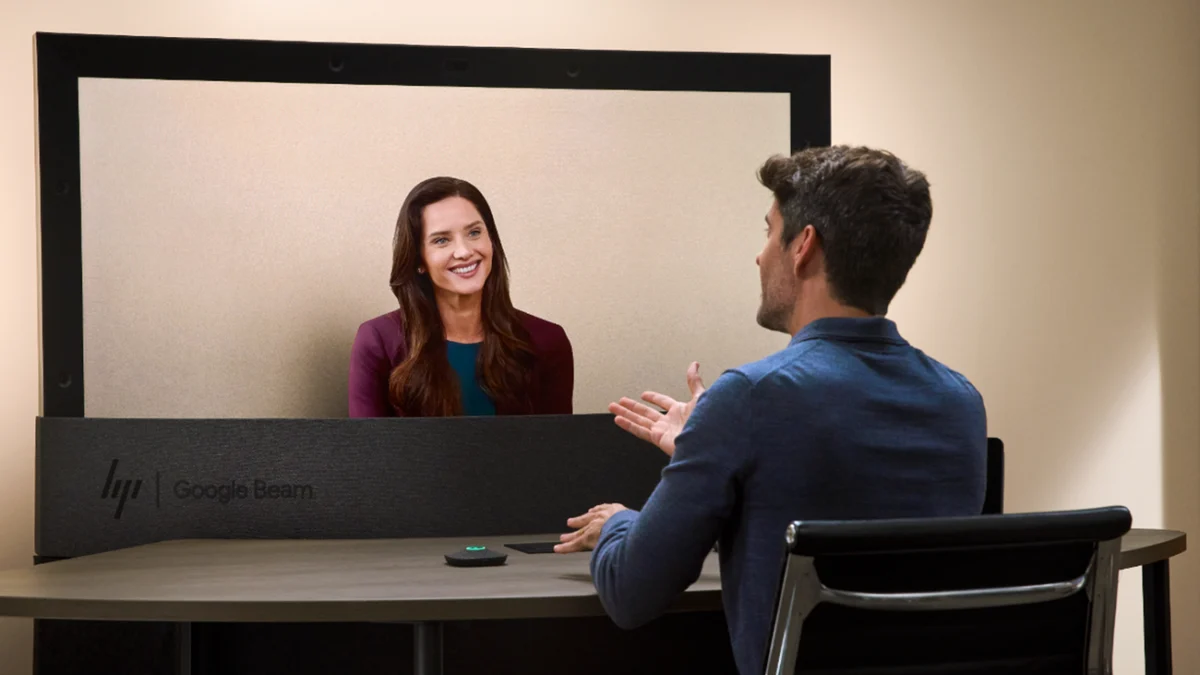
In an era where the "office" is as likely to be a home study as it is a glass-walled skyscraper, the challenge of maintaining authentic human connection has never been more pressing. Google’s latest initiative, Google Beam, is stepping into this breach. Designed to move beyond the flat, two-dimensional nature of standard video conferencing, Google Beam aims to restore the nuances of face-to-face interaction to digital collaboration.
Today, Aaron Luber, Director of Business Development for Google Beam, announced a significant milestone for the platform: a major international expansion, a strategic partnership with flexible workspace giant Industrious, and compelling new data confirming that "co-presence" technology is fundamentally changing how global teams operate.
The Evolution of Connection: A Chronology of Google Beam
The development of Google Beam represents a multi-year effort to solve the "telepresence gap." The project began as an internal experiment within Google’s own offices, driven by the realization that even the most advanced video conferencing tools often failed to capture the subtle social cues essential for trust, mentorship, and team cohesion.
- Early Development: Google researchers and engineers focused on high-fidelity visual and audio transmission, aiming to create a sense of physical "co-presence" where participants feel as though they are sitting across the table from one another.
- Internal Pilot Phase: The technology was deployed across Google’s global campuses. Data from these early trials showed significant improvements in collaboration speed and employee satisfaction.
- The Partnership Model: Recognizing that scaling requires robust hardware, Google teamed up with HP to develop the HP Dimension with Google Beam, a specialized hardware unit optimized for enterprise environments.
- Global Rollout (Present Day): Having proven its value internally, Google is now transitioning to a mass-market strategy, expanding to six key countries and establishing a network of 18 global channel partners.
Proving the Impact: Data-Driven Collaboration
The primary criticism of traditional video conferencing is "Zoom fatigue"—a phenomenon characterized by a lack of engagement and the feeling of disconnect despite being "connected." Google Beam challenges this by focusing on body language, eye contact, and the "spatial" awareness of a conversation.
Key Metrics from the Eight-Week Study
To validate the effectiveness of the platform, Google conducted a comprehensive eight-week internal study. The results provide a compelling case for businesses looking to optimize hybrid workflows:
- Enhanced Connection: Teams utilizing Google Beam reported feeling 50% more connected to their colleagues compared to those using standard video setups.
- Clarity and Understanding: Participants found it 33% easier to ensure their feedback was clearly understood, drastically reducing the ambiguity that often leads to workplace friction.
- Efficiency Gains: There was a 21% reduction in the need for follow-up meetings. By ensuring that the primary interaction was effective, teams were able to avoid the "meeting-after-the-meeting" cycle, effectively reclaiming lost hours in the work week.
These findings suggest that when technology accurately mimics human presence, the cognitive load of a meeting is lowered, allowing participants to focus on content rather than the mechanics of the digital interface.
Industry Adoption: From Bain & Company to the Enterprise
The utility of Google Beam is being tested far beyond the walls of Google. A standout use case involves Bain & Company, the global management consulting firm. For organizations like Bain, where recruitment and candidate assessment are core to business success, the ability to gauge a candidate’s interpersonal skills is vital.
Keith Bevans, EVP and Partner at Bain & Company, noted the critical nature of these interactions: "One of the most challenging things for us to assess with candidates is how they’ll be with clients. There are so many nuances in body language and eye contact, and Google Beam allows us to virtually understand how people will engage in person, which is critically important for their success at Bain."
By integrating Beam into their recruitment process, Bain has been able to conduct high-stakes interviews with a level of intimacy that was previously impossible without expensive and time-consuming travel. This success story is being mirrored by early enterprise adopters, including Netflix and Capital Group, who are now integrating Beam to bridge the gap between their distributed regional offices.
Expanding the Ecosystem: The Industrious Partnership
A major barrier to the adoption of sophisticated hardware like Google Beam has historically been the high barrier to entry for smaller businesses. Not every startup or mid-sized company has the infrastructure to install dedicated telepresence suites.
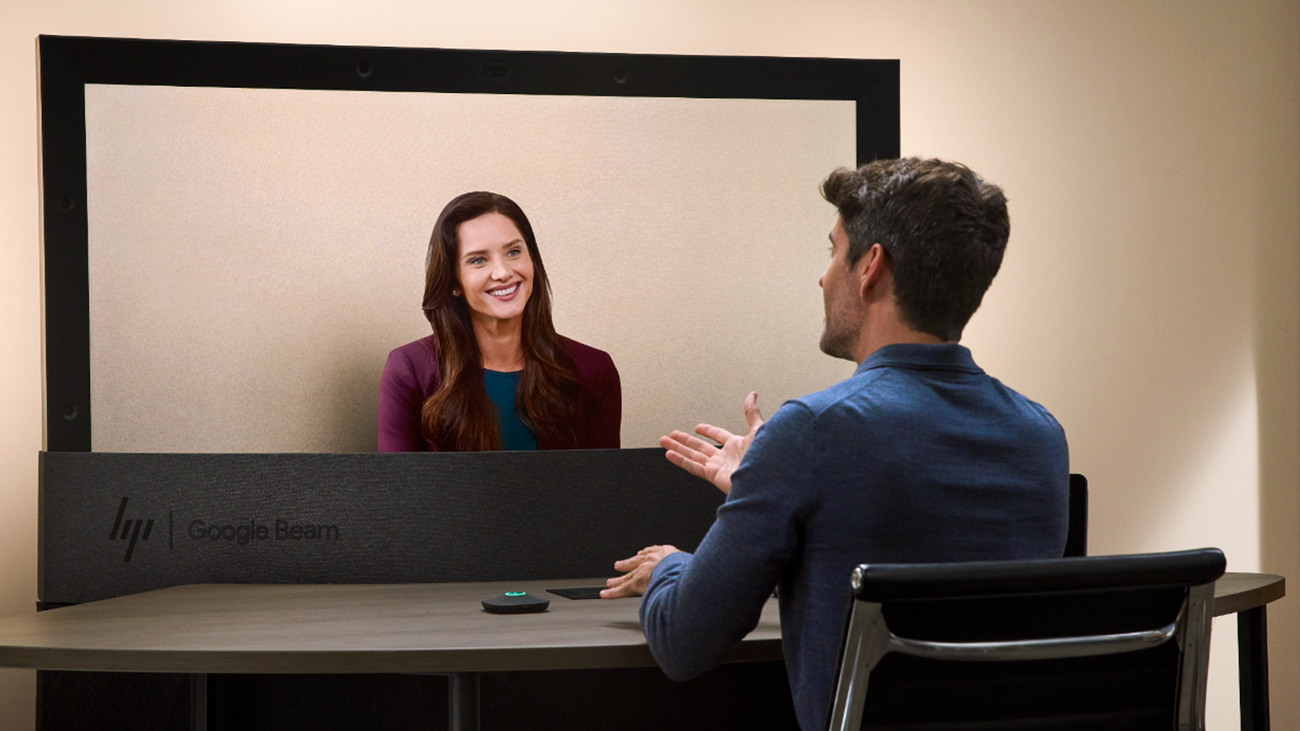
Google is addressing this by partnering with Industrious, the global premium flexible workspace provider. This collaboration creates the world’s first "Beam extended network." By placing these units in high-traffic, professional co-working environments, Google is democratizing access to enterprise-grade collaboration.
Starting this October, businesses operating out of, or visiting, select Industrious locations in Atlanta, Chicago, New York City, and Palo Alto will be able to book HP Dimension with Google Beam units. This move effectively turns the flexible office into a high-tech hub, allowing remote teams to meet in a neutral, professional space without the need for a permanent office footprint.
Strategic Implications: The Future of Distributed Work
The implications of this rollout are far-reaching. As businesses continue to grapple with the "return-to-office" debate, technologies that provide the benefits of in-person collaboration without the requirement of physical proximity offer a middle path.
1. The Death of Distance in Recruiting
As demonstrated by Bain & Company, the "geography of talent" is expanding. Companies no longer need to restrict their hiring to a specific commuting radius. If an interview via Google Beam can provide the same insights as a face-to-face meeting, the global talent pool becomes instantly accessible.
2. Organizational Cohesion
The 50% increase in connectivity reported by Google employees suggests that culture-building—often thought to be impossible in a remote setting—can be achieved through the right technological medium. This is particularly significant for companies with large, distributed workforces that rely on cross-functional collaboration to drive innovation.
3. Sustainability and Cost Efficiency
By reducing the necessity for business travel for routine meetings and interviews, firms can simultaneously reduce their carbon footprint and their travel expenditure. The 21% reduction in follow-up meetings also suggests that firms can increase their overall operational velocity.
Conclusion: A New Standard for Human Connection
Google Beam is not merely another video calling app; it is a fundamental shift in how we approach digital communication. By focusing on the human element—eye contact, non-verbal communication, and the sense of "being there"—Google is attempting to redefine the professional landscape.
As the company rolls out its global infrastructure, with 18 channel partners ready to support the technology in the U.S., Canada, U.K., France, Germany, and Japan, the focus will now shift to the long-term impact on workplace culture. Whether this technology becomes a standard fixture in the modern office remains to be seen, but the initial data is clear: when the distance is bridged, the quality of our work improves.
For organizations looking to future-proof their operations and maintain a competitive edge in a globalized economy, the path forward appears to be one of increased connectivity. As Google continues to refine the platform, it is clear that the objective remains unchanged: to ensure that no matter where we are, the connection feels real.
For more information on how to integrate this technology into your organization or to explore specific use cases, visit beam.google.


 Nana
 Siti Muinah

 Reynand Wu

 Sagoh


 Azzam Bilal Chamdy

 Ali Ikhwan

 Iffa Jayyana
