
 Lina Hope
Introduction: The Fragility of Digital Organizing
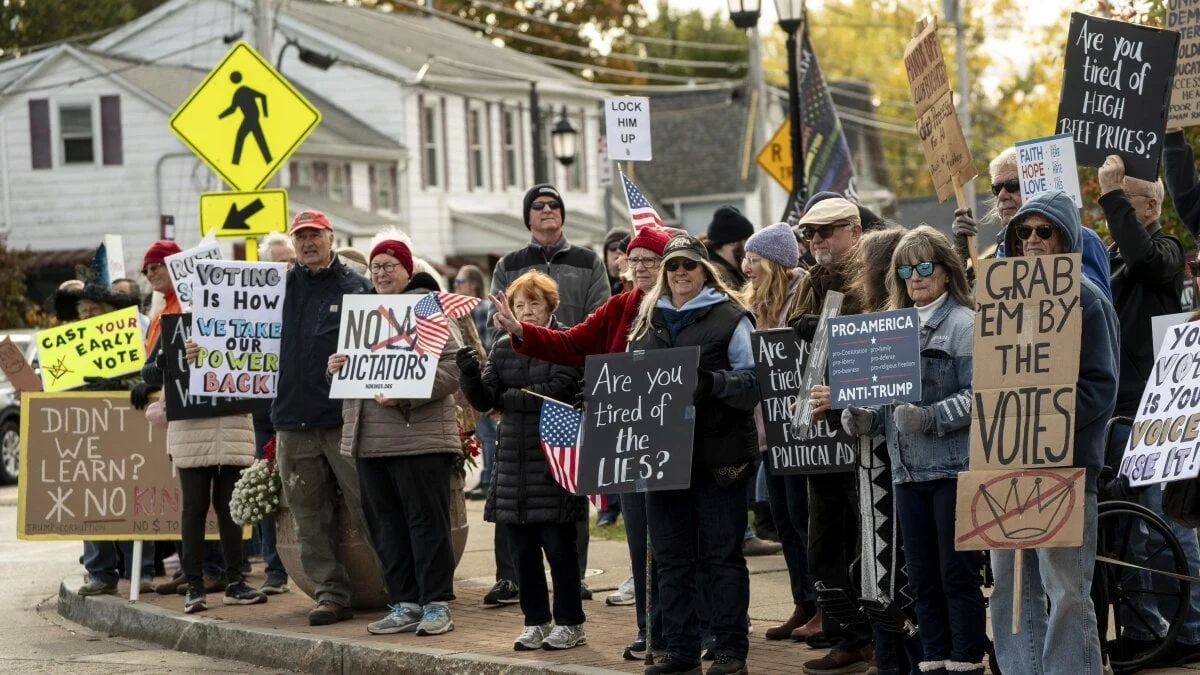
In the high-stakes environment of modern civic engagement, social media platforms serve as the digital town square, the primary megaphone for grassroots movements, and the central hub for real-time protest logistics. When that megaphone is abruptly silenced—even for a short duration—the repercussions are felt far beyond the confines of the platform. This past weekend, the No Kings Coalition, a prominent social justice movement, experienced exactly this form of digital erasure when their Instagram account was shuttered during a series of nationwide demonstrations.
The incident has reignited a fierce debate regarding Meta’s automated enforcement mechanisms, the transparency of its content moderation policies, and the potential for algorithmic bias to stifle democratic participation. While Meta has issued a formal apology, characterizing the incident as an "incorrect enforcement" triggered by technical anomalies, the timing of the blackout—occurring amidst voter mobilization efforts ahead of midterm elections—has left many activists questioning whether these "glitches" are truly accidental or a symptom of a broader, systemic hostility toward social justice advocacy.
The Chronology of an "Incorrect Enforcement"
The blackout occurred on October 17, as the No Kings Coalition was in the thick of organizing nationwide demonstrations and voter activation drives. According to reports from the organization, their primary Instagram channel—a vital source of information for thousands of followers—went offline without warning.
For 90 minutes, the account remained inaccessible. During this critical window, organizers were unable to coordinate logistics, broadcast rally locations, or share voter registration resources. The disruption was not merely a loss of reach; it was a disruption of the very infrastructure of the protest. Even after the account was ostensibly restored by Meta, administrators reported significant difficulty regaining access, further extending the period of administrative paralysis.
Meta’s internal investigation, communicated via spokesperson Andy Stone, claimed that the outage was the result of "abrupt, high-volume" requests originating from a third-party tool. Specifically, Meta’s automated security protocols flagged a "Claude tool" that was scraping the platform for profiles, posts, and hashtags at a frequency that mimicked malicious bot activity.
"This activity caused our automated protections to incorrectly take the No Kings Instagram account offline," Stone stated in a public post. "It unfortunately took additional time for us to straighten out the situation with admin access to the IG account. We want to reiterate our sincere apology for the error."
Algorithmic Governance and the Problem of "Automated Protections"
The incident underscores a growing concern among digital rights advocates: the reliance on "black box" algorithms to police content. Meta’s reliance on automated enforcement tools is, in theory, a measure to mitigate the spread of spam, hate speech, and coordinated inauthentic behavior. However, the No Kings Coalition case reveals the catastrophic potential of these tools when they function with too much autonomy and too little human oversight.
The Myth of Neutrality
The core of the issue lies in the definition of "bot-like behavior." When algorithms are programmed to detect high-frequency data requests, they often lack the contextual nuance to distinguish between a malicious bot farm and a legitimate activist organization attempting to aggregate information during a fast-paced public event.
By prioritizing speed and automation, Meta has created a system where "efficiency" often comes at the cost of civil liberties. When a system is designed to "shoot first and ask questions later," the collateral damage inevitably falls on marginalized groups and social movements that rely on high-frequency communication to counter mainstream narratives.
A Pattern of Censorship: Beyond the No Kings Coalition
The blackout of the No Kings Coalition is not an isolated event; it is the latest chapter in a long-standing narrative of alleged platform censorship. Over the past month, Meta has been embroiled in multiple controversies regarding its moderation decisions, suggesting a pattern that extends beyond mere technical errors.
The Cornell Sexual Assault Allegations
In recent weeks, various feminist organizations have accused Meta of suppressing content related to the Cornell sexual assault case. These groups argue that their posts were flagged, hidden, or deleted under the guise of community standards, effectively muting a conversation that was already gaining significant public traction. This has led to accusations that Meta’s moderation team is prioritizing the protection of the platform’s reputation over the public’s right to discuss sensitive social issues.
The Marginalization of Vulnerable Groups
For years, reproductive health advocacy groups and LGBTQ+ organizations have documented consistent issues with "shadow-banning"—a practice where content remains visible to the creator but is hidden from the wider public—and unexplained account deletions. Often, these accounts are flagged for "violating community standards" while posting information that is entirely compliant with platform policies. The pattern suggests that these accounts are being targeted not because they are violating rules, but because their content is deemed "controversial" or "sensitive" by an algorithm tuned to avoid advertiser friction.
The 2025 Shift: A Capitulation to Political Pressure?
The environment in which these moderation decisions are being made has shifted dramatically. In 2025, Meta made the controversial decision to remove significant hateful conduct protections from its platforms. At the time, critics warned that this move would create a "wild west" environment where hate speech and misinformation would flourish unchecked.
Many industry analysts suggest this policy shift was a direct response to the anti-DEI (Diversity, Equity, and Inclusion) efforts championed by the Trump administration. By dismantling these protections, Meta effectively signaled to its most vocal political critics that it was willing to deprioritize social equity in exchange for a less confrontational regulatory relationship.
The result is a platform that is increasingly hostile to social justice advocacy. When hate speech protections are gutted, the space for civil discourse shrinks, and the pressure on automated moderation systems to "clean up" the platform leads to the over-correction seen in the No Kings Coalition incident.
The Broader Implications for Democracy
The suppression of a movement’s communication channels, whether by malice or machine error, has profound implications for democracy. As noted by the League of Women Voters in an October 18 post: "The timing matters. When people are gathering, organizing, and seeking information about civic participation, cutting off a movement’s primary communication channel—even temporarily—is deeply troubling."
The Erosion of Civic Space
Digital platforms are no longer just companies; they are the infrastructure of modern public discourse. When they fail, it is not merely a business disruption; it is a civic failure. If the tools of democracy are gated by private corporations that can revoke access at the flick of a switch, the health of the democratic process is fundamentally compromised.
The Need for Accountability
The current status quo—where a company can apologize for an error after the damage is done, without offering any structural changes or transparency into how the error occurred—is unsustainable. There is a growing consensus among policymakers and civil rights groups that "apologies" are insufficient. What is required is:
- Algorithmic Transparency: Meta must provide greater transparency regarding the triggers for its automated enforcement tools, particularly those that result in account suspension.
- Human-in-the-Loop Oversight: Any decision to suspend or limit the visibility of a high-profile or organizational account must involve human review to ensure the context of the activity is understood.
- Appeals Processes: A clear, fast-track appeals process must be available for organizations whose accounts are flagged during critical events like elections or demonstrations.
- Legislative Reform: Governments must consider whether social media platforms should be subject to stricter oversight regarding their impact on civic participation and free speech, particularly in the lead-up to elections.
Conclusion: A Wake-Up Call
The case of the No Kings Coalition serves as a stark reminder of the power imbalance between global tech giants and the activists who use their platforms. While Meta characterizes the event as a technical glitch, the context of the incident suggests a more complex problem: a system that is fundamentally ill-equipped to handle the nuance of social justice advocacy and perhaps, under the current leadership, lacks the incentive to do so.
As we move deeper into an era where elections and social movements are fought in the digital trenches, the question of who holds the "off" switch becomes the most important question in modern politics. Meta may have restored the No Kings Coalition’s access, but the trust in the platform’s neutrality has been severely damaged. For the sake of a healthy, informed, and active electorate, the company must move beyond apologies and toward a model of governance that respects, rather than suppresses, the democratic voice.
The digital town square must be protected from the whims of the algorithm. If Meta cannot guarantee that its platforms will remain open and equitable for all, it may find that its most valuable users—the organizers, the activists, and the voters—begin to look for alternative squares in which to gather.


 Reynand Wu
 Iffa Jayyana

 Raul Delapena Setiawan


 Sagoh


 Azzam Bilal Chamdy

 Ali Ikhwan
