
 Nila Kartika Wati
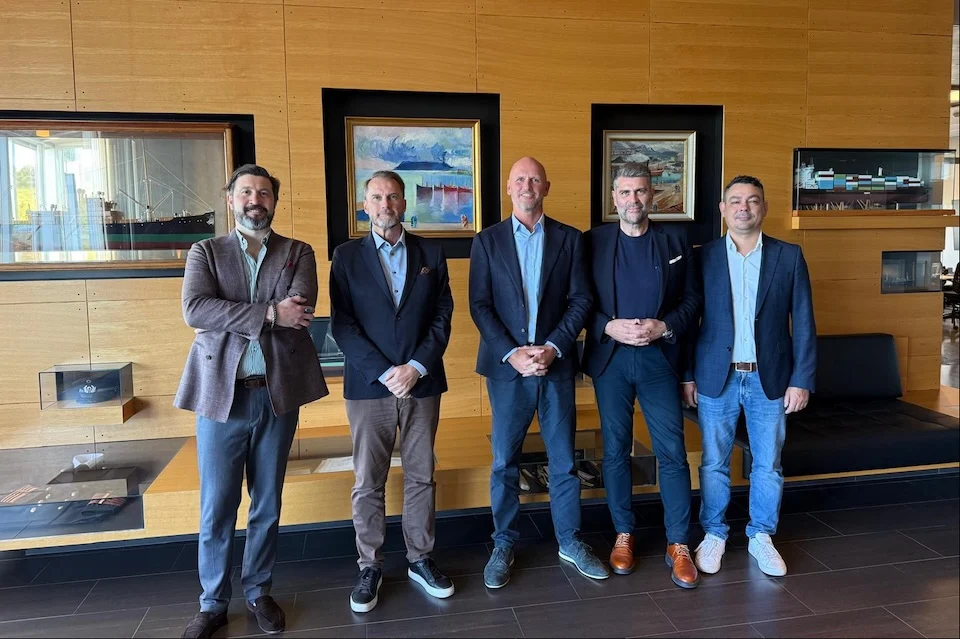
The global air cargo landscape is undergoing a subtle but significant transformation as specialized General Sales and Service Agents (GSSAs) look toward niche, high-potential markets to anchor their growth. In a landmark development for the North Atlantic logistics corridor, the Kales Group has announced its formal entry into the Icelandic market. This strategic expansion is executed through a collaborative partnership with TVG-Zimsen, one of Iceland’s most established forwarders and logistics service providers.
The move is not merely an administrative presence but a calculated effort to bridge the gap between Icelandic exporters—particularly those in the fresh seafood sector—and the burgeoning demand from the Chinese market.
The Core Partnership: Kales Group Meets TVG-Zimsen
The establishment of "Kales Iceland" marks a pivotal moment for regional airline representation. By integrating the Kales Group’s extensive international network and technical GSSA expertise with the deep-rooted local market knowledge of TVG-Zimsen, the new entity aims to standardize air cargo services in a region that has historically faced connectivity challenges.
The partnership operates on the philosophy of synergy. Kales Group brings the operational infrastructure, regulatory navigation, and carrier-relationship management necessary to handle complex, international air freight routes. Conversely, TVG-Zimsen provides the "on-the-ground" intelligence required to manage the unique demands of the Icelandic import-export ecosystem.
For the Kales Group, this is a strategic move to solidify its European footprint, while for TVG-Zimsen, the collaboration offers a direct conduit to global airline capacity that was previously difficult to access or manage without a specialized intermediary.
The Anchor Contract: Air China’s New Route
The formation of Kales Iceland is effectively anchored by a foundational contract with Air China. This agreement tasks Kales with providing comprehensive GSSA services across Iceland, encompassing both the commercial development of cargo business and the management of sales and administrative operations.
The timing of this launch is inextricably linked to Air China’s decision to inaugurate a new route connecting Beijing (PEK) to Keflavík (KEF) via Copenhagen (CPH). Commencing October 26, the service is scheduled to operate three times per week. The route will be serviced by Airbus A330-300 aircraft, a platform well-suited for a mix of passenger and belly-hold cargo capacity.
This route is anticipated to be a game-changer for the Icelandic trade balance. The ability to move goods from the North Atlantic to the heart of East Asia with limited transshipment time offers a competitive edge that few other routes can currently provide.
Chronology of Market Entry and Development
The roadmap to the launch of Kales Iceland reflects a methodical approach to market penetration:

- Early 2026 Strategic Planning: Kales Group identifies the North Atlantic and Nordic regions as key zones for expansion, citing an increase in demand for fresh, perishable goods moving from Iceland to Asia.
- Mid-2026 Negotiation Phase: Discussions intensify between Kales Group and TVG-Zimsen regarding a joint approach to servicing the Icelandic market. Concurrently, negotiations with Air China progress as the carrier finalizes its plans for the Beijing-Keflavík service.
- Late 2026 Formalization: The partnership agreement is signed, creating a dedicated entity, "Kales Iceland."
- October 2026 Operational Launch: The entity officially begins operations, coinciding with the launch of the Air China route on October 26.
This timeline underscores a rapid, high-impact entry strategy, moving from strategic planning to full operational capacity in less than a year.
Supporting Data: Why Iceland Matters
To understand the weight of this expansion, one must look at the specific requirements of the Icelandic economy. Iceland is a global leader in the export of fresh seafood—a highly time-sensitive commodity that requires cold-chain integrity and rapid transit.
The "freshness premium" associated with Icelandic fish means that every hour of ground time or circuitous routing directly impacts the product’s value. By providing a direct, scheduled connection via Beijing, the Kales/Air China partnership effectively reduces the lead time for exporters.
Furthermore, the import side of the equation is equally critical. Iceland is heavily dependent on the import of raw materials, consumer goods, and specialized electronics. The new route provides a reliable, high-capacity channel for these goods, reducing the reliance on sea freight or slower, multi-stop air connections. The use of the A330-300 is significant here; it offers the volumetric capacity necessary to handle both high-density export goods (seafood) and high-value, lower-density imports.
Official Perspectives: The Synergy of Knowledge
The leadership teams behind this venture have been clear about their objectives. Raffaele Manna, managing director of TVG-Zimsen, highlighted the cultural and operational alignment of the two firms.
"The establishment of Kales Iceland represents an exciting new chapter for airline representation in Iceland," Manna stated. "By combining TVG-Zimsen’s understanding of the Icelandic market with Kales’ international GSSA expertise and airline network, we are creating a strong foundation for airlines looking to develop their business in Iceland."
Sebastiaan Scholte, chief executive of Kales Group, reinforced this sentiment by focusing on the value proposition for the broader cargo community. "Our ambition is to build a professional, independent and commercially focused GSSA organisation that creates value for our airline principals and for the entire Icelandic cargo community," Scholte noted. He emphasized that the goal is not merely to facilitate flights, but to act as a catalyst for trade.
Implications for the Icelandic Cargo Community
The arrival of Kales Iceland is expected to have a ripple effect across the local logistics sector.
1. Increased Market Competition
The presence of a major, internationally backed GSSA will likely force a professionalization of local services. As Kales sets benchmarks for commercial development and operational support, other service providers in the region will likely need to refine their own offerings to remain competitive.

2. Enhanced Connectivity for Exporters
For the fishing industry, the new route offers a direct line to one of the world’s largest consumer markets. The ability to scale exports to China without the risks associated with third-party transshipment hubs is a significant boost for the Icelandic economy.
3. Strengthening of Diplomatic and Commercial Ties
As noted by Manna, the connectivity goes beyond the flight itself. Increased air freight capability strengthens the logistical backbone that supports diplomatic and commercial relationships. As Iceland and China continue to align on trade policies and cooperation, the role of reliable logistics partners becomes a matter of national economic importance.
4. A Template for Future GSSA Growth
If the Kales-TVG-Zimsen model proves successful, it may serve as a blueprint for how GSSAs enter other small but specialized markets. By partnering with local incumbents rather than competing with them, global players can leverage existing infrastructure, bypass the steep learning curve of local regulations, and establish a market presence with significantly lower risk.
Future Outlook: Sustainability and Scale
Looking ahead, the success of Kales Iceland will likely depend on its ability to sustain the load factors required by Air China. The air cargo industry is currently facing a period of volatility regarding fuel costs and geopolitical tensions, which can impact route profitability.
However, the specialized nature of the cargo (high-value perishables) provides a buffer. Unlike general cargo, which is highly price-sensitive, the seafood market is value-sensitive, prioritizing speed and quality over pure shipping cost. This dynamic makes the route more resilient to minor fluctuations in freight rates.
Furthermore, the scalability of the model allows Kales Iceland to potentially take on additional airline principals. As more carriers observe the success of the Air China route, Kales will be well-positioned to offer a comprehensive "one-stop shop" for international airlines seeking to serve the Icelandic market without the need for significant, direct local investment.
In conclusion, the entry of Kales Group into Iceland via the TVG-Zimsen partnership is a sophisticated strategic maneuver. It combines local intelligence with global reach at a time when the Icelandic economy is looking to deepen its trade relationships with East Asia. As the first flights touch down in late October, the industry will be watching closely to see how this new logistics conduit alters the competitive landscape of North Atlantic air freight. The move confirms that in the modern global economy, success is increasingly found in the intersection of specialized local expertise and broad-reaching international networks.

 Sagoh
 Ali Ikhwan

 Raul Delapena Setiawan

 Reynand Wu



 Azzam Bilal Chamdy

