
 Laily UPN
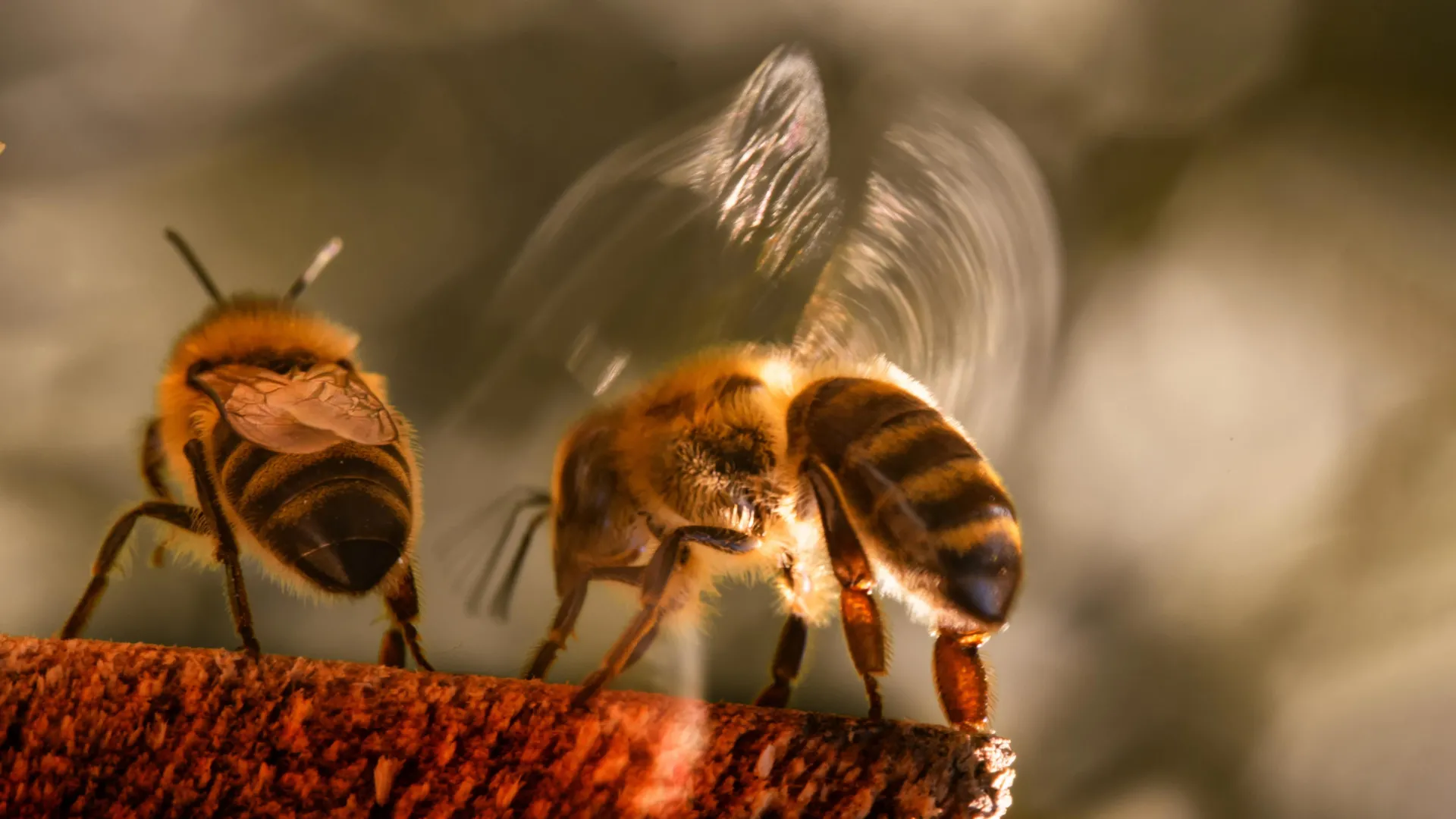
In the rolling meadows and manicured gardens of the United Kingdom, a silent, high-stakes battle for survival is unfolding. For years, the honey bee (Apis mellifera) has been heralded as the quintessential icon of ecological health—a vital worker essential to the pollination of our food crops and wildflowers. However, new research suggests that this beloved insect is far more than a passive gatherer of nectar. A groundbreaking study conducted by researchers at Anglia Ruskin University (ARU) has revealed that honey bees are increasingly acting as aggressive gatekeepers, using intimidation and physical displacement to secure food sources at the expense of native pollinators.
This study, published in the journal Ecological Entomology, provides the first comprehensive evidence of the extent to which managed honey bee colonies interfere with the foraging success of wild bumblebees, solitary bees, and hoverflies. As the number of managed hives continues to surge across Britain, scientists are warning that we may be witnessing a shift in the delicate ecological balance of our countryside.
The Geography of Conflict: A Two-Year Investigation
To understand the mechanics of this "floral turf war," the research team tracked pollinator activity over a two-year period across five distinct sites in and around Cambridge, England. Each site was strategically selected for its proximity to established honey bee colonies, situated within a 300-meter radius. This proximity ensured that the researchers were observing areas where the density of honey bees was high, reflecting a scenario increasingly common in urban and suburban landscapes.
The team focused their observations on two specific plant species: bramble (Rubus fruticosus) and ivy (Hedera helix). These plants serve as essential "fuel stations" for pollinators, offering rich, accessible supplies of nectar and pollen. Because both plants attract a wide diversity of insects during their flowering seasons, they provided an ideal laboratory for observing interspecies competition in real-time.
For 93 hours, researchers cataloged every interaction between insects, categorizing visitors into five distinct groups: honey bees, bumblebees, solitary bees, hoverflies, and a collective "other" category comprising beetles, butterflies, and wasps. Each interaction was meticulously documented as a "win," a "loss," or a "share," depending on whether an insect was successfully displaced from a flower or managed to feed alongside its peer.
Chronology of Findings: From Observation to Escalation
The results of the study paint a vivid picture of a landscape dominated by the honey bee. The data revealed a clear, inverse relationship: in locations where honey bee concentrations were highest, the diversity and abundance of other pollinators significantly declined.
On bramble flowers, the research showed a startling correlation: doubling the density of honey bees resulted in a 14% decrease in the presence of bumblebees. A similar trend was observed on ivy, where higher densities of honey bees were directly linked to a reduction in the number of solitary bees and hoverflies.
The Aggression Protocol
Perhaps most revealing was the nature of these interactions. The honey bees were not simply arriving at the flowers first; they were actively clearing the field. The researchers observed that in at least 20% of the encounters where a honey bee secured a flower, it did so by physically pushing aside or chasing off the incumbent insect.
In 28% of interactions on bramble and 36% on ivy, rival pollinators were seen actively avoiding honey bees before an encounter even turned physical. This suggests that the mere presence of honey bees creates a "landscape of fear," where smaller, less aggressive insects forfeit prime foraging sites to avoid conflict.
The Ivy Bee: A Rare Challenger
While the pattern of honey bee dominance remained consistent across the data, one notable exception emerged: the ivy bee (Colletes hederae). A solitary species not native to Britain—first recorded in the country in 2001—the ivy bee displayed a remarkable resilience. Unlike native bumblebees or hoverflies, which typically retreated, the ivy bee was the only pollinator observed actively challenging honey bees. In several instances, the ivy bee was seen defending its patch, successfully displacing honey bees and proving that, in the world of insect competition, some species are learning to stand their ground.
Data Breakdown: The Impact of Climate on Competition
The implications of this study extend beyond simple territorial disputes; they are deeply tied to the looming threat of climate change. The researchers noted that competitive encounters became significantly more frequent as temperatures rose. This suggests that the "war" for nectar is not static but is instead amplified by environmental stress.
The Heat Stress Factor
When plants experience heat stress, their ability to produce nectar is often compromised, leading to a diminished food supply. When resources become scarce, competition inevitably intensifies. However, the study points to a secondary, more complex issue: temperature-dependent activity cycles.
Bumblebees and hoverflies are historically sensitive to heat and perform their most effective foraging during cooler periods. Honey bees, by contrast, are invigorated by rising temperatures. Previous studies have shown that a 12°C increase in temperature can lead to a tenfold increase in the number of honey bees leaving their hives. As the UK experiences warmer, more erratic weather patterns, this gap in foraging capability is expected to widen, granting honey bees a near-permanent competitive advantage during peak summer heat.
Official Perspectives and the Beekeeping Boom
The release of these findings comes at a time when the popularity of beekeeping in the UK has reached an all-time high. Official figures indicate a massive surge in the number of registered beekeepers, rising from approximately 19,000 in 2010 to 47,000 by last year. This increase is largely driven by a public desire to help the environment, with many new keepers setting up hives in urban backyards and community gardens.
Victoria Buckle, the lead author of the study and a PhD student at ARU, is quick to temper the potential for alarm. "The aim of our study was not to discourage beekeeping," she asserts. "It is about understanding how competition happens between wild and managed species so we can develop better conservation strategies."
Buckle emphasizes that honey bees are a managed species, whereas wild pollinators like bumblebees and solitary bees are the true backbone of our ecosystem, providing essential pollination services for which they receive little recognition. "We found that most interactions when competing for food were instigated by honey bees," she notes. "Bumblebees, solitary bees, and hoverflies would avoid, be displaced by, and on some occasions be chased off by honey bees."
Implications: The Need for Managed Coexistence
The findings present a significant challenge for policymakers and conservationists. If we want to support honey bees without inadvertently driving our wild pollinators to the brink, we must rethink how we manage hive density.
Rethinking Urban Conservation
In densely populated urban areas, where floral resources may already be limited by concrete and pollution, the concentration of managed hives can create "nectar deserts" for wild species. Experts suggest that if the current trend continues, we may need to implement localized regulations or guidelines on the density of hives in specific areas to ensure that wild pollinators—which are often more efficient at pollinating native flora—are not entirely squeezed out of the ecosystem.
A Call for Diverse Forage
One of the most effective ways to mitigate this competition is through the diversification of floral landscapes. By planting a wider variety of nectar-rich flowers that bloom at different times, landowners and city planners can potentially reduce the "bottleneck" effect where multiple species are forced to compete for the same limited patches of bramble or ivy.
Ultimately, the study serves as a wake-up call that "saving the bees" is a more nuanced task than simply adding more hives to the landscape. While honey bees are a vital part of our agricultural system, they are not a substitute for the rich, diverse tapestry of wild insects that have evolved alongside the British landscape for millennia. Protecting these wild populations requires acknowledging the impact of our managed colonies and creating a habitat where every pollinator—from the aggressive honey bee to the resilient ivy bee—can find its place in the sun.
As the planet continues to warm, the race to understand these dynamics will only become more urgent. The research from Anglia Ruskin University acts as a foundational step toward a more sophisticated approach to conservation—one that prioritizes the health of the entire pollinator community, ensuring that the hum of the countryside remains as diverse as the flowers that support it.


 Raul Delapena Setiawan


 Reynand Wu

 Sagoh


 Azzam Bilal Chamdy

 Ali Ikhwan
