
 Siti Muinah

In a stark reminder of the widening chasm between security patching and public transparency, threat actors have spent the last month exploiting a critical Remote Code Execution (RCE) vulnerability within the "Collabora Online – Built-in CODE Server" app for Nextcloud. The vulnerability, officially cataloged as CVE-2026-110447, has become a focal point for cybercriminal activity, with reports emerging of webshell deployment, data exfiltration, and potential ransomware incursions.
The incident has ignited a heated debate regarding the efficiency of vulnerability disclosure pipelines. While patches were made available in mid-September, the formal CVE publication did not occur until October 14, leaving thousands of administrators in the dark during a period of active, weaponized exploitation.
The Technical Anatomy of the Breach
The vulnerability resides within the richdocumentscode app, specifically affecting versions prior to 26.4.303. The flaw is rooted in the application’s mechanism for initializing the bundled Collabora server. By sending a specially crafted malicious request to the proxy.php endpoint, an unauthenticated attacker can trigger an Operating System (OS) command injection.
Crucially, the exploit does not require user interaction or valid credentials. The primary prerequisite for a successful attack is that the built-in CODE server must be in a stopped state—a condition frequently triggered by routine system maintenance, such as server restarts, software upgrades, or unexpected crashes.
Once the attacker gains execution privileges, the consequences are severe. System administrators who have documented the intrusion on GitHub and community forums report that attackers are systematically planting PHP-based webshells. These backdoors provide persistent access to the underlying server environment, allowing threat actors to conduct reconnaissance and lateral movement. According to these reports, the primary objectives of the attackers have been the exfiltration of sensitive information, including password manager databases, locally stored credentials, and cryptocurrency wallet files. Some anecdotal reports from the field suggest that the vulnerability is also being leveraged by ransomware operators, though concrete evidence of encryption payloads remains under investigation.

A Chronology of Exploitation and Silence
The timeline of the CVE-2026-110447 incident underscores the danger of "silent" patching.
- September 9, 2026: The security fix for the vulnerability is officially committed by maintainers.
- September 11, 2026: Version 26.4.303 of the
richdocumentscodeapp is released, containing the silent fix. - September 10–15, 2026: Early reports of malicious activity begin appearing in administrative logs. Attackers identify the gap between the patch release and the lack of a public security advisory.
- October 3, 2026: Growing alarm in the community leads to an unofficial, urgent warning published on the Nextcloud help forums, imploring users to update their installations immediately.
- October 14, 2026: The formal security bulletin is published, and the vulnerability is officially registered as CVE-2026-110447.
This month-long delay created a "window of vulnerability" that attackers exploited with surgical precision. Because the fix was available but not explicitly tied to a security advisory, many administrators likely deferred the update, viewing it as a standard performance or feature patch rather than a critical security remediation.
The Broader Crisis: AI and the CVE Backlog
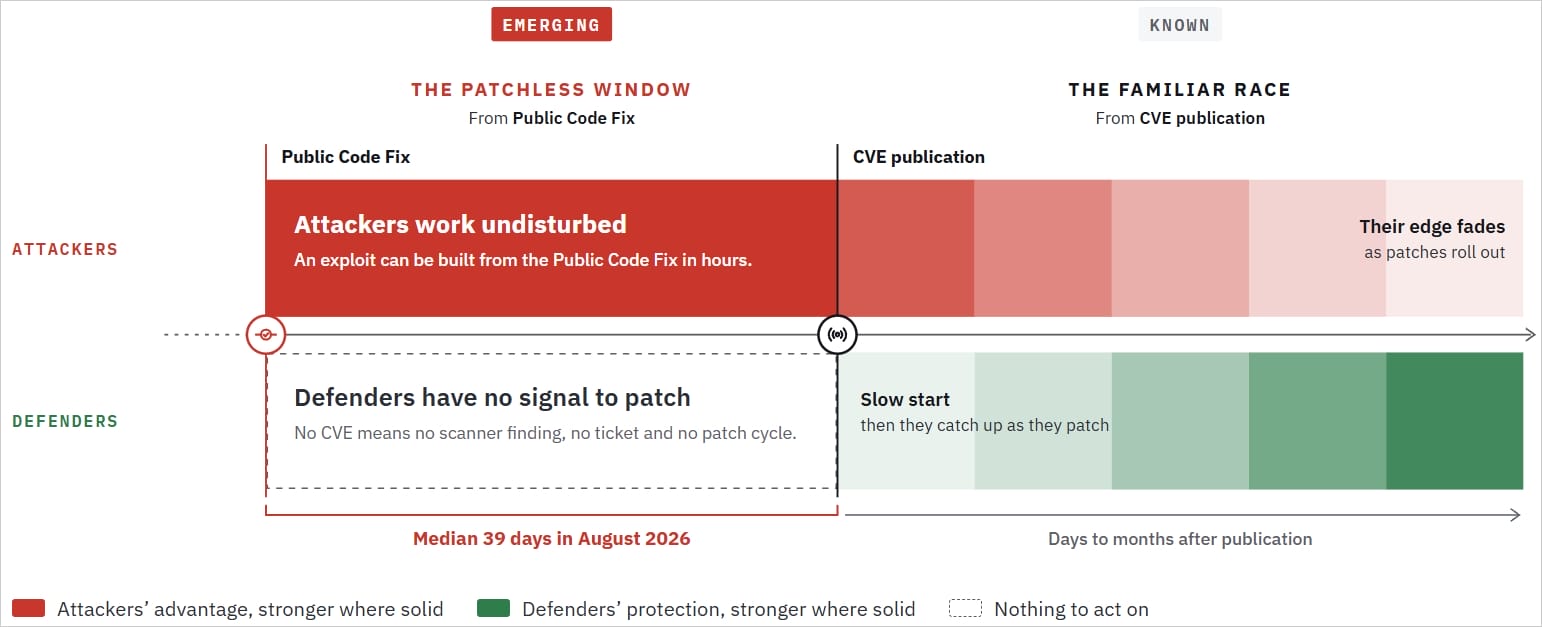
The delay in the formal publication of CVE-2026-110447 is not an isolated incident; it is a symptom of a systemic breakdown in the vulnerability disclosure ecosystem. Research conducted by the cybersecurity firm Second Security highlights an alarming trend: the time between the public availability of a security fix and the corresponding CVE registration is expanding rapidly.
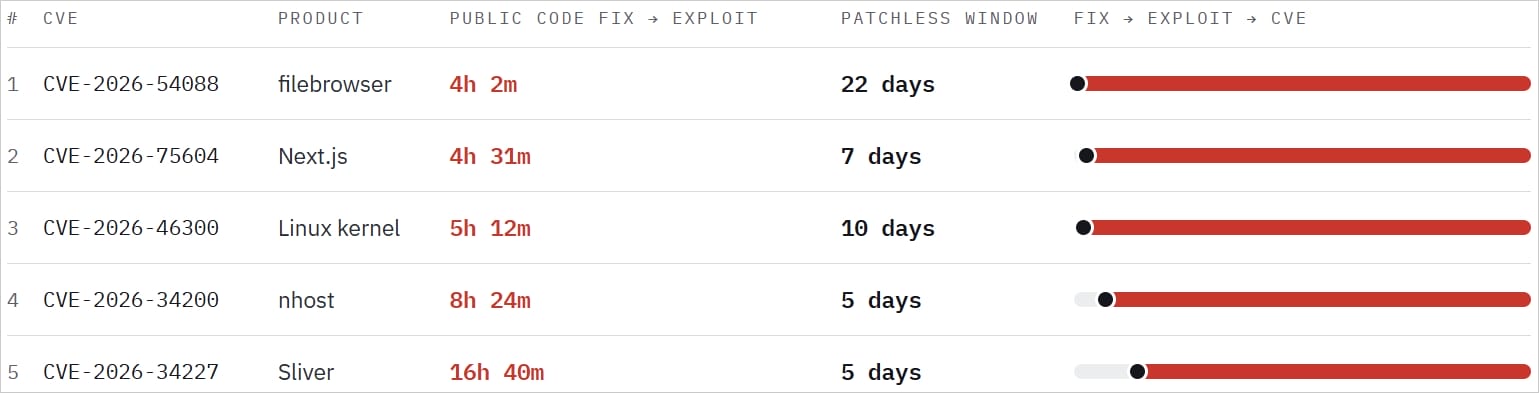
In January 2026, the median interval between a fix and a CVE publication was 5.1 days. By August 2026, that interval had ballooned to 39 days. Researchers point to the rise of AI-assisted vulnerability discovery as the primary culprit. As AI tools facilitate the rapid identification and reporting of flaws, the organizations responsible for processing CVEs are being overwhelmed by an unprecedented volume of requests.
This creates a dangerous environment for defenders. When a fix is committed to an open-source repository, it is often transparently visible. Threat actors use automated tools to monitor these repositories, reverse-engineer the "fix" to understand the vulnerability, and generate exploit code within hours—often weeks before the general public is notified via a CVE. The Second Security study demonstrates that public exploit code is frequently circulating online long before the official advisory is released, effectively turning the security community’s transparency against itself.
Official Responses and Remediation
Nextcloud and Collabora have faced scrutiny regarding the timing of their communication. In a blog post released shortly after the public disclosure, Collabora attributed the delay primarily to the GitHub CVE-processing backlog, noting that the entire infrastructure is currently under extreme pressure due to the explosion of AI-driven vulnerability reports.
Nextcloud, responding to inquiries, maintained that they had alerted users via the app store updates in mid-September. They argued that the delay was intended to provide administrators with a "grace period" to apply the updates before the nature of the vulnerability was made public knowledge, theoretically reducing the risk of mass exploitation. However, this strategy appears to have backfired, as the lack of a formal CVE ID prevented security teams from prioritizing the update in their internal risk-management workflows.
Remediation Steps for Administrators:
- Immediate Update: Ensure the
richdocumentscodeapp is updated to version 26.4.303 or later immediately. - Removal: If the built-in CODE server is not strictly required, it should be removed entirely. Simply disabling the app may be insufficient to mitigate the risk of the underlying command injection vulnerability.
- Forensic Audit: Given that exploitation has been occurring since mid-September, administrators are urged to audit their server logs for unauthorized access, the presence of unexpected PHP files, or unusual outbound network traffic consistent with data exfiltration.
Implications for the Future of Open Source Security
The incident involving CVE-2026-110447 serves as a cautionary tale for the open-source community. It highlights that in an era of AI-powered attacks, the traditional "patch-first, notify-later" approach to security is increasingly untenable.
When security fixes are deployed without immediate, clear communication, they do not protect users; they merely provide a map for sophisticated attackers. The reliance on centralized authorities like the CVE program—which are struggling to keep pace with the velocity of modern software development—needs to be re-evaluated.
Security leaders suggest that decentralized, faster notification systems or automated "security-first" update policies might be necessary to protect against the next generation of automated exploits. For now, the takeaway for the enterprise is clear: relying on official CVE alerts is no longer sufficient. Organizations must adopt a more proactive posture, monitoring repository commits and engaging with community-driven threat intelligence to stay ahead of the curve.
As we look toward the future, the integration of AI into both the offensive and defensive sides of cybersecurity will continue to accelerate. Whether this leads to a more secure landscape or a chaotic arms race depends largely on whether the industry can close the gap between when a vulnerability is fixed and when it is publicly understood. Until then, the burden of defense remains heavily skewed toward the end-user and the system administrator, who must navigate an increasingly complex and dangerous digital environment with limited information.


 Basiran
 Iffa Jayyana

 Raul Delapena Setiawan

 Reynand Wu

 Sagoh


 Azzam Bilal Chamdy

 Ali Ikhwan
