
 Nila Kartika Wati
By Olivia Rosane and Cristen Hemingway Jaynes
Methane is a silent, invisible, and odorless force that has become the defining challenge of our generation’s climate strategy. Found in the wetlands of the Arctic, the digestive tracts of livestock, and the aging pipelines beneath our city streets, this potent greenhouse gas is the second-largest driver of the global climate crisis, trailing only carbon dioxide (CO2). As the primary component of natural gas—a fuel source providing roughly 25 percent of the world’s electricity—methane is deeply embedded in the global economy. Yet, its unique chemical properties and its role in both natural and industrial processes make it the most critical lever for immediate climate intervention.
Quick Key Facts
- Atmospheric Impact: Methane is over 80 times more potent than CO2 at trapping heat over a 20-year period.
- Atmospheric Lifespan: Unlike CO2, which lingers for centuries, methane persists in the atmosphere for approximately 12 years.
- Current Levels: Atmospheric concentrations have surged 265% since pre-industrial times, reaching 1,934 parts per billion (ppb) by 2023.
- The 1.5°C Goal: The Intergovernmental Panel on Climate Change (IPCC) states that a 34% reduction in methane by 2030 is essential to meeting the Paris Agreement’s 1.5°C target.
- Primary Sources: Agriculture (40%), fossil fuels (35%), and waste management (20%) account for the vast majority of human-caused emissions.
What Is Methane?
Methane ($CH_4$) is a hydrocarbon composed of one carbon atom bonded to four hydrogen atoms. It is a dual-natured gas, generated by both biological and geological processes. Geologically, it is formed through the intense heat and pressure applied to organic matter over millions of years, creating the natural gas deposits we extract today. Biologically, it is produced via "methanogenesis," where archaea—microorganisms living in oxygen-free environments—break down organic matter. This occurs naturally in wetlands, termite mounds, and the digestive tracts of ruminant animals.

While methane is a natural part of the Earth’s carbon cycle, human activity has drastically accelerated its release, overwhelming the planet’s natural "sinks"—such as soil bacteria and the troposphere—that traditionally sequester or break down the gas.
A Chronology of the Methane Crisis
The history of atmospheric methane is a mirror of the industrial age.
- Pre-Industrial Era: Methane levels remained relatively stable for millennia, regulated by natural feedback loops in wetlands and forests.
- The Industrial Revolution: The rapid expansion of coal mining and early fossil fuel extraction began a steady, upward trajectory in atmospheric methane concentrations.
- The 20th Century: The rise of industrial-scale livestock farming and massive landfill expansion added a biological surge to the industrial baseline.
- 2016–Present: Following the lifting of a ban on liquefied natural gas (LNG) exports in the U.S., a global "gas rush" has led to a massive expansion of fracking and export infrastructure.
- 2021: The launch of the Global Methane Pledge at COP26 marked the first major international attempt to unify 150+ nations toward a 30% reduction by 2030.
- 2023–2025: Despite pledges, global methane emissions hit new record highs, driven by a combination of fossil fuel super-emitters and the "wetland methane feedback," where rising temperatures cause thawing Arctic permafrost to release trapped stores of the gas.
Supporting Data: The "Super-Emitter" Problem
Modern satellite technology has revolutionized our understanding of methane, shifting us from "bottom-up" estimation (calculating emissions based on industry reports) to "top-down" reality checks.

Studies show that standard industry reports often underestimate emissions by as much as 60%. The reason lies in "super-emitters"—the top 5% of leaks responsible for over 50% of total gas-industry leakage. In 2022 alone, satellites detected over 1,005 massive, human-caused emission incidents, including sites in Turkmenistan releasing 427 metric tons per hour—the equivalent of the hourly emissions of an entire country like France.
Furthermore, the "bridge fuel" narrative—the claim that natural gas is a cleaner alternative to coal—is increasingly under fire. While burning gas emits less CO2 than coal, the high rate of methane leakage throughout the supply chain means that LNG can actually have a 33% greater global warming potential over a 20-year period than coal.
Official Responses and Policy Gaps
The Global Methane Pledge, signed by 159 nations, represents a significant diplomatic step. However, a massive "implementation gap" persists. As of 2023, only 13% of all methane emissions were covered by formal emissions-reduction policies.

The International Energy Agency (IEA) has explicitly stated that 70% of oil and gas methane emissions could be eliminated using existing technologies, with 40% of those reductions achievable at no net cost to companies. Despite this, fossil fuel emissions have continued to rise since 2020. The lack of accountability for multinational energy corporations remains the primary barrier to meeting the goals outlined by the IPCC.
Implications: The Climate Tipping Points
The implications of unchecked methane emissions are twofold: immediate global heating and dangerous positive feedback loops.
The Feedback Loop Danger
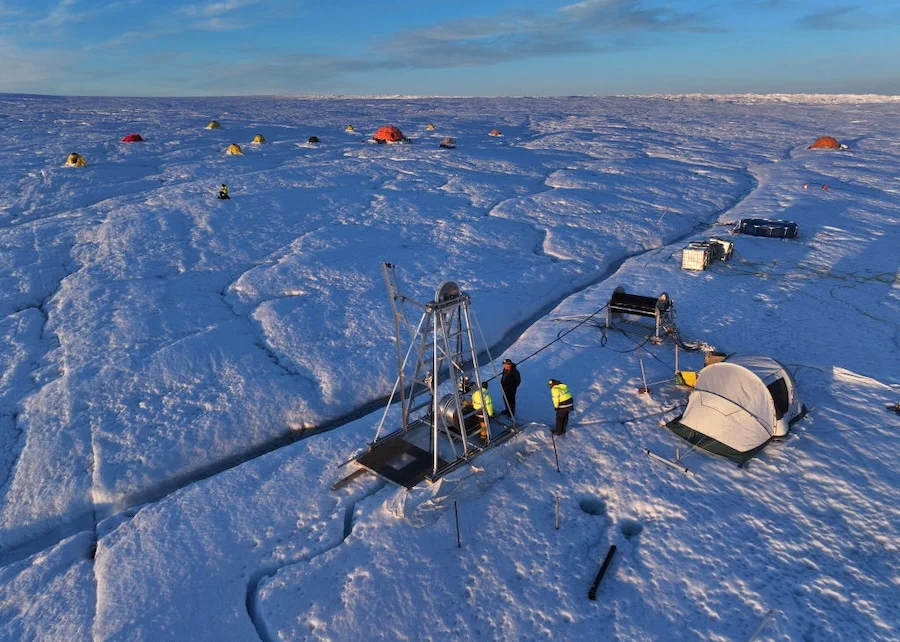
A positive feedback loop occurs when warming triggers more warming. The most alarming is the Arctic permafrost. As temperatures rise, the frozen ground thaws, awakening microbes that release methane. Because the Arctic contains 2.5 times more carbon underground than is currently in the atmosphere, this represents a potential "methane bomb." Furthermore, increasing wildfire frequency—driven by heat—releases vast amounts of trapped methane, which in turn fuels more heat, creating a self-perpetuating cycle of destruction.

Public Health Consequences
Methane is a precursor to ground-level ozone, a potent respiratory irritant. Ozone formation is responsible for approximately half a million premature deaths annually. Every million metric tons of methane prevented saves thousands of lives from cardiovascular and respiratory failure and protects vital food crops like wheat and soy from ozone damage.
Strategies for Transformation
Solving the methane crisis requires a multi-pronged approach that targets the three major human sources: agriculture, fossil fuels, and waste.
1. Reimagining Agriculture
Agriculture accounts for 40% of human-caused methane. Strategies include:

- Dietary Shifts: Reducing global meat and dairy consumption, particularly in wealthier nations, remains the most effective long-term strategy.
- Feed Additives: Incorporating seaweed supplements into cattle feed has shown potential to reduce methane emissions from ruminants by up to 82%.
- Rice Cultivation: Implementing "Alternative Wetting and Drying" in rice paddies can cut emissions by 40–45% compared to constant flooding.
2. Fossil Fuel Phase-Out
The most effective way to address fossil fuel methane is to stop the expansion of LNG infrastructure. For existing operations, the focus must be on:
- Mandatory Leak Detection: Requiring real-time, satellite-monitored leak detection and repair.
- Capping Abandoned Wells: Millions of abandoned wells leak methane; federal programs to plug these represent low-hanging fruit for emissions reduction.
3. Waste Management
The world must move toward a circular, zero-waste economy. In the interim, capturing biogas from landfills and upgrading wastewater treatment facilities to include secondary and tertiary processes are essential technical fixes.
Conclusion: An Opportunity for Urgent Action
Methane is both our greatest threat and our most strategic opportunity. Because it is short-lived, it is the only greenhouse gas where aggressive, immediate action can produce a noticeable "cooling" effect within our lifetimes.

While the systemic reliance on fossil fuels and industrial agriculture is deep-rooted, the path forward is clear. Whether through individual action—such as switching to induction stoves or reducing food waste—or through collective political pressure to halt the LNG buildout, the momentum to curb methane is building. We have the data, the technology, and the mandate. The only remaining variable is the political will to act before the planet crosses the threshold of irreversible change. As the Global Methane Assessment concluded, curbing methane is the single most powerful tool we possess to decrease global warming over the next two decades. The time to act is not in 2030; it is today.


 Raul Delapena Setiawan

 Laily UPN

 Reynand Wu

 Sagoh


 Azzam Bilal Chamdy

 Ali Ikhwan
