
 Reynand Wu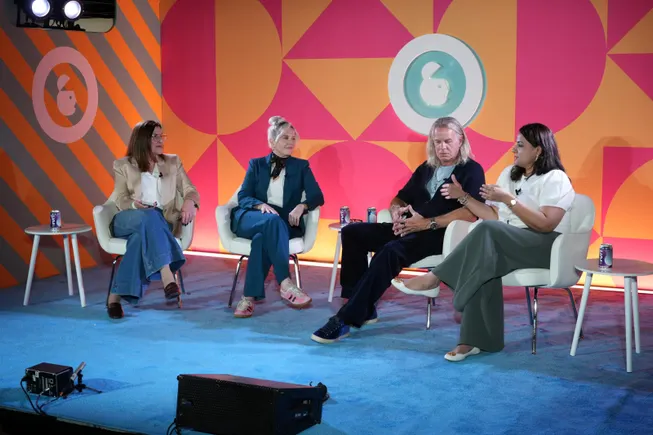
NEW YORK — As the advertising industry gathered at Advertising Week New York, a singular theme dominated the corridors and conference stages: the rise of Generation Alpha. As this cohort—comprising those born roughly between 2010 and 2025—moves from infancy into their formative tween and teen years, they are no longer just a demographic to watch for the future. They are active, influential participants in today’s global economy.
With approximately 2 billion members globally, Gen Alpha represents a monumental shift in how brands must conceptualize consumer engagement. Forecasts suggest this demographic could command a staggering $5.46 trillion in economic impact by 2029. As marketers look to refine their strategies, it has become clear that traditional demographic segmentation is insufficient. To reach this generation, brands must navigate a complex ecosystem of artificial intelligence, influencer-led content, and a reimagined definition of "household authority."
The Household CMO: Redefining Influence
For decades, the standard marketing playbook for younger generations was simple: target the parents, as they held the purse strings and made the purchasing decisions. However, the rise of Gen Alpha has dismantled this hierarchy.
Industry data from firms like DKC underscores a paradigm shift: Gen Alpha already commands over $100 billion in direct spending power and exerts influence over 42% of all household purchases. This has led many experts to label them the "household CMOs."
"I think Gen Alpha have been deemed the household CMO because they have so much influence," said Emma Witkowski, vice president of media solutions at WildBrain, during an Advertising Week panel. "For brands that are thinking, ‘Oh, we’ll think about Gen Alpha in 10 years’ time or when they’re teenagers,’ you’re missing the opportunity, which I really see as both short-term and long-term."
This transition means that brands must stop viewing Gen Alpha as a "long-game" project. Their input on everything from grocery shopping to tech upgrades is immediate and profound, requiring marketers to craft messaging that appeals to the child as much as the parent.
Navigating the Identity Paradox in an AI-Driven Era
Gen Alpha is the first generation to grow up in a world where AI is an invisible, ever-present layer of their daily existence. Research from GWI and the agency Razorfish indicates that over 20% of Gen Alpha consumers interact with AI on a daily basis. Yet, there is a significant tension between their high adoption rates and their desire for personal agency.
"What we’re finding is that Gen Alpha and Gen Z do not want to be labeled the ‘AI generation,’" noted Donna Tuttle, vice president of marketing and communications at Whataburger. "They’re irritated by that because they don’t feel like we’re giving them their individuality."
The Human-Centric Counter-Movement
As AI begins to synthesize more consumer preferences, Gen Alpha is increasingly seeking "human" touchpoints. They value authenticity and community connection—elements that AI struggles to replicate organically.
Tuttle pointed to a successful strategy employed by Whataburger: a social media "Museum of Art" hub dedicated to showcasing fan-generated art and projects. By fostering these community connections, brands create content that is not only emotionally resonant but also "crawlable" by AI models. "AI is crawling for anything that’s human," Tuttle explained. "They’re looking for those stories; they’re looking for those authentic things that already live out there."
For brands, the implication is clear: if you want to be recommended by an AI assistant or a chatbot, you must first build a library of genuine human stories and community-driven content.
The Double-Blind Strategy: Marketing to Humans and Machines
As digital discovery evolves, marketers are facing a dual challenge. They must create content that engages a young, savvy human audience while simultaneously optimizing that content to be prioritized by the algorithms powering the next generation of search.
Channan Sawhney, associate vice president of digital, media and measurement at Church & Dwight, emphasized the necessity of a "dual-track" marketing approach. "At least in my mind, it has almost come to a point where you’re marketing to humans and then you’re marketing to machines," Sawhney said. "Visibility becomes really critical. How do you convince the invisible layer to let you go through to who’s on the other side?"
The Role of the Influencer as an Algorithm Bridge
The most effective bridge between the human consumer and the AI layer is, paradoxically, the human influencer. Because Gen Alpha discovery often happens through creators on platforms like Roblox and YouTube, influencers are now the primary drivers of data that feeds the algorithms.
"This generation, Gen Alpha specifically, is so influencer-first," said Sawhney. "Imagine the scale that an influencer today has because it’s influencing the Gen Alpha consumer, but it’s also influencing the AI, which is influencing consumers more generally."
Marketers must move beyond a "one-size-fits-all" approach to platform optimization. Success requires understanding the nuances of different models—optimizing for Walmart’s "Sparky" interface, for instance, requires a different strategy than optimizing for Amazon’s Alexa.
Avoiding "Trend-Rot": The Move Toward Sustainable IP
A recurring warning at Advertising Week was the danger of "trend-hopping." When brands attempt to adopt Gen Alpha slang or memes—like the brief, chaotic rise of the "Six-seven" meme—without authentic context, the result is often alienation. Such tactics provide no long-term brand equity and are frequently viewed as "cringe-worthy" by the very audience they intend to woo.
Instead, industry experts are advocating for investment in high-quality, long-term Intellectual Property (IP). As traditional bastions of children’s media like Cartoon Network fade from their former prominence, a void has opened for high-quality storytelling.
"There’s a tremendous opportunity to go license some of this really credible IP and maybe work with some creative voices that have permission that your brand does not," suggested Bryce Adams, U.S. influencer lead at WPP Media’s The Goat Agency. "As a brand, you may not have a studio to shoot the content, but you have the budget, consumer data, and a POV on where you want to be."
This shift toward supporting "microdramas"—high-quality, short-form, vertical video series—allows brands to build lasting relationships with consumers, rather than chasing ephemeral trends that vanish in a week.
The Undervalued Power of Co-Viewing
Perhaps the most overlooked opportunity in the modern landscape is the "co-viewing" occasion. While linear TV ratings have declined, the act of families watching content together has not disappeared; it has simply moved to YouTube and various streaming platforms.
"I talk about co-viewing as the most undervalued audience segment in advertising right now," said WildBrain’s Witkowski. "That audience isn’t on traditional TV anymore. It’s on YouTube, it’s on streaming platforms, and it’s still very much alive, but advertisers seem to have forgotten about it."
Closing the Measurement Gap
The primary obstacle to capturing this audience is the lack of standardized measurement. Digital environments are highly fragmented, and strict privacy regulations regarding children’s data have made tracking difficult.
To combat this, industry leaders like WildBrain have joined taskforces with groups like the Coalition for Innovative Media Measurement (CIMM) to develop new, ethical ways to measure co-viewing. The goal is to move away from the "empty calories" of low-quality "brain rot" content and toward opt-in, high-value environments where parents and children can safely consume premium content.
Conclusion: The Path Forward
For brands, the era of Gen Alpha requires a fundamental restructuring of the marketing department. It is no longer enough to run a campaign that ignores the algorithmic realities of AI, nor is it sustainable to rely on outdated metrics from the linear TV era.
The future belongs to brands that can operate at the intersection of three pillars:
- Human-First Authenticity: Prioritizing community-led content that appeals to the emotional needs of Gen Alpha and provides "human" data points for AI to ingest.
- Algorithmic Fluency: Understanding the specific search behaviors of various AI interfaces and using creators as the primary vehicle for discovery.
- Strategic Investment: Moving away from fleeting meme-chasing and toward the development or licensing of sustainable, high-quality IP that provides real value to the viewer.
As the $5.46 trillion opportunity approaches, the brands that succeed will be those that treat Gen Alpha not as a child to be entertained, but as a sophisticated, influential, and human-centric partner in the future of the economy.


 Layla Zulfa
 Asep Darmawan
 Nana
Nana
 Nila Kartika Wati
 Neng Nana
 Sagoh
Sagoh