
 Ali Ikhwan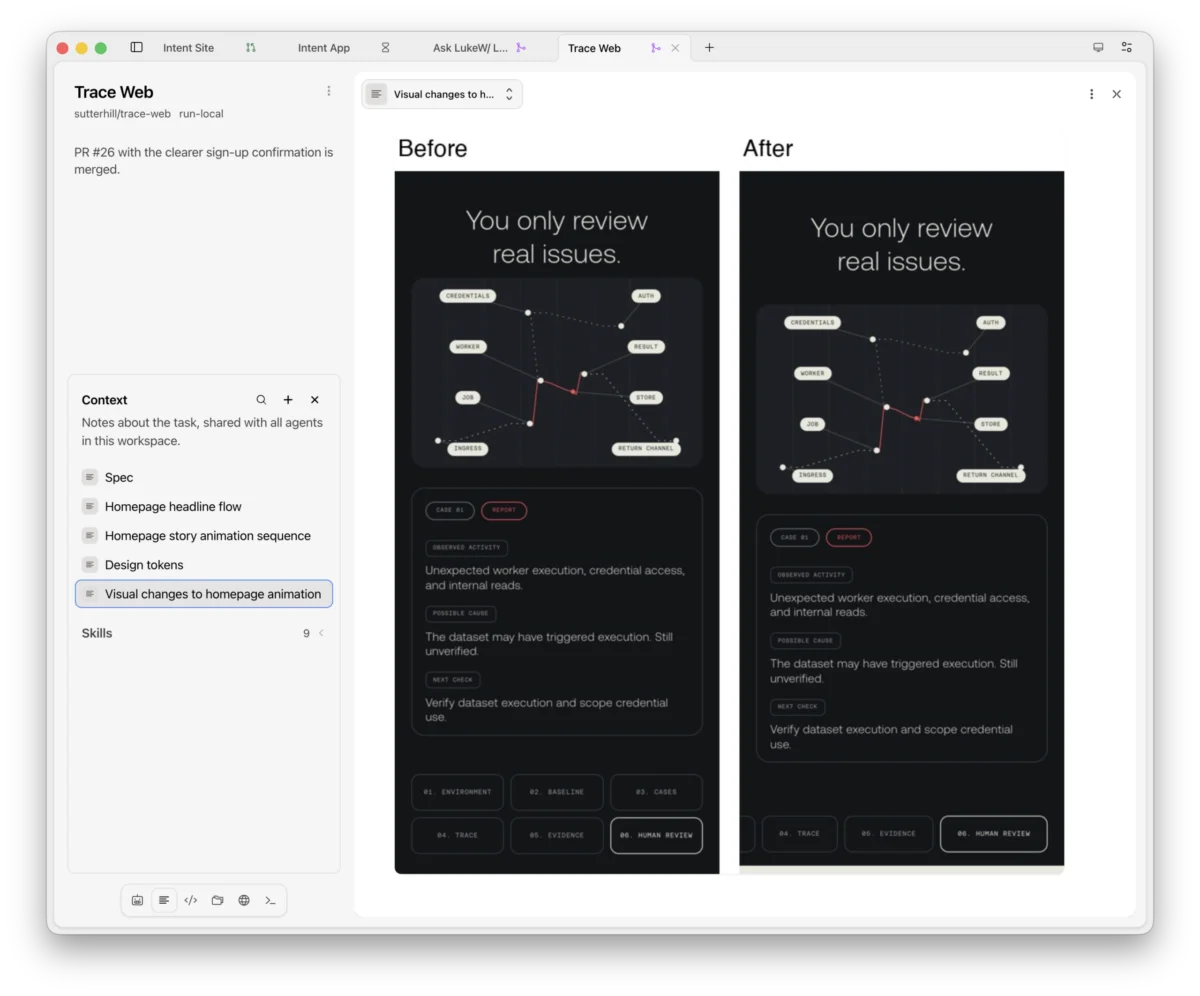
In the rapidly evolving landscape of artificial intelligence, we have moved past the era of the solitary chatbot. Today’s software ecosystem is defined by a cascading hierarchy of intelligence: humans manage primary agents, who in turn manage sub-agents, who delegate tasks to further specialized agents. This recursive architecture, while powerful, has introduced a significant bottleneck—the traditional chat interface.
As agent-driven workflows scale in complexity, linear text threads are proving insufficient for human oversight. When an autonomous system is tasked with a multi-layered project, developers and project managers are left struggling to decipher the "black box" of agent reasoning. The pressing challenge of the modern AI era is no longer just building agents; it is visualizing their intent, auditing their history, and steering their trajectory.
The Fallacy of the Traditional Dashboard
When organizations first began integrating AI agents into their workflows, the industry instinctively leaned on legacy management patterns. Developers and product managers reached for familiar tools: Slack-like inboxes, Kanban boards, task lists, and monitoring dashboards. These tools were designed for human-to-human coordination, and they excel at answering a singular, binary question: "What are my agents doing right now?"
However, this "management view" perspective is fundamentally misaligned with the reality of agentic software. While dashboards provide a pulse, they lack the granularity required to understand the why behind an agent’s actions. As explored in recent analyses of agent management interface patterns, relying on a static, unified dashboard creates a "context vacuum." You may see that an agent is active, but you remain blind to the architectural assumptions it is making or the long-term strategic risks it is introducing.
A New Philosophy: Intent-Driven Coordination
Recognizing the limitations of the chat-centric model, a new category of tools has emerged, with the coordination platform Intent leading the charge. The core philosophy behind Intent is that "management" is not a singular view, but a series of dynamic, context-specific perspectives.
Rather than forcing users into a rigid UI, Intent allows for the creation of "notes"—dynamic documents that act as workspaces. These are not merely text files; they are living environments where agents and humans collaborate. By moving beyond the chat thread, users can curate the specific visual information they need to steer complex operations.
Architectural Visualization: Seeing the Plan Before the Spend
One of the most significant risks in agent-driven development is the unintentional consumption of computational tokens on flawed logic. To mitigate this, Intent allows agents to generate architectural artifacts in real-time.
Agents can programmatically render:

- Sequence Diagrams: Mapping the flow of operations across multiple systems.
- State Machines: Defining the logic gates that dictate system transitions.
- Flowcharts: Providing a top-down view of task dependencies.
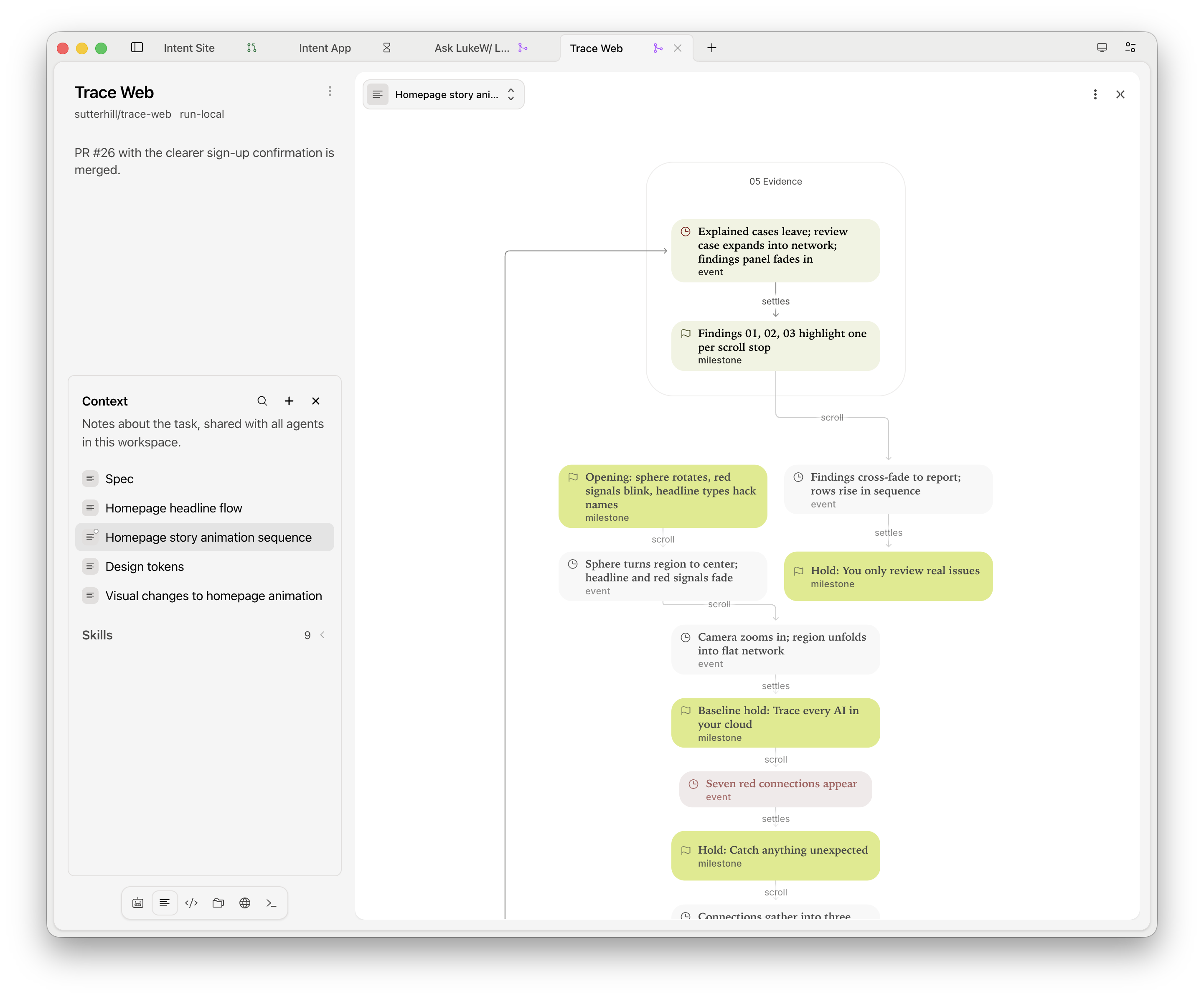
By forcing an agent to "draw" its plan before executing, the human operator gains a crucial opportunity for intervention. It shifts the dynamic from reactive debugging—fixing a mess after the fact—to proactive steering. If the agent’s logic is flawed, the developer can correct the diagram, effectively retraining the agent’s path before the first API call is made.
Stepped Walk-throughs: Democratizing Complexity
Even with visual documentation, complex agent plans can be difficult to parse. Intent addresses this through "stepped walk-throughs." These interactive, sequential views break down a complex plan into digestible stages. Each step provides a concise explanation, highlights relevant code or system components, and allows for deep-linking into specific files.
This modular approach ensures that even as systems grow in complexity, the human supervisor maintains a clear understanding of the "current state of things." By providing this granular control, developers can audit the agent’s progress at any stage of the lifecycle, ensuring that the final output aligns with the original vision.
The Evolution of Visual Review and Quality Control
Historically, software quality assurance has been a text-heavy process—reviewing pull requests, scanning diffs, and checking logs. In an agent-powered environment, this becomes unsustainable.

Intent introduces "Visual Reviews," a system where agents capture before-and-after screenshots of UI changes. These visual assets are embedded directly into the workspace, allowing for an immediate "at-a-glance" judgment of quality. This eliminates the need to manually compile or render code to see if an agent’s CSS changes had the desired effect. Because these screenshots act as a persistent historical record, they also provide an audit trail that makes regression testing significantly faster.
The Design System as a Shared Reality
Misalignment between AI agents and human design standards is a common source of technical debt. When an agent creates a component without full awareness of the design system, it often introduces inconsistencies—the "off-by-one-pixel" problem that plagues modern software.
Intent solves this by treating the design system as a living note. By placing colors, typography, spacing variables, and component variants in a shared space accessible by both humans and agents, the system acts as a "source of truth." When an agent works on a UI task, it references these constants, ensuring its output adheres to the brand identity from the first iteration.
The Workspace as an Operating System
The effectiveness of these views is entirely dependent on the user’s ability to arrange them. Intent treats the workspace as a fluid, modular environment. Every panel can house a unique combination of:

- Active Agents: To monitor ongoing tasks.
- Notes: For documentation and visual planning.
- Terminals and Browser Tabs: For immediate, hands-on interaction.
The ability to drag, split, and zoom panels provides a level of cognitive relief. Instead of toggling between a browser, a code editor, and a chat app, the user can construct a bespoke control center that focuses specifically on the current project requirements. This spatial organization is not just an aesthetic choice—it is a functional necessity for managing high-scale, multi-agent systems.
Implications for the Future of Software Development
The shift toward these advanced coordination interfaces carries significant implications for the future of the software industry:
- From Coding to Steering: As agents take on more of the "heavy lifting" of writing code, the developer’s role is shifting toward that of a creative director or orchestrator. The ability to "steer" agents through visual interfaces will become a primary skill.
- Increased Computational Efficiency: By visualizing agent intent early, organizations will see a marked decrease in wasted compute tokens, as humans catch logic errors before they are enacted.
- Cross-Disciplinary Collaboration: With shared, visual workspaces, designers, product managers, and developers can work within the same agent-driven loop, reducing the friction typically associated with cross-functional hand-offs.
Conclusion
The chat interface will likely remain a staple for the initial stages of human-agent interaction—it is, after all, the most natural way to initiate a task. However, as agents move from simple request-response loops to long-running, multi-layered coordination, the chat window can no longer be the sole interface.
We are entering an era of "spatial software management," where the tools we use to build software must be as intelligent and dynamic as the agents we are building. By embracing multi-modal, visual, and configurable workspaces, we can regain the control necessary to steer these complex systems toward our desired outcomes, ensuring that as our agent workforce grows, our ability to manage them grows in lockstep.

 Nana Muazin
 Layla Zulfa

 Nana
Nana
 Pevita Pearce
 Rifan Muazin

 Iffa Jayyana