
 Asep Darmawan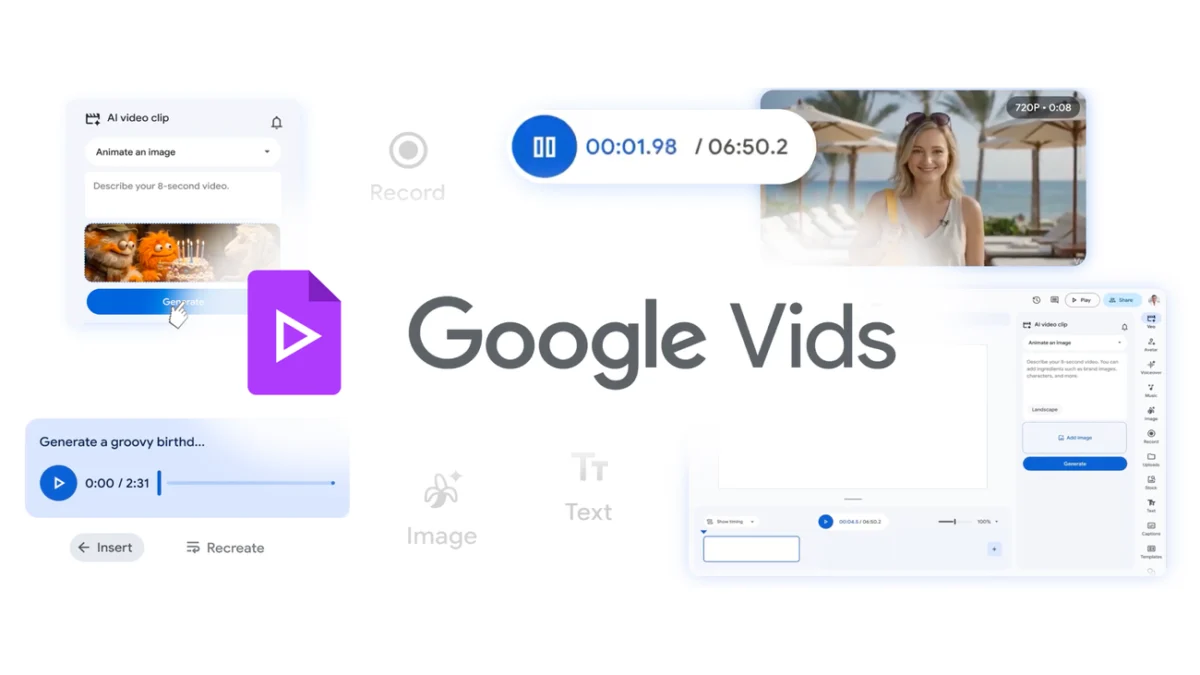
In an era where video content has become the primary language of the internet, Google is significantly lowering the barrier to entry for creators, small business owners, and casual users alike. With the latest update to Google Vids, the company is integrating its most sophisticated generative AI models—Veo 3.1 and Lyria 3—to transform how videos are conceived, scored, and produced.
By offering high-quality video generation, custom music synthesis, and directable AI avatars at no cost, Google is positioning Vids not just as an editing tool, but as a comprehensive production studio accessible directly through the web browser.
Main Facts: The New AI-Powered Production Suite
The update marks a pivotal shift in Google’s workspace strategy. By folding advanced AI capabilities into an intuitive interface, Google aims to democratize professional-grade video production.
Key Capabilities Now Available:
- Veo 3.1 Video Generation: Users can now generate high-quality, cinematic video clips from text prompts or static images. Google is offering 10 free generations per month for all personal accounts.
- Lyria 3 Music Composition: For those needing a unique auditory identity for their projects, the new Lyria 3 and Lyria 3 Pro models can generate custom soundtracks ranging from 30 seconds to three minutes, perfectly tailored to the "vibe" of the content.
- Directable AI Avatars: Leveraging the visual fidelity of Veo 3.1, users can now deploy consistent AI avatars. These avatars are fully directable, allowing creators to define appearance and behavior, effectively eliminating the need for expensive studio shoots or multiple takes.
- Scale for Professionals: For power users, Google AI Ultra and Workspace AI Ultra subscribers now have access to a significantly expanded quota, allowing for up to 1,000 Veo-generated videos per month.
A Chronology of Innovation: From Editing Tool to AI Studio
The evolution of Google Vids reflects a broader industry trend toward "generative-first" workflows.
- Early Development: Originally conceived as a collaborative video workspace, Google Vids focused on asynchronous team editing and presentation-style video creation.
- The Integration of Generative AI: Recognizing that the "blank canvas" is the biggest hurdle for creators, Google began integrating its Gemini-powered research into the platform.
- The Veo and Lyria Era: The integration of Veo 3.1—a model optimized for high-fidelity temporal consistency—and Lyria 3—a breakthrough in generative audio—marks the transition from a traditional editor to a generative engine.
- Current Deployment: This week’s rollout signifies the first time these high-tier models have been made broadly available to the general public at no cost, setting a new benchmark for accessible creative software.
Supporting Data: Understanding the Impact of Generative Media
The transition to AI-assisted video creation is backed by substantial engineering milestones. Google’s commitment to providing 10 free video generations per month is a strategic move to encourage user adoption and data-driven learning.
Scaling Production
For enterprise and power users, the jump to 1,000 videos per month via the "Ultra" tier represents a move toward full-scale industrial application. This volume is sufficient to support:
- Small Business Marketing: A company can now generate a daily social media ad or a series of promotional clips for an entire month without needing an external production crew.
- Education and Training: Educators can produce hundreds of minutes of personalized, avatar-led instructional content, which was previously a logistical impossibility for individual teachers.
The reliance on the Lyria 3 model for audio generation is equally significant. Unlike generic stock music libraries, which often suffer from "license fatigue," Lyria 3 generates original audio, ensuring that the creator’s content is not only unique but also free from the complexities of copyright strikes.
Official Perspective: The Vision for Google Vids
David Nachum, Group Product Manager for Google Vids, emphasizes that the platform is designed to handle the heavy lifting so users can focus on storytelling.
"Our goal is to remove the friction between a creative idea and the final product," says Nachum. "Whether you are a creator putting together a montage for a friend or a professional building a high-stakes business presentation, the integration of Veo 3.1 and Lyria 3 provides a level of quality that was previously locked behind expensive, industry-specific software."

The emphasis on "directable" avatars is a direct response to user feedback regarding consistency. In traditional video editing, maintaining a consistent presenter across different clips is difficult. By using generative AI to create a persistent, controllable character, Google is solving the "continuity problem" that plagues independent video production.
Implications for the Creative Economy
The release of these tools carries profound implications for the future of digital content creation.
1. The Death of the "Stock Asset"
As generative tools become more capable, the reliance on pre-made stock video and generic background music will likely diminish. When a user can prompt "a high-energy, upbeat acoustic track for a vacation montage" and receive an original, copyright-free file, the utility of stock libraries is challenged.
2. Democratization of High-End Production
Historically, high-quality video production required significant capital investment in hardware, software, and human expertise. By moving these capabilities into a web browser, Google is leveling the playing field. A student in a remote classroom and a marketing executive in a high-rise now have access to the same fundamental AI engine.
3. The New "Directorial" Role
The shift toward AI avatars and generative video suggests that the role of the creator is changing. The "video editor" of the future is less of a technician who spends hours scrubbing a timeline and more of a "director" who curates prompts, directs AI behavior, and manages the narrative flow.
4. Ethical and Practical Considerations
With such power, however, comes responsibility. Google’s implementation of these tools is strictly managed within the Vids ecosystem, which provides a layer of safety and provenance. As deepfake technology becomes more accessible, platforms like Vids that provide built-in, authenticated tools for content creation are becoming essential for maintaining trust in digital media.
How to Get Started
For those looking to explore these new features, the barrier to entry is intentionally low. By visiting vids.new, users are greeted with an interface that guides them through the creation process.
- Prompting: Start by describing your vision. The more specific the prompt, the better the AI can align with your creative intent.
- Iterating: Use the new "Directable" tools to refine the behavior of your AI assets.
- Scoring: Navigate to the music generation tab to generate a custom score that sets the tempo for your edits.
- Publishing: With the new browser-native sharing tools, the final export can be pushed directly to social channels or shared via Google Drive with collaborators.
As Google continues to iterate on the Veo and Lyria models, the gap between what is imagined and what can be produced is closing. Whether this leads to a new golden age of independent cinema or simply makes our internal team presentations more engaging, one thing is certain: the era of the AI-powered studio has arrived.
For those ready to dive in, the tools are ready. The only remaining variable is your imagination. Visit vids.new to begin your project today.

 Ammar Sabilarrohman
 Sagoh
Sagoh
 Nana Wu
 Asro
Asro
 Jia Lissa
 Neng Nana
 Dwi Wanna
 Siti Muinah