
 Sagoh
Sagoh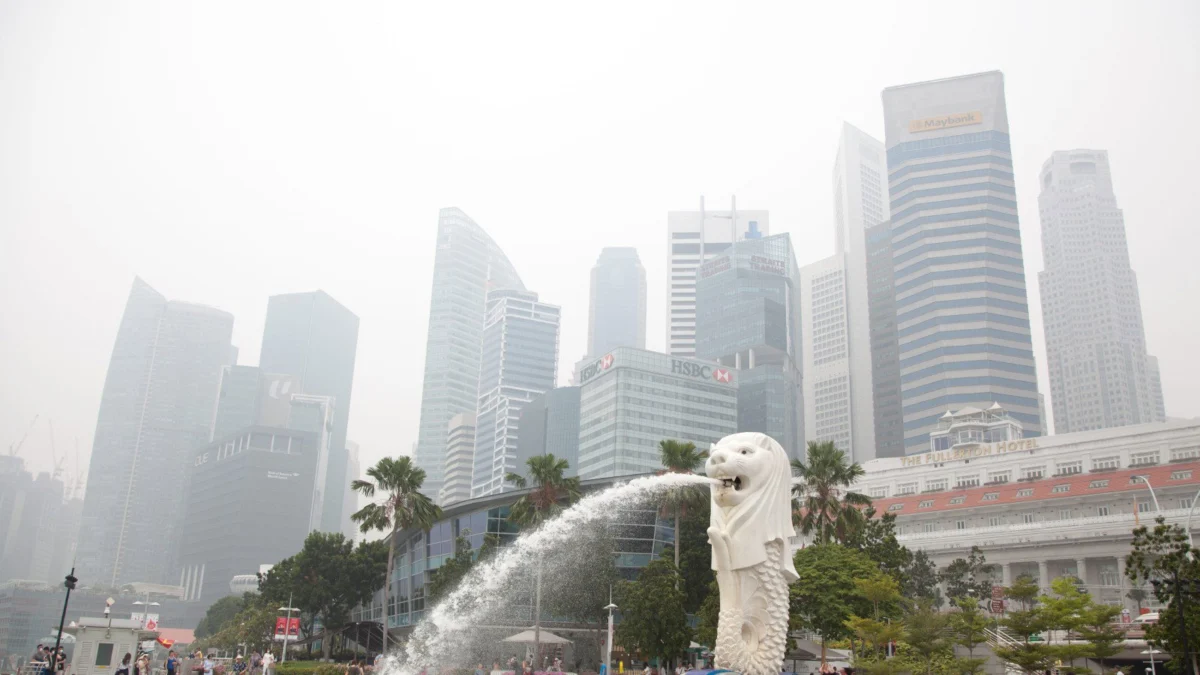
SINGAPORE — Singapore’s air quality took a sharp and concerning turn on Tuesday, 14 October, as localized air quality readings spiked into the "Very High" range across several major regions. By mid-afternoon, the National Environment Agency (NEA) reported that fine particulate matter (PM2.5) concentrations had reached levels that necessitate immediate health precautions for the general public, particularly for vulnerable groups and outdoor workers.
As of 2:00 PM, the 1-hour PM2.5 reading in Western Singapore hit a staggering 284 micrograms per cubic metre (µg/m³), while the Central region recorded 206 µg/m³. Just an hour later, the situation deteriorated further as the East region also crossed into the "Very High" band. These readings represent a significant escalation from the "Elevated" and "High" levels observed in the preceding days, signaling a period of intense atmospheric pollution that has shrouded the island in a dense, acrid haze.
Chronology of the Deterioration: October 14
The shift in air quality was rapid, catching many residents by surprise after a morning of relatively moderate conditions. The NEA’s monitoring stations, which provide real-time updates every hour, tracked the following progression:
The 2:00 PM Surge
At 2:00 PM, the data indicated a bifurcated air quality map. While the North and South remained in the "High" or "Elevated" bands, the West and Central regions plummeted into Band 4, classified as "Very High."
- West: 284 µg/m³ (Very High)
- Central: 206 µg/m³ (Very High)
- Other Regions: Remained between 55 and 150 µg/m³ (High/Elevated).
The 3:00 PM Update
The haze continued its eastward drift, bringing more of the island into the critical range. By 3:00 PM, the East region officially joined the "Very High" category.
- West: 284 µg/m³ (No change, remains critical)
- Central: 206 µg/m³ (Stable at critical)
- East: 208 µg/m³ (Newly entered Very High band)
The consistency of these high readings across three major sectors of the island prompted immediate reminders from the Haze Task Force regarding health advisories and workplace safety protocols.
Supporting Data: Understanding PM2.5 vs. PSI
To understand the severity of the current situation, it is essential to distinguish between the two primary metrics used by the NEA: the 1-hour PM2.5 reading and the 24-hour Pollutant Standards Index (PSI).
The Role of PM2.5
PM2.5 refers to fine particulate matter that is 2.5 micrometres or smaller in diameter—roughly 1/30th the width of a human hair. Because these particles are so small, they can bypass the nose and throat’s natural filters, settling deep in the lungs and even entering the bloodstream.
The 1-hour PM2.5 reading is a "nowcast." It reflects the air quality at a specific moment in time. This is the most useful metric for individuals deciding whether to go for a jog or if a school should cancel an outdoor PE lesson. It reacts quickly to sudden changes in wind direction or smoke plumes.

The Pollutant Standards Index (PSI)
The PSI is Singapore’s official long-term air quality index. It is calculated based on a 24-hour moving average of six pollutants: PM2.5, PM10, sulphur dioxide (SO2), nitrogen dioxide (NO2), ozone (O3), and carbon monoxide (CO).
While the 1-hour PM2.5 might be "Very High," the 24-hour PSI might still be in the "Unhealthy" range (101–200) rather than "Very Unhealthy" (201–300). This is because the PSI averages the data over a full day, acting as a stabilizer against short-term spikes. However, the NEA has clarified that on haze days, PM2.5 is almost always the dominant pollutant driving the PSI higher.
The AQI Confusion
The NEA also cautioned residents against using third-party apps that display "AQI" (Air Quality Index). Many of these apps use the United States EPA scale, which uses different calculation methods and breakpoints than Singapore’s PSI. A reading of 150 on a US-based AQI app does not mean the same thing as 150 on the Singapore PSI scale. Residents are urged to rely on the official haze.gov.sg website for accurate, localized data.
Official Responses and Health Advisories
Following the spike in readings, the inter-agency Haze Task Force, which was activated earlier in the month, reiterated the measures to be taken if air quality continues to hover at these dangerous levels.
Health Guidelines for the General Public
The current advice for regions in the "Very High" PM2.5 band (and should the 24-hour PSI exceed 200) is as follows:
- Healthy Individuals: Avoid prolonged or strenuous outdoor physical exertion.
- Vulnerable Groups: Children, the elderly, and pregnant women should minimize outdoor activity.
- Medical Conditions: Individuals with chronic lung or heart disease should avoid all outdoor activity. If they must go out, they should wear an N95 mask and keep their medication (such as inhalers) close at hand.
Educational Institutions
The Ministry of Education (MOE) and the Early Childhood Development Agency (ECDA) have established clear triggers for schools and preschools. Currently, schools in the affected regions have been advised to move all physical activities indoors. In the event the 24-hour PSI exceeds 200, preschools are required to cease all outdoor activities and stop any strenuous indoor activities to protect the respiratory health of young children.
Workplace Safety and Manpower
The Ministry of Manpower (MOM) has issued a directive to employers, particularly those with workers in the construction, marine, and logistics sectors.
- Risk Assessment: Employers must conduct a risk assessment to identify vulnerable workers (those with pre-existing heart or lung conditions).
- Mitigation: For these vulnerable workers, outdoor work should be minimized or avoided entirely.
- Platform Workers: MOM specifically addressed delivery riders and other platform workers. These individuals, who are often exposed to the elements for 8 to 12 hours a day, are advised to take frequent breaks, hydrate, and wear N95 masks when the 24-hour PSI is forecast to be in the "Unhealthy" range or higher.
Community Support and Mitigation Infrastructure
The Singapore government has prepared several layers of support to help the population cope with the deteriorating air quality.
Haze Shelters
In the event that the 24-hour PSI reaches "Very Unhealthy" levels, the government will open air-conditioned rooms at Community Clubs (CCs) and selected Residents’ Committee (RC) or Residents’ Network (RN) centres. These "haze shelters" are designed to provide a respite for residents who may not have air conditioning at home, particularly the elderly living in rental flats.

N95 Mask Distribution
While surgical masks are effective for filtering large droplets (like those associated with COVID-19), they are ineffective against the fine particles of haze. Only N95 masks are designed to filter out PM2.5 particles.
The government has initiated a distribution plan for eligible low-income and vulnerable Singaporeans. These groups can collect N95 masks at:
- Vending Machines: Located at selected public transport hubs and Social Service Offices.
- People’s Association (PA) Venues: Distribution points at designated CCs.
Eligible residents must bring their NRIC for verification during collection.
Implications: Environmental and Economic Impacts
The return of "Very High" air pollution levels carries significant implications beyond immediate health concerns.
Transboundary Haze and Regional Cooperation
The current haze is largely attributed to transboundary smoke originating from hotspots in the region, exacerbated by dry weather conditions and the El Niño phenomenon. This spike serves as a reminder of the fragility of regional air quality. Singapore continues to work with ASEAN partners through the Agreement on Transboundary Haze Pollution, though localized weather patterns and wind directions remain the primary drivers of day-to-day air quality.
Economic Productivity
Persistent haze has a documented impact on economic productivity. Beyond the direct healthcare costs associated with increased hospital admissions for asthma and respiratory infections, there is the "hidden" cost of reduced outdoor labor productivity and a decline in the tourism and F&B sectors as people choose to stay indoors.
Long-term Health Monitoring
Medical experts warn that while the immediate symptoms of haze—itchy eyes, running nose, and dry throat—are temporary, repeated exposure to high PM2.5 levels can have long-term cardiovascular and respiratory consequences. The NEA’s move to provide 1-hour PM2.5 readings is part of a broader public health strategy to allow the population to manage their exposure more granularly.
Conclusion: Staying Informed
As of the latest reports, the air quality in the West, Central, and East regions remains in a critical state. The NEA will continue to provide hourly updates. Residents are encouraged to download the myENV app or follow the official NEA social media channels for the most current data.
The Haze Task Force remains on high alert, and should the 24-hour PSI exceed the 200 mark, further nationwide measures—including potential closures of certain outdoor facilities—may be implemented. For now, the message to the public is clear: monitor the readings, stay indoors where possible, and prioritize the health of the most vulnerable members of the community.


 Ammar Sabilarrohman
 Asep Darmawan
 Nana Wu
 Asro
Asro
 Jia Lissa
 Neng Nana
 Dwi Wanna
 Siti Muinah