
 Evan Lee Salim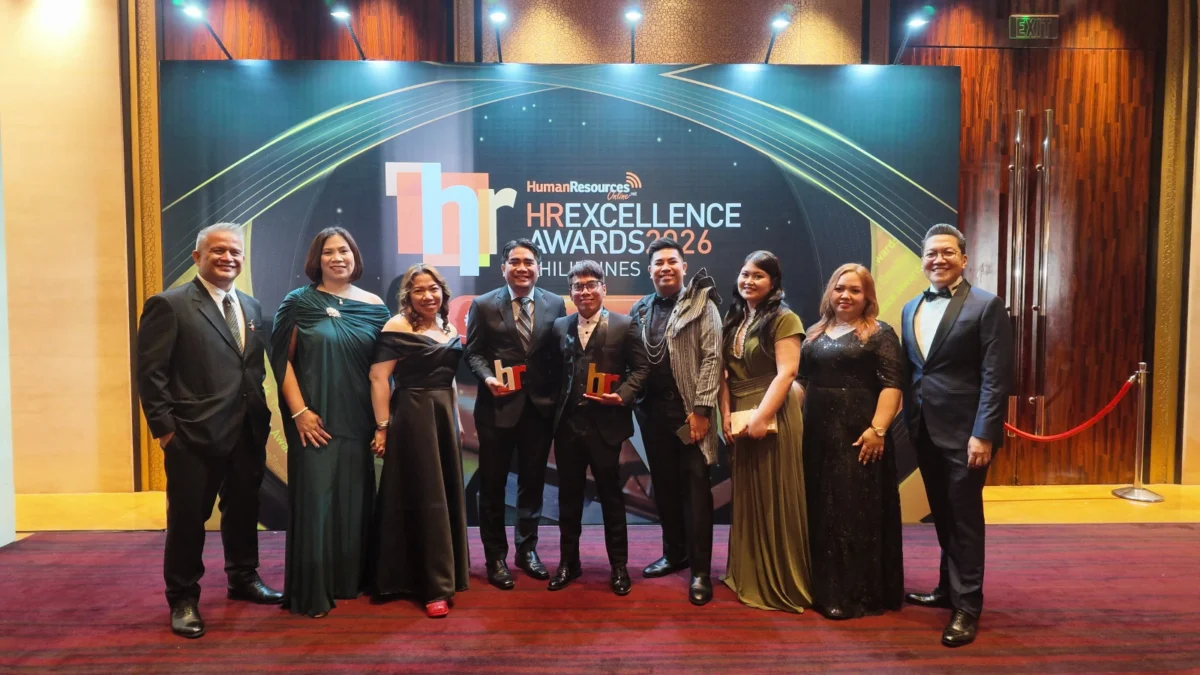
In the rapidly evolving landscape of global shared services, the competition for talent is no longer just about competitive salaries or prestigious brand names. It is about the "experience"—the holistic, daily reality of an employee’s life within an organization. This philosophy was at the forefront of the HR Excellence Awards 2026 in the Philippines, where ING Hubs Philippines emerged as a benchmark for modern human resources strategy.
By moving away from fragmented HR programs and toward a unified, "connected ecosystem," the organization has demonstrated that when employees are empowered to "Do Your Thing," they transition from being mere participants in a corporate structure to becoming architects of the company’s future.
Main Facts: The "Do Your Thing" Philosophy
At the center of ING Hubs Philippines’ success is a strategic pivot led by Rei Aparicio, the LEAD for Talent and Learning Center of Expertise (CoE). The organization’s approach is grounded in the belief that an employee’s perception of their workplace is not formed during high-stakes HR interventions, but rather through the cumulative effect of small, consistent touchpoints.
The "Do Your Thing" brand is more than a tagline; it is a promise of autonomy, recognition, and belonging. By integrating culture, career development, diversity and inclusion (D&I), wellbeing, and rewards into a single, seamless experience, ING Hubs Philippines has managed to maintain high engagement levels even during periods of rapid scaling and technological disruption.
This integrated strategy earned the team significant accolades at the HR Excellence Awards 2026, Philippines, validating their move toward a more human-centric, future-ready workplace.
Chronology: From Siloed Programs to a Connected Ecosystem
The transformation at ING Hubs Philippines did not happen overnight. It was the result of a deliberate shift in perspective regarding how HR delivers value to the workforce.
The Initial Phase: Recognizing the Fragmented Experience
Historically, like many large-scale organizations, HR functions operated in silos. Recruitment focused on acquisition, L&D focused on training modules, and D&I worked on specific representation goals. However, the leadership team at ING Hubs Philippines realized that employees do not see these as separate departments; they see them as one continuous journey. This "lightbulb moment" triggered a redesign of the entire people strategy.
The Scaling Challenge
As the organization began to scale rapidly, the challenge was to maintain a "small company" sense of belonging within a "large company" infrastructure. The HR team faced the hurdle of ensuring that as the workforce grew, the individual did not get lost in the numbers. They needed a model that was both scalable and deeply personal.
The Formalization of Communities
To address this, the organization formalized its Employee Resource Groups (ERGs). These groups became the bedrock of connection, allowing employees to find community and advocacy within the larger corporate framework. Simultaneously, the leadership expanded development programs to ensure that growth was not just vertical (promotions) but horizontal (skill acquisition).
The Future-Ready Pivot
In the most recent phase of their evolution, the focus has shifted toward "future-readiness." This involved embedding AI and digital fluency into the cultural fabric, ensuring that as technology evolved, the workforce was not left behind but was instead leading the charge.
Supporting Data: The Pillars of Integration
The success of ING Hubs Philippines is supported by several key pillars that work in tandem to create a robust employee value proposition.
1. Talent and Learning (Future-Readiness)
The organization has moved beyond traditional training. By investing in AI and digital fluency, they are preparing employees for a world where automation and human creativity must coexist. Their focus on "skills-based learning pathways" allows for internal mobility, giving employees the chance to reinvent their careers without leaving the company.
2. Diversity, Inclusion, and Belonging
Inclusion at ING Hubs Philippines is not a checkbox exercise. It includes specialized focus areas such as neuroinclusion and accessibility. By fostering an environment where different cognitive styles and physical needs are accommodated, the organization taps into a wider pool of talent and fosters a culture of genuine psychological safety.
3. Employer Branding as Advocacy
One of the most telling metrics of success is the shift from corporate marketing to employee advocacy. When employees feel empowered to "Do Your Thing," they naturally become brand ambassadors. This organic advocacy has significantly improved attraction and retention outcomes in a highly competitive Philippine labor market.
Official Responses: Insights from Rei Aparicio
In a detailed reflection on the organization’s journey, Rei Aparicio, LEAD for Talent and Learning CoE at ING Hubs Philippines, provided insights into the mechanics of their HR transformation.
On the "Lightbulb Moment":
"The turning point came when we realised that employees don’t experience HR through separate programmes. They experience it as one journey," Aparicio explained. "Whether someone is applying for a role, onboarding, or joining an Employee Resource Group… every touchpoint shapes how they feel about their workplace."
On Overcoming Obstacles:
Aparicio noted that the biggest challenge was sustaining growth and connection while scaling in an environment disrupted by AI and changing workforce expectations. "We saw an opportunity to move beyond standalone initiatives and build a connected ecosystem where culture, development, inclusion, wellbeing, and employer branding work together."
On the Impact of the Initiative:
The shift from "participation to ownership" has been the most meaningful result. "Our people are not simply attending programmes, they are helping shape culture, mentoring future talent, championing inclusion, and driving change," Aparicio said. This has led to a stronger leadership pipeline and continued trust in the workplace culture.
On the Future of HR:
Aparicio believes the next great opportunity for HR leaders is helping people navigate transformation with confidence. "As AI, automation, and changing workforce expectations reshape jobs and careers, organisations will need to balance innovation with a deeply human employee experience."
Implications: What This Means for the HR Landscape
The success of ING Hubs Philippines offers several critical lessons for the broader HR community as it navigates the mid-2020s.
The End of the HR Silo
The most significant implication is the necessity of integration. In an era where employees have more choices than ever, a disjointed HR experience can lead to attrition. Organizations must ensure that their rewards, learning, and D&I strategies are not competing for attention but are instead reinforcing the same cultural message.
Human-Centric Innovation
As AI becomes a standard tool in the workplace, the "human" element of HR becomes more valuable, not less. ING Hubs Philippines has shown that technical fluency must be balanced with a sense of belonging. The goal of technology should be to empower the human, not replace the human experience.
Organizational Resilience through Mobility
By focusing on internal mobility and continuous learning, ING Hubs Philippines is building "organizational resilience." In a volatile economy, the ability to redeploy talent and upskill existing workers is a major competitive advantage. This reduces the costs associated with external hiring and preserves institutional knowledge.
The Shift to "Culture Builders"
The transition of employees from "users" of HR services to "culture builders" represents a paradigm shift in management. When employees take ownership of the culture, the burden of engagement shifts from the HR department to the entire workforce. This creates a self-sustaining environment that can survive leadership changes and market shifts.
Conclusion: Shaping the Future of Work
ING Hubs Philippines has proven that the future of work is not just about where we work or what tools we use, but how we feel while we are doing it. By championing the "Do Your Thing" philosophy, they have created a template for a workplace that is inclusive, adaptable, and profoundly human.
As Rei Aparicio concludes, the goal was never about winning trophies, but about creating a workplace where people are "continuously learning, adapting, and succeeding in a rapidly changing world." For HR leaders globally, the message is clear: to prepare for the future, you must first empower your people to shape it.
For more insights into award-winning HR practices and interviews with industry leaders, visit the Winning Secrets section at Human Resources Online.

 Pevita Pearce
 Lina Hope
 Ali Ikhwan
 Raul Delapena Setiawan
 Nana
Nana
 Muslim
 Asep Darmawan
 Neng Nana