
 Asep Darmawan
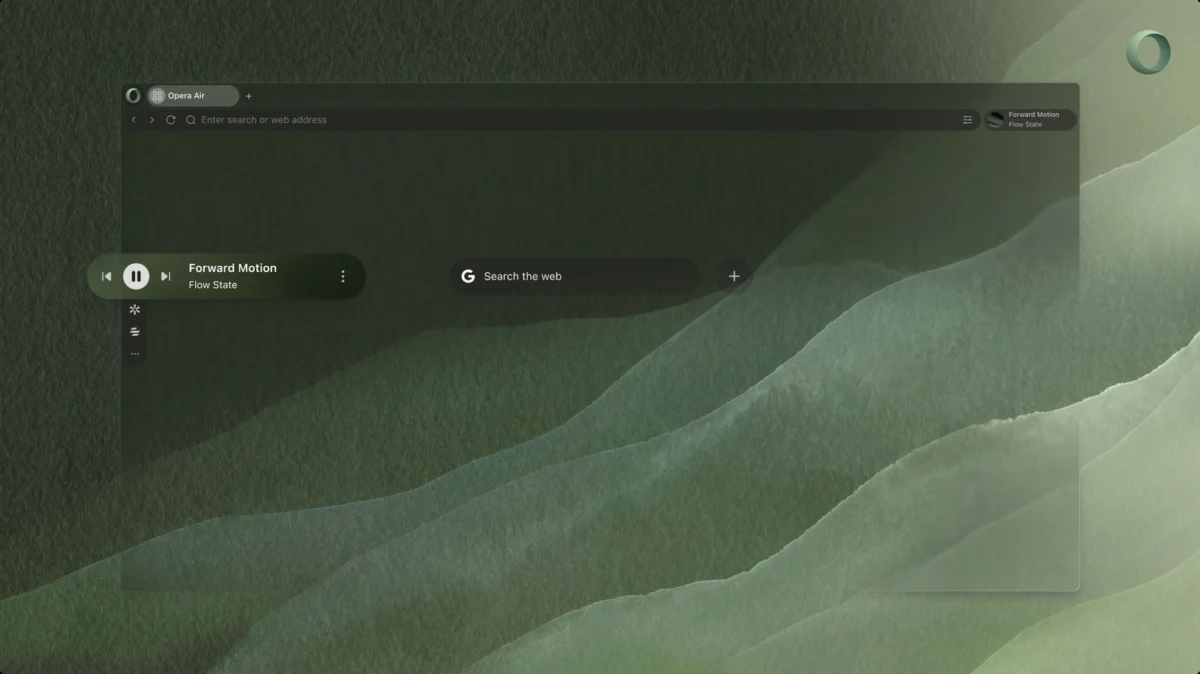
In an era defined by the "attention economy," where every pixel on a webpage is engineered to keep users scrolling, clicking, and consuming, the internet has become a place of profound sensory overload. Notifications, infinite feeds, and targeted advertisements have turned the act of browsing into a battle for cognitive preservation. Opera, long a pioneer in browser innovation, is seeking to reclaim the web for the user with the official relaunch of "Air"—a browser designed not to maximize engagement, but to facilitate mindfulness.
The Core Concept: Browsing with Intent
The relaunched Opera Air is an exercise in intentional design. While mainstream browsers compete to see who can integrate the most aggressive AI-driven shopping assistants or clutter their interfaces with social media integrations, Air moves in the opposite direction. It is, by definition, an "unbothered" browser.
The browser’s philosophy is rooted in minimalism. Upon installation, the user is greeted with a clean, expansive interface that eschews the typical cacophony of pinned tabs and news feeds. Instead, the browser functions as a blank slate, requiring the user to manually curate the applications they wish to access via the sidebar. This intentional friction is a deliberate feature; by forcing the user to choose their tools, Opera hopes to curb the mindless "tab-hopping" that characterizes modern digital fatigue.
A Chronology of Digital Mindfulness
To understand why a major software company would pivot toward a product that encourages users to spend less time mindlessly interacting with the web, one must look at the recent evolution of Opera’s strategy.
- Early 2025: The First Iteration. Opera first unveiled Air as a "mindful antidote" to the chaos of the internet. It was an experimental release aimed at power users who were reporting high levels of burnout. The initial version focused on basic distraction-blocking, such as limiting notification pings and simplifying the URL bar.
- Mid-2025: Data Collection and User Feedback. During its pilot phase, Opera gathered feedback suggesting that users didn’t just want a "blocked" internet—they wanted a "calm" internet. The feedback loops highlighted a desire for sensory integration that could help regulate the nervous system during long work sessions.
- October 2026: The Relaunch. Building on the lessons of the pilot, the updated Air browser arrives with a suite of audiovisual features, ambient soundscapes, and physical wellness integrations, signaling a shift from a purely "blocking" tool to a "supportive" tool.
Audiovisual Zen: The Science of "Air Soundscapes"
Perhaps the most significant addition to the new Air browser is the integration of "Air Soundscapes." Opera has recognized that the modern work-from-home environment is often plagued by ambient noise or the stress of complete silence.
The soundscapes are divided into four distinct psychological "moods":
- Focus: High-frequency, low-distraction audio designed to induce a state of flow.
- Relax: Mid-tempo sound profiles aimed at lowering the heart rate during high-stress periods.
- Work: Rhythmic, unobtrusive soundscapes that mimic the steady hum of a productive environment.
- Ambience: Natural soundscapes, such as the rhythmic crashing of waves or the rustle of wind through a forest, which research has shown to have restorative effects on cognitive fatigue.
By embedding these directly into the browser, Opera is effectively turning the web interface into a digital workspace that competes with dedicated productivity apps like Brain.fm or Endel.
Wellness in the Workflow: Breathing and Stretching
Recognizing that digital strain is not merely psychological but physical, the new Air browser introduces active wellness prompts. Users can now schedule "Breathing Intervals," where the browser gently nudges them to engage in guided breathwork. Furthermore, the browser includes integrated tutorials for neck and shoulder stretches—areas of the body most impacted by prolonged screen time.
This integration is a bold departure from traditional browser architecture. Historically, a browser’s sole job was to retrieve and render HTML documents. With Air, Opera is positioning the browser as a wellness companion, arguing that the health of the user is intrinsically linked to the health of their digital ecosystem.
Implications for the Attention Economy
The relaunch of Air raises critical questions about the future of the internet. For years, the industry standard has been the "engagement model." Companies like Google and Meta rely on keeping users glued to their screens for as long as possible. Opera’s counter-movement represents a growing "digital sobriety" trend that is beginning to gain traction among tech-conscious demographics.
Privacy and Performance
The browser maintains its lightweight profile, ensuring that it does not tax the CPU, which in itself contributes to a smoother, less frustrating user experience. It comes pre-packaged with a robust ad-blocker and a complimentary VPN, effectively shielding the user from the tracking mechanisms that typically drive the "chaos" of the modern web.
The AI Dilemma
Opera has included an interface for ChatGPT, yet in a move that underscores its commitment to mindfulness, the feature is disabled by default. It is a subtle but powerful statement: AI is a tool, not a necessity. By making it an "opt-in" experience, Opera prevents the browser from becoming another source of digital noise.
Official Perspectives and Industry Response
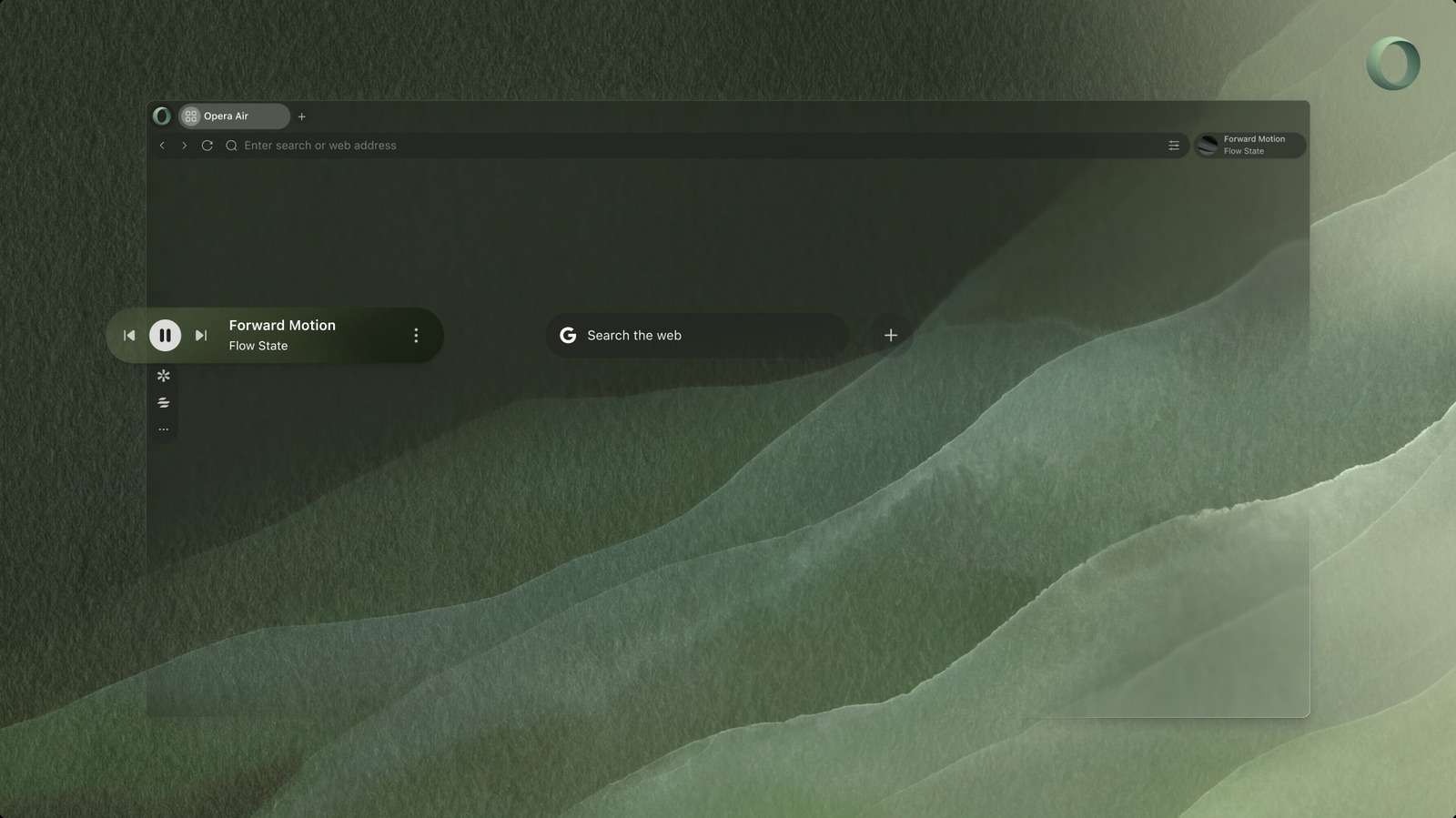
In a press release regarding the launch, Opera’s design team emphasized the concept of "perspective." The new wallpapers, which utilize wide-angle, natural textures, are not merely aesthetic choices; they are intended to mitigate "screen tunnel vision." By providing the user with visual cues of space and scale, the browser attempts to break the claustrophobic nature of typical browser windows.
Industry analysts are watching the Air browser closely. While it is unlikely to overtake Chrome or Safari in market share, it serves as a "canary in the coal mine" for the browser market. If a significant segment of the population adopts Air, it could force other browsers to integrate more "humane" design elements into their feature sets.
The Future of "Mindful" Browsing
As we look toward the remainder of the decade, the divide between "productive" browsing and "distractive" browsing will likely widen. The Opera Air browser is a direct response to the "doomscrolling" epidemic.
The implications are clear: the future of software development is moving toward empathy. Users are no longer content with software that works; they demand software that understands their cognitive limits. Whether this is a niche trend or a precursor to a wider shift in how we build the internet remains to be seen. However, by prioritizing the user’s mental state over the advertiser’s bottom line, Opera has carved out a unique space in a crowded market.
For those interested in reclaiming their digital autonomy, the Air browser offers a sanctuary. It is a reminder that the internet is a tool, and like any tool, its impact depends on how we handle it. With the right soundtrack, a few deep breaths, and a browser that respects your focus, the internet might finally feel less like a digital labyrinth and more like a space where you can actually get things done.
Opera Air is available for download on both Windows and macOS platforms, free of charge. In a world that is constantly demanding your attention, choosing to be "unbothered" might just be the most radical thing you can do.


 Reynand Wu

 Sagoh

 Raul Delapena Setiawan


 Azzam Bilal Chamdy

 Ali Ikhwan
