
 Laily UPN
By Carl Bildt
October 21, 2026
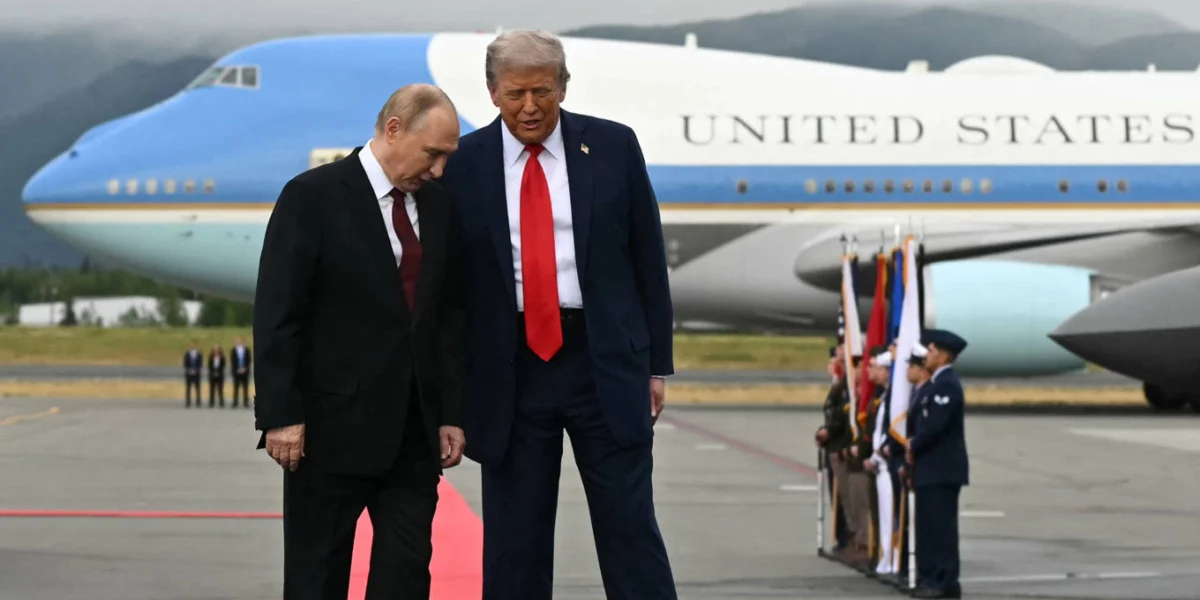
The traditional geopolitical map, once dominated by the binary poles of the Cold War and subsequently the singular, unchallenged dominance of the American "unipolar moment," has fractured. As we navigate the complexities of late 2026, the global order is undergoing a profound reassessment. While the United States continues to exert unparalleled influence in technology, finance, and military projection, and while Russia maintains a formidable—if increasingly strained—conventional and nuclear arsenal, the aura of invincibility that once defined both nations has evaporated.
We find ourselves in an era defined not by absolute supremacy, but by failure and constraint. The systemic inability of traditional superpowers to dictate outcomes in regional conflicts, trade disputes, and technological standardization has led to a provocative conclusion: the U.S. and Russia, in their current geopolitical posture, may share more characteristics with the broad, emerging grouping of "middle powers" than their historical status as superpowers would suggest.
Main Facts: The Great Levelling
The central thesis of the current geopolitical discourse is that power has become diffuse. The concept of a "middle power"—traditionally reserved for states like Canada, Brazil, and India—is being expanded to accommodate a world where even the giants are hemmed in by internal political polarization, economic volatility, and the limitations of hard power.
The reality on the ground is stark. For the United States, the constraints are internal—a legislative paralysis that prevents consistent long-term strategic planning and a domestic populace increasingly skeptical of foreign interventions. For Russia, the constraints are structural and demographic; years of attrition have depleted the resource base required to maintain the status of a true global hegemon.
When we observe these nations, we see them increasingly acting like "middle powers": seeking alliances of convenience, focusing on specific regional interests rather than global ideological crusades, and struggling to translate military capability into tangible political stability.
Chronology: The Erosion of Supremacy
To understand how we reached this inflection point in 2026, one must look at the historical trajectory of the last decade:
- 2020–2022: The Catalyst of Global Instability. The pandemic and the subsequent return of high-intensity conflict in Europe acted as a shock to the system, exposing supply chain vulnerabilities and the limits of soft power.
- 2023: The Realignment. As traditional alliances began to fray, nations like India and Brazil emerged as "swing states," effectively deciding the trajectory of global economic policy. This was the moment the term "middle power" began to move from academic discourse into the halls of government.
- 2024: The Stagnation of the Giants. Both the U.S. and Russia found themselves mired in intractable domestic issues. The U.S. election cycles created an environment of "strategic uncertainty," while Russia’s economy pivoted toward a wartime footing that offered diminishing returns.
- 2025: The Normalization of Constraint. Diplomatic efforts shifted from "leading the world" to "managing decline." International summits became less about grand visions and more about crisis mitigation.
- 2026: The Current State of Play. We have arrived at a consensus: power is no longer defined by what a nation can do, but by what it can prevent.
Supporting Data: Measuring the Shift
The metrics of power are changing. We are no longer simply counting warheads or GDP. Instead, we are tracking three critical indicators that signify the "middle-powerfication" of former superpowers:
- Strategic Autonomy Ratios: This measures the ability of a country to act independently of international consensus. In 2016, the U.S. could effectively sanction the global economy unilaterally. By 2026, the efficacy of unilateral sanctions has dropped by roughly 40%, as alternative payment systems and regional trade blocs have neutralized traditional tools of coercion.
- Military Attrition vs. Deployment: Russia’s conventional capabilities, while still massive, have seen a 60% increase in maintenance costs relative to effectiveness since 2022. Similarly, the U.S. defense budget has hit record highs, yet the "cost per outcome" in regional theaters—such as the Middle East or Eastern Europe—has surged, indicating a diminishing return on investment.
- Diplomatic Leverage Index: In multilateral forums, the ability of both Washington and Moscow to whip votes or force policy shifts has declined. Conversely, the "middle power" coalition (the BRICS+ and various middle-tier European and Asian nations) now accounts for nearly 55% of global GDP, effectively turning them into the arbiters of global norms.
Official Responses: The Denial and the Pivot
Responses from the halls of power have been predictably varied. In Washington, the official line remains one of "resurgent leadership." State Department briefings consistently emphasize the "vitality of democratic alliances" and the "unmatched innovation ecosystem" of the U.S. Yet, in private, policymakers speak of "strategic patience" and the necessity of "burden-sharing," a tacit admission that the era of the sole superpower is behind us.
In Moscow, the narrative is one of "sovereignty against a hostile unipolar order." The Kremlin continues to frame its constraints as a badge of honor, arguing that the "struggle against hegemony" is a process that necessitates hardship. However, the internal shift toward an increased reliance on private-public partnerships and regional energy deals suggests that Moscow is, in practice, operating as a regional power with global aspirations, rather than a truly global hegemon.
Other "middle powers" have been more vocal. Representatives from Brazil and India have frequently remarked in the UN that the "binary world" is obsolete. Their diplomatic posture is increasingly one of non-alignment, favoring a "multi-aligned" approach that treats the U.S. and Russia as partners in trade rather than masters of destiny.
Implications: A World of Interdependence
What does this mean for the future? We are moving toward a "Post-Hegemonic Order." The implications are profound for international law, trade, and regional security:
1. The Rise of Variable Geometry Alliances
We will see fewer permanent, monolithic blocs (like the classic NATO or Warsaw Pact models) and more "variable geometry" alliances. Nations will partner on climate change, then compete on technology, then remain neutral on security, all within the same calendar year. This creates a more flexible but less predictable international environment.
2. The Decentralization of Financial Systems
As the U.S. dollar’s role as the sole reserve currency faces pressure from a basket of digital assets and regional currencies, the "financial weapon" will become less potent. This decentralization will force the U.S. to focus more on competitive trade and less on financial coercion.
3. The Security Vacuum
The most dangerous implication is the potential for regional vacuums. When superpowers are too constrained to intervene and too distracted to mediate, regional actors—be they mid-sized nations or non-state entities—may feel emboldened to resolve disputes through force. The "middle power" world is, by definition, a world where no single police officer is on the beat.
4. Technological Fragmentation
We are already witnessing the "splinternet." As middle powers seek to protect their own industries, we see a move toward localized tech standards. The U.S. and Russia, once the undisputed leaders in technological innovation, now find themselves competing to keep their ecosystems relevant in a market that is increasingly favoring localized, indigenous solutions.
Conclusion: Toward a New Equilibrium
As we look toward the remainder of the 2020s, it is clear that the nostalgia for a world of clear-cut hierarchies is a dangerous distraction. The term "middle power" should not be viewed as a pejorative. It is, in many ways, a more honest description of a world where interdependence is the reality and absolute control is a myth.
The United States and Russia may struggle to accept this new reality, clinging to the rhetoric of the past. But the sooner these nations—and the rest of the international community—understand that we are all, in a sense, navigating a complex, multi-polar, and interdependent system, the sooner we can build the institutions necessary for 21st-century stability. The age of the titan is over; the age of the balancer has begun.

 Reynand Wu
 Iffa Jayyana

 Ammar Sabilarrohman

 Asep Darmawan

 Asro

 Layla Zulfa

 Nila Kartika Wati

 Muslim
