
 Sagoh
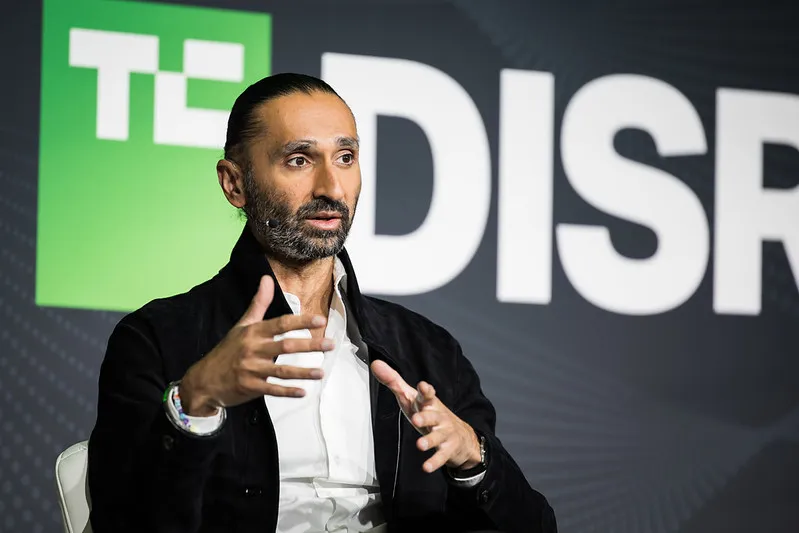
In the high-stakes theater of artificial intelligence, where multi-billion-dollar bets are the entry fee, private equity colossus Blackstone has emerged as the industry’s most consequential financier. With $1.3 trillion in assets under management, the firm is not merely observing the AI gold rush; it is building the infrastructure that makes it possible. By pivoting from traditional private equity to becoming a foundational pillar of AI compute, Blackstone is effectively rewriting the rules of corporate lending and infrastructure development.
As Jas Khaira, a Blackstone veteran and the leader of the firm’s San Francisco-based AI hub, Blackstone N1 (BXN1), recently articulated at TechCrunch Disrupt, the current technological transition is fundamentally different from the mobile or SaaS eras. While previous cycles allowed startups to achieve massive scale with moderate capital, the AI era is an insatiable beast, demanding staggering, unprecedented levels of investment. Blackstone has positioned itself as the primary architect of this capital-intensive reality.
The Genesis of BXN1: A Strategic Pivot to the Epicenter
Earlier this year, Blackstone solidified its commitment to the sector by launching BXN1, a dedicated central hub in San Francisco. The relocation of Khaira from New York to the heart of Silicon Valley was more than a logistical shift; it was a symbolic move intended to place the firm at the epicenter of the AI movement.
Unlike traditional venture capitalists who focus primarily on equity stakes in early-stage startups, Blackstone operates across a broader spectrum. The firm offers flexible capital structures—ranging from massive debt facilities to strategic equity investments—to support the entire AI stack, from chip-designing startups to the colossal data centers that house the world’s most powerful GPUs.
A Chronology of Capital: From CoreWeave to the Multi-Billion Dollar Scale
The blueprint for Blackstone’s current dominance was drafted in 2023, during the immediate aftermath of the ChatGPT explosion. At that time, the neocloud provider CoreWeave—a company with a modest $30 million in revenue and minimal profitability—found itself in a position of extreme demand but limited liquidity.
Blackstone recognized that the value was not in the startup’s current earnings, but in its physical assets: a massive, growing collection of Nvidia GPUs. By pioneering a financing structure that treated GPUs as collateral and leveraged committed contracts with blue-chip clients like Microsoft, Blackstone provided a $2.3 billion loan that would prove to be a watershed moment for the industry.
This transaction served as the "proof of concept" for a new asset class. Once the model was validated, Blackstone moved aggressively:
- 2023: Initial $2.3 billion credit facility for CoreWeave.
- 2024: Significant expansion into neocloud lending, with Blackstone and Coatue co-leading a $10 billion credit facility for Australian GPU provider Firmus.
- 2025/2026: Continued commitment to the broader AI ecosystem, including a $5 billion investment into Crux AI (a partnership with Google to commercialize custom TPUs) and a strategic backing of the chip startup Etched.
Supporting Data: The Anatomy of AI Debt
The sheer scale of capital required to fuel the AI boom is reflected in the debt loads carried by today’s infrastructure providers. CoreWeave, for instance, has seen its debt burden balloon to approximately $50 billion. Critics, including Altimeter Capital’s Brad Gerstner, have voiced concerns, arguing that the collateral—GPUs—may be losing its luster as the market matures and the supply of specialized hardware stabilizes.
Khaira acknowledges the market jitters but provides a nuanced defense. He notes that the rising cost of capital is a macroeconomic reality, influenced by a volatile interest rate environment and persistent inflation. "We’re seeing higher credit spreads," Khaira admitted at TechCrunch Disrupt. "Lenders are charging higher premiums on top of already higher base interest rates to finance the AI buildout."
Even the tech giants—the so-called "Hyperscalers" like Meta and Microsoft—are facing higher costs to borrow. However, Blackstone maintains that its risk management is superior because it focuses on the quality of the customer. "If the customer is an investment-grade entity, the risk gets priced relative to that customer," Khaira explained.
Official Responses and Market Realities
The cooling of the market has had tangible consequences. Firmus, the Australian GPU provider, recently scrapped its planned IPO on the Australian Securities Exchange after failing to secure a valuation of $30 billion. When asked about the cancellation, Khaira was candid: "Ultimately, the market wasn’t there at that valuation… The market is thinking: what is the right price for neoclouds in this moment?"
Despite these headwinds, Khaira dismisses the "doom-monger" narrative that a credit crisis is imminent. He draws a sharp distinction between the current AI infrastructure buildout and the 2008 financial crisis. "This doesn’t feel like something where you’ve got banks that are shaky credits," he argued. "The vast majority of these data centers are built for hyperscalers. The debt is ultimately backed by the most creditworthy companies in the world."
Beyond Infrastructure: The Implementation Frontier
Blackstone’s influence extends beyond the silicon and steel of data centers. Recognizing that AI is only as valuable as its application, the firm partnered with Anthropic and Hellman & Friedman to form "Ode," a $1.5 billion joint venture.
Ode is tasked with a singular, vital objective: implementation. By deploying specialized engineers directly into Blackstone’s 280 portfolio companies, the venture seeks to bridge the gap between AI theory and operational reality. When questioned about the return on investment (ROI) for these initiatives, Khaira remained pragmatic. He described the adoption curve as a "sawtooth-type pattern"—an uneven progression where capacity often temporarily outstrips immediate utility.
Implications: The Long-Term View
The implications of Blackstone’s aggressive AI strategy are profound. By acting as a lender, an investor, and an operational consultant, the firm is effectively creating a closed-loop ecosystem.
- Industrialization of AI: Blackstone is moving AI from the realm of speculative venture capital into the realm of "industrialized infrastructure." This shift suggests that the era of "move fast and break things" is being replaced by an era of "build deep and finance strategically."
- The Credit-Asset Nexus: The precedent of using GPUs as collateral has fundamentally changed how hardware-heavy startups access capital. It allows for rapid scaling but ties the health of these firms directly to the market value of chips—a volatile variable.
- The "Sawtooth" Reality: Khaira’s admission that ROI is "uneven" serves as a warning to investors. The AI boom will likely be punctuated by periods of oversupply and market correction as companies struggle to integrate high-cost infrastructure into their bottom lines.
As Blackstone continues to pour billions into the bedrock of the AI economy, it remains the ultimate bellwether. Whether the AI boom leads to a sustained period of economic growth or a painful correction, Blackstone has ensured its position at the center of the story. For now, the firm’s strategy remains clear: provide the capital, control the compute, and bet on the long-term, albeit volatile, transition of the global economy toward an AI-first future.


 Reynand Wu


 Raul Delapena Setiawan


 Azzam Bilal Chamdy

 Ali Ikhwan
