Jia Lissa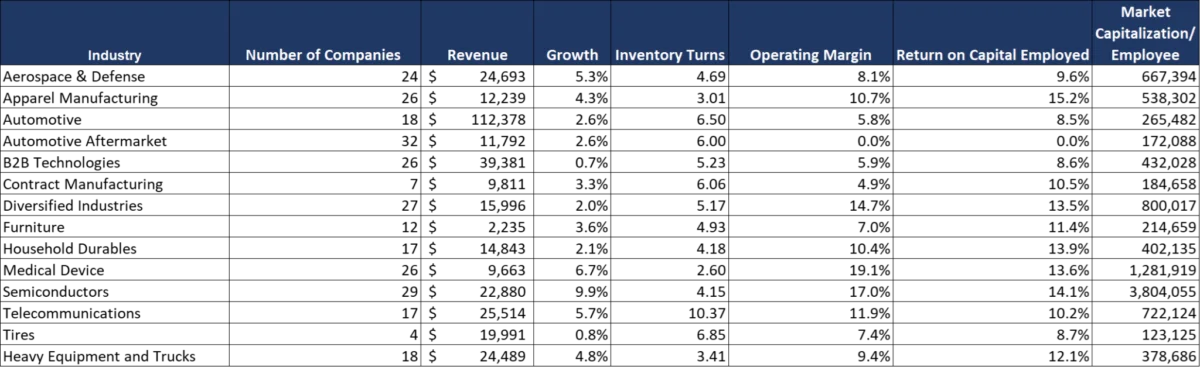
In an era defined by rapid technological advancement, a startling paradox has emerged: 82% of industries are seeing their supply chain performance regress even as corporate investments in supply chain management reach record highs. According to the latest findings from the upcoming Supply Chains to Admire report, the primary culprit is a fundamental misunderstanding of what a modern supply chain should be. Companies are attempting to automate enterprise silos rather than architecting true, industry-specific value networks.
For decades, the industry has relied on generalized methodologies—often squeezed into the rigid, one-size-fits-all confines of a spreadsheet—that strip away the vital nuances of specific manufacturing processes. As global markets fluctuate under the pressures of geopolitical volatility, technological shifts, and the integration of Artificial Intelligence, this "spreadsheet mentality" is not only outdated; it is actively hindering growth.
The Chronology of Decline and Resilience (2016–2025)
The latest Supply Chains to Admire analysis, conducted by a dedicated research team, provides a ten-year longitudinal study of industry performance. By comparing the pre-COVID era (2016–2019) with the post-COVID landscape (2020–2025), the data reveals a stark divergence in operational success.
The Pre-COVID Baseline (2016–2019)
Before the pandemic, the average manufacturing company experienced steady, if unremarkable, annual growth of 2.8%. During this period, the focus was predominantly on incremental improvements to existing enterprise resource planning (ERP) systems. The industry was largely characterized by static, linear supply chains that prioritized cost-cutting over resilience.
The Pandemic Disruption and Post-COVID Rebound (2020–2025)
The arrival of COVID-19 acted as an accelerant for systemic failure. However, the recovery patterns that followed were highly fragmented. Discrete manufacturing industries—driven by the urgency of military production, shifting technology platforms, and the burgeoning AI sector—managed a robust rebound. Conversely, process-based industries, with the notable exception of the pharmaceutical sector, remained largely stalled.
This period serves as a critical case study for resilience. While discrete manufacturers were forced to pivot toward configure-to-order and make-to-order models, many process-based manufacturers remained tethered to legacy make-to-stock processes. The data suggests that technologists have disproportionately focused on automating the latter, effectively underserving the high-potential discrete manufacturing sector.
Dissecting the Data: The Metric of Value
The Supply Chains to Admire methodology is built on a decade of academic collaboration with institutions like Arizona State University and the Georgia Institute of Technology. The report evaluates companies based on their ability to improve faster than their peers across four critical vectors: growth, inventory turns, operating margin, and Return on Capital Employed (ROCE).
These metrics are not chosen at random. Research confirms that when combined, they provide a reliable prediction of value, as measured by market capitalization per employee. The core goal is to shift the corporate agenda from a narrow focus on cost-reduction to a broader, more sustainable strategy centered on value creation.
Process vs. Discrete: A Tale of Two Models
The analysis separates manufacturing into two distinct categories:
- Process-Based Manufacturers: These organizations prioritize "make-to-stock" processes, often dealing with raw materials that require blending, refining, or chemical processing.
- Discrete Manufacturers: These industries focus on "configure-to-order" or "make-to-order" workflows.
The data indicates that while process-based industries have received the lion’s share of technological automation, the discrete sector holds significantly larger market potential. By failing to tailor solutions to these specific needs, many consultants and software providers have stifled the innovation that discrete manufacturers require to scale effectively.

The Myth of Economies of Scale
One of the most counterintuitive findings in this year’s report is the failure of the "big is better" philosophy. For the past twenty years, the industry has chased economies of scale, believing that larger market leaders would naturally dominate through sheer volume.
The evidence suggests otherwise. Smaller, more nimble companies that focus on innovation within a well-defined peer group consistently outperform their massive counterparts. For instance, in the beverage sector, Monster Beverages has outperformed industry titans like AB InBev, Coca-Cola, and PepsiCo. Similarly, Church & Dwight has maintained a competitive edge over Procter & Gamble, while Ecolabs has demonstrated superior performance compared to chemical giants like BASF and Dow.
This finding challenges the commonly held belief that supply chain leadership is synonymous with organizational scale. Instead, it suggests that smaller companies are more effective at building value networks that remain responsive to market shifts.
A Glaring Leadership Vacuum
Despite the clear data on performance, there is a profound lack of leadership among companies that possess both high operating margins (above 15%) and a dominant position in their respective value chains. These industry leaders have largely failed to pioneer the "network interoperability" required for the modern era.
Four decades later, the backbone of the global supply chain remains an archaic mix of spreadsheets and Electronic Data Interchange (EDI). Digital transformation initiatives have largely failed because they were designed to automate historical practices rather than re-engineer the supply chain to match new, industry-specific operating models.
The Medical Device Dilemma
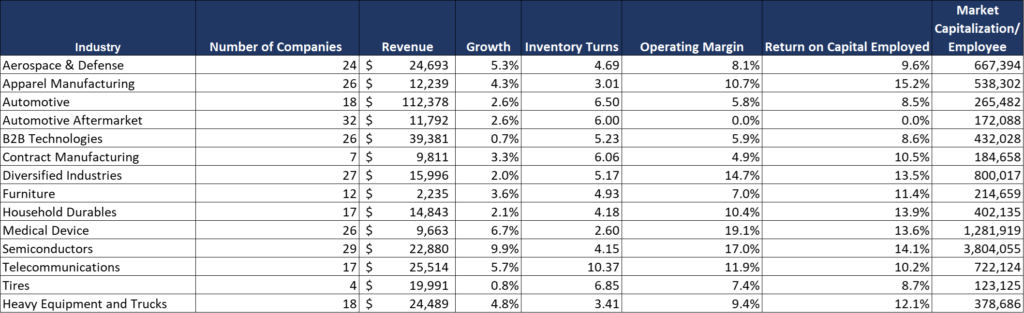
The medical device industry provides a perfect snapshot of this stagnation. With average operating margins of 19.1%, the sector is profitable but operationally inefficient. Performance data from 2016 to 2023 showed a steady decline, with only a marginal rebound beginning in 2023. The inbound supply chain, from procurement to final assembly, remains largely manual. Key issues such as supply chain lineage and quality of conformance are currently left to chance rather than integrated system oversight.
Implications for the Future: The AI Trap
As we look toward 2026 and beyond, the industry is at a crossroads. Technology marketers are currently pushing the adoption of autonomous agents—essentially AI wrappers placed on top of existing Advanced Planning Systems (APS) or ERP platforms.
There is a significant danger in this approach. If companies attempt to layer AI over a system that is fundamentally broken, they will simply be accelerating the speed at which errors occur. Artificial Intelligence is not a panacea for the lack of fundamental supply chain design.
For supply chain leaders, the message is clear:
- Stop automating the past: Digital transformation must move beyond simple automation of historical processes.
- Define industry-specific value: Every industry has a different operating model. Adopting a generalized, "spreadsheet-ready" methodology is a recipe for stagnation.
- Build value networks: The future is not in the siloed enterprise, but in the interoperable network. Leaders must prioritize the connection between suppliers, manufacturers, and customers.
- Prioritize the right metrics: Move the focus from cost-per-unit to market capitalization per employee. Value is driven by efficiency and responsiveness, not just budget slashing.
The findings from the upcoming June 23rd report are designed to serve as an "arrow in the quiver" for supply chain leaders. It is time to abandon the failed methodologies of the past and begin the difficult but necessary work of architecting value networks capable of thriving in an unpredictable, high-speed global economy. The era of the automated silo is ending; the era of the value network must begin.


 Sagoh
Sagoh
 Ali Ikhwan
 Raul Delapena Setiawan
 Reynand Wu


 Azzam Bilal Chamdy