
 Nana Wu
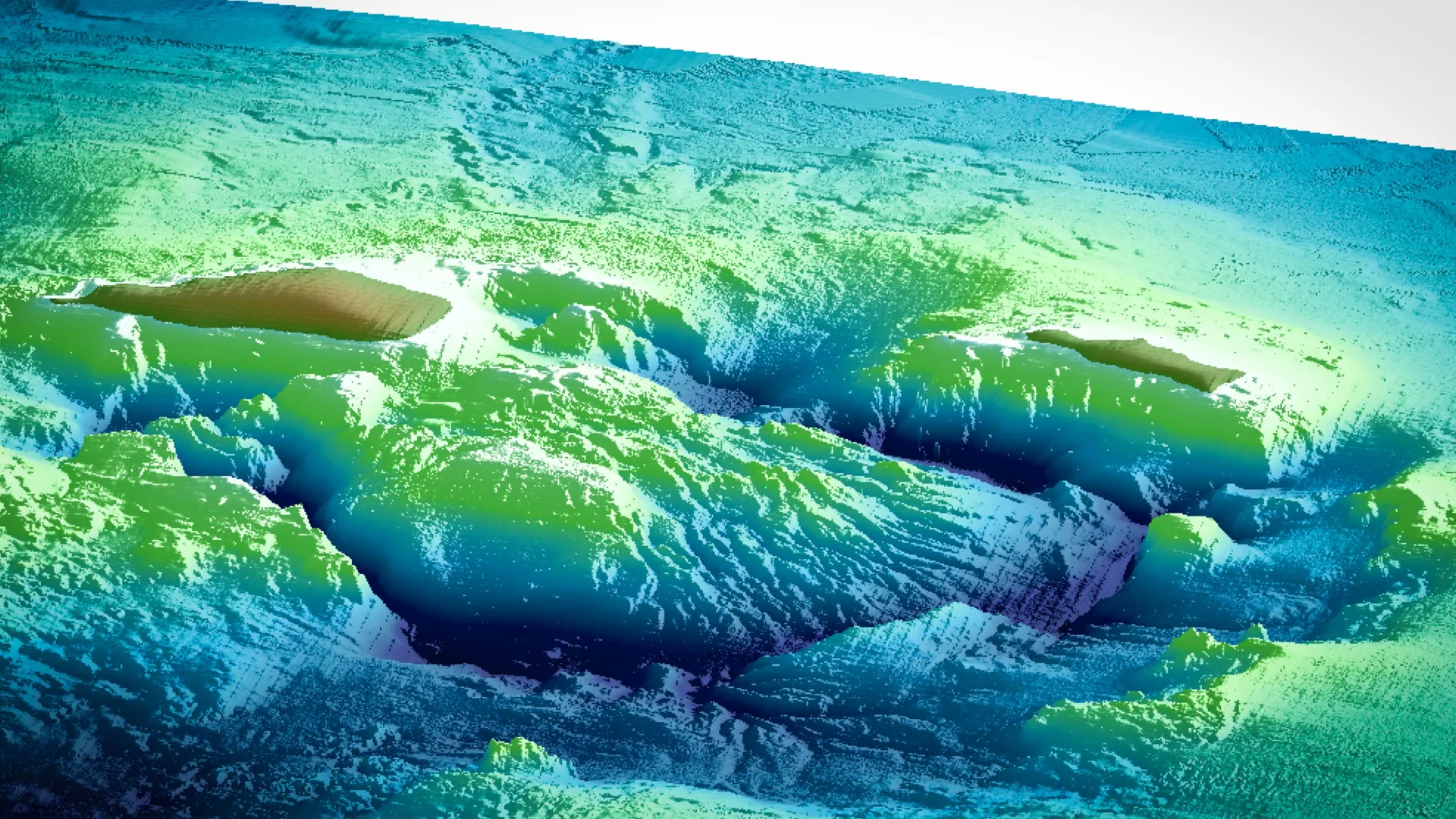
Thousands of years after a cataclysmic event that reshaped the geological landscape of the Holocene epoch, one of Earth’s most formidable supervolcanoes is showing signs of renewed life. Beneath the tranquil, azure waters of the East China Sea, Japan’s Kikai caldera—the site of a colossal eruption approximately 7,300 years ago—is quietly refilling its massive underground magma reservoir.
This discovery, spearheaded by a dedicated team of geophysicists at Kobe University, marks a pivotal moment in our understanding of volcanic life cycles. By peering beneath the seafloor, scientists have confirmed that the reservoir responsible for the prehistoric disaster is not a dormant relic of the past, but an active, recharging system. This breakthrough provides a rare, empirical window into how the world’s most dangerous volcanic systems recover and rebuild their lethal potential, offering critical insights that may one day improve the global monitoring of supervolcanoes like Yellowstone and Toba.
The Anatomy of a Super-Eruption
To understand the significance of the Kikai discovery, one must first grasp the sheer scale of the forces involved. A super-eruption is not merely a volcanic event; it is a landscape-altering catastrophe. When a supervolcano releases its contents, the volume of magma expelled is staggering—often enough to bury a metropolis like New York City under a layer of volcanic material 12 kilometers (7.5 miles) thick.
When such immense quantities of magma are evacuated, the structural integrity of the crust above the reservoir is compromised. Deprived of the upward pressure that once supported the weight of the earth above, the ground collapses inward, creating a broad, shallow depression known as a caldera. These features are the fingerprints of the most powerful eruptions in Earth’s history.
Kikai holds a particularly notorious place in this geological record. Its last major eruption, roughly 7,300 years ago, stands as the largest volcanic event of the Holocene—the current geological epoch that began 11,700 years ago. While the majority of the Kikai caldera remains submerged, its history of devastation continues to serve as a sobering reminder of the volatility hidden beneath the waves.
Chronology: From Catastrophe to Rebirth
The history of Kikai is defined by cycles of destruction and slow, silent regeneration.
- 7,300 Years Ago: The Kikai caldera experiences a catastrophic eruption, marking the most significant volcanic event of the Holocene.
- 3,900 Years Ago: Geological evidence suggests the onset of a new phase of activity, characterized by the development of a lava dome near the center of the caldera. Unlike explosive eruptions, this dome formed as thick, viscous lava extruded slowly from the vent.
- Present Day: Modern seismic surveys have confirmed that the reservoir associated with the ancient eruption is actively accumulating new, fresh magma.
This chronology reveals that the current state of Kikai is not a lingering "echo" of its past. The chemical composition of the material in the current lava dome differs significantly from the debris left behind by the 7,300-year-old eruption. This distinction is vital; it suggests that the reservoir is being actively "recharged" by new injections of molten rock rising from the deeper crust or the mantle.
Scientific Methodology: Piercing the Seafloor
Investigating a submerged volcano presents unique challenges, yet for the researchers at Kobe University and the Japan Agency for Marine-Earth Science and Technology (JAMSTEC), the ocean served as an unexpected laboratory.
"The underwater location allows us to implement systematic, large-scale surveys," explains Kobe University geophysicist Nobukazu Seama. Because the seafloor is relatively uniform compared to the rugged, obstructed terrain of a terrestrial volcano, scientists were able to conduct comprehensive geological surveys across the entire structure.
To map the interior of the caldera, the team deployed a sophisticated array of airguns to generate seismic pulses. These pulses traveled through the ocean floor and deep into the crust. As the waves encountered different materials—solid rock versus molten, liquid magma—they traveled at different speeds and refracted in distinct patterns. By placing ocean bottom seismometers to record these pulses, the researchers created a high-resolution "ultrasound" of the volcano’s interior.
The results, published in the journal Communications Earth & Environment, clearly delineated a substantial, high-magma-content reservoir directly beneath the site of the ancient eruption. The spatial extent of this reservoir matches the system that fueled the prehistoric catastrophe, confirming that Kikai is rebuilding using the same "plumbing" that powered its previous, more violent manifestations.
Official Perspectives and Expert Analysis
The research team is careful to note that while this discovery is scientifically monumental, it does not sound an immediate alarm. The replenishment of a magma reservoir is a process that unfolds over millennia, not days.
"We must understand how such large quantities of magma can accumulate to understand how giant caldera eruptions occur," says Seama. His perspective is shared by the wider volcanological community, which views the study as a cornerstone for future disaster mitigation.
The findings have been supported by the Ministry of Education, Culture, Sports, Science and Technology (MEXT) and the Japan Society for the Promotion of Science. By validating the "magma re-injection model," the study confirms that supervolcanoes are not static entities. They are living systems that breathe, feed, and grow. This understanding shifts the paradigm from simply monitoring for "signs of eruption" to monitoring the long-term "health" and "volume" of these reservoirs.
Global Implications: Lessons for Yellowstone and Toba
The significance of the Kikai study extends far beyond the borders of Japan. The scientific community has long struggled to understand why systems like Yellowstone in the United States and Toba in Indonesia maintain such vast, shallow reservoirs of magma.
The Kikai research provides a compelling answer: the re-injection model. This model suggests that after a massive eruption, the crust does not simply heal and go dormant. Instead, it creates a conduit for fresh magma to rise from the depths, slowly inflating the reservoir once more.
"This magma re-injection model is consistent with the existence of large shallow magma reservoirs beneath other giant calderas like Yellowstone and Toba," Seama notes. If these volcanoes function on similar cycles of long-term replenishment, the techniques developed at Kikai could become the global gold standard for assessing volcanic risk.
The Road Ahead: Monitoring the Unseen
As the team looks toward the future, the goal is to move from static mapping to dynamic monitoring. The researchers hope to refine their seismic techniques to observe not just the presence of magma, but the movement and flux of magma injections in real-time.
Understanding the "pulse" of a supervolcano—how often it receives fresh infusions of heat and material from the mantle—is the key to anticipating the next phase of its life cycle. While another catastrophic eruption is not on the horizon today, the knowledge gained at Kikai is fundamentally altering how humanity prepares for the possibility of such events.
By demystifying the internal workings of one of the planet’s most formidable volcanoes, scientists are turning the tide on geological uncertainty. The "Sleeping Giant" may be refilling, but for the first time in history, we have the tools to watch it breathe. As our technological capabilities grow, so too does our ability to interpret the warning signs of the Earth, ensuring that when the next great volcanic awakening occurs, we will be observers, not victims.
This research was funded by the Ministry of Education, Culture, Sports, Science and Technology (MEXT) under the Third Earthquake and Volcano Hazards Observation and Research Program, and the Japan Society for the Promotion of Science (grant 20H00199). The study was conducted in close collaboration with the Japan Agency for Marine-Earth Science and Technology (JAMSTEC).


 Ammar Sabilarrohman

 Neng Nana

 Asep Darmawan

 Asro

 Layla Zulfa

 Nila Kartika Wati

 Muslim
