
 Ali Ikhwan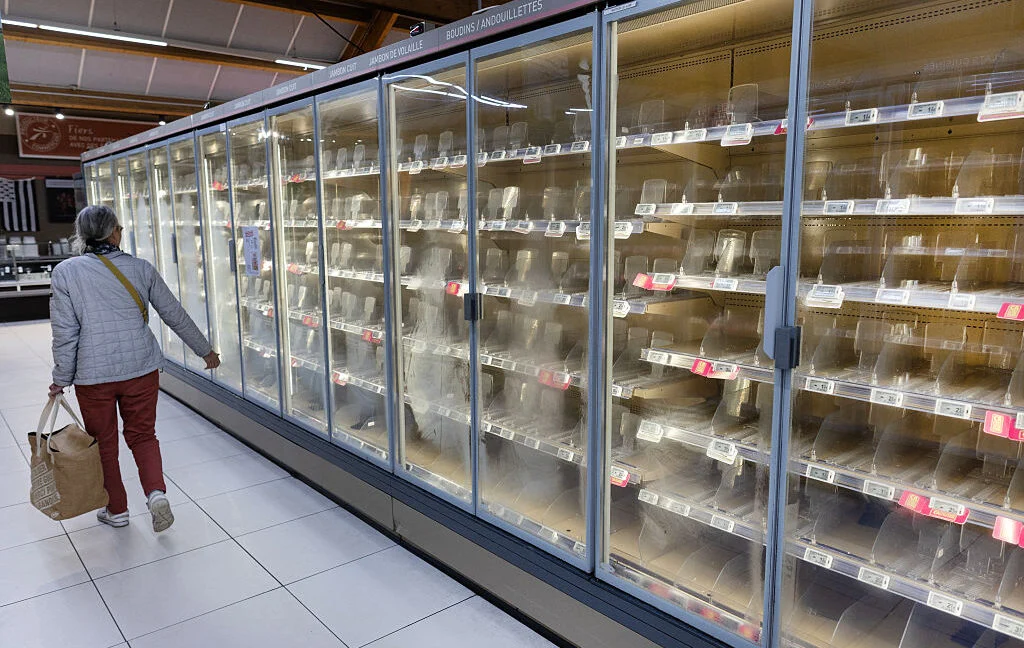
In a stark illustration of the vulnerabilities inherent in the modern Industrial Internet of Things (IIoT), supermarket chains across Europe have fallen victim to a sweeping cyberattack that resulted in the loss of millions of euros in perishable goods. The incident, which saw malicious actors gain unauthorized access to refrigeration controllers, serves as a grim case study on the dangers of "security debt" and the failure to implement basic digital hygiene in critical infrastructure.
Main Facts: A Failure of Basic Cyber Hygiene
The breach, which primarily targeted refrigeration systems, exploited fundamental lapses in network security. Reports indicate that the affected retailers failed to implement even the most rudimentary protective measures. Specifically, the controllers in question—devices responsible for maintaining cold-chain integrity in food storage—were left exposed directly to the public internet.
By failing to place these devices behind a Virtual Private Network (VPN) or implementing a restricted IP allowlist, these businesses effectively left their digital front doors wide open. Security researchers at Pen Test Partners noted that the controllers were running on outdated, vulnerable firmware, providing an easy entry point for attackers to manipulate temperatures, potentially spoiling vast quantities of inventory.
The impact was not localized; it was a transnational event. Affected stores were identified across Spain, Portugal, Poland, Germany, and Belgium. The financial fallout is estimated to be in the tens or even hundreds of millions of euros, accounting for the loss of inventory, the cost of emergency repairs, and the significant reputational damage incurred.
Chronology of the Crisis
The road to this disaster was paved with ignored warnings. The timeline of this vulnerability extends far beyond the recent attack, highlighting a systemic failure to act on known threats.
- October 2023: Security firm Claroty published a comprehensive analysis detailing specific vulnerabilities within Danfoss refrigeration controllers. Their report, Freeze the Controller, Defrost the Food, explicitly warned that these devices could be compromised to cause catastrophic failure in retail settings.
- February 2024: The U.S. Cybersecurity and Infrastructure Security Agency (CISA) issued an official Industrial Control Systems (ICS) advisory, reinforcing the warnings provided by researchers. CISA highlighted that these controllers were susceptible to remote exploitation if left exposed.
- The Breach Window: Throughout early 2024, attackers systematically scanned the public internet for these specific, vulnerable, and exposed controllers.
- The Attack: Within a compressed timeframe, the unidentified actors manipulated the refrigeration settings across multiple European chains. By the time the anomaly was detected—often when food began to spoil or alarm systems triggered—the damage was already irrevocable.
- Post-Incident Response: Following the discovery, manufacturers began issuing statements regarding end-of-life hardware, while retailers scrambled to retrofit their networks with the VPNs and security protocols they should have implemented years ago.
Supporting Data: The Anatomy of the Hack
The technical failures identified by Pen Test Partners are standard, yet they remain the most common vectors for industrial espionage and vandalism. The firm’s researchers outlined a five-point "Cyber Hygiene" checklist that would have rendered the attack impossible:
- Network Isolation: Removing the controller from the public-facing internet is the single most effective defense.
- Access Control: Implementing VPNs and IP allowlists ensures that only authorized personnel can communicate with the hardware.
- Third-Party Oversight: Bringing external contractor equipment onto a corporate network in a documented, controlled manner prevents "shadow IT" from becoming a backdoor.
- Credential Hygiene: Changing default manufacturer passwords is a baseline requirement that remains frequently ignored.
- Lifecycle Management: Patching to current firmware releases is essential to mitigate known vulnerabilities.
The vulnerability stems from the "legacy" nature of the equipment. Many retailers rely on refrigeration systems that have been in service for a decade or longer. While these machines are physically robust, their digital components have become obsolete, making them liabilities in an era of sophisticated automated threats.
Official Responses and Corporate Accountability
The manufacturers involved have largely pointed to the age of the equipment to deflect responsibility. Copeland, in an official statement provided via email, acknowledged that a vulnerability was identified in a "discontinued, end-of-life generation of controllers." The company stated that they are actively working with affected customers to prevent future incidents, though this offers little solace to those who have already suffered millions in losses.
Danfoss, another major player in the refrigeration control space, has remained notably reserved, with representatives offering little immediate comment to the press. CNN reported that the company echoed sentiments regarding the use of discontinued models, emphasizing that the burden of maintaining security for legacy hardware rests with the end-user.
This defensive posture from manufacturers highlights a recurring tension in the industrial sector: who is responsible for the security of a device once it is sold? As these devices become "smarter," the boundary between a mechanical failure and a cyberattack becomes increasingly blurred.
Motive and the Spectre of State Actors
Perhaps the most unsettling aspect of the attack is the silence of the perpetrators. There has been no ransom demand, no manifesto, and no claim of responsibility. This silence has fueled two primary theories among cybersecurity analysts.
The first theory is that this was an act of mass-scale, "for-the-lulz" vandalism. In this scenario, the perpetrators are motivated by the sheer destructive potential of the exploit—demonstrating that they can cause millions of euros in damage with a few lines of code.
The second, and perhaps more concerning, theory is that this was a "dry run" by a nation-state actor. By probing the resilience of European supply chains and the ability of retailers to respond to large-scale infrastructure disruptions, international actors could be gathering data for a more coordinated, continent-wide attack. If an adversary can compromise the food supply chain, they possess a powerful lever of soft power and psychological warfare.
Implications: The Financial-Security Tug-of-War
The most profound implication of the European supermarket hacks is the exposure of the cultural divide between corporate finance and cybersecurity departments.
In many retail organizations, security is viewed as a "cost center"—an expense that does not generate revenue. CFOs and procurement departments are often loath to authorize the replacement of perfectly functional refrigeration equipment simply because it lacks modern encryption or requires an expensive VPN integration. They prioritize the "bottom line" in the short term, ignoring the "security debt" that accrues with every month of operation.
The irony is that the cost of the breach far exceeds the cost of a comprehensive, proactive security upgrade. The "lessons learned" by the executives at these supermarket chains will be etched into their quarterly reports for years to come. The question remains whether other businesses will heed this cautionary tale.
The Future of Industrial Security
As we move deeper into the era of the Internet of Things, the distinction between a "security event" and a "business crisis" will continue to dissolve. The refrigeration hack is not an isolated incident; it is a preview of a broader vulnerability. From HVAC systems in commercial high-rises to automated manufacturing lines in factories, the risk of "digitally enabled physical failure" is growing.
For businesses, the path forward is clear but demanding. It requires:
- Investing in Visibility: Companies must audit every device on their network. If you cannot see it, you cannot protect it.
- Prioritizing Security over Convenience: The convenience of remote access without a VPN is a luxury that modern infrastructure can no longer afford.
- Establishing Zero-Trust Architectures: The assumption that any device—especially one coming from a third-party contractor—is "safe" must be abandoned. Every request must be verified.
- Cultural Shifts: Cybersecurity must be integrated into the boardroom as a core operational risk, on par with supply chain management and financial solvency.
The "Silent Thaw" across Europe serves as a wake-up call. The perpetrators may have been silent, but the message they delivered was deafening: in the modern digital economy, security is not an optional feature—it is the foundation upon which all other business functions depend. Those who continue to ignore this reality will eventually find their own operations, and their own bottom lines, melting away.


 Nana
Nana
 Rifan Muazin
 Layla Zulfa
 Pevita Pearce

 Iffa Jayyana