
 Ammar Sabilarrohman

As the smoke clears from the wildfires that scarred the European landscape and the cooling winds of autumn finally arrive, climate scientists have delivered a sobering post-mortem of the 2026 summer. It was not merely the hottest summer in recorded history; it was, according to newly released modeling, the deadliest.
New data indicates that the extreme heatwaves of the past few months triggered more than 50,000 excess deaths across urban areas alone. This staggering figure marks a harrowing departure from previous peaks, eclipsing the catastrophic tolls of 2022 and 2003. As global temperatures continue their relentless climb, experts are warning that the "dress rehearsal" phase of climate change is over. The continent is now facing a new, volatile reality where the mercury does not just rise—it kills.
The Scale of the Crisis: A Statistical Breakdown
The numbers, set to be published in the journal Nature Health next week, paint a picture of a continent under siege. Researchers from Imperial College London’s Centre for Environmental Policy modeled the impact of these temperature extremes across 854 urban centers, which collectively house roughly 40 percent of Europe’s population.
The data reveals that Europe endured five distinct, scorching heatwaves between May and September. On average, the summer was 5.2 degrees Fahrenheit (2.9 degrees Celsius) above the 1991–2020 baseline. However, these averages mask the true volatility of the season; on certain days, temperatures in specific regions spiked nearly 22 degrees Fahrenheit (12 degrees Celsius) above the historical norm.
Clair Barnes, a leading researcher at Imperial College London, noted that the jump in mortality is profound. “We’re seeing significantly higher modeled deaths,” she stated. To put the 50,000 figure in perspective, the deadliest years previously recorded were 2022, which saw 29,000 excess deaths, and 2003, which claimed approximately 28,000. The 2026 surge represents a near-doubling of these previous benchmarks, signaling an urgent escalation in both the intensity and frequency of heat events.
A Chronology of Scorching: From June to September
The summer of 2026 was defined by a series of relentless atmospheric assaults. While heatwaves are a natural phenomenon, the events of this year were "turbocharged" by human-caused climate change.
The June-July Peak
The most intense stretch occurred between June 17 and July 1. During this fortnight, daily average temperatures across the entire European region remained more than 9 degrees Fahrenheit (5 degrees Celsius) above the 30-year average. The impact on infrastructure was immediate and disruptive. Schools were forced to shutter their doors to protect students, public transit networks—often ill-equipped for such thermal stress—ground to a halt, and wildfires erupted across the Mediterranean, turning forests into ash and forcing mass evacuations. Even the iconic Tour de France felt the sting of the climate, as organizers struggled to navigate a landscape where asphalt literally threatened to soften under the feet of athletes.
The Cumulative Effect
Unlike previous summers, where a single, intense "heat dome" might dominate the headlines, 2026 was defined by persistence. "Any one of those heat waves would have been deadly, but we’ve had five," Barnes explained. The human body requires a period of recovery between heat events; this summer, that recovery period never arrived. The cumulative stress on the cardiovascular and respiratory systems of the population, particularly the vulnerable, proved to be a lethal combination.
The Human Cost: Vulnerability and Geography
The geographic distribution of the mortality data highlights a clear trend: southern and western Europe bore the brunt of the heat. Italy topped the list with 13,303 modeled excess deaths, followed closely by France with 7,268.
This disparity is not just a matter of latitude, but of preparedness. Kai Chen, faculty director of the Yale Center on Climate Change and Health, points out a crucial infrastructural gap: air conditioning. "In the United States, air conditioning can cut heat-related fatalities by more than half," Chen noted. "In much of Europe, where such amenities are significantly less prevalent, the population remains highly exposed."
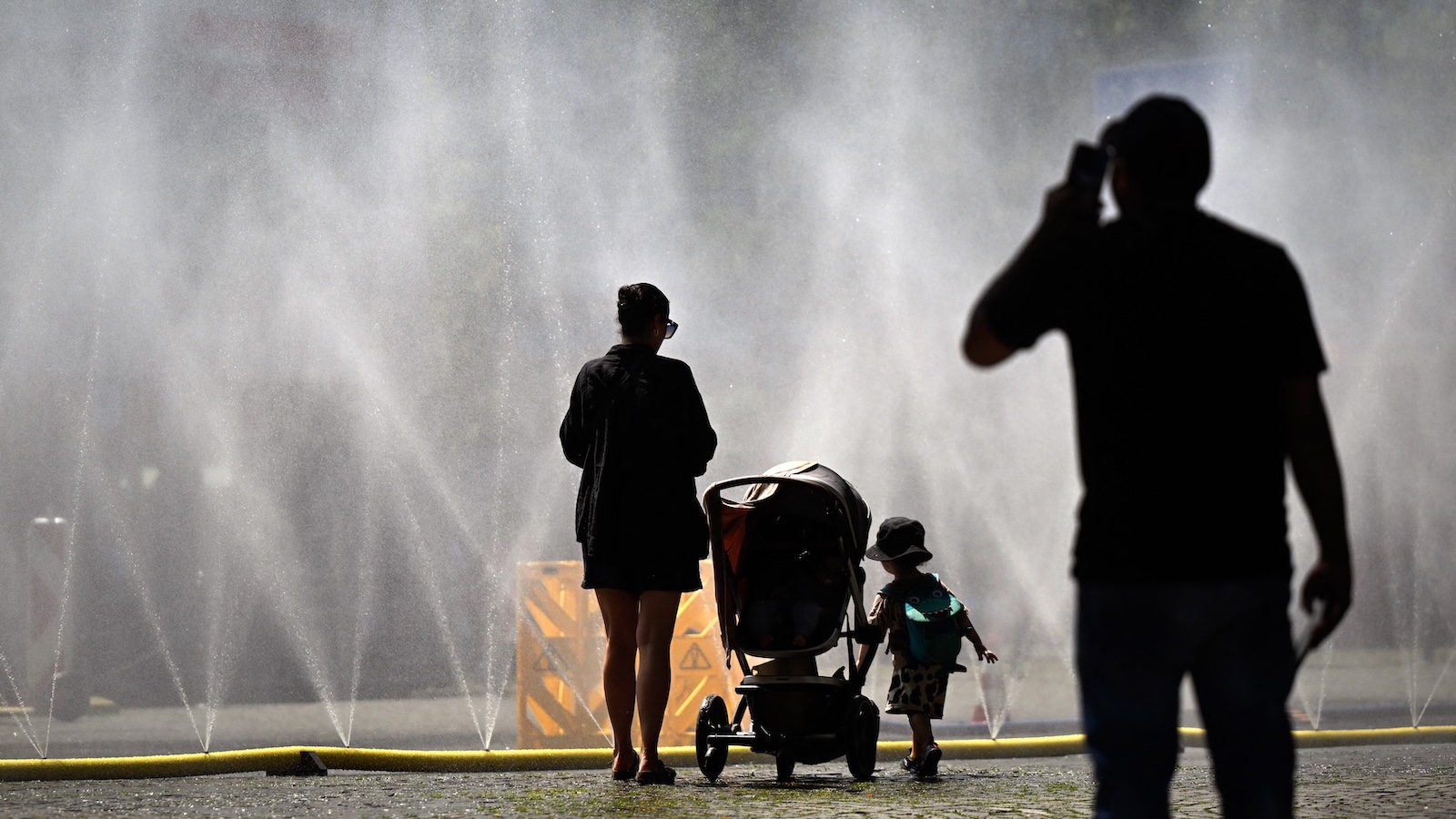
The demographic impact was equally lopsided. The elderly, whose bodies are less efficient at thermoregulation, were the primary victims. Of the 50,000 excess deaths, all but 6,000 occurred in individuals over the age of 65. For this population, heat is not just an inconvenience; it is a catalyst that exacerbates underlying conditions such as heart disease, diabetes, and respiratory ailments.
The Attribution Science: Proving the Link
The methodology used to reach these conclusions is now considered a gold standard in climate science. Researchers essentially run two parallel simulations: one representing the climate as it exists today, with the added influence of greenhouse gas emissions, and another representing a "counterfactual" world—a version of Earth without the warming influence of human activity.
By comparing the death rates between these two models, scientists can isolate the impact of human-caused warming. According to the study, roughly two-thirds of the 50,000 deaths are directly attributable to climate change.
"This tells people that climate change is not a distant threat anymore," said Kai Chen, who praised the speed at which this data was released. "That is critical information to communicate in near-real time. When people see that their neighbors are dying because of atmospheric changes that were entirely preventable, it changes the conversation from abstract policy to immediate human survival."
Implications: A New Era of Climate Adaptation
The World Health Organization has labeled 2026 a "dress rehearsal" for the decades to come. As the planet warms, the threshold for what constitutes a "dangerous" heatwave is dropping, and the frequency of these events is rising.
Policy and Mitigation
The study authors argue that this data should not be viewed as a static historical record, but as a diagnostic tool for the future. Barnes suggests that the same modeling framework could be applied to short-term weather forecasts. By running these models against upcoming meteorological predictions, local authorities could issue targeted health warnings, open "cooling centers," and prepare healthcare systems for surges in patients before the heat arrives.
Global Outreach
The research team is now looking to expand this methodology to other regions, particularly in Africa and Southeast Asia. These areas are often on the front lines of climate change but suffer from a lack of reliable, digitized death registration data. The goal is to provide these nations with the same predictive capacity that Europe now possesses, allowing for more robust disaster management and advocacy.
A Call to Action
The implications for the United States are also significant. With heatwaves becoming a standard feature of American summers, the adoption of these European modeling techniques could provide a more accurate picture of the silent death toll occurring in U.S. cities. "It can raise awareness and motivate policy action," Chen said.
Ultimately, the 2026 data serves as a grim indictment of a global failure to curb emissions. As the science becomes increasingly precise, the "deniability" of climate impact vanishes. When the deaths of 50,000 people can be mathematically traced to a warmer planet, the call for systemic change—both in carbon mitigation and urban adaptation—becomes impossible to ignore. The question is no longer whether we can survive the heat, but whether we are willing to build a world that protects its most vulnerable from it.



 Neng Nana

 Asep Darmawan

 Asro

 Layla Zulfa

 Nila Kartika Wati

 Muslim
