
 Neng Nana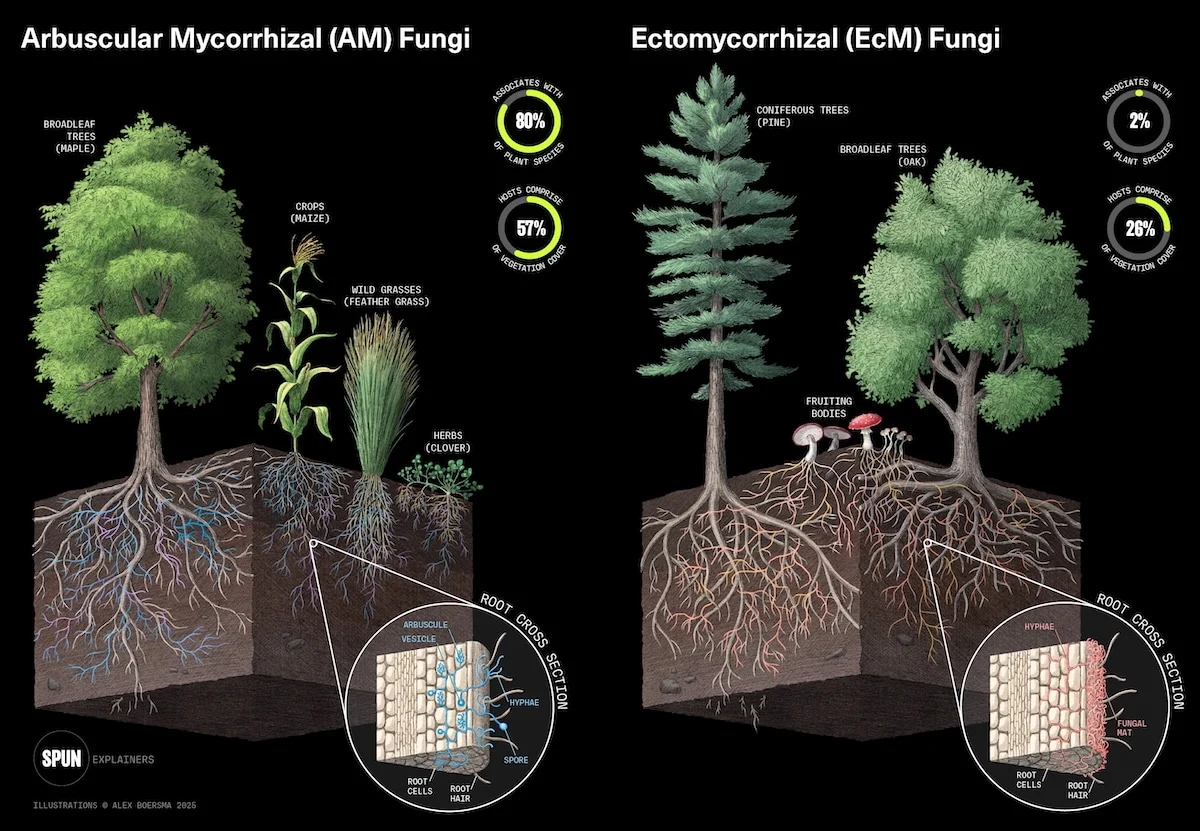
Beneath our feet lies a vast, intricate, and largely invisible biological infrastructure that serves as the planet’s life-support system. Mycorrhizal fungi—ancient, symbiotic organisms that weave through the soil—act as the Earth’s "circulatory system," facilitating the exchange of nutrients, sequestering carbon, and underpinning the resilience of almost every terrestrial ecosystem. Yet, a groundbreaking study published in the journal Nature has revealed a startling vulnerability: the world’s most critical fungal biodiversity hotspots are almost entirely unprotected.
According to researchers from the Society for the Protection of Underground Networks (SPUN), 90 percent of these vital subterranean hotspots exist outside of designated conservation areas. As the climate crisis intensifies, the neglect of this "underground architecture" threatens to unravel global food security, stall forest regeneration, and significantly hinder our ability to reach carbon emission reduction targets.
The Foundations of Life: Understanding Mycorrhizal Fungi
To understand the gravity of this discovery, one must recognize the evolutionary importance of mycorrhizal fungi. These organisms form symbiotic relationships with the roots of roughly 90 percent of all land plants. In this partnership, fungi extend their thread-like mycelial networks far beyond the reach of plant roots, scavenging for essential nutrients like phosphorus and nitrogen, which they trade to the plants in exchange for carbon-rich sugars.
"450 million years ago, there were no plants on Earth," explains Dr. Toby Kiers, Executive Director of SPUN. "It was because of these mycorrhizal fungal networks that plants colonized the planet and began supporting human life. If we have healthy fungal networks, we have greater agricultural productivity, bigger and more beautiful flowers, and enhanced protection against pathogens."
Beyond individual plant health, these networks are global climate stabilizers. Every year, they draw approximately 13 billion tons of carbon dioxide into the soil—a figure representing roughly one-third of global fossil fuel emissions. When these networks are disrupted by industrial agriculture, deforestation, or urban sprawl, that carbon is at risk of being released back into the atmosphere, creating a feedback loop that accelerates climate change.
A Chronology of Discovery: From Dark Matter to Data
For centuries, scientists have focused their mapping efforts on the "charismatic" ecosystems aboveground—the towering redwoods, the sprawling savannas, and the deep oceans. Fungi, meanwhile, remained the "dark matter" of biology.
The turning point arrived in 2021, when SPUN launched its ambitious world-mapping initiative. The goal was to illuminate the hidden geography of the soil. By mid-2025, that vision materialized into a high-resolution, predictive atlas of the planet’s mycorrhizal communities.

The project relied on an unprecedented dataset: over 2.8 billion fungal DNA sequences gathered from 130 countries. By processing this data, the research team, led by Dr. Michael Van Nuland, was able to visualize biodiversity patterns that had previously only been hypothesized.
"For centuries, we’ve mapped mountains, forests, and oceans," says Dr. Kiers. "But these fungi have remained in the dark, despite the extraordinary ways they sustain life on land. This is the first time we’ve been able to visualize these biodiversity patterns—and it’s clear we are failing to protect underground ecosystems."
Supporting Data: The Scale of the Crisis
The data provided by the SPUN study is as revealing as it is alarming. By cross-referencing fungal biodiversity hotspots with current global protected areas, the researchers discovered a massive discrepancy in conservation priorities.
- The 9.5 Percent Reality: Only 9.5 percent of identified fungal biodiversity hotspots are contained within existing protected areas.
- The Global Scope: The atlas identified critical, unique communities in regions as diverse as West Africa’s Guinean forests, Tasmania’s temperate rainforests, and Brazil’s Cerrado savanna.
- The Sampling Gap: Despite the vastness of the dataset, researchers estimate that only 0.001 percent of the Earth’s soil surface has been sampled. Even with this limited scope, the project has already cataloged over 40,000 specimens representing 95,000 distinct mycorrhizal taxa.
These figures underscore what experts call "fungus blindness"—a systemic societal bias that prioritizes visible life forms while ignoring the essential microscopic engineers that make that life possible.
Official Responses and Strategic Implications
The release of the Nature study has sent ripples through the conservation and policy communities. Advisors to the project, including renowned conservationist Jane Goodall and influential authors Michael Pollan and Paul Hawken, have signaled that the map represents a paradigm shift in how we view environmental stewardship.
"The idea is to ensure underground biodiversity becomes as fundamental to environmental decision-making as satellite imagery," notes Jason Cremerius, Chief Strategy Officer at SPUN.
Integrating Fungi into Policy
SPUN’s initiative is designed not merely for academic interest but for practical application. The maps act as a guide for policymakers to:

- Prioritize Interventions: Identify areas where fungal degradation is most acute.
- Establish Underground Corridors: Create protected zones that specifically account for the needs of mycelial networks.
- Enhance Restoration: For restoration ecologists, the maps provide "quantitative targets" for what a healthy, diverse fungal community should look like in a specific region, moving beyond a simple "tree planting" approach to a more holistic ecosystem-building model.
Dr. Alex Wegmann of The Nature Conservancy highlights the limitation of past efforts: "Restoration practices have been dangerously incomplete because the focus has historically been on life aboveground. These high-resolution maps provide the missing pieces for restoration managers to establish what diverse mycorrhizal communities could and should look like."
Implications for a Warming Planet
The implications of this research are profound. As we navigate the 21st century, the resilience of our agricultural systems is under threat from extreme weather events, soil degradation, and loss of topsoil fertility. Mycorrhizal fungi are the primary agents of soil structure formation; without them, the land loses its ability to hold water and retain nutrients.
Dr. Merlin Sheldrake, Impact Director at SPUN, emphasizes that the maps are an essential tool for "alleviating our fungus blindness." By recognizing the fungi as the "planetary circulatory system," we can begin to integrate them into climate change strategies, which have, until now, largely overlooked the soil.
Furthermore, the work is ongoing. The "Underground Explorers"—a network of 96 researchers across 80 countries—continue to sample remote ecosystems, including in Bhutan, Mongolia, Ukraine, and Pakistan. This global, collaborative effort seeks to ensure that when we talk about biodiversity loss, we are including the millions of tiny architects working silently beneath our feet.
Conclusion: The Path Forward
The message from the scientific community is clear: we cannot protect the surface of the Earth if we ignore the foundation upon which it stands. The SPUN initiative has successfully lifted the veil on the world’s underground networks, providing a roadmap for a new era of conservation.
As Dr. Michael Van Nuland concludes, "These maps are more than scientific tools—they can help guide the future of conservation. Food security, water cycles, and climate resilience all depend on safeguarding these underground ecosystems."
The challenge now lies in the hands of policymakers, environmental organizations, and the public. We must move beyond the "aboveground" bias and acknowledge that the future of life on Earth is inextricably linked to the survival of the vast, interconnected world beneath the soil. Protecting the underground is not just an act of biological preservation; it is a fundamental requirement for the continued survival of human civilization.

 Raul Delapena Setiawan
 Laily UPN
 Suro Senen
 Lina Hope
 Iffa Jayyana