
 Raul Delapena Setiawan
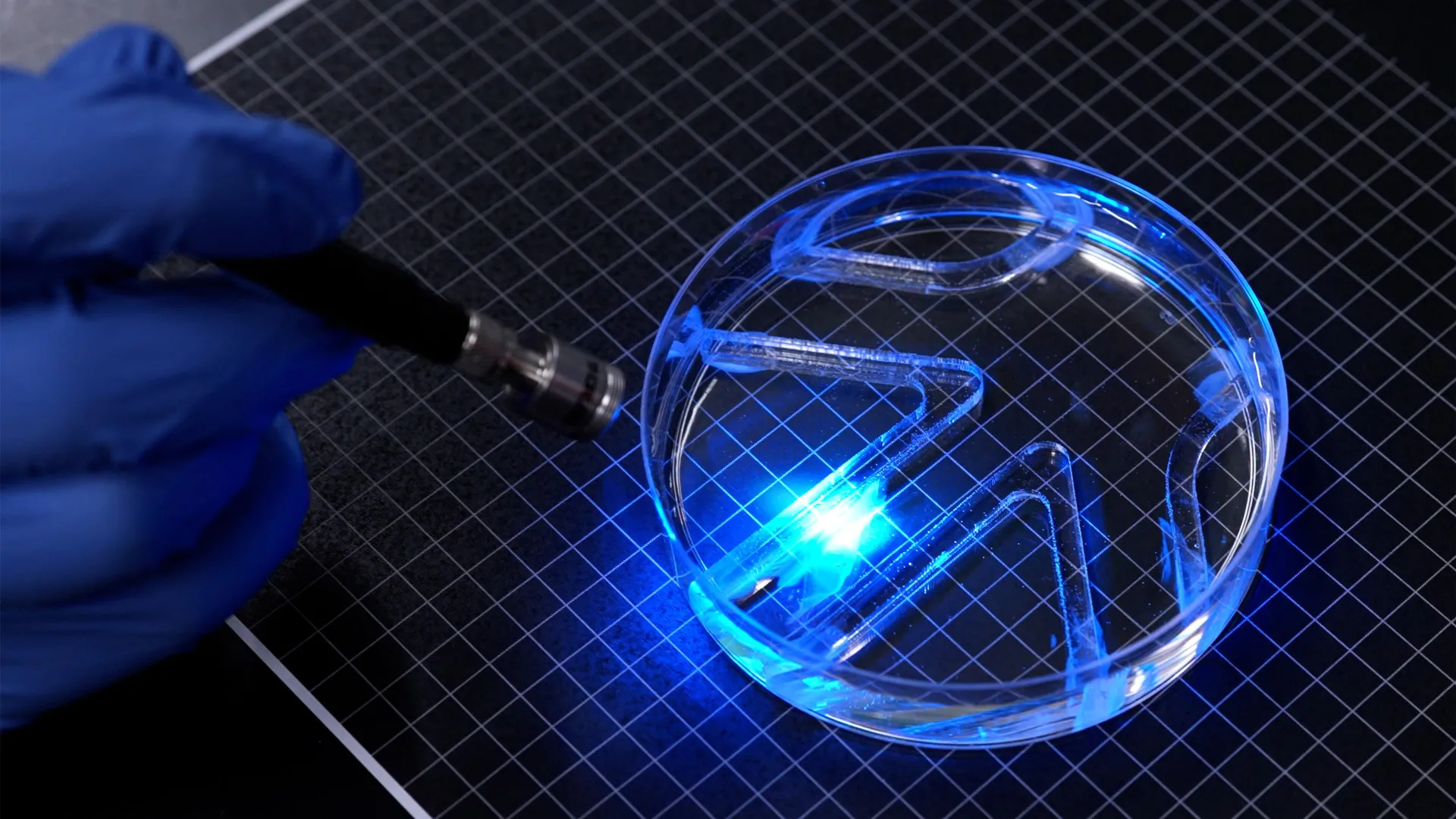
In a breakthrough that blurs the line between biology and mechanical engineering, researchers at the Massachusetts Institute of Technology (MIT) have successfully demonstrated a swimming robot propelled not by heavy, energy-hungry motors, but by a single, ultra-thin layer of living muscle tissue. This development, detailed in the journal Advanced Functional Materials, represents a fundamental shift in how we conceive of robotic locomotion, moving away from bulky, rigid hardware toward soft, responsive, and self-healing biological systems.
The robot, roughly the size and shape of a stick of gum, features a flexible gel framework configured into two distinct fins. Each fin is coated in a layer of genetically modified muscle cells thinner than a human hair. By precisely directing light onto these fins, the researchers can trigger synchronized contractions, allowing the device to navigate underwater environments with remarkable agility.
Chronology of an Engineering Milestone
The journey toward this bio-hybrid swimmer began long before the recent successful aquatic trials. It was born from the foundational work of Ritu Raman’s laboratory at MIT, which has spent years investigating the intersection of synthetic materials and biological tissue.
The Iris Precedent
Last year, the team made headlines by creating an artificial muscle disk inspired by the human iris. In that study, the engineers patterned a gel disk with concentric grooves and seeded it with muscle cells. When illuminated, the tissue contracted, causing the disk to expand and compress—mimicking the pupil’s response to light. While the experiment proved that muscle cells could be organized to perform complex movements, the results were limited; the movements were confined to a scale of roughly 100 microns. From a robotics standpoint, the force generated was insufficient for large-scale mobility.
Optimizing the Foundation
Recognizing that their previous design lacked the necessary "muscle" to move through a viscous liquid medium like water, the team spent the last year refining the mechanical and biological parameters of their design. They discovered that their original material, fibrin—an exceptionally soft gel—was prone to shrinking under the tension of contracting muscle fibers.
To rectify this, the researchers systematically tested a variety of substrates. They evaluated chemical composition, stiffness, and the geometry of the grooves used to guide cell growth. Through rigorous testing, they identified gelatin methacrylate (GelMA) as a superior scaffold. By adjusting the formulation of the GelMA, they achieved a level of stiffness that optimized cell alignment. They also determined that square-bottomed grooves, rather than curved channels, encouraged the muscle cells to fuse into long, powerful fibers.
By applying a "training" regimen of light pulses, the team strengthened these fibers before deployment, ensuring that the muscle tissue was primed for the high-resistance environment of an underwater trek.
Supporting Data and Performance Metrics
The capabilities of this bio-hybrid robot, while still in its infancy, provide a compelling proof-of-concept for the future of soft robotics. In controlled experiments, the robot was placed in a water-filled petri dish containing a miniature obstacle course.
Velocity and Agility
At its maximum speed, the robot achieved a velocity of approximately four body lengths per minute. While this is significantly slower than an Olympic swimmer—who can reach speeds of 65 body lengths per minute—it places the robot in the same performance category as a cow shark moving through the water in a leisurely, energy-efficient manner.
Force and Structural Integrity
The strength of the robot is disproportionate to its size. Because moving through water requires overcoming high drag, the ability of a layer of tissue thinner than a human hair to propel the gel structure is a testament to the effectiveness of the team’s bio-engineering. The choice of a 0.5-millimeter-thick gel film proved to be the "Goldilocks" zone: it provided enough structural integrity to hold the muscle cells during contraction, yet remained light enough to ensure the entire device remained buoyant and maneuverable.
Independent Control
The dual-fin design allows for nuanced steering. By activating the left or right fin independently via a light source, the researchers can execute precise turns and navigate complex paths. If both fins are stimulated simultaneously, the robot surges forward. This level of control, achieved simply by manipulating the wavelength and location of light, demonstrates an elegant, decentralized approach to robotics.
Official Perspectives: The Vision of Ritu Raman
Ritu Raman, an associate professor of mechanical engineering at MIT and the lead author of the study, views this project as a bridge toward a new era of technology. She emphasizes that the current reliance on "bulky, 3D chunks of lab-grown skeletal muscle" is a significant hurdle for the field of bio-hybrid robotics.
"Currently, biohybrid robots from our group and others are built from bulky, 3D chunks of lab-grown skeletal muscle that require millions of cells to fabricate," Raman explains. "We believe that thinner, less bulky designs such as our new bot could be cheaper to build and could move more efficiently."
Raman’s team, which includes first author Maheera Bawa along with researchers Arielle Berman, Laura Schwendeman, Ferdows Afghah, and Seanbiron Johnson, argues that the advantages of living tissue go beyond mere efficiency. Unlike silicon and steel, living tissue is inherently "soft, responsive to its surroundings, and can heal itself." This suggests that future robots could survive in environments that would destroy traditional hardware.
Implications for the Future of Robotics
The implications of this research extend far beyond the laboratory petri dish. By successfully engineering a device that leverages the power of biological contraction, the MIT team has opened several doors for potential application.
Environmental Monitoring
One of the most promising applications for muscle-powered swimmers is environmental monitoring. Because the robot is constructed from soft, organic-compatible materials, it could potentially operate in fragile ecosystems—such as coral reefs or contaminated water tables—where rigid, metallic robots might cause damage or introduce pollutants. A fleet of these "bio-bots" could quietly patrol aquatic environments, gathering data without disrupting the natural balance.
Delicate Exploration
The responsiveness of living muscle tissue allows for a degree of "soft touch" that is difficult to replicate with traditional actuators. In scenarios where a robot must interact with delicate biological samples or unpredictable terrain, the self-healing and compliant nature of muscle-based systems provides a distinct advantage. If a limb is damaged, the living tissue could theoretically repair itself over time, extending the operational life of the robot significantly.
Cost-Efficiency and Scalability
By moving toward a 2D design—using thin layers rather than massive 3D tissue constructs—the researchers have significantly reduced the "cost of entry" for bio-hybrid fabrication. Lower cell counts mean less time in the incubator and less reliance on expensive culture media. This scalability is essential if the technology is to move from a niche academic experiment to a functional, real-world tool.
The Path Forward: Scaling Up
While the team has proven that living tissue can generate the force required for movement, the work is far from finished. The researchers have already identified the next phase of their development: optimizing the body design for increased speed.
As the technology matures, the team envisions integrating sensory feedback loops, where the robot could potentially respond to chemical signals in the water rather than requiring a human operator to shine a light on its fins. By embedding synthetic or natural sensors, these robots could one day become autonomous, intelligent agents in our oceans and waterways.
The research, partially funded by the Office of Naval Research, underscores a shift in engineering philosophy. By working with biology rather than trying to replicate it with cold, hard materials, MIT engineers are moving closer to a future where robots are not just tools, but biological counterparts capable of navigating the most challenging environments on Earth. Whether they will eventually monitor climate change in the Arctic or explore the depths of polluted urban canals, one thing is certain: the era of the muscle-powered robot has officially begun.


 Azzam Bilal Chamdy

 Lina Irawan

 Ammar Sabilarrohman

 Asep Darmawan

 Asro

 Layla Zulfa

 Nila Kartika Wati

 Muslim
