
 Azzam Bilal Chamdy
Introduction
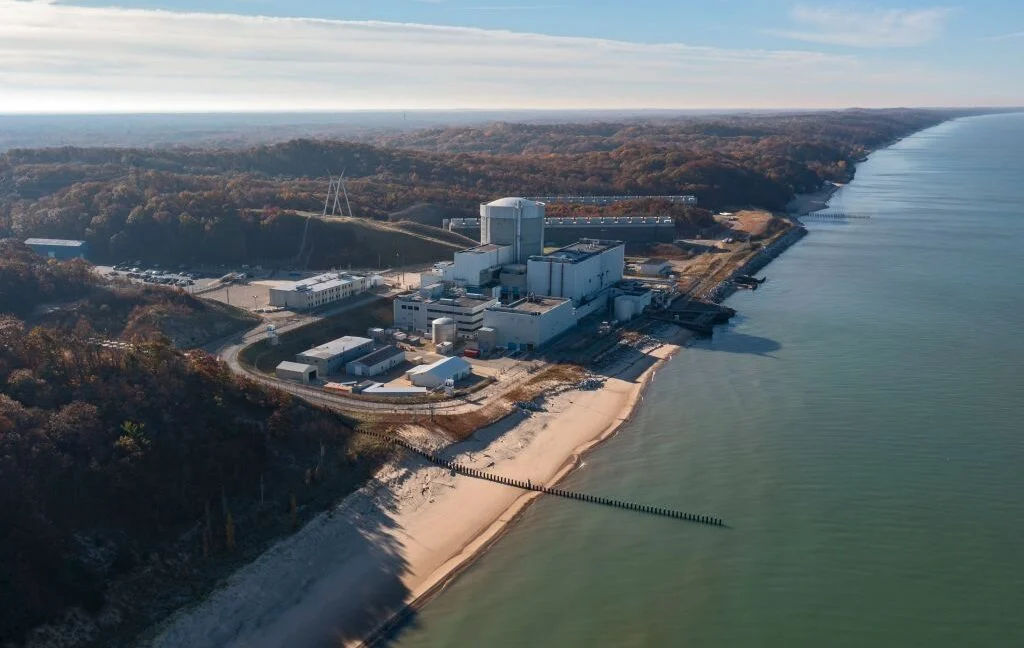
The revival of the Palisades Nuclear Power Plant in Michigan stands as one of the most ambitious and controversial energy projects in the United States. As the nation pivots toward carbon-free base-load power, the dormant facility has become a focal point for both climate optimism and profound skepticism regarding nuclear governance. With a firm contractual deadline of March 2027 to begin delivering power to an eager customer base—which has collectively secured $1.3 billion in federal subsidies to guarantee the plant’s output—operator Holtec International is under immense pressure. However, recent interventions by the Nuclear Regulatory Commission (NRC) have cast a long shadow over the project, raising critical questions about safety, corporate culture, and the viability of Holtec’s transition from a component supplier to a major plant operator.
The Main Facts: A Project Under the Microscope
At the heart of the current friction is a series of operational mishaps and cultural warnings issued by the NRC. While Holtec portrays its work as a "remarkable demonstration of technical ingenuity," the federal regulator has expressed mounting concerns regarding the company’s internal management.
The project is currently attempting to restart a decommissioned reactor, a process with virtually no modern precedent in the U.S. nuclear industry. To meet the March 2027 deadline, Holtec must navigate not only complex engineering hurdles but also a stringent regulatory environment designed to prevent the catastrophic failure of nuclear infrastructure. The NRC’s intervention, which warns of "cultural decline" within specific departments at the Palisades site, suggests that the regulator is watching the transition with an unblinking eye, potentially threatening the timeline of the multi-billion-dollar power purchase agreements that underpin the plant’s future.
Chronology of the Palisades Resurgence
The saga of Palisades is characterized by rapid shifts in ownership and intent:
- May 2022: Entergy Corp shuts down the Palisades plant, ending its commercial operational life.
- June 2022: Holtec International acquires the plant with the intent of decommissioning it.
- 2023–2024: Amid shifting geopolitical energy concerns and federal pushes for clean energy, Holtec pivots from decommissioning to a historic restart effort, supported by the Department of Energy.
- Late 2024–2025: Operational incidents, including a worker falling into the reactor cavity and a fuel assembly tilting incident, occur during the site’s intensive refurbishment phase.
- 2026 (Present): The NRC issues formal warnings regarding workplace culture, demanding a corrective action plan within 30 days to mitigate further "cultural decline."
- March 2027 (Target): The contractual deadline for Holtec to begin supplying power to grid customers.
Supporting Data: The Stakes of Success and Failure
The economic stakes of the Palisades project are staggering. The $1.3 billion in government funding is tied directly to the assumption that the plant will contribute to grid stability. If the project stalls or is denied a license to operate due to safety concerns, the financial fallout for stakeholders and the federal government would be significant.
Furthermore, the data surrounding Holtec’s operational history is a point of contention. The company has historically thrived as a provider of nuclear components and dry cask storage services. However, the move into reactor operations requires a shift from a product-based safety culture to a process-based, human-centric safety culture. The NRC’s concerns regarding "workplace culture" are essentially a critique of the company’s ability to manage this shift. When a nuclear operator experiences a series of incidents—such as the tilt of a fuel assembly or the fall of an employee into a restricted cavity—it often serves as a leading indicator of broader systemic failure, even if the individual incidents are mitigated by existing safety protocols.
Official Responses and Corporate Stance
Holtec International has maintained a defensive, albeit firm, posture regarding its operations. In a statement to the Financial Times, the company emphasized that it takes NRC findings with the utmost seriousness. Regarding the fuel assembly incident, Holtec officials described the recovery as a "remarkable demonstration of technical ingenuity," insisting that the lack of a spill or radiation leak proves that their safety systems are functioning as intended.
Addressing the NRC’s concerns about a "rushed" timeline, Holtec stated:
"A strong safety-conscious work environment is fundamental to our culture. The assertion that we have rushed has been directly countered by the work that has been accomplished."
The company further addressed the 2025 workplace accident, noting that the employee who fell into the reactor cavity sustained only minor injuries and was able to return to work quickly. Holtec’s founder and CEO, Kris Singh, has historically rejected allegations of mismanagement, focusing instead on the company’s technical proficiency and its role as a necessary player in the clean energy transition.
The NRC, for its part, has sought to balance its warnings with public reassurance. While they have been blunt about the need for cultural reform within Holtec, they have consistently downplayed any immediate risk to the public, citing that mitigating measures currently in place at the site ensure that plant safety has not been compromised.
Implications: A Question of Corporate Governance
The challenges at Palisades are not occurring in a vacuum. Holtec’s transition into a reactor operator has been shadowed by a history of litigation. The company has been the subject of whistleblower lawsuits and legal disputes involving former executives that span a decade. These cases have included serious allegations ranging from financial misrepresentation to executive retaliation and fraudulent practices.
The Governance Gap
The primary implication of these ongoing disputes is the erosion of trust between the regulator and the operator. For the NRC, the "culture" at a nuclear site is not a soft metric; it is a primary safety indicator. A culture that suppresses whistleblowers or ignores minor procedural lapses is, in the eyes of the regulator, a precursor to a major incident.
If Holtec fails to address the NRC’s concerns within the mandated 30-day window, the consequences could be severe:
- Licensing Delays: Any delay in the licensing process would likely push the March 2027 start date, triggering penalties under the power purchase agreements.
- Increased Oversight: The NRC may impose "Special Inspection" status on the facility, requiring a much higher level of ongoing oversight that could drive up operational costs significantly.
- Reputational Damage: Continued scrutiny could alienate the public and local communities in Michigan, who are already wary of the risks associated with a restarted, aging nuclear facility.
The Energy Transition Nexus
The broader implication concerns the national energy strategy. The U.S. government has bet heavily on nuclear energy as a cornerstone of its net-zero ambitions. If Holtec—a company currently under federal fire—becomes the face of this transition, the resulting controversies could weaken political support for nuclear power as a whole. Conversely, if Holtec successfully resolves these issues and brings Palisades online by 2027, it could serve as a model for how the U.S. can leverage existing, dormant infrastructure to meet urgent energy needs.
Conclusion: The Road to 2027
The next few months will be pivotal for Holtec International. The company finds itself in a precarious position where technical competence is no longer enough to satisfy the requirements of the nuclear industry. To succeed, Holtec must demonstrate a profound change in its internal governance, moving away from the litigious and often secretive culture of its past toward a transparent, safety-first paradigm that the NRC can endorse.
The $1.3 billion investment in the Palisades project is more than just money; it is a vote of confidence in a new, unproven business model. As the March 2027 deadline approaches, the eyes of the energy sector, the federal government, and the Michigan public will remain fixed on whether Holtec can reconcile its ambitious goals with the rigid, non-negotiable safety standards of the nuclear age. The "cultural decline" mentioned by the NRC is the final hurdle—or perhaps the fatal flaw—in what has become one of the most high-stakes industrial experiments of the decade.
© 2026 The Financial Times Ltd. All rights reserved. Not to be redistributed, copied, or modified in any way.


 Reynand Wu

 Sagoh

 Raul Delapena Setiawan



 Ali Ikhwan
