
 Lina Hope
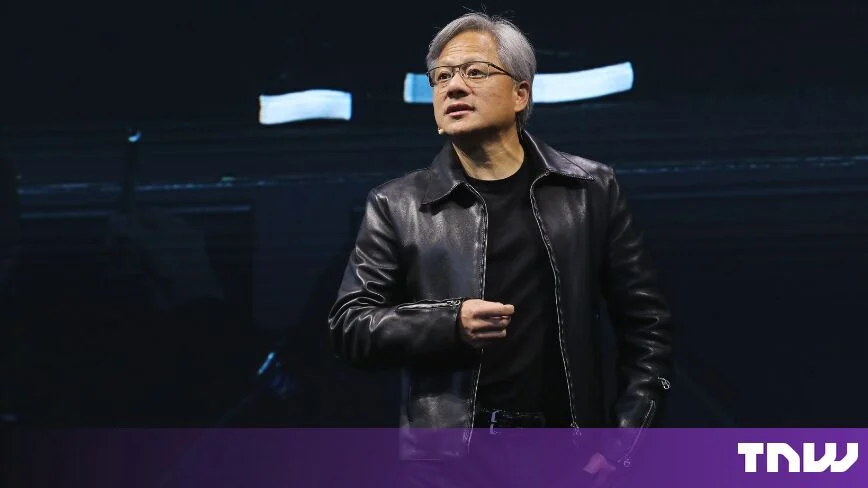
In the high-velocity world of Artificial Intelligence, the line between visionary investment and systemic risk is increasingly being drawn by the credit markets. This week, a striking divergence emerged between the optimism of Nvidia CEO Jensen Huang and the cold, mathematical skepticism of bond traders. As Huang toured Stockholm to solidify European partnerships, the financial markets delivered a jarring reality check regarding CoreWeave, one of Nvidia’s most significant partners and customers.
The Disconnect: CEO Optimism vs. Market Skepticism
While Jensen Huang spent his time in Stockholm this week emphasizing the growing maturity and financial stability of CoreWeave, the credit markets were busy signaling profound distress. Huang, in an interview with Bloomberg, explicitly stated that CoreWeave’s cost of capital is on a downward trajectory and, crucially, that Nvidia has no intention or need to act as a financial backstop for the cloud infrastructure provider.
"CoreWeave’s strength is improving every day," Huang stated. "I’m optimistic. Their cost of capital is actually decreasing."
Yet, on the very day those words were spoken, CoreWeave’s five-year credit default swaps (CDS)—a financial derivative that acts as insurance against a borrower’s default—soared to a record-breaking 1,194.5 basis points. This move, tracked by ICE Data Services, represents a significant escalation in risk perception. Financial analysts interpret these levels as pricing in a greater than 60% probability of default within the next five years. The market is not merely concerned; it is sounding a loud, collective alarm that stands in stark contrast to the boardroom confidence displayed by Nvidia’s leadership.
A Chronology of Financial Volatility
To understand the current tension, one must look at the recent trajectory of CoreWeave’s credit profile. The company, which functions as a critical specialized cloud provider for AI training, has seen its debt load balloon as it races to build out data center capacity at an unprecedented scale.
- December 2025: CoreWeave’s CDS spreads hit a previous peak, reflecting investor nervousness over the company’s aggressive capital expenditure model.
- June 2026: A period of relative calm saw those same contracts compress to 452 basis points, bolstered by market optimism regarding AI demand and infrastructure growth. During this period, bonds backed by CoreWeave leases were pricing at 7%.
- July 2026: Concerns regarding the sheer volume of AI-related financing began to resurface. Nvidia’s own credit markets flinched as the company announced a staggering $750 billion in potential AI deals, causing Nvidia’s own five-year swaps to hit a record high of 82 basis points.
- October 2026 (Present): The spread on CoreWeave’s debt has roughly tripled from its June lows, pushing the company into speculative-grade territory as investors grapple with the sustainability of its debt-fueled expansion.
Supporting Data: The Scale of the "Circular" Economy
The structural relationship between Nvidia and its customers has come under intense scrutiny from global regulators, including the International Monetary Fund (IMF) and the Bank for International Settlements (BIS). The concern centers on the perception of "circularity."
Critics argue that Nvidia’s business model involves a self-reinforcing loop: Nvidia provides the hardware, then takes equity stakes in, or guarantees the debt of, the customers purchasing that hardware. This influx of capital allows the customers to purchase more Nvidia chips, which in turn inflates Nvidia’s revenue and stock price.
The data underscores why this model is under a microscope:
- The Debt Load: As of June 2026, CoreWeave’s total debt stood at approximately $30 billion—a three-fold increase from the previous year.
- The Backlog: CoreWeave claims a formidable backlog of $99.4 billion as of July.
- Capital Intensity: The company’s 2026 capital spending budget is estimated between $31 billion and $35 billion.
While the backlog is substantial, the sheer volume of capital required to convert that backlog into operational revenue is massive. If credit markets continue to tighten, the cost of financing that $35 billion spend could significantly erode the company’s margins, forcing it to rely even more heavily on its primary supplier—Nvidia—for financial support.
Official Responses and the "Backstop" Question
Jensen Huang’s denial of a need to "backstop" CoreWeave is a pivot from reports surrounding other major industry players. Reports have suggested that Nvidia is in advanced talks to backstop as much as $250 billion in financing for OpenAI’s data center ambitions. This proposed guarantee would cover construction and lease debt for a colossal 10-gigawatt campus in Ohio.
While neither Nvidia nor OpenAI has officially confirmed these figures, the market is clearly viewing Nvidia as the ultimate guarantor of the AI infrastructure revolution. When Huang says, "no backstop is needed" for CoreWeave, he is attempting to decouple the health of his supply chain from the health of his balance sheet. However, the market’s reaction suggests that investors view these entities as inextricably linked. If a major partner like CoreWeave were to default, the reputational and operational hit to Nvidia would be seismic, making the "no backstop" stance a difficult narrative to maintain in the eyes of risk analysts.
Implications: The European Expansion and Beyond
While the credit drama plays out in the U.S., Huang is aggressively pursuing a growth strategy in Europe. During his visit to Paris and Stockholm, he has been positioning Nvidia as the catalyst for European technological sovereignty. He pledged $2 billion in European investment within a week of his arrival, urging the continent to "get in the race" of AI infrastructure.
In Stockholm, the atmosphere was markedly different from the tension in the bond markets. Alongside Sferical AI CEO Jenny Nordlow and financier Marcus Wallenberg, Huang announced the establishment of a new Stockholm AI lab, scheduled to open in 2027 in partnership with the Norrsken Foundation.
Yet, the irony of the situation was not lost on observers. While Huang was promising a future of innovation and expansion, the cost of borrowing for the infrastructure required to run that AI was hitting historic highs.
The Systemic Risk Assessment
The implications of this divergence are twofold:
- Market Sentiment vs. Operational Reality: There is a distinct possibility that the credit markets are mispricing the risk of specialized AI cloud providers, focusing too heavily on short-term debt levels while ignoring the long-term utility of the hardware. Conversely, it is possible that investors are correctly identifying that the AI boom is currently being fueled by cheap credit that is rapidly becoming expensive, threatening the viability of the entire ecosystem.
- The "Too Big to Fail" Dilemma: If Nvidia continues to act as the primary financier for the AI industry, it is effectively moving from a hardware company to a hardware-plus-finance conglomerate. This transition carries inherent risks. Should the demand for AI compute flatten, or should the efficiency of these data centers fail to meet return-on-investment targets, the "circularity" that currently drives the industry could lead to a rapid and painful deleveraging event.
As the AI industry moves from the "hype phase" into the "infrastructure phase," the focus of investors is shifting from revenue growth to cash-flow sustainability. Jensen Huang remains the industry’s greatest optimist, but he is now finding that even the most powerful company in the world cannot fully dictate the terms of the global credit markets. Whether CoreWeave’s current credit volatility is a temporary bump in the road to an AI-driven future or the first crack in a fragile financial foundation remains the most critical question in tech finance today.


 Reynand Wu

 Sagoh

 Raul Delapena Setiawan


 Azzam Bilal Chamdy

 Ali Ikhwan
