
 Nana Wu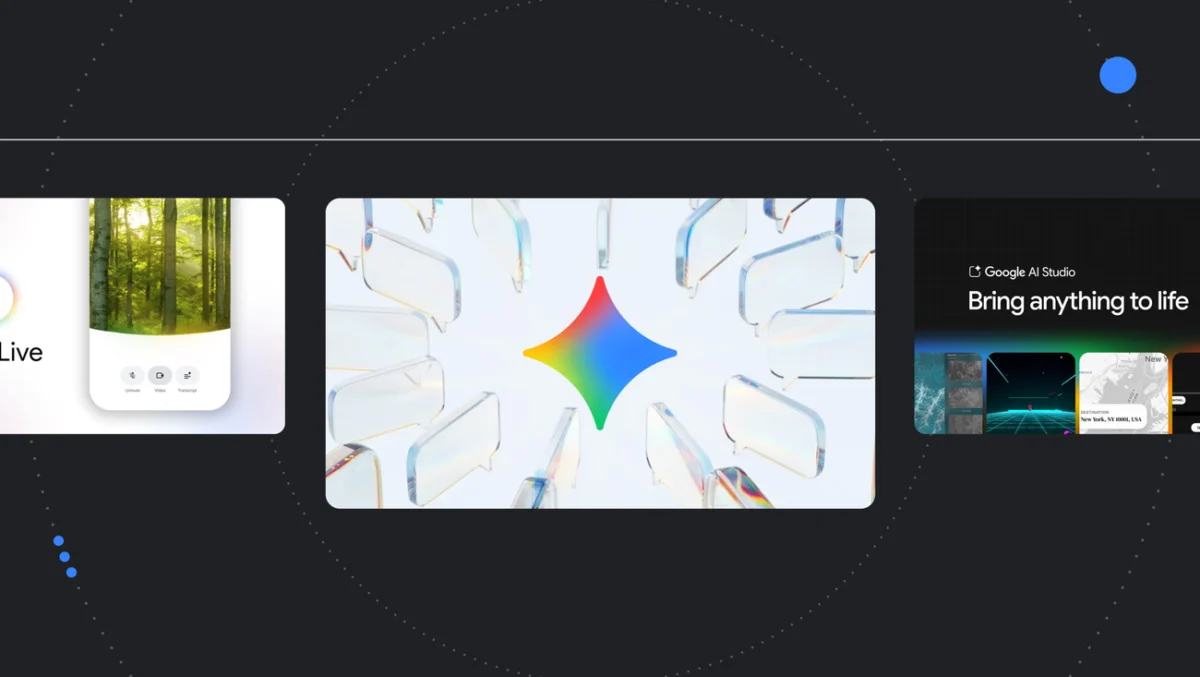
The landscape of artificial intelligence is moving at a velocity that few could have predicted even two years ago. As of March 2026, Google has reached a significant inflection point, transitioning from the experimental phase of generative AI to a model of deep, proactive integration across its entire product ecosystem. This month’s announcements, ranging from architectural model updates like Gemini 3.1 to hardware-level enhancements in the Pixel ecosystem, represent a fundamental shift: AI is no longer just a tool you visit; it is an intelligent layer woven into the fabric of your daily digital life.
Main Facts: The Core Pillars of the March Updates
The core of Google’s March 2026 strategy centers on three primary objectives: contextual understanding, proactive assistance, and developer accessibility.

Google has significantly expanded its "Personal Intelligence" capabilities. By allowing the AI to interface securely with personal data—such as Gmail, Photos, and Calendar—Google is enabling its models to move beyond general queries. Now, the AI can synthesize specific travel itineraries, organize shopping preferences, and manage complex work projects based on the user’s unique history.
Additionally, the introduction of the "Antigravity" coding agent and the release of the Gemini 3.1 model family mark a major leap in professional-grade productivity. For the average user, these changes manifest as a more intuitive device experience; for developers, they represent a significant reduction in the friction associated with building, scaling, and deploying real-time, low-latency AI applications.

Chronological Breakdown of March Developments
The month of March 2026 saw a rhythmic release of features that touched nearly every aspect of the Google portfolio:
- Early March: The Global Rollout of Search Live. Google expanded its "Search Live" capabilities to over 200 countries. By tapping the Live icon in the Google app, users gained the ability to engage in fluid, voice-and-camera-based dialogue, facilitating real-time troubleshooting and visual identification.
- Mid-March: Workspace and Maps Integration. Google rolled out deeper Gemini integration for Docs, Sheets, and Slides. Simultaneously, "Ask Maps" was introduced, allowing users to ask natural language, multi-part questions about navigation and local services, while Immersive Navigation provided users with more intuitive, real-world visual routing.
- Late March: The Pixel Drop and Developer Tools. The March Pixel Drop brought advanced visual search capabilities (via Circle to Search) and AI-driven recommendations. Concurrently, Google AI Studio launched the upgraded "vibe coding" experience, powered by the new Antigravity agent, allowing users to build complex, multi-player applications with natural language prompts.
- Month-End: Scientific Reflection. The company concluded the month by celebrating the 10-year anniversary of AlphaGo, highlighting how that foundational breakthrough led directly to the current era of scientific discovery, specifically mentioning the protein-folding success of AlphaFold.
Supporting Data: Performance and Efficiency Gains
The release of Gemini 3.1 Flash-Lite and Gemini 3.1 Flash Live provides the technical backbone for these user-facing features. Flash-Lite is optimized specifically for low-latency, high-volume workloads, offering developers a cost-efficient way to deploy AI that feels instantaneous.

In the realm of collaborative data, Gemini in Sheets has reportedly achieved "state-of-the-art" performance metrics. By minimizing the time required to process complex datasets, it has become a primary tool for business intelligence. Furthermore, the expansion of Lyria 3 Pro for music generation allows for the creation of high-fidelity, three-minute audio tracks, with granular control over musical structure, indicating that Google’s multimodal models are reaching a level of nuance previously reserved for dedicated professional software.
Official Responses and Strategic Philosophy
Google’s leadership has framed these updates as a natural evolution of their two-decade-long investment in machine learning. According to official company communications, the goal is to transform digital devices from passive screens into "proactive partners."

The emphasis on privacy remains a cornerstone of their messaging. With every update regarding "Personal Intelligence," Google has reiterated that the user remains in total control. The ability to toggle data connectivity—choosing exactly what the AI can see and access—is designed to mitigate the inherent privacy concerns that come with increasingly capable, context-aware AI.
Regarding the recent "The Check Up 2026" event, Google emphasized that the future of AI is not just about efficiency, but about social good. By committing $10 million to clinician education and focusing on rural healthcare delivery, Google is positioning its AI not merely as a consumer convenience, but as a critical infrastructure for global health equity.

Implications for the Future of Human-AI Interaction
The implications of the March 2026 announcements are profound, suggesting three major shifts in the industry:
1. The Death of the "Start from Scratch" Era
With the introduction of memory and chat history import features, Google is solving one of the most significant pain points in AI adoption: the loss of institutional memory. By allowing users to migrate their preferences and history between AI platforms, Google is lowering the barrier to entry and creating a more continuous, personalized experience.

2. The Rise of "Vibe Coding"
The "vibe coding" experience in Google AI Studio is perhaps the most disruptive trend. By shifting the focus from manual syntax to natural language intent, Google is democratizing software development. When an agent like Antigravity can handle the backend architecture, databases, and service connections, the role of the developer evolves from "coder" to "architect," potentially accelerating the pace of global innovation tenfold.
3. Ambient Intelligence
The integration of live translation via headphones and the expansion of Immersive Navigation in Maps suggest that the "AI experience" is moving off the smartphone screen and into the environment. We are entering an era of ambient computing, where the AI is not just something you look at, but a layer of information that overlays the physical world, helping us navigate, communicate, and work in real-time.

Conclusion: A New Standard for Utility
As we look past the March 2026 updates, it is clear that Google is no longer racing just to build the "smartest" model. Instead, the focus has shifted toward building the most useful one. Whether it is a user in a rural area getting better health outcomes, a developer building a complex app via natural language, or a traveler navigating a foreign city with live, real-time voice translation, the promise of AI is finally being delivered at scale.
The milestones of March 2026 serve as a testament to the fact that while AI research is often abstract, its application—when executed correctly—is profoundly human. As these tools continue to mature, the distinction between "using a computer" and "collaborating with an intelligent partner" will continue to blur, setting the stage for a future where our technology is as intuitive as our own thought processes.


 Azzam Bilal Chamdy
 Ali Ikhwan
 Layla Zulfa
 Nana
Nana
 Pevita Pearce
 Rifan Muazin

 Iffa Jayyana