
 Neng Nana
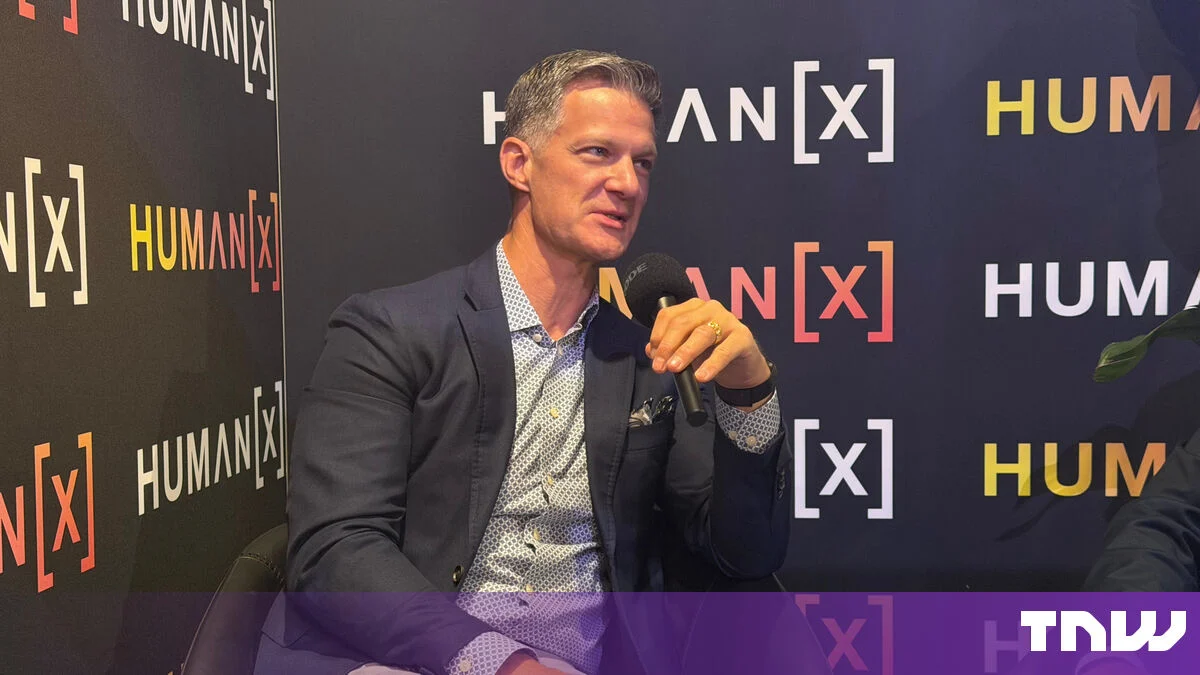
As the global enterprise sector grapples with the promise and peril of artificial intelligence, Boomi—the data activation and integration powerhouse—is positioning itself as the vital plumbing for the modern digital economy. Under the leadership of Chairman and CEO Steve Lucas, the company is rapidly closing in on the $1 billion annual recurring revenue (ARR) milestone, fueled by a surge in demand for the connective tissue that makes AI functional.
In a wide-ranging discussion on the TNW Podcast with Cristian Dina, Lucas offered a candid assessment of the current AI landscape, arguing that while the industry is obsessed with the "intelligence" of models, the true battleground is the "data" that feeds them.
The Architecture of Connectivity: Main Facts
Boomi, which serves over 30,000 customers globally, has undergone a period of aggressive expansion since Lucas took the helm in 2022. By his account, the company has tripled its revenue in just four years. Boomi’s core value proposition is straightforward yet essential: it allows disparate applications, databases, and APIs to communicate seamlessly.
In an era where large enterprises manage an average of 350 productivity applications, the fragmentation of data has become a critical bottleneck. Boomi functions as a data activation layer, ensuring that when companies deploy AI, the models are accessing high-quality, secure, and accessible information. As Lucas succinctly put it, "AI needs data," and Boomi is effectively the beneficiary of the trillions of dollars flowing into the AI ecosystem.
A Legacy of Leadership: The Chronology of Steve Lucas
Steve Lucas’s journey to the top of the integration industry began in the early 1990s, rooted in the foundational days of the personal computer revolution. As a university student, he cut his teeth demonstrating Windows 3.1 and Microsoft Office at trade shows—a role that gave him a front-row seat to the dawn of the productivity software era.
His trajectory through the tech industry reads like a history of enterprise software’s evolution:
- The Foundation: A decade-long tenure at Business Objects and SAP, where he refined his understanding of business intelligence and enterprise resource planning.
- The Scaling Phase: Leading Marketo through a successful growth trajectory, culminating in its acquisition by Adobe.
- The Human Element: Serving as the CEO of iCIMS, the recruitment software leader, where he navigated the complexities of human-capital-driven tech.
- The Present: Taking the reins at Boomi in 2022, and recently publishing his book, Digital Impact: The Human Element of AI-Driven Transformation (April 2025), which explores the sociological shifts accompanying AI adoption.
The Myth of the "SaaS Apocalypse" and the Productivity Paradox
Despite the widespread anxiety surrounding AI’s potential to displace human labor, Lucas remains a pragmatic optimist. He dismisses the narrative of a "SaaS apocalypse"—the idea that AI will cause software development to collapse—as fundamentally flawed.
"AI lets anyone create software," Lucas noted. "I expect more software in the next five years, not less." He argues that the irony of modern "productivity" software is that it has, in many ways, made work more complex. He challenges the industry to look past the buzzwords, famously asking, "Don’t you find it ironic that productivity software is called productivity software?"
Instead of a 10x reduction in work, Lucas predicts a 10x expansion. "I think there’s going to be 10 times more work before there’s 10 times less work," he claimed. Drawing parallels to the industrial revolution and the advent of robotics, he suggests that technology rarely eliminates the need for human labor; rather, it shifts the focus of that labor to higher-level, more complex tasks.
Supporting Data: AI in Practice at Boomi
Boomi is not merely selling the tools of integration; it is practicing what it preaches. Internally, the company has begun automating its own back-office processes. Roughly half of its accounts payable functions are now performed by AI, albeit with human oversight—a "human-in-the-loop" approach that Lucas insists is essential for enterprise-grade reliability.
However, he warns against "buzzword compliance"—the tendency for companies to deploy thousands of AI agents just to say they are doing so. For Lucas, the value of an agent is measured strictly by its ability to drive decisions and deliver clear return on investment (ROI). "Anyone can have millions of agents deployed if they do meaningless work," he cautioned.
Official Responses and Philosophical Outlook: Integration as Life
Perhaps the most personal insight into Lucas’s professional focus comes from his own health. As someone living with type 1 diabetes, Lucas relies on a glucose sensor and an insulin pump to manage his physiology. He views his life through the lens of integration: these two devices must communicate perfectly to keep him healthy. "My life depends on integration, and it’s also what I do for a job," he reflected.
This philosophy is baked into the company’s identity. The name "Boomi" is derived from the Sanskrit word for "earth," symbolizing a foundational, interconnected world.
Regarding the debate over Artificial General Intelligence (AGI), Lucas takes a contrarian view. He suggests that if we use the definitions from a decade ago, we have already reached AGI. For him, the ultimate litmus test for the technology is simple: "I will know [we have reached AGI] when my job starts to get easier."
Strategic Implications: Governance and the Future
As Boomi scales, Lucas is prioritizing the "hard lesson" of saying no. Upon joining the company, he aggressively pruned the project portfolio, cutting roughly ten initiatives to refocus the organization on the core competency of integration.
Looking forward, the company is being pulled into the realm of AI infrastructure, with a specific focus on governance. In the eyes of regulators and enterprise clients, "governance" is the new mandate. Companies need to be able to audit their AI’s decision-making processes, ensuring compliance and transparency. Boomi is positioning its tools to handle this oversight, providing the audit trails necessary for government-level scrutiny.
For the next generation entering the workforce, Lucas offers a piece of advice that transcends technical proficiency: cultivate curiosity. "Curiosity will be the number one skill set coming out of university," he said, emphasizing that while coding and architectural knowledge remain vital, the ability to question how AI systems function will be the true differentiator.
The Path Forward
Boomi’s growth trajectory highlights a critical trend in the tech industry: the shift from the "era of the app" to the "era of the agent." As businesses rush to adopt AI, they are discovering that the true value isn’t in the model itself, but in the data pipelines that feed it. By focusing on integration, governance, and the human element of transformation, Steve Lucas is steering Boomi into a central role in the next decade of enterprise software—a role defined not just by the intelligence of machines, but by the connectivity that makes that intelligence useful.


 Reynand Wu

 Sagoh

 Raul Delapena Setiawan


 Azzam Bilal Chamdy

 Ali Ikhwan
