
 Iffa Jayyana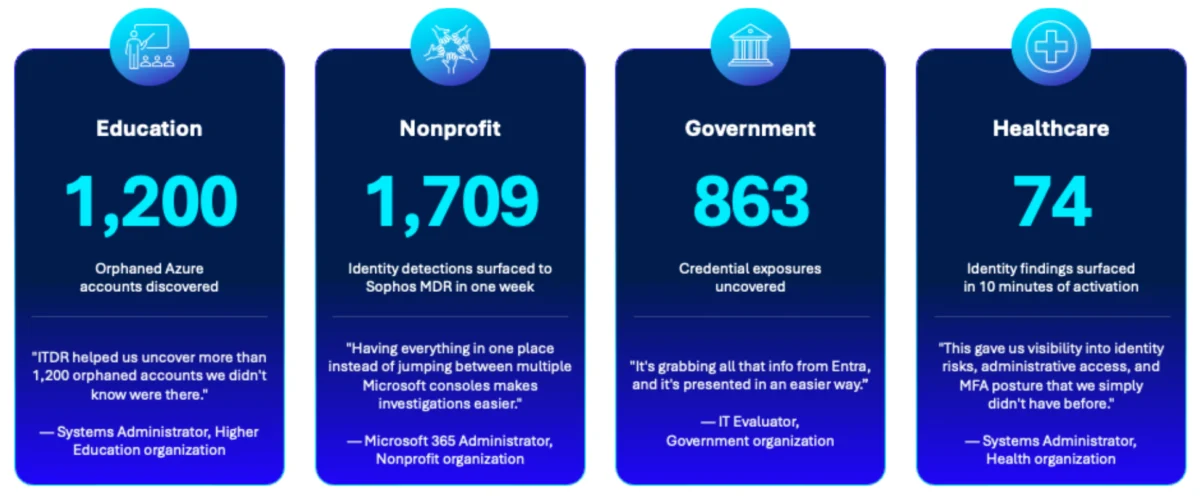
In the modern digital landscape, the traditional "walled garden" approach to cybersecurity has crumbled. As organizations accelerate their migration to the cloud, adopt hybrid work models, and integrate generative AI agents into their workflows, the perimeter has shifted from the network edge to the individual identity. Today, identity is the primary attack surface, and for cybercriminals, it is the path of least resistance.
According to the Sophos State of Identity Security Report 2026, the stakes have never been higher. A staggering 71% of organizations reported an identity-related breach within the last year. Perhaps most alarmingly, 41% of these incidents were directly linked to the poor management of non-human identities—the often-overlooked service accounts, API keys, and AI agents that hold the keys to sensitive enterprise data.
To counter this, Sophos has announced a significant evolution of its Identity Threat Detection and Response (ITDR) solution. By transitioning into a standalone platform integrated into the Sophos Fusion AI-native defense system, the company is attempting to bridge the critical gap between identity management and proactive threat response.
The New Frontier of Threat: Why Identity Matters
Historically, security teams viewed identity management as an administrative function—something handled by IT departments to ensure employees could access their email and applications. Cybersecurity, by contrast, focused on firewalls, antivirus, and network monitoring. That distinction has effectively vanished.
Modern attackers no longer need to "hack" a network in the traditional sense. Instead, they "log in." By leveraging stolen credentials, session hijacking, and the exploitation of excessive privileges, adversaries can masquerade as legitimate users. This problem is exacerbated by the proliferation of non-human identities. As AI agents gain the ability to execute tasks and access data on behalf of humans, they create a vast, often invisible, footprint that security teams struggle to monitor.
The Sophos State of Identity Security Report 2026 serves as a wake-up call. It highlights that the complexity of managing these identities—compounded by the rapid deployment of cloud services—has left organizations vulnerable to sophisticated lateral movement by attackers who are already "inside" the perimeter.
Chronology: The Evolution of Sophos ITDR
The path to the current iteration of Sophos ITDR reflects the broader industry trend toward consolidation and AI-driven defense.
- 2025: The Foundation: Sophos introduced ITDR as a specialized add-on module for its XDR (Extended Detection and Response) and MDR (Managed Detection and Response) platforms. The goal was to provide existing Sophos customers with better visibility into their Active Directory environments.
- Late 2025: The Shift to AI: Recognizing that human analysts cannot keep pace with the sheer volume of identity-related telemetry, Sophos began integrating advanced behavioral analytics and AI-driven risk scoring into its defensive stack.
- 2026: The Standalone Evolution: Today, Sophos has unveiled ITDR as a fully standalone solution. This shift acknowledges that many organizations need immediate identity protection regardless of whether they have already deployed other Sophos components. This move also aligns the product with "Sophos Fusion," the company’s broader AI-native cybersecurity defense ecosystem.
Supporting Data: The Anatomy of the Challenge
The data provided by Sophos underscores a shift in attacker methodology. The 41% of breaches attributed to non-human identity mismanagement is a critical figure. These identities are frequently static, often over-privileged, and rarely subject to the same multi-factor authentication (MFA) rigor as human accounts.
Furthermore, the "Identity Gap" is widening. Organizations are finding that they have:
- Visibility Gaps: They do not know who owns which service account or what those accounts are permitted to do.
- Posture Gaps: They have "orphaned" accounts—accounts left behind by former employees or deprecated services—that remain active and vulnerable.
- Response Gaps: When a credential leak occurs, the time between the breach and the detection is often measured in weeks or months, giving attackers ample time to establish persistence.
Key Capabilities: A New Standard for ITDR
The updated Sophos ITDR is designed to move beyond passive monitoring. Its core features aim to provide actionable intelligence rather than just long lists of alerts.
1. Dynamic AI Identity Risk Scores
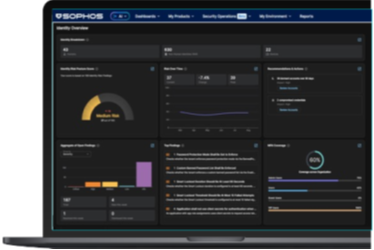
Rather than relying on static rules, Sophos ITDR employs behavioral analytics. By evaluating authentication history, geolocation data, and environmental signals, the platform assigns a real-time risk score to every identity. If a user’s behavior deviates from their established baseline—such as accessing a high-security database from a new location at an unusual hour—the risk score escalates, triggering an automatic alert.
2. Visibility into AI Agents
As organizations deploy Microsoft AI agents to automate workflows, they inadvertently create new attack vectors. Sophos ITDR provides comprehensive visibility into these agents, mapping out their ownership, permissions, and the data they can access. This allows security teams to treat AI agents with the same scrutiny as human users.
3. Continuous Posture Assessment
The platform performs over 160 continuous posture checks. These checks automatically identify security gaps, such as excessive privileges that violate the principle of least privilege, or MFA configurations that are missing or improperly implemented.
4. Contextualized Case Management
Security operations centers (SOCs) are often plagued by "alert fatigue." Sophos ITDR addresses this by grouping related findings into "contextualized cases." Instead of seeing 50 separate alerts, a security analyst sees a single, unified narrative that connects a suspicious login to an identity, a device, and the subsequent data access attempt.
Implications for the Enterprise
The move to a standalone ITDR platform has significant implications for how organizations approach security architecture.
Democratizing Identity Security
By offering ITDR as a standalone product with a rapid deployment cycle, Sophos is making enterprise-grade identity protection accessible to mid-sized organizations that may not have the resources to manage complex, multi-year security integration projects. The ability to begin uncovering identity risks within minutes of deployment is a significant value proposition for teams under pressure to demonstrate immediate security improvements.
Shifting from Management to Defense
Organizations must realize that "managing" identities (i.e., provisioning and de-provisioning) is not the same as "securing" them. Security teams must now treat identities as active, living entities that can be compromised, hijacked, or misused. Sophos ITDR forces this shift by providing the tools to not only see the risk but to intervene. The ability to force password resets, revoke active sessions, and disable accounts directly from the ITDR interface minimizes the "window of opportunity" for attackers.
The Role of Sophos Fusion
The integration of ITDR into the Sophos Fusion AI-native system represents a broader philosophy of "Connected Security." In this framework, identity intelligence is no longer siloed. When an identity risk is identified, that intelligence is shared across the entire ecosystem—endpoints, network firewalls, and email security gateways. If an identity is flagged as compromised, the firewall can automatically restrict that user’s access to sensitive network segments, and the endpoint agent can isolate the machine.
Conclusion: Preparing for the Future
The Sophos State of Identity Security Report 2026 serves as a stark reminder that identity is no longer just a component of security—it is security. With the rapid rise of AI-driven threats and the complexity of non-human accounts, organizations can no longer afford to rely on legacy identity management tools that lack threat detection capabilities.
Sophos has positioned its evolved ITDR solution as a response to this reality. By combining deep visibility into both human and non-human identities with the proactive power of AI-driven risk assessment, the platform offers a path forward for organizations struggling to keep their digital borders secure.
For security leaders, the message is clear: the perimeter is gone, and the identity is the new frontier. Investing in robust, AI-native ITDR is not just an operational necessity—it is a fundamental requirement for business continuity in an increasingly hostile digital environment. Organizations looking to test their own resilience can begin with a 30-day free trial, which, as early data suggests, often reveals critical security blind spots within the first few minutes of operation.
In the race between security teams and attackers, the ability to see, understand, and act upon identity risk in real-time will be the defining factor of success in the years to come.

 Pevita Pearce
 Dwi Wanna
 Basiran
 Neng Nana
 Nana Muazin
 Jia Lissa
 Laily UPN
 Asep Darmawan