
 Ali Ikhwan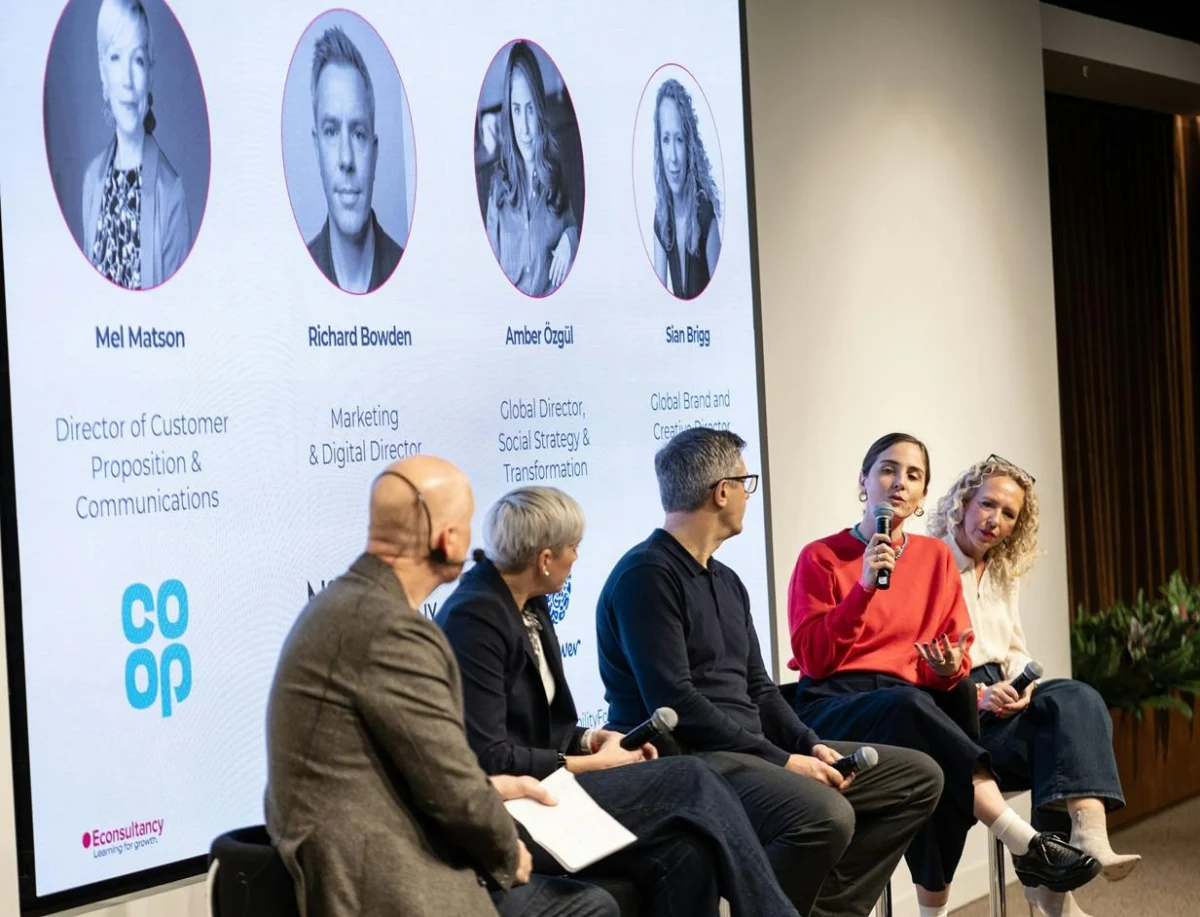
As we step into 2026, the marketing landscape is no longer defined by the question of "if" artificial intelligence will reshape the industry, but "how" it will be integrated without sacrificing the essential human elements of creativity, strategy, and brand trust. This was the central tension explored at Econsultancy’s January 2026 Capability Leaders Forum, where industry heavyweights from Unilever, Co-op, No7, and EY gathered to dissect the shifting paradigms of modern marketing.
Main Facts: The New Reality of 2026
The consensus among the panelists was clear: GenAI has officially moved from the experimental phase to a core operational reality. However, this transition brings with it a paradox. While 76% of marketers acknowledge that AI is fundamentally transforming the function of marketing, an even larger majority—79%—maintain that the ultimate competitive advantage remains the people within an organization.
The forum served as a launchpad for Econsultancy’s Future of Marketing 2026 report, authored by Content and Insight Director Rose Keen. The report underscores that 2026 is the year the promises and the risks of Generative AI have begun to impact the daily, tactical realities of marketers everywhere. The core challenge for leadership in the coming year is to navigate this fragmented landscape while balancing technological efficiency with the preservation of human insight.
Chronology of the Shift: From Adoption to Integration
The discussion at the forum traced the evolution of the industry over the last decade, drawing parallels between the early days of digital transformation and the current AI revolution.
- The Early Days (2024-2025): The industry saw a period of rapid, sometimes chaotic, experimentation. Companies scrambled to implement tools, often without a clear strategy for governance or long-term value.
- The Current Phase (2026): As Richard Bowden, Marketing and Digital Director at No7, noted, the industry has entered a phase of practical application. The focus has shifted from "what is this tool?" to "how do we use this tool to drive growth while maintaining brand integrity?"
- The Future Horizon: The panelists agreed that the next step involves moving away from the "novelty" of AI to a state of "augmented intelligence," where tools are seamlessly integrated into the creative workflow, rather than serving as the primary drivers of output.
Supporting Data: The Marketing Pulse
Data from the Future of Marketing 2026 report highlights the urgency of these conversations:
- 76% of marketers agree that AI is transforming the marketing function.
- 79% of marketers believe people remain the primary source of competitive advantage.
- 83% of respondents agree that building and maintaining brand trust is becoming increasingly critical as the digital environment becomes more cluttered.
- 76% cite "achieving cut-through" as a growing challenge in an age of automated, high-volume content.
These figures illustrate a clear market sentiment: while technology provides the "how," the "why"—the strategy, the emotional resonance, and the ethical framework—must remain firmly in human hands.
Official Responses: Insights from the Frontlines
The panelists, moderated by Econsultancy MD Paul Davies, offered nuanced perspectives on how to lead teams through this period of radical change.
The Case for "Augmented Intelligence"
Sian Brigg, Global Brand & Creative Director at EY, argued that the industry must reframe its vocabulary. "We need to talk about ‘augmented intelligence’ instead of ‘artificial intelligence,’" she stated. Brigg emphasized that at EY, marketing teams are using AI agents to iterate on and improve briefs, but the "critical thinking" required to elevate those briefs remains a human endeavor. She stressed the importance of protecting foundational skillsets—brief-writing, insight gathering, and emotional intelligence—which are at risk of atrophy if over-reliant on automation.
The Challenge of Intentionality
Amber Özgül, Global Director of Social Strategy & Transformation at Unilever, introduced a cautionary note regarding the overuse of AI. She warned that constant reliance on automated tools can lead to "losing the muscle" required to build complex thought processes. "There is a power in going through the struggles and the resilience that makes us human," she said. Her approach is one of "intentionality"—choosing when to use AI to scale and when to step away to foster deeper creative thinking.

Change Management and Team Dynamics
Richard Bowden drew a direct line between the digital transformation of the mid-2010s and the current AI era. He noted that the primary challenge is not technical, but cultural. Teams often contain "naysayers" who fear job displacement, alongside "enthusiasts" who are eager to adopt new tools. Marketing leaders, he suggested, must manage these disparate cohorts by providing hands-on access to tools and celebrating small wins to build confidence.
The Collapsed Funnel
Mel Matson, Director of Customer Proposition & Comms at Co-op, highlighted the structural shifts in the customer journey. "The funnel has collapsed," she observed. Consumers now navigate a fragmented environment of social platforms, AI-driven search agents, and traditional touchpoints simultaneously. Matson argued that marketers can no longer rely on linear models; instead, they must be "always-on" across all touchpoints, requiring a radical shift in how teams are structured and how capabilities are defined.
Implications for the Future of Marketing
The forum’s conclusions suggest a fundamental shift in the definition of a "marketer" for the remainder of the decade.
1. The Fight Against "Workslop"
One of the most pressing implications identified by Sian Brigg is the danger of "workslop"—the creation of work that simulates progress but adds no real value. As AI makes it easier to produce content, the danger is that teams will drown in a sea of mediocrity. The implication is clear: leaders must prioritize quality over quantity and hold their teams accountable for the "soul" of their campaigns.
2. The Resurgence of Brand-Building
Despite the temptation to focus solely on performance marketing and quick conversions, the panel concluded that brand-building is more important than ever. In a world of synthetic content, a brand’s reputation and voice serve as the ultimate filter for consumers. As Mel Matson noted, "If you are really clear about who you are as a brand, it can drive joined-up CX and take it to the next level."
3. Governance as an Unlock
Amber Özgül pointed out that many organizations are paralyzed by the lack of clear rules. By establishing robust governance around AI, companies can actually move faster. Transparency and safety protocols allow teams to experiment without fear, turning compliance from a hurdle into an "unlock" for innovation.
4. The Voice of the Customer
Perhaps the most significant takeaway was Richard Bowden’s reminder that, regardless of the tools used, the marketer’s fundamental role is to be the "voice of the customer." If the industry loses sight of the human being on the other side of the screen, no amount of AI-driven efficiency will save the brand.
Conclusion: Four Resolutions for 2026
As the forum concluded, each panelist offered a professional resolution for the year ahead, serving as a roadmap for the broader industry:
- Mel Matson (Co-op): Double down on brand-building. Do not mistake traditional fundamentals for being "old-fashioned"; they are the bedrock of modern success.
- Amber Özgül (Unilever): Focus on transparency and governance. Use AI, but be intentional about where and why it is being deployed.
- Sian Brigg (EY): Combat "workslop" by emphasizing critical thinking and human creativity. Shift the focus from the quantity of output to the quality of ideas.
- Richard Bowden (No7): Fall in love with the customer experience. By keeping the customer at the center of every decision, marketers can navigate any technological shift.
The 2026 Capability Leaders Forum made it evident that while the tools of the trade are evolving at a breakneck pace, the heart of marketing remains unchanged. The winners of the coming year will not be those who adopt the most AI, but those who use it to amplify their uniquely human capacity for connection, strategy, and creative brilliance.


 Siti Muinah
 Jia Lissa
 Layla Zulfa
 Nana
Nana
 Pevita Pearce
 Rifan Muazin

 Iffa Jayyana