
 Suro Senen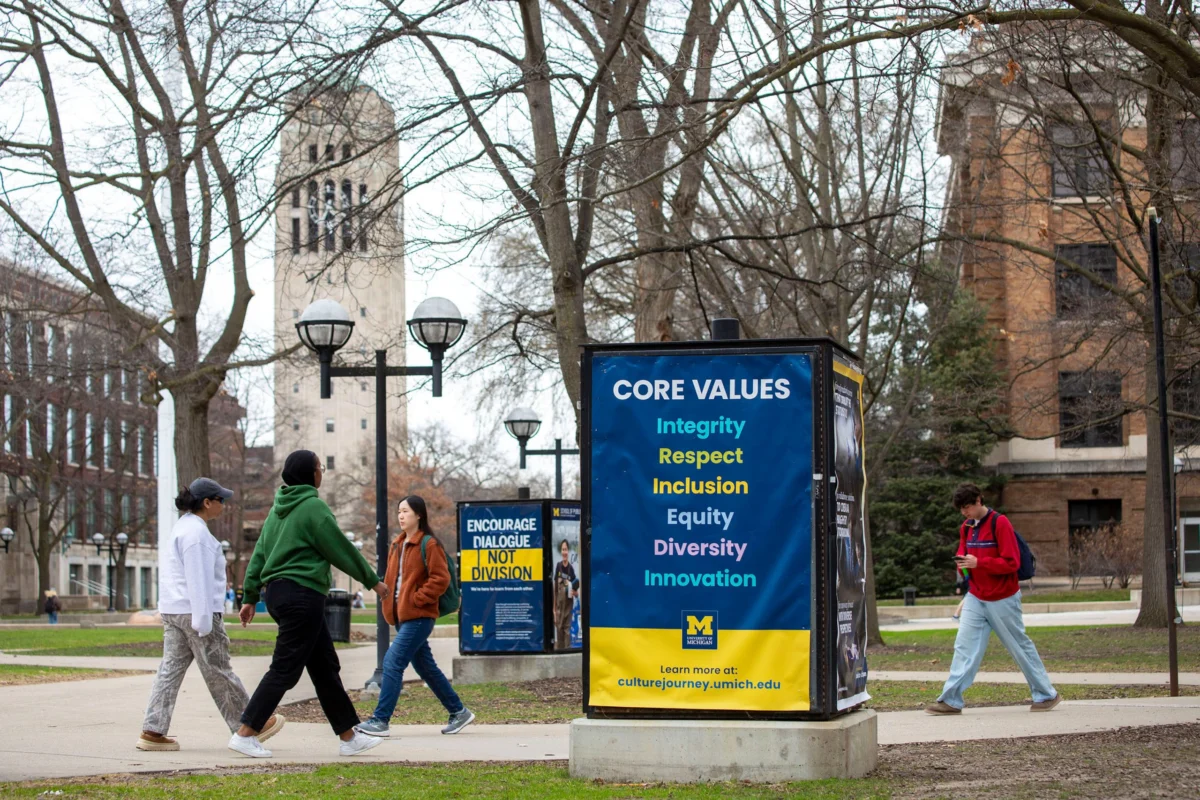
Across the American higher education landscape, a quiet but profound transformation is underway. From the flagship research universities of the West Coast to private liberal arts colleges in the Northeast, institutions are dismantling decades of infrastructure designed to foster diversity, equity, and inclusion (DEI). This wave of retrenchment is not necessarily being forced by new legislation, but rather by a climate of pervasive fear, with university administrators opting for "anticipatory compliance" in the face of aggressive rhetoric and proposed regulatory threats from the federal government.
The Regulatory Shadow: A Climate of Fear
The current landscape is defined by a high-stakes standoff between Washington and the ivory tower. Last month, the U.S. Treasury Department and the Internal Revenue Service (IRS) signaled a seismic shift in policy, proposing rules that would jeopardize the tax-exempt status of private colleges maintaining race-conscious policies in admissions, scholarships, and academic programming.
For many university boards and executive suites, this proposal functions as a "shot across the bow." However, legal scholars and advocates argue that there is a critical distinction between a regulatory threat and a binding legal mandate. Despite this, the mere suggestion of federal intervention has triggered a cascade of preemptive retreats. University presidents, provosts, and governing boards, wary of protracted legal battles or the loss of federal funding, are moving to purge programs before they are ever formally challenged in court.
This behavior—what critics term "anticipatory compliance"—is fundamentally reshaping the academic environment. By proactively dismantling programs that were built to support underrepresented scholars, institutions are effectively resegregating the academy without a single law ever mandating them to do so.
A Chronology of Retrenchment
The erosion of diversity infrastructure did not happen overnight. The current trend follows a deliberate pattern of political pressure and administrative capitulation.
- Early 2020s: Universities, following the national reckoning on racial justice, bolstered their DEI infrastructure, creating offices, fellowships, and recruitment pipelines designed to diversify a historically homogeneous faculty.
- 2024–2025: The political environment shifted, with conservative advocacy groups and lawmakers targeting DEI as a central point of contention. Lawsuits began to challenge race-conscious admissions, leading to Supreme Court interventions that narrowed the scope of permissible DEI efforts.
- 2026: The current "extortion framework" solidified. Federal agencies began using their vast control over research funding as a bludgeon. A stark example occurred when agencies cut nearly $2 billion in research grants at the University of California system. Investigators did not review the scientific merit of the research; instead, they scanned for keywords such as "diversity" and "gender" and terminated funding immediately.
- Mid-2026 to Present: The federal government’s willingness to defund research without substantive legal review signaled to universities that they were vulnerable. The subsequent trend of "cancellation" has accelerated, with schools across the country shuttering everything from post-doctoral fellowships to STEM pipeline programs.
Supporting Data: The Cost of Disengagement
The consequences of this dismantling are measurable and severe. A recent analysis by The Washington Post found that of 184 universities that had publicly committed to faculty diversity, at least 108 had partially or fully rolled back those efforts. Only 12 institutions confirmed that their commitment remained unchanged.
The impact of these cuts is not merely administrative; it is deeply personal and scientific. Through more than 100 interviews across 38 states, researchers have documented the human toll:
- The Pipeline Collapse: A professor who once entered academia through an equity-focused initiative noted that under current policies, she would likely never have been hired.
- The Research Gap: An exposure scientist studying the health risks of industrial mining saw her environmental justice grants terminated simply because they were grouped under the umbrella of "DEI." Her work—and the protection it provided to vulnerable communities—was effectively defunded.
- The Intellectual Chill: A quantitative scholar studying civil rights issues reported being told by her administration that she "might want to let go" of her specific line of research to avoid institutional scrutiny.
The data suggests that this is not about neutral policy adjustments. As these programs disappear, the academy is becoming less representative of the population it serves. In the early 1970s, the faculty profession was roughly 95% white. By 2021, that number had shifted, with 12% of tenured faculty coming from historically underrepresented groups. The current dismantling threatens to reverse these gains, ensuring that the next generation of professors will look much like the generation of the 1970s.
Official Responses and the "Neutrality" Myth
The federal government maintains that it is upholding the law, specifically targeting policies that allegedly violate equal protection standards. However, the lack of transparency in the recent UC grant terminations suggests a more ideological motive. Agencies were caught in federal court having cut funding without a review process, effectively admitting that the "enforcement" was arbitrary.

Universities, meanwhile, often justify their retreats under the guise of "neutrality." Yet, this neutrality is proving to be highly selective. While ethnic and gender studies departments—which have historically supported scholars of color—are being consolidated or closed, some institutions are simultaneously establishing state-funded centers for "intellectual freedom." These new centers, which often hire almost exclusively white faculty, face zero scrutiny from the same administrators who are quick to defund diversity initiatives.
The message from the top is clear: the risk of supporting inclusion is now perceived as a greater institutional liability than the risk of excluding entire demographics of scholars.
The Implications: A Loss of Knowledge
The most damaging implication of this trend is the loss of intellectual diversity. Science and the humanities rely on a plurality of perspectives to identify problems, ask questions, and derive solutions. When the demographics of the academy are restricted, the scope of what we know is similarly restricted.
When a researcher studying environmental health in marginalized communities loses her funding because of a keywords search, the entire society suffers. When a doctoral student from an underrepresented background loses their funding and leaves the academy, the university loses a potential innovator who might have solved a critical problem in physics, history, or medicine.
Furthermore, the "chilling effect" on faculty cannot be overstated. When a governing board hires a law firm linked to political interest groups like Project 2025 to review faculty syllabi, the message is not one of academic freedom, but of surveillance. Professors are increasingly self-censoring, avoiding race-related topics or social justice frameworks to protect their employment status.
A Path Forward: Challenging the Threat
Despite the grim trajectory, the study shows that resistance is possible. Institutions that had fully integrated their mission—such as Historically Black Colleges and Universities (HBCUs) and certain Hispanic-serving institutions—have remained largely untouched. Because these schools built their mission around inclusion from the beginning rather than treating it as an "add-on" or a side-office, they are far more resilient to external political pressure.
For the rest of higher education, the lesson from the University of California case is clear: threats are not statutes. The federal government was able to bully the university system because the university system allowed itself to be bullied. When the UC case moved to federal court, the arbitrary nature of the cuts was exposed, and the administration’s legal authority was found wanting.
Universities must stop surrendering before the fight begins. The legal standard for what is permissible in higher education is not set by a Treasury Department warning or a vague threat from an agency head. It is set by the law. By demanding that the government prove its legal authority for every demand, and by testing these threats in the courts, academic institutions can preserve their integrity.
The current wave of preemptive retreat is a betrayal of the academy’s role as a sanctuary for truth and discovery. As the faculty and student body stop reflecting the diversity of the nation, the university loses its ability to understand the country it serves. The history of American education shows that when you strip away the infrastructure of integration, you are left with the reality of segregation. To avoid this, universities must stop viewing the protection of diversity as a liability to be managed and start viewing it as a core component of their mission to be defended.


 Lina Hope
 Nana
Nana
 Layla Zulfa

 Pevita Pearce
 Rifan Muazin

 Iffa Jayyana