
 Azzam Bilal Chamdy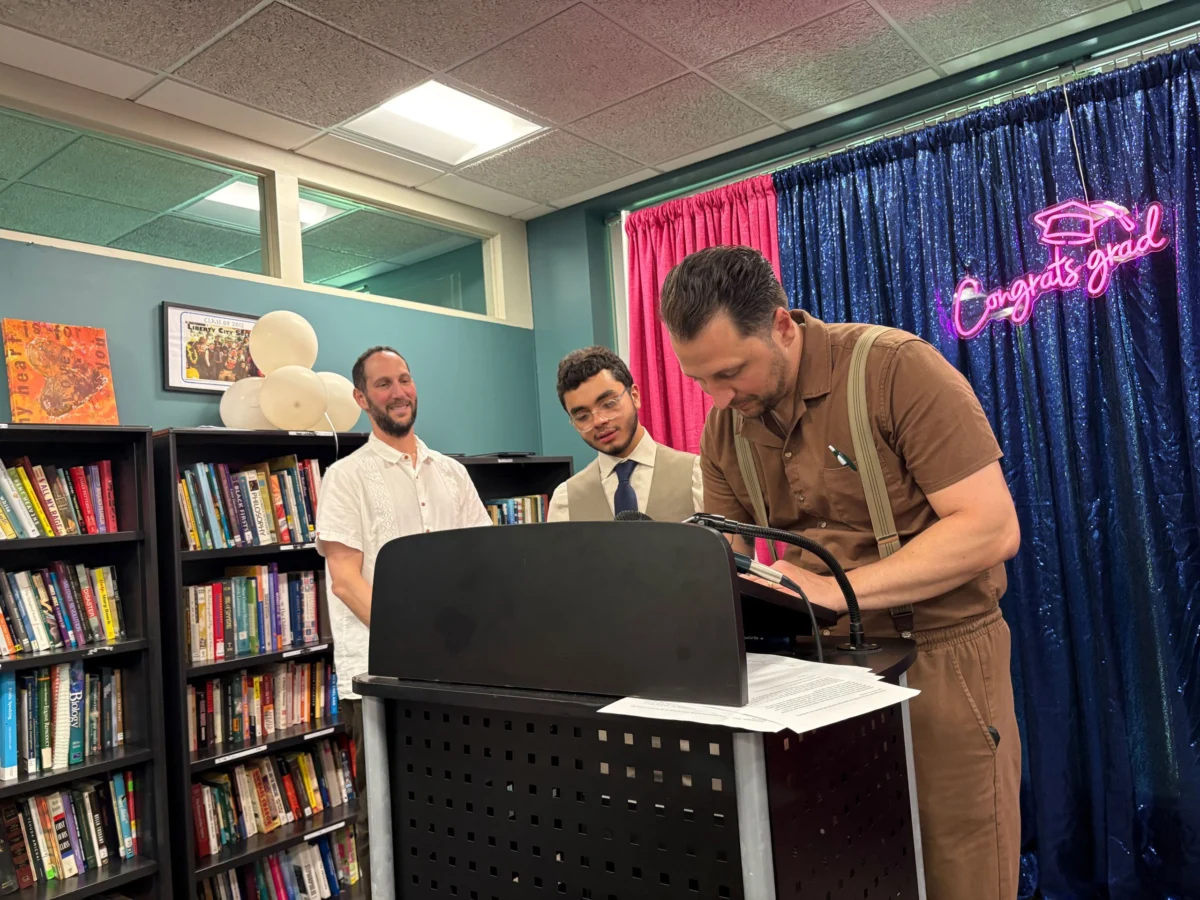
The traditional American high school model—once defined by a rigid sequence of college-preparatory coursework and standardized testing—is undergoing a profound, if sometimes chaotic, transformation. As artificial intelligence disrupts labor markets and public confidence in the traditional four-year college path wavers, educators, policymakers, and students are engaging in a high-stakes debate: Is the current system truly preparing the next generation for the realities of the 21st-century economy?
Evan Perez, a first-year student at Babson College, serves as a compelling case study for this evolution. A graduate of The Met High School in Providence, Rhode Island, Perez didn’t spend his formative years confined to a desk. Instead, his education was rooted in "real-world learning," an approach that allowed him to shadow professionals, complete internships, and launch an AI-driven business while still in high school. Today, as he navigates the complexities of higher education on a full scholarship, he credits that hands-on model for his ability to pitch ideas and collaborate. Yet, he also admits to feeling the friction of the transition, noting that his unconventional high school training left him needing to sharpen his traditional academic rigor.
Perez’s experience captures the central dilemma of modern secondary education: How do schools maintain academic excellence while simultaneously pivoting to provide the practical, career-focused training necessary in an era of rapid technological change?
The Disconnect: A System Under Pressure
The impetus for this national reexamination is not merely pedagogical; it is born of necessity. A recent report by the National Association of State Boards of Education paints a stark picture of the current landscape. Nearly three in four high school graduates report feeling less than fully prepared for the life that awaits them after graduation. Perhaps even more alarming, one-third of teachers express skepticism regarding whether their students are adequately equipped to enter the workforce.
This dissatisfaction is mirrored in broader social trends. A July Gallup poll revealed a significant decline in institutional trust, with only 38 percent of Americans expressing "a great deal" or "quite a lot" of confidence in higher education. Among those who voiced low confidence, one-quarter explicitly cited the failure of colleges to prepare students for the workforce as a primary driver. As the cost of tuition continues to climb, families are increasingly scrutinizing the return on investment for a traditional degree, leading some to seek alternatives like vocational training, apprenticeships, or specialized certifications.
A Chronology of Change: From Theory to Practice
The shift toward career-connected learning has been bubbling beneath the surface for decades, but it has gained significant legislative and institutional momentum over the past few years.
The Early Efforts: For years, "career education" was often stigmatized as a secondary track for students not destined for college. However, the rise of the "Early College" model—where students earn associate degrees alongside their high school diplomas—began to challenge the binary of "college vs. career." Programs like P-TECH in New York City pioneered this integration, offering paid internships and intensive mentorship that blurred the lines between the classroom and the boardroom.
The State-Level Pivot: States like Indiana have moved to codify this change, introducing new diploma structures that allow students to earn specific "seals" based on their post-secondary intent—whether it be university, the workforce, or military service. This move represents a departure from the "one-size-fits-all" diploma, acknowledging that different paths require different competencies.
The Current Moment: Today, the conversation has moved toward systemic integration. A new state policy framework is currently circulating that calls for a total overhaul of the high school experience, advocating for widespread apprenticeships and AI literacy as core components of the curriculum. The goal is no longer just to "get students through" high school, but to ensure they emerge with a marketable skill set that is resilient against the threat of automation.
Regional Innovations: What Works and What Doesn’t
Across the United States, school districts are experimenting with diverse models to bridge the gap between education and employment.
- Niagara Falls, New York: This district has adopted an aggressive early-intervention model. Starting in the ninth grade, students are encouraged to select a career pathway—ranging from finance and entrepreneurship to construction and engineering. By treating career discovery as a core subject, the district aims to prevent the "lost" years often experienced in the early high school period.
- Fall River, Massachusetts: Educators here have reported a significant increase in student engagement by abandoning traditional, lecture-heavy formats in favor of hands-on, interest-driven learning. Principals report that students who were once "off-track" have found a renewed sense of purpose when their schoolwork is directly connected to a craft or profession.
- Connecticut’s Technical Schools: The demand for high-quality technical education has become so intense that the state recently transitioned from a competitive admissions model to a lottery system. This shift underscores the growing public recognition that vocational training is not a "lesser" path, but a highly desirable one.
Despite these successes, the challenge of measurement remains. Critics often point out that while career pathways look good on paper, assessing their long-term efficacy—specifically whether they lead to higher wages and sustainable career growth—is fraught with difficulty. Many programs are still in their infancy, and the metrics used to judge "success" are often localized and inconsistent.
The AI Factor: Preparing for an Automated Workforce
The elephant in the room for every school administrator today is artificial intelligence. As AI automates increasingly complex tasks, the skills required for the future workforce are shifting. Basic data entry and routine clerical tasks are being offloaded to software, forcing schools to prioritize "human-centric" skills: critical thinking, complex problem-solving, and interpersonal collaboration.
Perez, reflecting on his own education, highlights this exact tension. "Schools have to think: Are tests useful? Are classes useful when AI is automating so much?" he asks. "How can we use AI in ways that help us with our careers?"
This sentiment is driving a surge in interest for project-based learning (PBL). Advocates argue that PBL is the best vehicle for teaching critical thinking because it requires students to tackle real-world problems that lack a single "correct" answer—the very environment they will face in the modern office.
Implications for the Future of U.S. Education
The implications of this transition are immense. If high schools successfully integrate career readiness, we may see a significant reduction in the "skills gap" that has plagued the U.S. economy for years. However, there is a risk of creating a bifurcated system where low-income students are tracked into "career pathways" while wealthy students remain on a traditional path to prestige universities.
To avoid this, experts argue that career-connected learning must be integrated into the core curriculum for all students, not just those who appear to be struggling. True equity in education means that every student, regardless of their background, should have the agency to choose between a university degree, a trade, or an entrepreneurial endeavor, equipped with the skills to succeed in all three.
Moving Forward: A Call for Dialogue
The transformation of the American high school is an ongoing project. It requires the input of the entire community—parents, employers, educators, and, most importantly, the students themselves.
The Hechinger Report is committed to tracking this evolution, investigating what is working in towns and cities across the nation and challenging the systems that hold students back. We invite our readers to join this conversation. By sharing your experiences with career-readiness programs, the impact of AI in your classrooms, or your own journey from high school to the workforce, you help us document the necessary changes in our education system.
As Evan Perez concludes, we need to "take a step back and think more about how education works." The era of the factory-model high school is fading. In its place, a new, more flexible, and more practical model is beginning to emerge. The success of this evolution will define the next generation of American innovators, tradespeople, and leaders. It is time to ensure that our schools are not just teaching students how to pass tests, but how to navigate the world they will inherit.

 Ammar Sabilarrohman
 Iffa Jayyana
 Ali Ikhwan
 Raul Delapena Setiawan
 Nana
Nana
 Muslim
 Asep Darmawan
 Neng Nana