
 Dwi Wanna
In the landscape of the short-term rental market, few friction points have been as persistent as the "checkout chore list." For years, travelers have shared social media horror stories of paying hefty, non-negotiable cleaning fees only to be greeted by a departure checklist that rivals a professional janitorial assignment: strip the beds, start the laundry, haul trash to off-site dumpsters, and scrub the kitchen clean.
That era is now officially under fire. Airbnb, in a move aimed at streamlining the guest experience and curbing the rising tide of "fee fatigue," has implemented a new policy for all reservations booked on or after November 20. The mandate is clear: hosts are generally prohibited from requiring guests to complete time-consuming checkout tasks typically handled by professional cleaners.
While the policy change has been hailed by travelers as a long-overdue return to the standards of the hospitality industry, it has ignited a fierce, sprawling civil war among the platform’s host community. From online petitions to calls for organized strikes, the debate over who—the guest or the host—is responsible for a dirty plate has spiraled into a much larger existential question: What, exactly, is the Airbnb business model in 2024?
The Core Mandate: What Has Changed?
Under the new guidelines, Airbnb has effectively drawn a line in the sand regarding "reasonable" guest expectations. The company stipulates that hosts may no longer demand that guests perform chores that impede on the "vacation" experience.
Specifically, the policy targets tasks like:
- Stripping beds: A labor-intensive task that cleaners prefer to do themselves to inspect for mattress damage or pests.
- Taking trash off-site: Asking guests to transport bags to distant dumpsters or sorting centers.
- Deep-cleaning the kitchen: Demanding that dishes be washed, dried, and put away before departure.
The policy does not, however, mean that guests are granted a free pass to leave a property in disarray. Airbnb maintains its "ground rules" for guests, which explicitly forbid leaving a rental in a condition that requires excessive or deep cleaning—such as leaving carpets soiled or kitchens covered in moldy food. Hosts are still encouraged to communicate their expectations, but these must now be clearly disclosed in a designated, transparent section of the listing before the booking is finalized.
A Chronology of the Friction
The tension surrounding this policy did not appear overnight. It is the culmination of years of "fee creep" and shifting expectations in the post-pandemic travel market.
- 2020–2022: As travel surged following lockdowns, the number of Airbnb listings exploded. Simultaneously, cleaning fees began to rise sharply, often to cover the cost of professional sanitization. However, many hosts began bundling these high fees with increasingly rigid checkout requirements, leading to viral social media backlash from disgruntled guests.
- Mid-2023: Public sentiment reached a breaking point. Travelers began flooding platforms like TikTok and X (formerly Twitter) with screenshots of "host rulebooks" that essentially functioned as unpaid labor contracts.
- Late 2024: Airbnb, observing a dip in guest satisfaction scores and a rise in complaints regarding value-for-money, announced the impending policy shift.
- November 20, 2024: The policy officially goes into effect, triggering an immediate and vocal reaction from the host community.
The Host Backlash: A Rebellion Against "Devaluation"
The reaction from a vocal segment of the host community has been nothing short of vitriolic. On platforms like Reddit’s r/airbnb_hosts and various private Facebook groups, many property owners view the policy as an infringement on their autonomy and a misunderstanding of the "sharing economy."
The Call to Strike
Some hosts are calling for organized resistance. One popular thread featured a proposal to collectively "unlist" properties for a period of 24 to 48 hours to demonstrate to Airbnb just how reliant the platform is on its supply side. "Airbnb built its empire on our properties," one user wrote. "It is time we reminded them who actually holds the power."
The Financial Argument
Beyond the emotional argument of control, there is a legitimate financial concern. Many hosts operate on thin margins. They argue that if they are forced to stop asking guests to perform basic tidying, they will be forced to increase their professional cleaning costs, which will, in turn, drive up the total price for the guest.

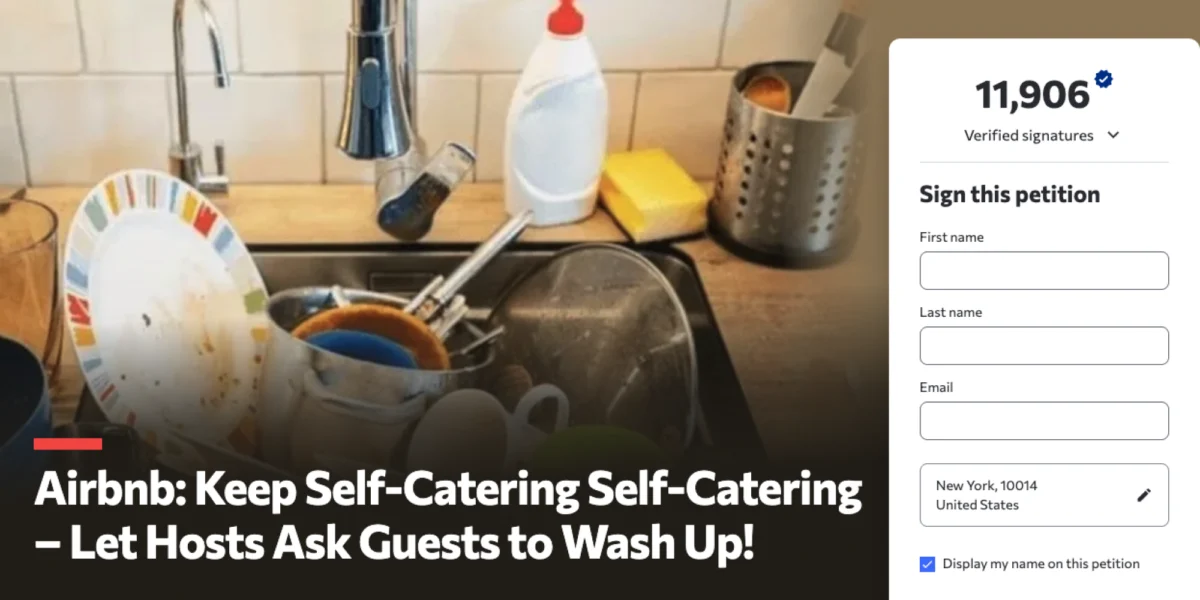
"These are not professional cleaning duties," states a popular Change.org petition, which has garnered over 11,000 signatures. "They are ordinary aspects of living responsibly in somebody else’s property." The organizers argue that there is a fundamental difference between a hotel, which is built for high-volume turnover, and a residential home, which requires a different standard of care from the occupant.
The Divided House: Not All Hosts Are Aligned
Despite the volume of the protest, a significant cohort of hosts is welcoming the change, suggesting that the industry has lost its way by prioritizing "rules" over "hospitality."
The "Hospitality First" Perspective
Many Superhosts are siding with the company, arguing that the "chore list" culture has been a detriment to the brand. "We are in the hospitality business," one veteran host noted on the community forums. "Hotels don’t ask their guests to strip the bed, and neither should we. If you want a five-star review, the guest shouldn’t feel like they’ve just finished a shift at a motel."
The Logic of Professionalism
Other hosts point out that the chore requirements were often counter-productive. When guests are asked to strip beds, they may accidentally damage the mattress or hide evidence of a spill that the host needs to see. "I want my cleaners to see the room exactly as the guest left it," says one host. "If the guest strips the bed, I lose the ability to see if there was a stain that needs treatment. It’s better for the property’s longevity if the professionals do the work."
Supporting Data and Guest Behavior
The debate touches on the psychological aspect of travel. Research into guest satisfaction indicates that the "chore-free" experience is one of the primary drivers of repeat bookings.
Furthermore, data suggests that the "broken window theory" of hosting—whereby guests who are asked to do chores are supposedly more respectful—is largely anecdotal. Many experienced hosts argue that guests who are inclined to be destructive will remain so, regardless of a laminated sign on the refrigerator. Conversely, polite guests often tidy up out of social courtesy, regardless of whether a rule is posted.
The Implications: What This Means for the Future
The implications of this policy shift are far-reaching for the short-term rental market.
- Market Consolidation: Hosts who are unable to adapt their business models to absorb cleaning costs may find themselves struggling to compete with those who can. This could lead to a consolidation of the market, where professional property management companies, which already have efficient, high-volume cleaning operations, become the dominant force.
- Increased Price Transparency: By forcing hosts to be more transparent about their rules and fees, Airbnb is effectively trying to reduce the "sticker shock" that often occurs at the final checkout screen.
- The End of the "DIY" Era: The era of the "informal" host—where someone rented out their spare room with the expectation that the guest would act like a roommate—is fading. As Airbnb pushes for a more "hotel-like" experience, the barrier to entry for casual hosts will likely rise.
- Regulatory Pressure: Many of the complaints from hosts regarding "local rules" or "fire codes" are legitimate. Airbnb’s challenge will be to ensure that these necessary, legally binding requirements are not discarded alongside the "wash the dishes" requests.
Conclusion: A Necessary Evolution
The "Great Checkout War" is a growing pain for a company and an industry that has matured rapidly over the last decade. While the anger from some hosts is understandable—driven by a desire to protect their assets and their livelihoods—the reality is that the short-term rental industry cannot thrive if it alienates its primary source of revenue: the traveler.
By curbing the "chore list," Airbnb is attempting to pivot back to a focus on user experience. Whether this will lead to a more professionalized, higher-quality industry or a mass exodus of smaller hosts remains to be seen. What is certain, however, is that the debate has forced every host to ask themselves a difficult question: Are they running a home, or are they running a business? And if it is the latter, who should really be doing the dishes?


 Asep Darmawan

 Layla Zulfa

 Ammar Sabilarrohman
 Asro

 Nila Kartika Wati
 Muslim
