
 Raul Delapena Setiawan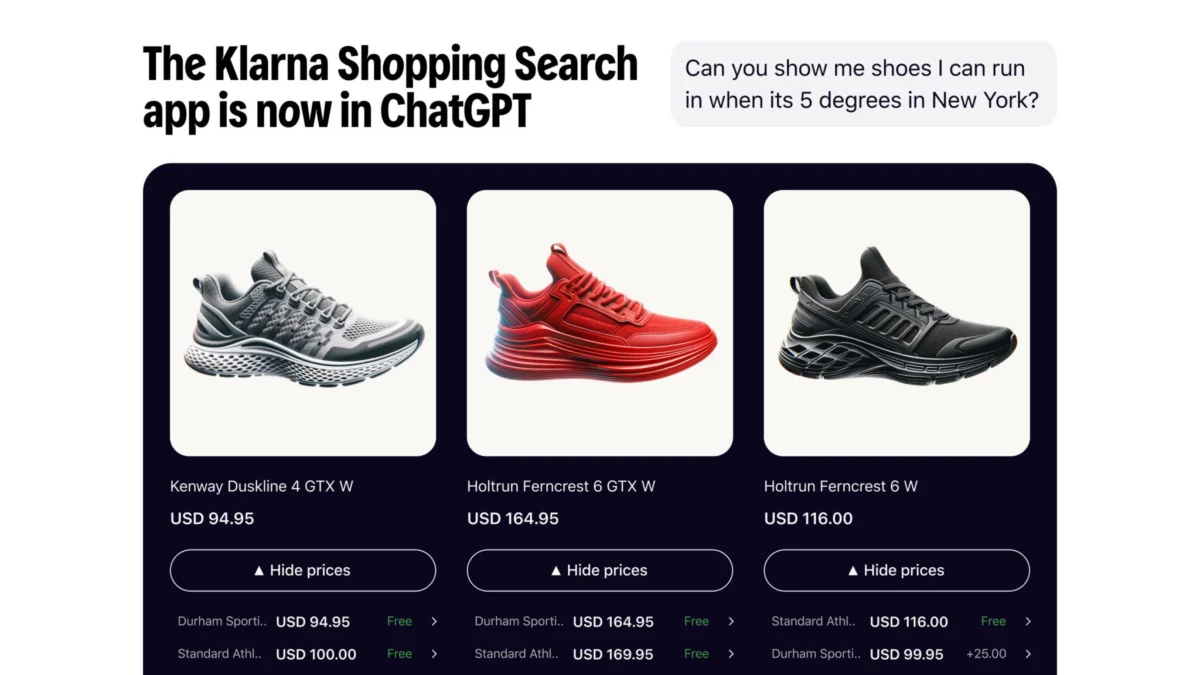
The landscape of digital retail is undergoing a tectonic shift. As artificial intelligence evolves from a novelty into a utility, payment giant Klarna has made a definitive move to capture the consumer at the most critical stage of the buyer’s journey: the initial search. By launching its new AI-powered "Shopping Search" app within OpenAI’s ChatGPT, Klarna is not merely facilitating transactions; it is attempting to redefine the online shopping experience by merging discovery, comparison, and intent into a single, conversational interface.
This development arrives at a time when the giants of technology—Google, Shopify, and Salesforce included—are racing to establish dominance in the realm of "agentic commerce," a burgeoning field where AI agents act on behalf of consumers to navigate, negotiate, and execute purchases.
The Core Innovation: Conversational Discovery
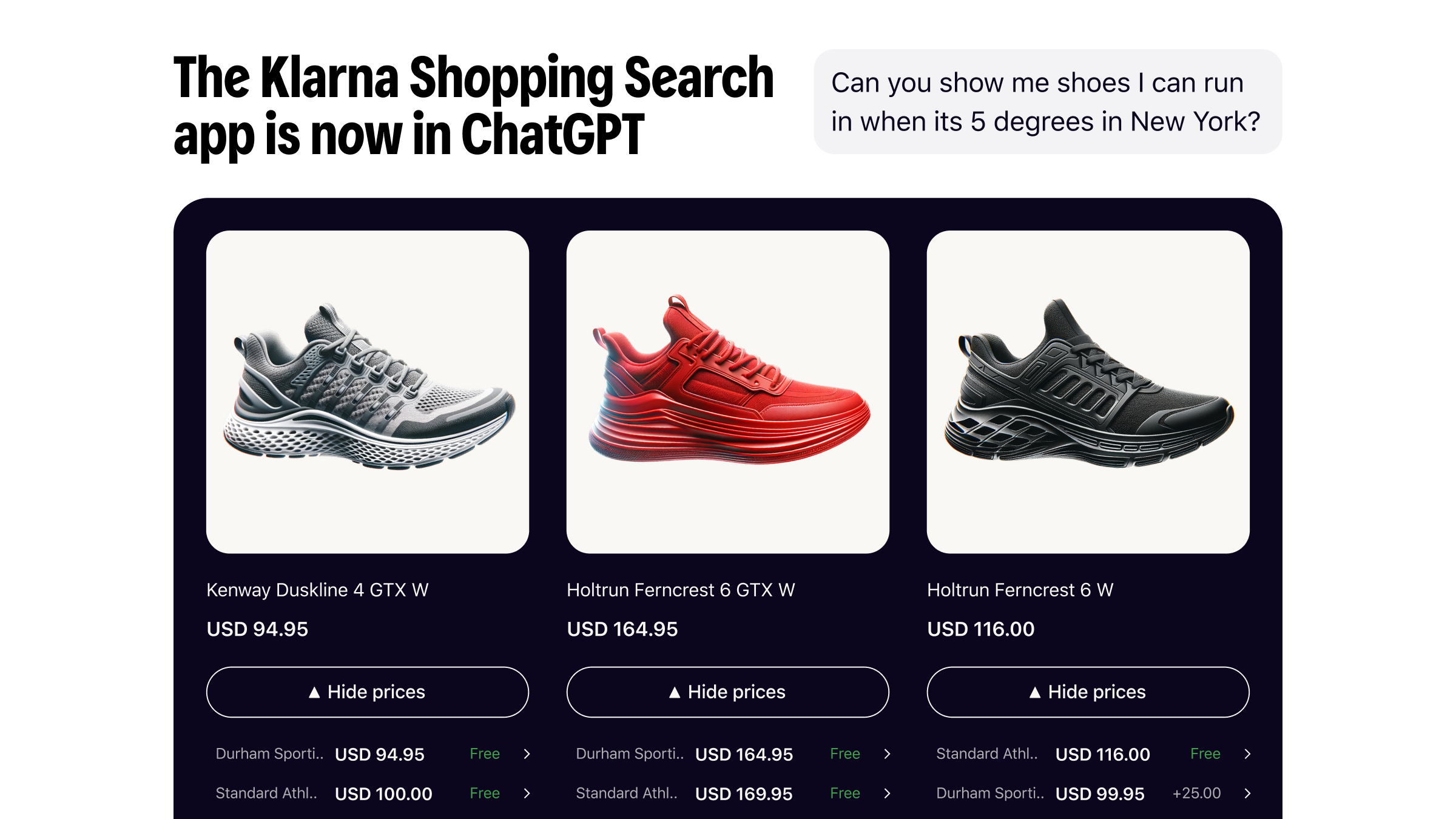
The Klarna Shopping Search app is designed to replace the traditional, multi-tab browsing experience that has characterized online shopping for decades. Rather than forcing a consumer to toggle between search engines, retailer websites, and price comparison tools, Klarna’s integration allows users to input natural language queries into ChatGPT.
A user might ask, "I need a pair of lightweight running shoes for under $100 that are good for trail running," and the AI, powered by the Model Context Protocol (MCP), will return a curated list of visual results. These results are not static; they reflect real-time data, including current pricing, stock availability, and specific offers from a vast network of merchants. Once a consumer selects a product that piques their interest, the app provides a seamless redirect to the merchant’s website, where the final transaction is completed.
This transition from "search-and-click" to "ask-and-buy" represents a significant leap in reducing friction. By condensing a 20-minute research session into a single conversation, Klarna is positioning itself as the primary interface for consumer intent.
A Chronology of Strategic Moves
The announcement on May 20, 2026, was not an isolated event but rather the latest milestone in a series of aggressive digital transformations:
- Mid-2025 – The Rise of Agentic Commerce: As generative AI models began to demonstrate higher proficiency in reasoning, industry analysts identified "agentic commerce" as the next $5 trillion opportunity. During this period, the integration of AI into the shopping stack became a priority for major payment processors.
- March-April 2026 – The Ecosystem Expands: Preceding the Klarna announcement, industry titans Shopify and Salesforce unveiled their own integrations with ChatGPT. These moves signaled a broader industry trend where ecommerce platforms are rushing to make their merchant catalogs discoverable within the AI platform.
- May 19, 2026 – The Google I/O Pivot: One day before Klarna’s announcement, Google utilized its annual developer conference to showcase its "Universal Cart" technology. This tool aims to allow users to purchase from multiple merchants in a single checkout experience, directly within a Google-managed environment.
- May 20, 2026 – The Klarna Launch: Klarna officially enters the fray with its ChatGPT plugin, emphasizing its deep data integration via MCP.
- Late May 2026 – The BNPL Integration: Klarna further solidified its presence in the AI space by partnering with Google to make "Buy Now, Pay Later" (BNPL) options available directly within Google’s AI-powered shopping agents.
Supporting Data and Technical Architecture
At the heart of this integration is the Model Context Protocol (MCP). The MCP is the technical bridge that allows AI agents to interface with live commerce data. Klarna has leveraged this protocol to connect ChatGPT to its massive commerce engine, which boasts data on more than 100 million individual products.
These products are distributed across 400 million unique listings spanning 13 international markets. The scale is staggering: Klarna currently serves over 119 million global active users and processes approximately 3.4 million transactions per day.
For the retailer, this is not just a visibility play; it is a high-intent conversion funnel. By appearing in the ChatGPT search results, brands gain access to consumers at the exact moment they are articulating a need. As of 2025, 203 of the largest retailers tracked in the Digital Commerce 360 Top 2000 Database had already integrated Klarna as a payment option, providing a robust foundation for this new AI search channel.
Official Perspectives: The C-Suite Vision
David Sykes, Chief Commercial Officer at Klarna, framed the move as a return to the essence of retail: helping people find exactly what they need without unnecessary friction.
"ChatGPT is where millions of people already turn when they’re figuring out what they want," Sykes stated. "We’re plugging our merchant network directly into that moment. A consumer who last week would have spent 20 minutes comparing tabs now gets a real answer in one conversation, creating a more seamless experience from idea to purchase."
The sentiment from Klarna’s leadership suggests that the company views itself not just as a payment provider, but as a commerce discovery engine. By moving upstream into the discovery phase, Klarna protects its ecosystem, ensuring that its payment methods remain the default choice for the consumer once they reach the checkout page.
The Implications: What This Means for Retailers
The shift toward AI-mediated shopping presents both a massive opportunity and a significant challenge for the modern retailer.
1. The Death of the Traditional Funnel
Traditional SEO and SEM strategies rely on capturing search traffic via keywords. In an AI-agent world, the "search" is performed by a machine. Retailers must now optimize their product data feeds to be "AI-readable." If an AI agent cannot interpret the features, availability, and pricing of a product via an MCP server, that product effectively does not exist in the new conversational economy.
2. The Battle of the "Universal Cart" vs. The Redirect
There is a clear ideological divide emerging. Klarna’s current model acts as an aggregator that sends traffic to the merchant’s site, preserving the retailer’s brand environment and customer data ownership. In contrast, Google’s "Universal Cart" approach seeks to keep the entire transaction within a Google-controlled interface. Retailers will soon have to decide which model offers better long-term value: the high-traffic, third-party discovery of Klarna or the frictionless, platform-locked checkout of a tech giant.
3. High-Intent Discovery
The "high-intent discovery channel" mentioned by Klarna is arguably the most valuable real estate in modern ecommerce. Because the AI is fulfilling a specific request ("I need running shoes under $100"), the likelihood of conversion is exponentially higher than a user clicking a generic banner ad. Retailers who successfully integrate their inventory into these AI agents will likely see an increase in conversion rates, provided their data is accurate and up-to-date.
4. The Data Imperative
The success of this entire ecosystem relies on real-time data. In the past, a lag in inventory updates might result in a frustrated customer. In the age of AI, a mismatch between what the AI suggests and what the merchant actually has in stock could result in a total loss of trust in the AI agent itself. Consequently, the burden on retailers to maintain "live" commerce data has never been higher.
Conclusion: The New Frontier of Retail
The launch of the Klarna Shopping Search app in ChatGPT is a harbinger of a broader transformation. We are moving away from an internet of static pages and into an internet of active, intelligent agents.
While the technology is still in its infancy, the implications are profound. As consumers become accustomed to the ease of AI-led shopping, the traditional methods of online discovery will seem increasingly archaic. The brands that win in this new era will not necessarily be those with the largest advertising budgets, but those that successfully integrate their supply chains into the logic of the AI agents that guide the modern consumer.
As Klarna, Google, and their peers continue to iterate, the line between "searching for a product" and "buying a product" will continue to blur. For the global retail industry, the message is clear: adapt to the agent, or risk being left out of the conversation.


 Reynand Wu
 Iffa Jayyana


 Sagoh
Sagoh
 Azzam Bilal Chamdy
 Ali Ikhwan