
 Ammar Sabilarrohman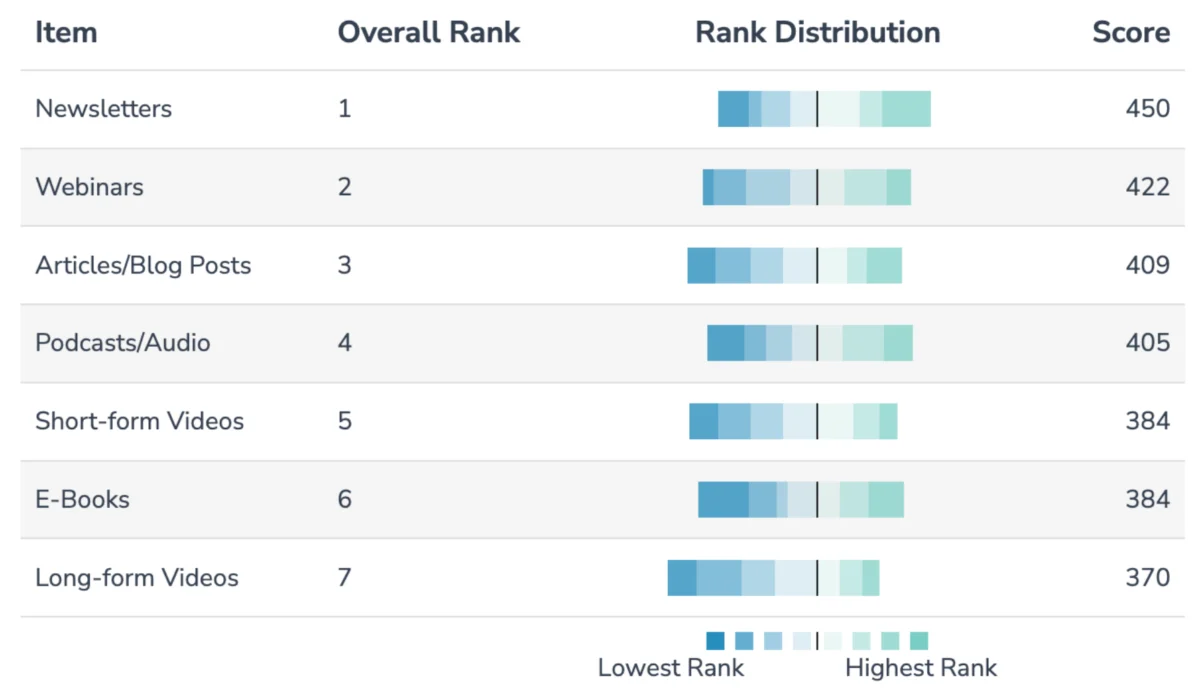
In the current digital landscape, the primary challenge for marketing leaders is no longer the scarcity of information, but the overwhelming abundance of it. Every day, the average executive’s inbox and social media feeds are inundated with a relentless deluge of industry reports, trend frameworks, tactical case studies, and "must-read" LinkedIn think pieces.
The prevailing theory among modern strategists is clear: Marketing leaders do not need more content. They need better filters.
This shift in consumer behavior has fundamentally changed how B2B brands approach their communication strategies. As the noise level in the marketing industry reaches an all-time high, the newsletter—once considered a legacy digital tool—has re-emerged as the most potent weapon for engagement. It is a medium that thrives not on the volume of content provided, but on the precision of its curation.
The Data-Driven Shift: Why Newsletters Are Winning
Convince & Convert (C&C), a prominent voice in the digital marketing consultancy space, recently undertook a rigorous analysis of its audience’s consumption habits. By surveying its base of marketing leaders, the firm uncovered a significant trend that defies the industry’s obsession with short-form video and high-production webinars.
According to the data, when marketing professionals look to stay informed about industry shifts and strategic insights, they consistently rank newsletters as their preferred medium. When asked to rank seven different content formats, respondents placed newsletters at the top—twice as often as any other channel.
This isn’t merely a preference for text; it is a preference for efficiency. In an era of "content fatigue," marketing leaders are looking for resources that do the heavy lifting for them. They are not just looking for a summary of what happened; they are looking for an expert analysis of what it means and why it matters to their specific business objectives.
A Strategic Evolution: From "ON" to "The Trendline"
Recognizing that their previous newsletter, titled ON, was no longer delivering the level of strategic value that their sophisticated audience demanded, the leadership team at Convince & Convert decided on a complete overhaul. The result is The Trendline, a rebranded and restructured resource designed to act as a high-level briefing rather than a repository of links.

The transition from ON to The Trendline was not merely a cosmetic change or a rebrand for the sake of novelty. It was a calculated pivot based on the realization that traditional "link-list" newsletters are becoming obsolete.
The Pitfalls of Legacy Newsletter Models
For years, the industry standard for a brand newsletter was simple: a list of links to recent blog posts, podcast episodes, and white papers. While this format served its purpose in a less crowded market, the "quality bar" has risen dramatically. Today, if a newsletter fails to provide utility within the body of the email itself—forcing the reader to click out just to understand the value proposition—it risks losing the reader’s trust and authority.
The team identified three core opportunities for improvement that catalyzed the development of The Trendline:
- Value Upfront: Moving away from "teaser" content that requires a click to be understood.
- Strategic Lens: Providing a synthesis of industry news rather than just a collection of headlines.
- Compact Utility: Ensuring that even the most complex strategic shifts are distilled into digestible formats that respect the reader’s limited time.
The Anatomy of a Modern Newsletter
The Trendline is structured as a daily or weekly "debrief." It functions as an extension of the agency’s consultancy arm, where the team applies their strategic lens to current events. The goal is to answer the questions that keep CMOs and marketing directors up at night: Why does this story matter to my department? What specific questions should I be asking my team about this trend?
The Four Pillars of the New Format
To ensure consistency and high-level engagement, the team implemented a new, rigid structure for every edition of The Trendline:
- The Lead Insight: A primary, deep-dive analysis of a current industry trend.
- The Tactical Take: A specific, actionable takeaway that can be applied to current projects.
- The Curated Brief: A distilled summary of news items that have been vetted by the editorial team.
- The "Sound Off" Poll: An interactive component that serves two purposes: keeping the audience engaged and providing the firm with high-fidelity, first-party data on audience sentiment.
This structure allows the team to maintain a consistent cadence while providing content that is, by design, modular and easy to consume. By limiting the need for "click-throughs" to understand the core message, the newsletter builds trust through utility.
Professional Insights: The Art of Executive Communication
The shift toward this "debrief" style of communication is a lesson that extends far beyond email marketing. It reflects a broader shift in executive communication.

"When presenting to CMOs or other senior decision-makers, they need information that will help their team solve problems," notes the leadership at C&C. "They don’t have time for 20 charts to get there."
This philosophy—prioritizing the needs of the target audience over the ego of the content creator—is the hallmark of effective strategy. Whether one is presenting a research report, a new digital strategy, or an internal memo, the starting point should always be: Who is the target audience, and what do they need to be successful?
Implications for the Future of Content Marketing
The pivot to The Trendline signals a broader trend in the marketing industry: the return to "owned" channels. In an environment where social media algorithms are increasingly volatile and the "reach" of organic content is shrinking, building a direct, high-trust relationship with an audience via email is becoming a non-negotiable strategic imperative.
Key Takeaways for Marketing Leaders
For brands looking to audit their own communication strategies, the transition at Convince & Convert provides a blueprint for modern engagement:
- Conduct Audience Research: Stop guessing what your audience wants. Survey them, look at your analytics, and understand their specific pain points.
- Prioritize Value Over Volume: It is better to send a bi-weekly, high-value newsletter than a daily email that adds to the "inbox clutter."
- Design for the "In-App" Experience: Assume your reader will not click your links. If the value isn’t evident within the email itself, you haven’t succeeded.
- Build in Interactive Feedback Loops: Use polls, surveys, and direct questions to gather your own data, rather than relying solely on vanity metrics like open rates.
- Evolve or Risk Irrelevance: What worked five years ago is likely failing today. Treat your communication channels as living products that require constant iteration.
A Final Thought on Trust
As artificial intelligence begins to flood the internet with an unprecedented volume of generic content, the value of human-led curation will only increase. The brands that win in the coming decade will be those that act as trusted filters, helping their audiences navigate complexity rather than adding to it.
The success of The Trendline proves that in a world of infinite content, the most valuable commodity is not the information itself, but the clarity that comes from a well-informed perspective. For marketing leaders, the message is clear: if you want to earn attention, you must earn trust—and you do that by being relentlessly useful.


 Siti Muinah
 Jia Lissa
 Layla Zulfa
 Nana
Nana
 Pevita Pearce
 Rifan Muazin

 Iffa Jayyana