
 Dwi Wanna
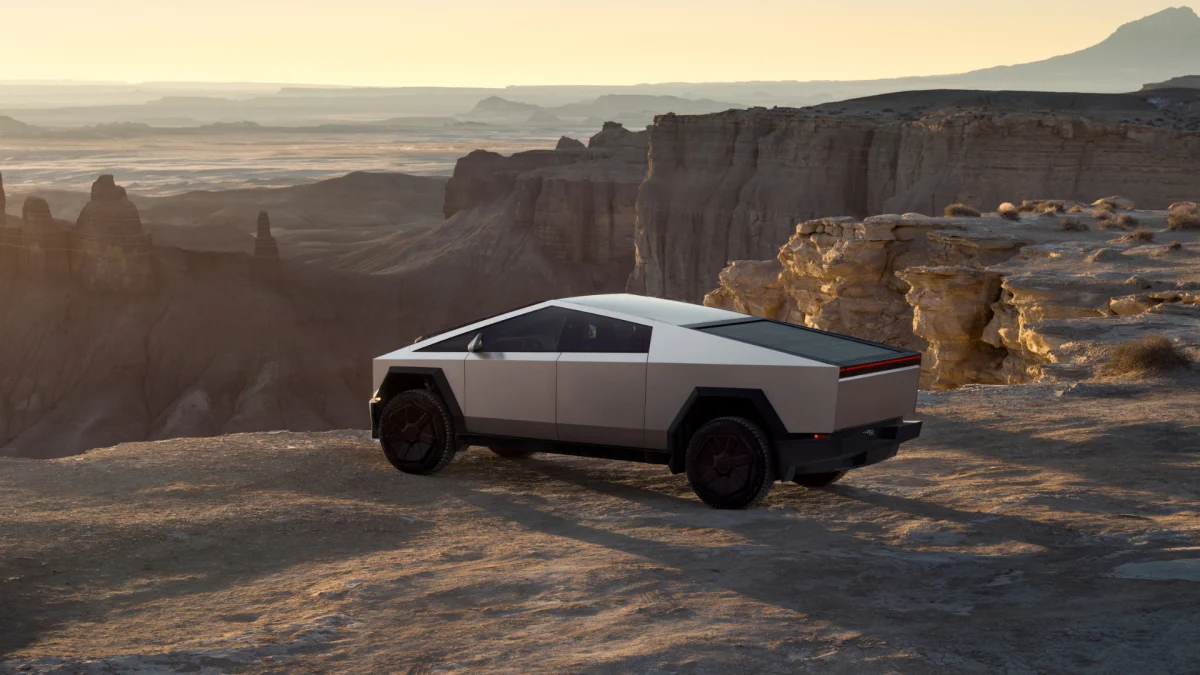
For thousands of enthusiasts in Australia and New Zealand, a long-standing automotive dream has officially reached a dead end. On Friday, Tesla sent shockwaves through the electric vehicle (EV) community by confirming that its angular, polarizing, and much-delayed Cybertruck will no longer be released in these regions. The announcement, delivered via direct email to reservation holders, marks the definitive conclusion of a five-year saga of anticipation, speculation, and ultimately, disappointment.
"After careful consideration, plans to produce the Cybertruck for Australia and New Zealand have been discontinued," the company stated in its communication to customers. "As a result, we’re unable to fulfil your reservation and it will be cancelled."
This decision effectively removes the vehicle from Tesla’s regional roadmaps, leaving the Model 3, Model Y, and the long-awaited Roadster as the primary pillars of the brand’s offerings in Oceania.
A Chronology of Anticipation and Delay
To understand the weight of this cancellation, one must look back at the timeline of the Cybertruck’s turbulent development. The vehicle was first teased by CEO Elon Musk as early as 2013, long before the prototype was formally unveiled to the world in November 2019. That initial reveal—infamous for the moment the "armored" glass shattered during a live demonstration—set the stage for a vehicle that defied every convention of automotive design.
At the time of the 2019 unveiling, the rhetoric from Tesla was one of aggressive optimism. The company projected that production would begin in late 2021. For Australian and Kiwi consumers, the prospect of an electric pickup truck that promised utility, performance, and an aesthetic pulled straight from a 1980s sci-fi film was enough to drive them to the company’s website in droves.
The deposit fee—a relatively modest $150 in local currency—was a small price to pay to secure a place in line for what was promised to be a revolutionary piece of hardware. However, as 2021 passed, then 2022, and eventually 2023, the production window continued to slide. As the manufacturing timeline stretched five years beyond its original goal, the patience of those in the Southern Hemisphere began to thin. The recent email is the first official confirmation that the "patient waiting" described by many will not result in a vehicle delivery.
The Financial and Operational Pivot
For those who had held onto their reservations for half a decade, the news brings a mixture of administrative closure and minor compensation. Tesla has confirmed that all $150 deposits will be fully refunded to customers.
In a move clearly designed to maintain brand loyalty and pivot potential buyers toward vehicles currently available in the region, Tesla has sweetened the deal for those whose preorders were cancelled. Affected customers are being offered a one-year subscription to Tesla’s "Full Self-Driving (Supervised)" software, contingent upon the purchase of a new Model 3 or Model Y.
However, industry observers are quick to note the limitations of this offer. Despite the marketing nomenclature, "Full Self-Driving (Supervised)" does not, in fact, render a Tesla vehicle autonomous. It remains a sophisticated Advanced Driver Assistance System (ADAS) that requires constant human oversight. By offering this as a consolation prize, Tesla is attempting to keep its customer base within the ecosystem while simultaneously admitting that its most high-profile hardware product will not be traversing the streets of Sydney or Auckland.
Why Did the Cybertruck Fail to Make the Cut?
While Tesla has not provided a granular breakdown of the engineering or regulatory hurdles that led to this decision, industry analysts suggest several key factors contributed to the cancellation.
1. Regulatory and Design Challenges
The Cybertruck’s unconventional design—characterized by its stainless steel exoskeleton and lack of traditional crumple zones—has faced significant scrutiny regarding pedestrian safety regulations in various global markets. Australia and New Zealand maintain stringent safety standards. Modifying the vehicle to meet these localized requirements, specifically concerning exterior protrusions and impact absorption, would likely have required a costly re-engineering of the vehicle’s core platform.
2. Market Size and Right-Hand Drive Logistics
Australia and New Zealand are smaller markets compared to the massive scale of the United States. The investment required to manufacture a right-hand drive (RHD) version of the Cybertruck is substantial. Given the production complexities already plaguing the North American manufacturing lines, the return on investment for an RHD version of such a niche, high-cost vehicle likely failed to meet the threshold required by Tesla’s board.
3. Build Quality and Reliability Concerns
The Cybertruck has been the subject of multiple recalls in the United States, ranging from issues with the accelerator pedal to concerns regarding wiper motor failures and trim panels. By restricting the vehicle to markets where service infrastructure is already deeply established and where the production line is within reach, Tesla may be attempting to mitigate the risks associated with scaling a notoriously difficult-to-manufacture vehicle into new, geographically isolated territories.
The Public Sentiment: A Polarized Response
If one were to gauge the reaction of the local community, it is clear that the news has been met with a spectrum of emotions. On forums such as r/TeslaAustralia, the discourse is surprisingly muted—or in some cases, celebratory.
The Cybertruck has been a lightning rod for criticism since its inception. Detractors have frequently mocked its design, comparing it to "low-poly" graphics from early 2000s video games or a child’s drawing of a truck. Beyond the aesthetics, the reports of build quality issues and the negative press surrounding its various recalls have eroded the enthusiasm of even some dedicated EV proponents.
"I’m actually relieved," one user noted on a thread discussing the cancellation. "I wanted a truck, but I didn’t want a beta-test on wheels."
This sentiment highlights a growing sophistication among EV buyers in Australia and New Zealand. As the market matures and more competitors—such as Ford, Rivian, and various Chinese manufacturers—enter the space with more traditional, highly capable electric utility vehicles, the "cool factor" of the Cybertruck has been superseded by the need for proven reliability and practicality.
Implications for the Future of Tesla in Oceania
The cancellation of the Cybertruck serves as a significant inflection point for Tesla’s operations in the Southern Hemisphere. For years, the brand has relied on the cult-like status of its upcoming products to maintain momentum. By cutting the Cybertruck, Tesla is signaling a shift toward a more pragmatic, product-focused strategy in the region.
The company will likely focus its efforts on the volume sellers: the Model 3 and the Model Y. These vehicles have become ubiquitous in Australia and New Zealand, benefiting from a robust charging infrastructure and a strong resale market.
Furthermore, the decision frees up resources that would have otherwise been spent on navigating the regulatory labyrinth of importing the Cybertruck. For the consumer, this may be a net positive. It forces the market to look toward other manufacturers to fill the gap for electric pickups, potentially accelerating the arrival of more practical, mass-market electric utility vehicles that are better suited to the rugged terrain and specific needs of the Australian outback and New Zealand’s rural landscapes.
Conclusion: A Lesson in Brand Management
The saga of the Cybertruck in Australia and New Zealand is a cautionary tale regarding the perils of long-term speculative marketing. When a company sells a vision five years into the future, it risks alienating the very customers it hopes to capture when reality finally sets in.
While the Cybertruck remains a marvel of engineering ambition and a testament to Tesla’s ability to disrupt the status quo, it was ultimately a bridge too far for the Oceania market. For the hundreds of reservation holders who waited half a decade, the journey ends not with a delivery, but with an email, a refund, and a realization that even the most disruptive companies are ultimately bound by the realities of global logistics, market demand, and the practicalities of the road.
As Tesla moves forward, it will need to navigate this shift carefully. Whether this decision will damage the brand’s image or allow it to refocus on more reliable growth remains to be seen. However, one thing is certain: the silhouette of the Cybertruck will not be a common sight on the roads of Australia or New Zealand anytime soon. The "futuristic" dream has been cancelled, and for many in the local EV community, that is simply the end of the road.


 Reynand Wu

 Sagoh

 Raul Delapena Setiawan


 Azzam Bilal Chamdy

 Ali Ikhwan
