
 Iffa Jayyana
Jakarta, Indonesia – For many, the ability to whistle is as natural as breathing, a spontaneous expression of joy or a simple way to call attention. Yet, for an equally significant portion of the population, this seemingly effortless act remains an elusive mystery, a source of quiet frustration. A casual observation from a 2019 YouTube video, which documented 100 randomly selected individuals attempting to whistle on camera, starkly illustrated this divide: roughly half of the participants failed, often producing only strange, unidentifiable noises. Conversely, those who succeeded often exhibited a remarkably similar mouth formation, a subtle yet crucial detail that hints at the complex biomechanics underlying this everyday sound.
This fascinating disparity has long captivated scientists and laypeople alike, prompting questions about why such a simple human action can be so difficult for some. Is it an innate talent, an anatomical predisposition, or merely a matter of practice? Experts in acoustics and human physiology are shedding light on this intriguing phenomenon, revealing that while anatomical limitations can exist, the secret to whistling for most lies not in born ability, but in refined motor control and persistent effort.
Main Facts: Unraveling a Common Conundrum
The core of the whistling enigma lies in its surprising complexity. What appears to be a straightforward expulsion of air is, in fact, a sophisticated interplay of oral geometry, airflow dynamics, and precise muscular coordination. The 2019 YouTube experiment, while informal, provided compelling visual evidence: successful whistlers consistently formed a small, round aperture in the center of their lips, roughly the width of a pencil, with the corners of their mouths drawn slightly back, rather than pursed forward as if for a kiss. This observation immediately challenged the popular notion of a wide, ‘O’-shaped mouth being the key to whistling.
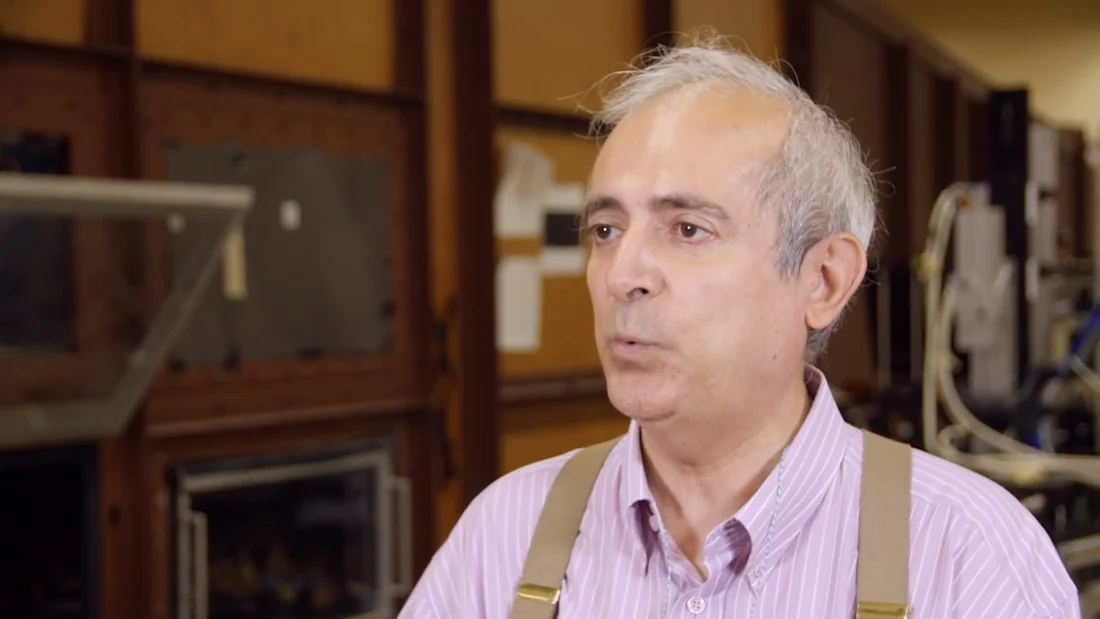
Professor Francisco Ruiz, a mechanical engineering expert at the Illinois Institute of Technology who specializes in the acoustics of whistling, dismisses the idea that an inability to whistle is commonly due to anatomical deficiencies. "It’s like learning to ride a bicycle," Ruiz explains, as quoted in PopSci. "You’ll fall many times until you get it." His research, supported by decades of acoustic studies, indicates that for the vast majority, the capacity to whistle is a learnable skill, albeit one that requires significant practice and the discovery of a specific, precise technique.
However, Ruiz and his colleagues acknowledge that certain rare physical conditions, such as a cleft palate, can indeed present genuine anatomical barriers. These conditions disrupt the intricate oral structure necessary to create the specific air channels required for sound production. Beyond these rare exceptions, the consensus among experts is clear: whistling is a refined motor skill, a testament to the human body’s capacity for fine-tuned control over seemingly simple muscular actions.
The Chronology of a Curious Observation
The journey into understanding whistling often begins with simple, everyday observations that pique scientific curiosity. The 2019 YouTube video serves as a modern example, visually cataloging the varied and often comical attempts of individuals trying to whistle. The footage meticulously captured the universal struggle: participants contorting their mouths, puffing their cheeks, and producing everything from raspy breaths to unintended raspberries, but rarely a clear, melodious whistle. Yet, when a successful whistler appeared, a pattern emerged: the consistent, almost identical lip formation – corners slightly retracted, a small, tight opening in the center. This stark visual contrast underscored the existence of a precise, albeit often unconsciously adopted, technique.
This anecdotal evidence resonates with the more rigorous scientific inquiry that has long been undertaken by researchers like Professor Ruiz. His interest in the acoustics of whistling predates the viral video, stemming from a fundamental curiosity about how the human body can generate such pure, tonal sounds without the vocal cords. Ruiz’s research has systematically broken down the mechanics, moving from macroscopic observations of mouth shapes to microscopic analyses of airflow and pressure dynamics within the oral cavity.
The practical application of this research gained significant momentum during the recent global pandemic. Confined to his lab and driven by both scientific curiosity and perhaps a touch of personal ambition to assist non-whistlers, Ruiz began developing a tangible solution. This period saw the conception and prototyping of Flutino, a 3D-printed device designed to guide aspiring whistlers into the correct mouth configuration. The development of Flutino represents a significant chronological step, moving from theoretical understanding to a practical, assistive technology, now undergoing further testing by groups such as the Whistling Club at the University of California, Los Angeles (UCLA). This progression from casual observation to detailed scientific investigation and, finally, to an innovative tool, highlights the iterative nature of scientific discovery.
Supporting Data: The Intricate Biomechanics of a Simple Sound
The apparent simplicity of whistling belies a sophisticated interplay of anatomical structures and fluid dynamics. Unlike speech or singing, which rely on the vibration of vocal cords, whistling operates on entirely different acoustic principles, transforming a stream of air into a pure tone through precise manipulation of the oral cavity.
Beyond the "O": The Precise Geometry of the Mouth
The initial YouTube observation of successful whistlers provided a crucial visual cue: the characteristic mouth shape. Instead of the widely held belief that one must round the lips into a large ‘O’ shape, effective whistling necessitates a more nuanced posture. The corners of the mouth are slightly drawn back, creating tension, while the central portion of the lips forms a small, focused aperture – akin to a tiny, circular nozzle. This specific configuration is paramount.
Professor Ruiz emphasizes the concept of "geometry" in whistling. He explains that generating a whistle requires an exact coordination between the position of the lips and the precise placement of the tongue against the roof of the mouth. These two elements must collectively form narrow channels of specific dimensions and orientations. This intricate "oral geometry" dictates how air flows through the mouth, shaping it into the distinctive sound waves that constitute a whistle. Without this precise arrangement, the air simply disperses or creates chaotic turbulence, failing to produce a clear tone.
The Helmholtz Resonator: How Air Becomes Music
The underlying principle behind whistling is deeply rooted in physics, specifically the phenomenon of acoustic resonance, often described by the Helmholtz Resonator principle. This principle, named after German physicist Hermann von Helmholtz, explains how air within a cavity can resonate at a specific frequency when air is blown across a small opening. The classic example is blowing across the mouth of a bottle to produce a tone; the volume of air inside the bottle determines the pitch.
In whistling, the human oral cavity acts as this resonator. When a whistler forms the precise lip aperture and tongue position, they create a narrow slit through which air is expelled. This directed airflow causes small disturbances, or vortices, at the edge of the lip opening. These disturbances interact with the column of air inside the mouth, creating pressure fluctuations. This interaction forms an acoustic feedback loop: the airflow excites the air within the oral cavity, which then resonates at a specific frequency, further influencing the airflow and sustaining the sound.
Crucially, the pitch of the whistle is controlled by altering the volume and shape of this internal "resonator" – the oral cavity. This is achieved by subtle movements of the tongue, jaw, and even the soft palate, which change the size and configuration of the air space inside the mouth. A smaller cavity typically produces a higher pitch, while a larger cavity yields a lower one. This dynamic reshaping of the oral cavity allows skilled whistlers to produce complex melodies and varying tones without engaging their vocal cords, which remain open and uninvolved in the sound production.
The Critical Role of Airflow Dynamics
Beyond the correct oral geometry, the force and consistency of the exhaled air stream are equally vital. Prashanth Tamilselvam, a researcher working with Professor Ruiz at the Illinois Institute of Technology, highlights the delicate balance required for airflow. "There’s a sweet spot where a whistle can be generated," Tamilselvam notes.
An embusan (exhale) that is too weak will not provide enough energy to initiate the necessary acoustic feedback loop within the oral cavity, resulting in no sound or merely a breathy whisper. Conversely, blowing too hard can introduce excessive turbulence, disrupting the laminar flow required for stable resonance and causing the whistle to break or become distorted. The "sweet spot" refers to the precise air pressure and velocity that allows for the creation of stable vortices at the lip aperture and sustained resonance within the oral cavity, leading to a clear, consistent tone. Mastering this delicate control of airflow is often one of the most challenging aspects for aspiring whistlers.
Anatomical Barriers: The Rare Exceptions
While most individuals can learn to whistle with practice, there are genuine anatomical conditions that can preclude this ability. The most significant of these is a cleft palate, a congenital condition where the roof of the mouth does not fully close during fetal development.
As Professor Ruiz explains, successful whistling depends on the ability to create precisely sealed and narrowed air passages within the mouth. In individuals with a cleft palate, the structural integrity of the oral cavity is compromised. The gap in the palate prevents the tongue from forming the necessary sealed channel against the roof of the mouth, making it impossible to create the required air pressure and resonance. "If someone has a cleft palate, they might not be able to whistle because they cannot form the constriction of the airway correctly," Ruiz states. While relatively rare, affecting approximately 1 in 700 births globally, cleft palate underscores that while practice is key for most, fundamental anatomical differences can indeed present insurmountable barriers to certain oral motor skills.
The Practice Paradox: Whistling as a Motor Skill
For the vast majority, the inability to whistle is not a medical condition but a lack of motor skill development. Ruiz’s analogy to learning to ride a bicycle is particularly apt. Mastering any complex motor skill, from typing to playing a musical instrument, involves repeated attempts, failures, and gradual refinement of muscle coordination and neural pathways.
Whistling requires an intricate choreography of numerous small muscles in the lips, tongue, cheeks, and jaw. Initially, these movements are clumsy and uncoordinated. Through persistent practice, the brain begins to form and strengthen neural connections that allow for increasingly precise control over these muscle groups. This process, known as motor learning, leads to the development of muscle memory, where the correct mouth shape, tongue position, and airflow can be achieved unconsciously and with minimal effort. The frustration often experienced by non-whistlers stems from the difficulty in consciously isolating and coordinating these minute muscular actions without the benefit of established neural pathways.
The Age Factor: A Question of Adaptability
The ease with which one acquires new motor skills often varies with age, a phenomenon observed in many domains, including whistling. Maureen Stone, a speech scientist and professor emeritus at the University of Maryland’s School of Dentistry, draws an insightful parallel to language acquisition. "If an adult moves to a new country and is asked to learn the local language, they will most likely always have an accent," Stone observes. "However, if a child moves to a new country, that’s not an issue."
Stone suggests that the period around puberty marks a significant shift in the body’s ability to adapt and learn certain new skills. While children’s brains and bodies exhibit remarkable neuroplasticity, readily forming new neural connections and adapting muscle control, adults tend to have more established motor patterns and less flexible physiological systems. Whistling demands highly accurate control over the tiny muscles of the lips and tongue. As individuals age, their muscle memory for existing oral motor functions becomes more entrenched, and the flexibility to develop entirely new, fine-motor skills like whistling may diminish. This doesn’t mean adults cannot learn to whistle, but it often requires a more concerted, conscious effort and longer practice periods to overcome established habits and forge new motor pathways.
Official Responses and Expert Insights
The collective wisdom of experts like Professor Francisco Ruiz, Dr. Maureen Stone, and researcher Prashanth Tamilselvam paints a comprehensive picture of whistling, elevating it from a simple act to a fascinating subject of scientific inquiry. Ruiz consistently emphasizes the mechanical precision and the role of practice, framing whistling as an acquired skill rather than an inherent talent for the vast majority. His work underscores the overlooked sophistication of seemingly trivial human actions, revealing a miniature acoustic laboratory within the oral cavity.
Dr. Stone’s contributions highlight the developmental aspects, linking the ease of learning to age and the plasticity of the developing brain. Her analogy to language acquisition resonates deeply, suggesting that there might be optimal windows for mastering certain fine motor skills, including the intricate muscle coordination required for whistling.
Tamilselvam’s insights further refine our understanding by focusing on the critical role of airflow. His concept of a "sweet spot" for breath control adds another layer of complexity, demonstrating that merely adopting the correct oral geometry is insufficient; the dynamic element of air propulsion must also be perfectly calibrated.
Together, these expert perspectives converge on a unified conclusion: whistling is a remarkable feat of biomechanical engineering and motor learning. It is a skill that demands not only the correct physical setup but also a precise, dynamic interaction of breath, muscle, and resonance, often mastered through iterative trial and error.
Implications: From Personal Frustration to Technological Solutions
The scientific exploration of whistling extends beyond academic curiosity, offering tangible solutions for those who have long struggled with this seemingly simple art. The understanding gained from acoustic research has paved the way for innovative tools designed to demystify and facilitate the learning process.
The Birth of Flutino: Aiding the Aspiring Whistler
Perhaps the most exciting practical implication of Ruiz’s research is the development of Flutino. Born out of the constraints and introspection of the pandemic era, this small, 3D-printed device is a testament to applying scientific understanding to solve everyday problems. Measuring smaller than a quarter-dollar coin, Flutino is designed as a miniature, funnel-like mouthpiece.
"This device replaces the function of the lips," Ruiz explains. "You put it between your lips and blow, and it helps you get that position that your mouth might not be able to do correctly naturally." The device precisely guides the user’s lips into the optimal configuration, creating the necessary small, central aperture and tension crucial for initiating a whistle. What’s more, Flutino is versatile, capable of producing a whistle whether the user blows or inhales, demonstrating its effectiveness in mimicking the precise airflow dynamics. During testing, Flutino proved remarkably effective, generating whistles at up to 100 decibels – a testament to its ability to replicate the complex acoustic conditions required.
Current Status and Future Potential
While Flutino represents a significant leap, it is currently in the patent application process and not yet commercially available. However, its potential as a pedagogical tool is already being explored. Professor Ruiz has initiated pilot programs, including one with the Whistling Club at UCLA. This group of students is actively testing Flutino’s efficacy, evaluating whether the device can genuinely accelerate the learning curve for individuals who previously found whistling impossible.
The implications of Flutino’s success could be far-reaching. Beyond simply teaching individuals to whistle for personal enjoyment, the device could potentially serve as a therapeutic aid for individuals with minor oral motor coordination challenges. By providing a tangible guide for lip and tongue placement, Flutino could help in developing muscle memory and control, which might have broader benefits for speech articulation or other oral functions. Furthermore, it could open new avenues in musical education, offering a foundational tool for exploring wind instrument techniques or simply fostering a deeper appreciation for acoustic physics.
Beyond the Whistle: Broader Significance
The study of whistling, while seemingly niche, offers a valuable lens through which to examine broader aspects of human physiology, motor learning, and cultural expression. It highlights the remarkable capacity of the human body for precise fine motor control, often taken for granted. The intricacies of airflow, resonance, and muscle coordination involved in whistling serve as a microcosm for understanding more complex human actions.
Culturally, whistling holds diverse significance – as a form of non-verbal communication, a musical art form, a signal, or simply an expression of mood. Mastering it, therefore, can offer not only personal satisfaction but also a connection to these broader human traditions. The ongoing research and development of tools like Flutino underscore humanity’s continuous quest to understand, enhance, and even democratize our innate physiological capabilities, transforming perceived limitations into achievable skills through scientific innovation and persistent effort.
In conclusion, the inability to whistle, while a common source of mild vexation, is rarely an insurmountable genetic curse. Instead, it is, for most, a fascinating challenge in motor learning and acoustic mastery. With the insights provided by experts and the advent of ingenious tools like Flutino, the once elusive art of whistling is slowly but surely becoming accessible to all who are willing to practice. The secret, it turns out, lies not in an inherent gift, but in the precise geometry of the mouth, the delicate balance of breath, and the unwavering dedication to learning a new tune.

 Azzam Bilal Chamdy

 Lina Hope

 Ammar Sabilarrohman

 Asep Darmawan

 Asro

 Layla Zulfa

 Nila Kartika Wati

 Muslim
