
 Asro
Every four years, the FIFA World Cup serves as the ultimate global proving ground for digital infrastructure. It is a quadrennial event that transcends mere sports, functioning as a synchronized, high-stakes stress test for the backbone of the internet. The 2026 World Cup, however, pushed these boundaries further than ever before, setting all-time records for messaging volume, video streaming, algorithmic recommendations, and global networking traffic.
For the engineers at Meta, the 2026 tournament was not just a sporting event; it was a 39-day endurance marathon that required a total reimagining of how global traffic is managed, balanced, and sustained.
The Anatomy of a Digital Surge: Main Facts
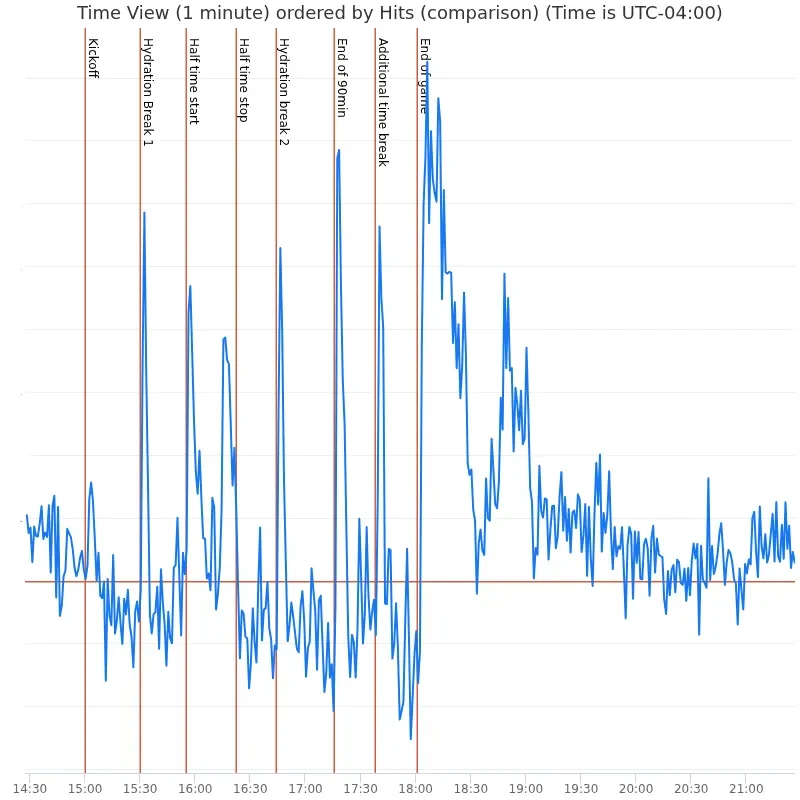
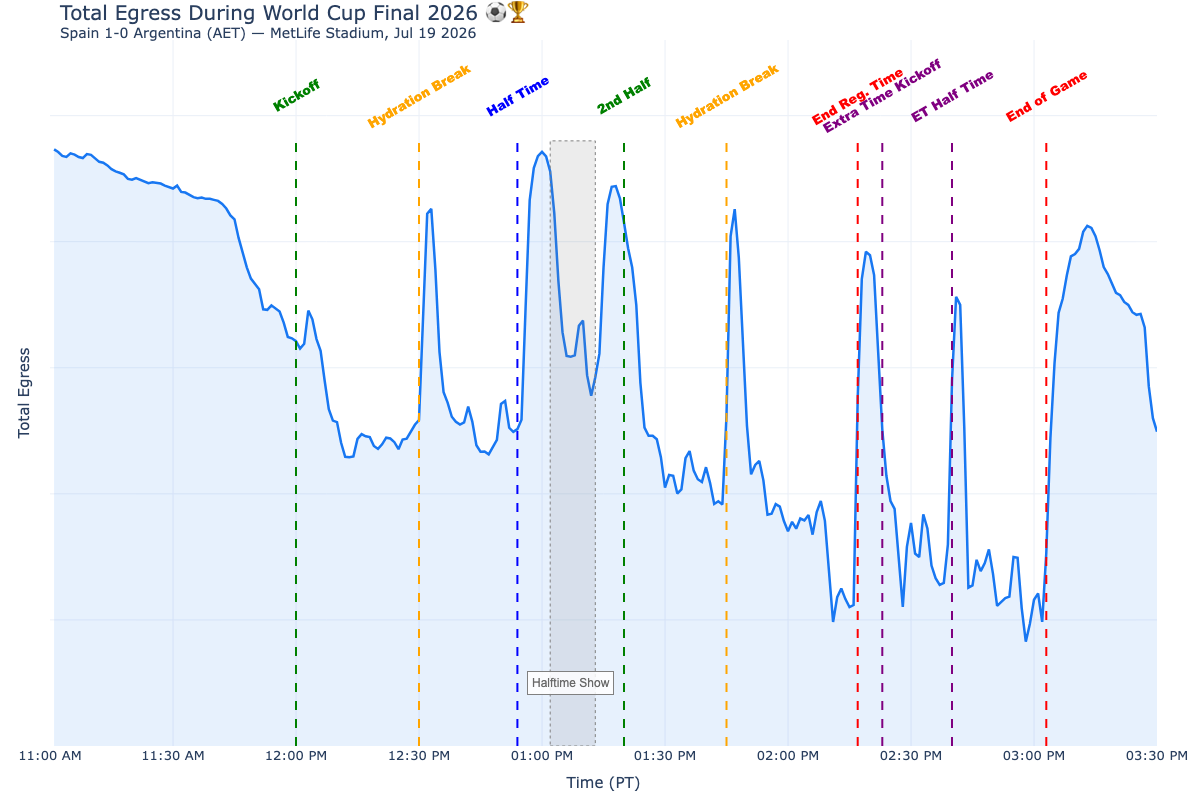
When billions of people share a singular, instantaneous experience, the underlying network infrastructure feels the pressure. The 2026 World Cup data reveals that the most significant traffic spikes were not driven by the action on the pitch, but by the "social aftermath" of the gameplay.
The data indicates a clear behavioral pattern: users were not merely passive consumers of video content during the matches. Instead, they utilized Meta’s suite of platforms—Instagram, WhatsApp, and Facebook—to process their emotions, celebrate victories, and analyze defeats during the natural lulls of the game. Hydration breaks, halftime intervals, and, most notably, the final whistle, acted as trigger points for massive surges in egress traffic.
During the tournament final, Meta observed a 46% surge in traffic within a four-minute window at the conclusion of regular time. Even more staggering, the final whistle triggered a 57% surge in traffic within just 15 minutes. This confirms a core insight for modern infrastructure management: the "human" element of social networking dictates traffic patterns far more aggressively than the live streaming of the game itself.
A Chronology of Capacity: From Group Stages to the Final
The infrastructure strategy for the 2026 tournament was not a static plan, but a dynamic, phased evolution. Meta’s approach was built on an incremental deployment timeline that shifted as the tournament progressed from the group stages toward the final match.
Phase 1: Preparation and ISP Collaboration
Months before the first kickoff, Meta’s edge teams engaged in a comprehensive analysis of global network capacity. This involved strategic partnerships with Internet Service Providers (ISPs) to ensure that infrastructure upgrades were placed exactly where they would provide the greatest improvement to user quality of experience. Unlike temporary "quick fixes," these upgrades represent permanent capacity improvements, leaving behind a more robust internet infrastructure for the regions involved long after the tournament concluded.
Phase 2: The 39-Day Surge
For Instagram, the tournament represented an unprecedented test of resilience. For 39 consecutive days, traffic spikes became the new baseline. Machine learning inference models, Feed serving, Stories, and data infrastructure were subjected to sustained pressure. During the final, Instagram Feed traffic surged 76% above the previous day’s levels at the exact moment the match ended, maintaining a 21% elevated volume for two hours afterward.
Phase 3: The WhatsApp "Firehose"
WhatsApp faced the most intense load, handling a staggering 8.4 billion messages within a single five-minute window during the tournament’s climax. This was made possible by a rigorous schedule of load testing, where over 100 internal services were resized, retested, and revalidated as the bracket narrowed and the global user base grew more engaged.
Supporting Data and Technical Architecture
The systems that absorbed these shocks were built on a foundation of "layered automation," ensuring that the network could respond to surges without manual intervention.
The Technical Stack
- Taiji: This system played a critical role in balancing load across data centers globally, acting as the primary orchestrator for traffic distribution.
- Katran & Proxygen: These frameworks handled Layer 4 and Layer 7 traffic distribution, respectively, ensuring that the surge in requests was efficiently parsed and routed.
- AutoScaling: By leveraging predictive demand modeling, the system dynamically provisioned compute capacity on demand, ensuring that resources were available exactly when the traffic hit.
The Failure of Traditional "Load Shifting"
Historically, Meta’s playbook for handling high-traffic events involved shifting load between regions. For events like New Year’s Eve, where peaks happen sequentially as time zones transition, this strategy is highly effective—quiet regions "borrow" capacity from busy ones.
The 2026 World Cup rendered this strategy obsolete. Because the entire world was watching the same matches simultaneously, every region peaked at the exact same moment. There was no "idle" capacity to borrow. Consequently, Meta’s engineers had to shift their philosophy, abandoning global multipliers in favor of hyper-localized, region-specific forecasting. Every data center had to stand on its own, providing enough capacity to meet its own local peak without relying on global redistribution.
Official Perspectives: Breaking the "Freeze" Protocol
One of the most radical departures from industry norms during the 2026 World Cup was the decision to abandon the traditional "code freeze."
In standard enterprise environments, a major global event usually mandates a moratorium on software deployments and "risky" operations to ensure stability. However, Meta’s teams operated on a normal cadence throughout the entire 39-day window. This decision was a direct vote of confidence in the maturity of their reliability engineering. By refusing to freeze, teams were able to ship features, perform maintenance, and execute updates even during the most high-traffic moments of the final, proving that the infrastructure had reached a level of maturity where continuous deployment was not a liability, but a standard operational state.
Implications for Future Mega-Events
The lessons learned from the 2026 World Cup have already been codified into a "reusable runbook." This framework is not intended to collect dust; it is a living document that will be stress-tested again at future global gatherings, most notably the 2028 Olympic Games.
Key Implications:
- Shift in User Behavior: Infrastructure must now be optimized not for content delivery (streaming), but for content creation and social interaction (posting, messaging, sharing). The "aftermath" of a live event is the new primary load vector.
- Autonomous Resilience: The reliance on human intervention during traffic spikes is a relic of the past. The success of Taiji and AutoScaling proves that autonomous, layered systems are the only way to manage events of this scale.
- Regional Independence: Future capacity planning must move away from global load-sharing. As global synchronization increases, regional infrastructure must be capable of handling peak demand entirely independently.
Conclusion
Powering a global experience where billions of people connect at the exact same second—celebrating a last-minute goal or mourning a defeat—is the ultimate manifestation of infrastructure and product working in perfect harmony. The 2026 World Cup proved that the digital world is no longer just a mirror of the physical world; it is an active, vital participant in how we experience humanity’s greatest collective moments. As we look toward the 2028 Olympics and beyond, the blueprint established this summer serves as a testament to what is possible when engineering meets global connectivity at scale.


 Jia Lissa

 Nila Kartika Wati

 Raul Delapena Setiawan

 Reynand Wu

 Sagoh


 Azzam Bilal Chamdy

 Ali Ikhwan
