
 Nana Muazin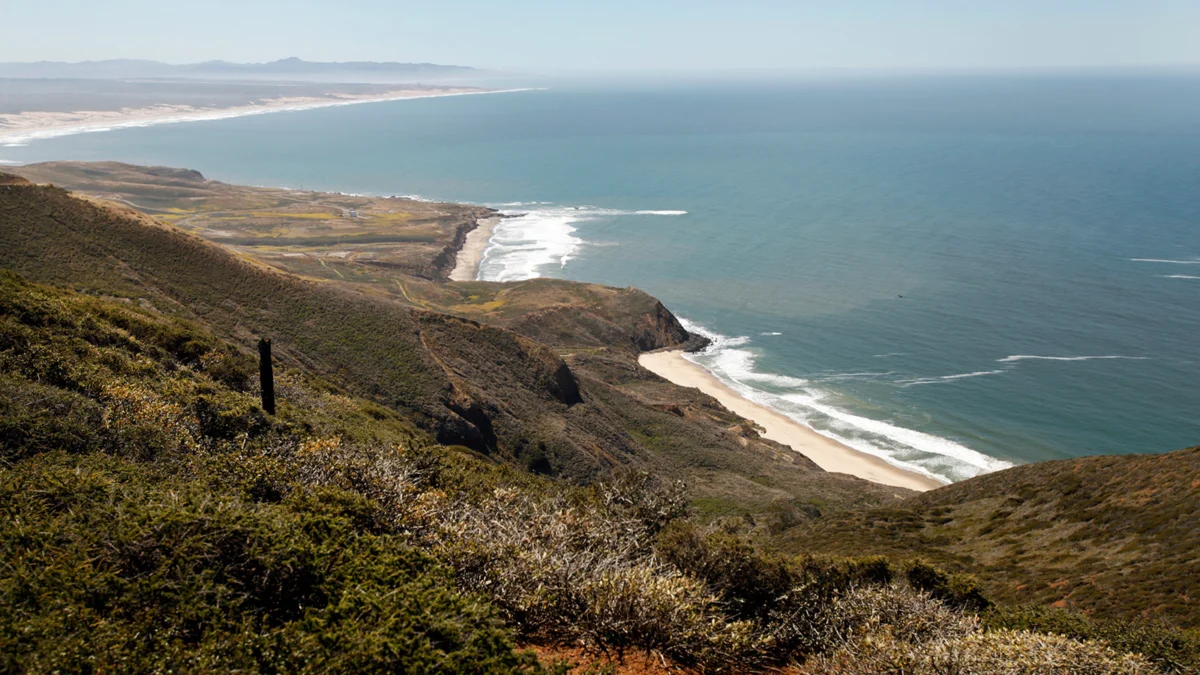
Beneath the rolling, sun-dappled surface of the Pacific Ocean off the California coast lies a realm of staggering complexity. In the kelp forests surrounding the Channel Islands, sheephead fish—striking in their high-contrast coats of pink and black, accented by formidable protruding teeth—patrol the stalks. Nearby, giant sea bass the size of household refrigerators glide through the water, while seals and sea lions weave through a kaleidoscopic tapestry of sponges and sea stars.
"We sometimes think of the Channel Islands as our Galapagos in California," observes Doug McCauley, a professor of marine science at the University of California, Santa Barbara. It is a comparison that holds both wonder and warning: like the famed archipelago that inspired Darwin, the Channel Islands represent a fragile, concentrated hub of biodiversity that requires careful, deliberate management to survive.
Yet, this thriving marine ecosystem was not always a beacon of resilience. Violet Sage Walker, chair of the Northern Chumash Tribal Council, vividly recalls archival documentary footage of the islands from the late 20th century, before the implementation of modern conservation safeguards. During that era of intensive, unregulated commercial extraction, the seafloor had been stripped of its vitality. "It looked like Mars," Walker says, describing the barren, decimated landscape. "It looked like a dead planet."
Now, California stands at a critical juncture. For the first time in 15 years, state officials are conducting a sweeping review of the Marine Protected Area (MPA) network, weighing proposals to expand existing zones and create new ones. With final votes scheduled for mid-October 2026, the state is poised to decide the future of its coastal legacy.
The Evolution of Underwater State Parks: A Chronology
The movement to protect California’s coastal waters was not an overnight development but the result of decades of advocacy and scientific study.
The Turning Point (2003–2012)
Following years of ecosystem decline, California enacted the Marine Life Protection Act (MLPA), which provided the legal framework for the state’s MPA network. Beginning in 2003, the Channel Islands became the testing ground for these "underwater state parks." By 2012, the network had expanded significantly, covering roughly 150 square miles of protected waters. These zones were designed not merely as static boundaries, but as biological nurseries—safe havens where kelp bass, rockfish, and leopard sharks could reach maturity without the pressure of constant commercial extraction.
The Decadal Review
The current review process, which culminates this month, represents the first comprehensive assessment of the network in over a decade. The state is currently evaluating proposals for two new sites: the Point Sal and Mishopshno State Marine Conservation Areas. Unlike previous iterations of the MPA network, these proposals are unique in their co-sponsorship by California Tribes, marking a historic shift toward integrating Indigenous ecological knowledge into state-level policy.
The Anatomy of an MPA: How Protection Works
Marine Protected Areas are essentially designated ocean zones where human activity is strictly regulated to prevent habitat degradation. Restrictions often include limitations on commercial fishing, bans on oil and gas drilling, and prohibitions on seafloor disturbances such as bottom trawling.
"When you remove those kinds of disturbances, you see a transformation," explains Sandy Aylesworth, director of the Pacific Initiative for the Natural Resources Defense Council (NRDC). "You see larger fish, more abundant wildlife, and a demonstrably healthier habitat."
The "Spillover" Effect
Critics of MPAs often cite potential economic losses to the fishing industry as a primary concern. However, data suggests a more nuanced reality. A 2021 study of two Southern California MPAs established in 2012 revealed that fishing boats operating in adjacent waters actually saw a 225% increase in lobster catches over a six-year period. This "spillover effect"—where the protected area acts as a nursery that continuously repopulates surrounding fishing grounds—suggests that conservation and economic viability are not mutually exclusive, but are, in fact, symbiotic.
Spotlight on New Proposals: Point Sal and Mishopshno
The two proposed additions to the network, Point Sal and Mishopshno, represent a convergence of biological necessity and cultural reclamation.
Point Sal: A Coastal Paradise
Located off the Santa Barbara County coast, the proposed Point Sal State Marine Conservation Area spans roughly nine square miles. The area’s unique topography—a headland that shields southern waters from prevailing winds—creates calm, nutrient-rich conditions that allow fish larvae to mature safely. Scientific surveys have documented over 880 sea lions gathering there in a single day, alongside sea otters, sharks, and rocky reef fish. For the Chumash people, this is ancestral territory. "Our people lived and thrived there for thousands of years," says Walker. The proposal seeks to honor this legacy, ensuring the area remains a sanctuary for both wildlife and the cultural traditions that have guarded the coast since time immemorial.
Mishopshno: The Great White Nursery
Further south, near Carpinteria, the Mishopshno proposal targets a rare 1.6-mile rocky reef that supports one of the Central Coast’s most resilient kelp forests. This site is particularly significant for shark research. Carlos Gauna, a filmmaker and researcher who has spent thousands of hours documenting the area, describes it as one of the most remarkable shark habitats on the planet.
"I live and breathe sharks daily," Gauna notes. "There is literally nothing like it anywhere else on the California coast." Gauna’s footage has frequently captured the dangers lurking in unprotected waters: jet skiers ramming into wildlife, and illegal fishing activity resulting in injured or killed sharks. For Gauna, the designation of an MPA at Mishopshno serves as a clear signal—a boundary that mandates respect for the ecosystem.
The Case for Indigenous Stewardship
One of the most profound shifts in this current review is the emphasis on Tribal co-management. For over 10,000 years, California Tribes have acted as the primary stewards of the Pacific coastline. Despite this, the state’s current MPA system lacks formal mechanisms for Tribal co-management.
The Point Sal and Mishopshno proposals, led by the Northern Chumash Tribal Council and the Santa Ynez Band of Chumash Indians respectively, seek to rectify this. "Being able to reconnect and offer our vision and our help with dealing with climate resiliency and coastal stewardship is critical," says Walker. By formalizing these roles, the state has the opportunity to move beyond passive protection and toward an active, collaborative model of environmental management that recognizes the intersection of climate science and Indigenous wisdom.
Implications for a Changing Climate
The urgency of this moment cannot be overstated. As the federal government has moved to roll back various environmental protections, California finds itself in a position to lead on a regional scale. Doug McCauley emphasizes that the current window for action is narrow: "This is a historic opportunity that we don’t want to miss."
Public Sentiment and the Path Forward
Public support for these expansions is overwhelming. Recent data indicates that approximately 70% of California voters favor the new protections at Point Sal and Mishopshno. Despite the vocal opposition of a small minority of commercial fishing interests, the scientific consensus remains clear: the benefits of MPAs—ranging from biodiversity preservation to carbon sequestration and coastal resilience—far outweigh the temporary inconveniences of regulated access.
The upcoming Fish and Game Commission votes (scheduled for October 14th–16th) will define the next decade of marine governance in California. If passed, these areas will provide a necessary buffer against the warming, acidifying, and increasingly unpredictable ocean environment of the 21st century.
A Legacy of Healing
The philosophy driving this expansion is rooted in the belief that the ocean possesses a remarkable capacity for regeneration if given the space to function. As Violet Sage Walker eloquently puts it: "The ocean, given the opportunity, will thrive. But we have to give it the space and the time to heal itself."
Whether through the protection of a shark nursery in Mishopshno or the preservation of an ancient village site at Point Sal, California’s commitment to its marine life is a commitment to its own future. As the state moves toward these final decisions, the eyes of the global conservation community are turned toward the Pacific, watching to see if California can successfully balance the demands of a modern society with the absolute necessity of a wild, healthy, and protected ocean.


 Basiran
 Lina Irawan
 Neng Nana

 Jia Lissa
 Laily UPN
 Asep Darmawan