
 Muslim
The 2026 World Cup was more than just a spectacle of athleticism; it was a high-stakes arena for global sportswear giants. With over 68.5 million mentions across social media, digital news outlets, forums, and traditional broadcast media, the tournament served as the ultimate test of brand visibility and consumer engagement. While the scoreboard reflected the talent on the pitch, a secondary, equally intense competition played out on the feet of the players.
As the dust settles, data from Brandwatch reveals a fascinating dichotomy: the difference between official sponsorship visibility and organic consumer demand. While Adidas maintained the "official" spotlight, Nike emerged as the victor in sentiment, search momentum, and long-term brand equity.
The Landscape: Footwear as the Ultimate Accessory
Football boots are the most scrutinized accessory in the sport. During the June 11 to July 19 window, major manufacturers—including Nike, Adidas, Puma, and New Balance—poured resources into product launches and celebrity-driven campaigns.
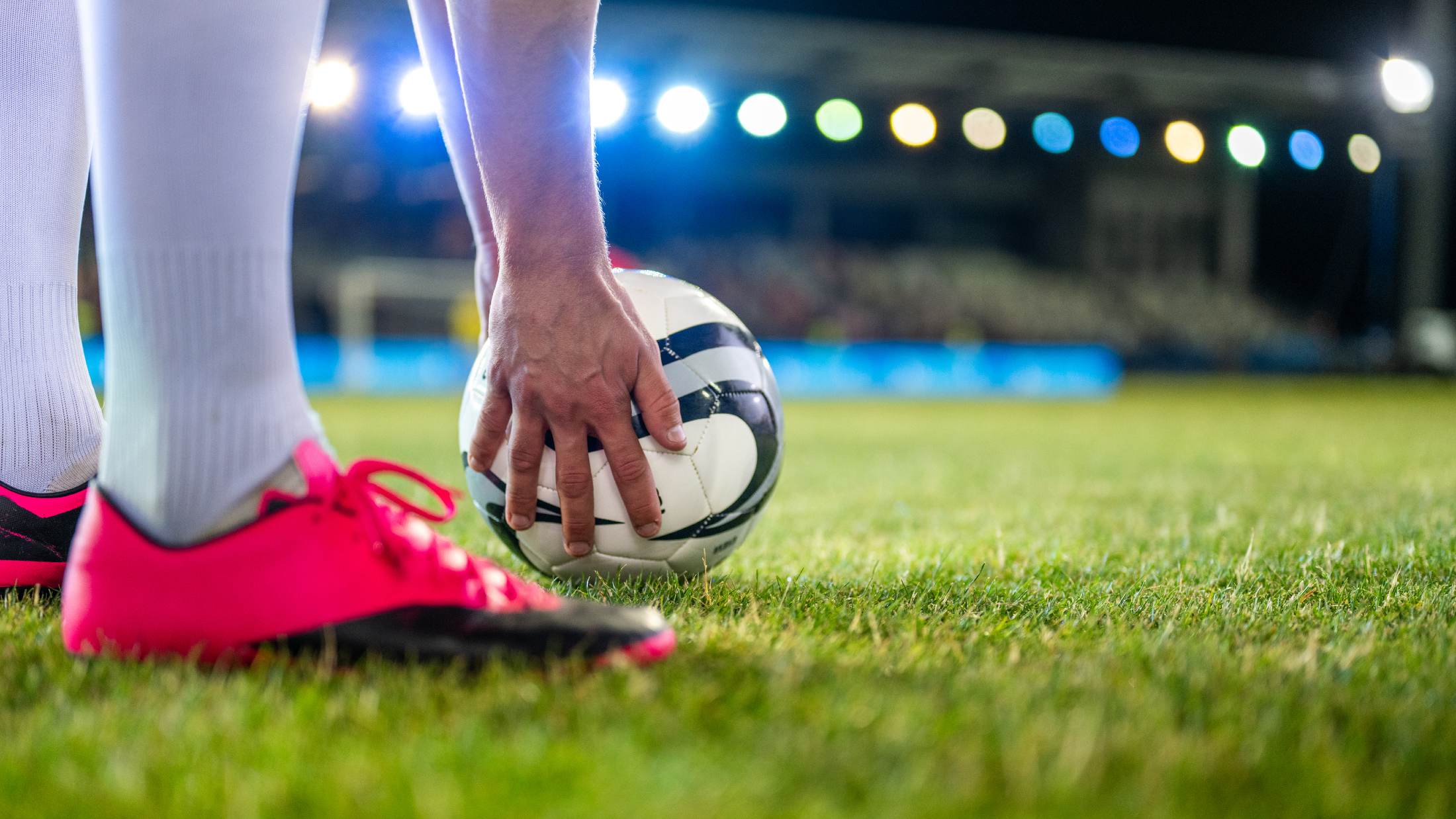
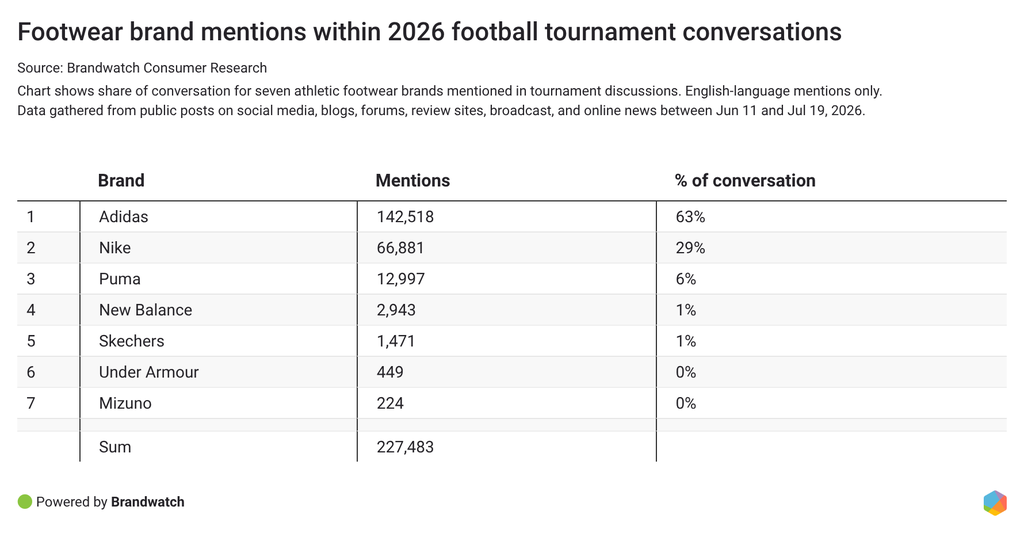
The analytical data paints a clear picture of the consumer mindset during the tournament. There were nearly 50,000 direct mentions of football boots within tournament-specific discourse. However, when widening the scope to include broader football footwear conversations, that number swelled to 818.5k, highlighting the immense interest in the industry’s product evolution.
Chronology of a Digital Turf War
The tournament was not a static event for brands; it was a fluid, evolving narrative that unfolded in three distinct phases:
- The Pre-Tournament Build-up: Brands set the stage with high-budget campaigns. Adidas focused on "Backyard Legends," a star-studded film featuring Timothée Chalamet, Lionel Messi, and Lamine Yamal. Nike countered with the "Rip The Script" campaign, leveraging K-pop icon LISA to bridge the gap between football culture and global pop culture.
- The Tournament Peak: As the matches began, the focus shifted to on-field performance. Adidas enjoyed the "official sponsor" advantage, providing the match ball (the Trionda) and referee kits. However, this period also saw the rise of the "Pink Cleat" controversy, a design trend that polarized fans across the globe.
- The Post-Tournament Search Spike: Immediately following the conclusion of the event, search intent shifted from "Who is wearing what?" to "What should I buy?" This is where the battle for commercial conversion reached its climax.
Supporting Data: Search Trends vs. Social Noise
To understand how the tournament impacted long-term demand, we analyzed search queries across the US, UK, and Canada. The findings suggest that while social media buzz is fleeting, search volume indicates genuine intent.
Brand-Level Search Analysis
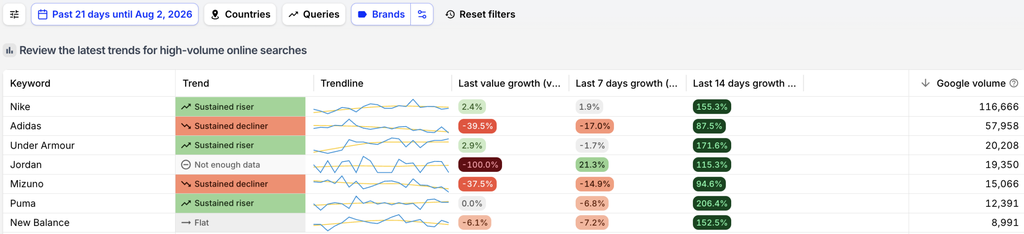
Nike dominated the search landscape post-tournament. "Nike football cleats" saw a 155.3% surge in interest in the two weeks following the final. In contrast, while Adidas remained the second-largest brand by search volume with an 87.5% growth rate, they saw a 17% decline in the second week alone, suggesting a lack of sustained momentum.
Smaller brands, such as Under Armour and Puma, saw rapid percentage growth—up 171.6% and 206.4% respectively—though their total volume remained modest, confirming that the "Big Two" still hold a stranglehold on the market.
The Rise of Generic Querying
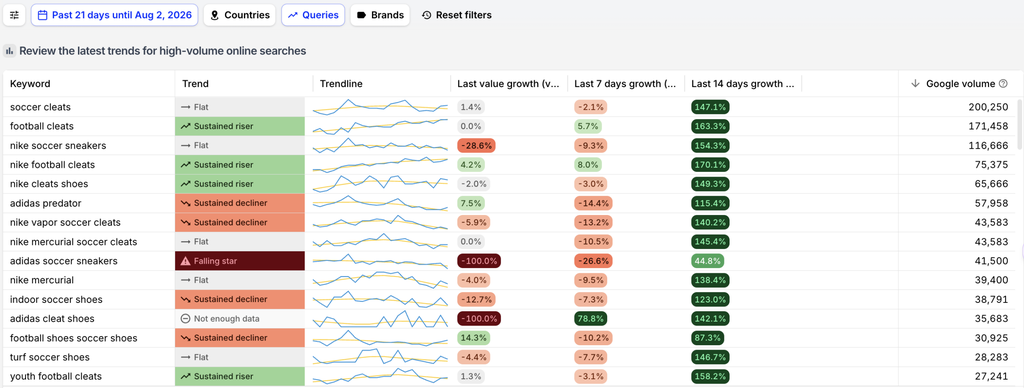
One of the most critical takeaways for marketers is that modern consumers prioritize function over brand. Generic search terms like "soccer cleats" (200.3k searches) and "football cleats" (171.5k searches) significantly outperformed brand-specific queries. This shift suggests that non-sponsor brands have a viable path to market share if they can optimize their content for category-level searches rather than relying solely on brand-name recognition.
The Sentiment Gap: Why Nike Won the "Heart" Battle
While Adidas captured 63% of tournament-specific mentions due to their official status, they struggled with a 52% positive sentiment rating. Nike, by contrast, achieved a 78% positive sentiment score.
The reason lies in the nature of the engagement. Nike’s strategy relied on "cultural moments"—the kind that fans want to share. When Cristiano Ronaldo gifted his game-worn "Gold Scorpion" Mercurial Superfly 11s to streamer IShowSpeed, the interaction went viral, humanizing the brand. Conversely, the "pink cleat" phenomenon, which affected both brands, became a flashpoint for fan frustration.
The "Pink Cleat" Backlash: When Trends Backfire
Pink cleats were ubiquitous, worn by athletes across multiple brands. However, instead of being seen as a bold fashion statement, the color choice was met with widespread derision. With over 5.5k mentions of the issue—70% of which were negative—fans voiced that the uniformity made players look indistinguishable from one another.
The backlash highlights a recurring risk in modern marketing: when every brand chases the same trend simultaneously, the result is a dilution of brand identity. The negative reception serves as a cautionary tale for designers: in a sport that celebrates individual genius, forced uniformity can feel sterile.
Official Responses and Strategic Implications
For the sportswear giants, the 2026 World Cup served as a multi-million dollar case study in the efficacy of different marketing pillars.
- Adidas’s Strategy: Leaning into "Officiality." By anchoring their campaign in the tournament’s official infrastructure—the match ball, the referees, and the legendary status of Lionel Messi—Adidas ensured they were central to the event. Their failure to maintain momentum, however, suggests that prestige alone cannot compete with active cultural engagement.
- Nike’s Strategy: Leaning into "Cultural Relevance." By integrating non-football celebrities like LISA and leveraging the massive reach of influencers like IShowSpeed, Nike turned the tournament into a broader lifestyle event, successfully insulating themselves from product-specific critiques like the pink cleat issue.
Implications for Future Marketing
The data from the 2026 World Cup offers three critical lessons for brands operating in the sports landscape:
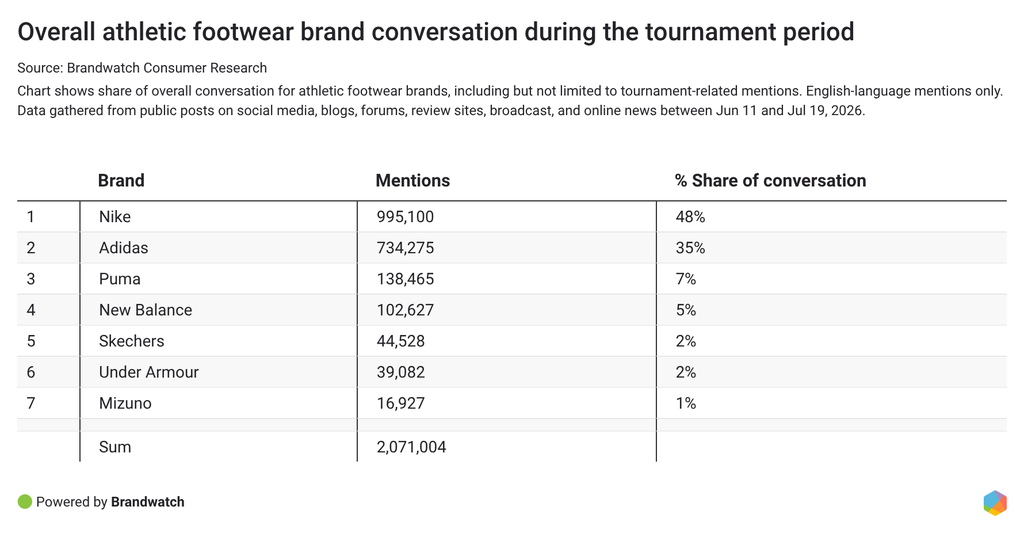
- Sponsorship is not a Guarantee of Love: Being an official partner provides eyes, but it does not dictate sentiment. To earn positive sentiment, a brand must contribute to the story, not just occupy space within it.
- Generic Search is the New Battleground: Brands that optimize for terms like "youth football cleats" or "turf soccer shoes" capture consumers at the point of purchase. Relying solely on brand-centric search terms is an outdated strategy that leaves money on the table.
- Cultural Synergy Over Uniformity: The failure of the pink cleats proves that consumers value distinctiveness. Brands should focus on creating products that allow for individual expression rather than attempting to force a singular, monolithic trend upon the market.
Ultimately, the 2026 World Cup demonstrated that while the scoreboard at the stadium determined the champion of the tournament, the true winners in the marketplace were those who understood that the game is played as much in the digital feeds of the fans as it is on the pitch. The brands that bridged the gap between professional excellence and cultural relatability are the ones that will continue to dictate the footwear market long after the final whistle has blown.


 Jia Lissa
 Suro Senen
 Ali Ikhwan
 Pevita Pearce
 Siti Muinah