
 Nana
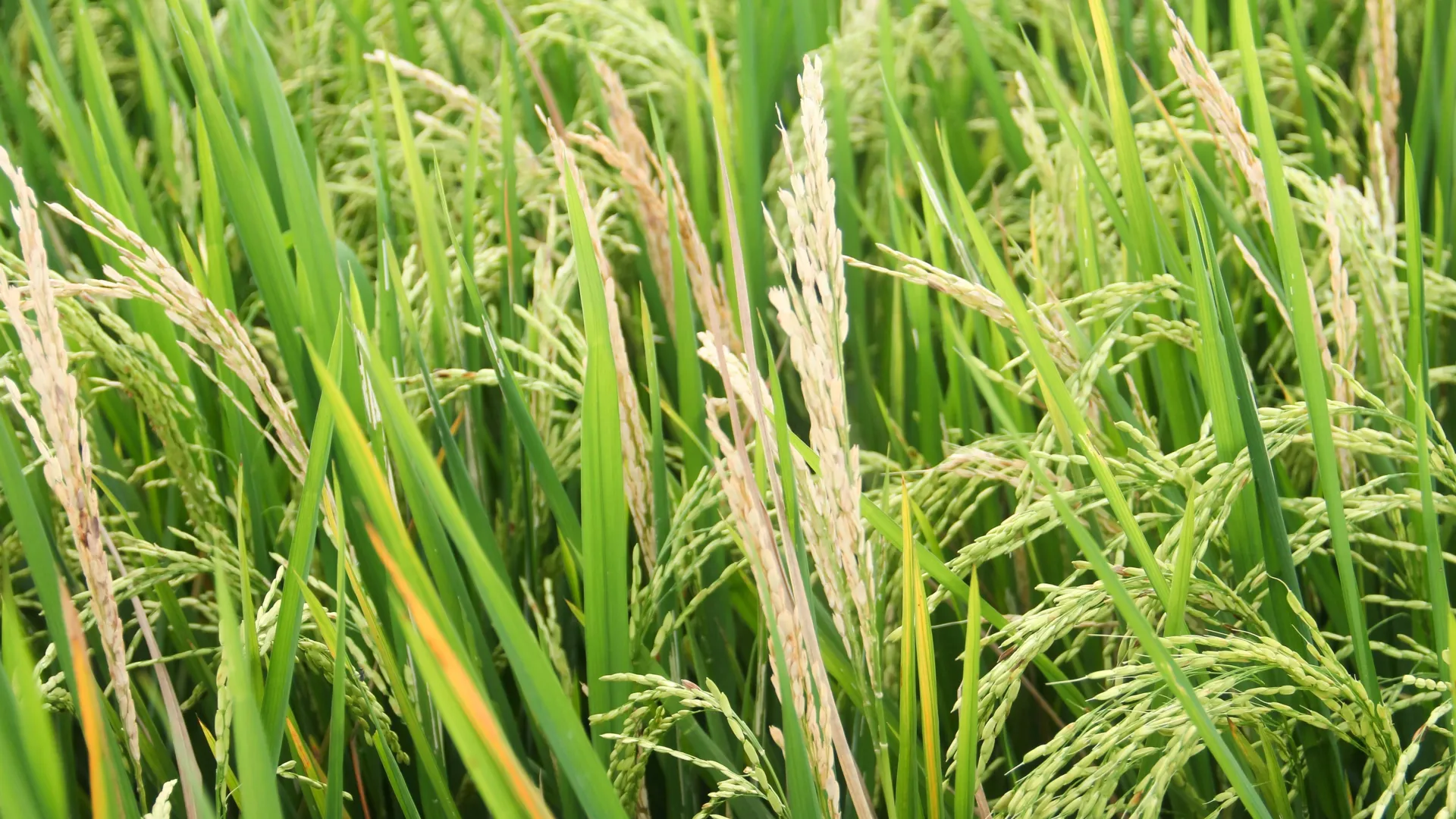
In an era defined by climate instability and a ballooning global population, the sanctity of the world’s food supply has never been more precarious. A major threat to this stability is Magnaporthe oryzae, a devastating fungus responsible for "blast disease." This pathogen, which acts with ruthless efficiency, ravages rice, wheat, and barley—staple crops that sustain billions. However, a breakthrough by an international research team led by the John Innes Centre in the United Kingdom may have finally tipped the scales in favor of global food security.
By mapping the intricate molecular landscape of plant immune receptors, researchers have developed an experimental framework to engineer crops capable of detecting and neutralizing fungal infections before they can devastate a harvest. This milestone, published in the journal Science Advances, represents a shift from reactive pest management to proactive, genetically fortified agriculture.
The Scourge of Blast Disease: A Crisis in the Fields
To understand the magnitude of this discovery, one must first grasp the scale of the threat. Magnaporthe oryzae is not merely a common garden blight; it is a sophisticated biological adversary. The fungus infiltrates plant cells by deploying specialized molecules known as "effectors." Once inside the host, these effectors act as saboteurs, hijacking the plant’s internal machinery to suppress immune responses and facilitate rapid colonization.
The economic and humanitarian toll is staggering. Estimates suggest that rice blast alone destroys enough crop annually to feed 60 million people. Historically confined to specific regions, the fungus has demonstrated a terrifying ability to adapt and migrate. Since its identification in Brazil in the 1980s, wheat blast has spread across continents, infiltrating agricultural zones in Asia and Africa. With climate change altering humidity and temperature patterns, regions once considered "safe," including parts of Northern Europe, are now on the frontline of potential infestation.
Chronology of Discovery: From NLRs to Tandem Kinases
For over three decades, the scientific community’s efforts to bolster plant immunity have focused almost exclusively on Nucleotide-binding and leucine-rich receptors (NLRs). These proteins have served as the "gold standard" for understanding how plants identify pathogens. However, the complexity of fungal evolution—where pathogens constantly mutate to evade detection—has necessitated a broader search for immune mechanisms.
Recently, the focus shifted toward a secondary group of immune proteins found in cereals: tandem kinase proteins (TKPs). While NLRs have been well-documented, TKPs remained an enigma until researchers identified a critical component: the Heavy Metal Associated (HMA) domain.
The research team, involving collaborators from Kobe University in Japan, noted that these HMA domains functioned as "molecular bait." By studying the structural biology of these proteins through high-resolution crystallography, the team revealed that these domains are capable of "trapping" the effector molecules released by the fungus. This interaction acts as a biological alarm, triggering a controlled, localized cell-death response that effectively contains the infection, preventing it from spreading to the rest of the plant.
Supporting Data: Engineering "Dual Specificity"
The core of the recent breakthrough lies in the team’s ability to manipulate these HMA domains. Using biophysical modeling, researchers successfully modified TKP immune receptors to achieve "dual specificity"—a rare biological trait that allows a single receptor to recognize multiple fungal effectors simultaneously.
In the initial study, the team utilized protoplasts—isolated wheat cells—to test the efficacy of these re-engineered receptors. The results were decisive: by making precise amino acid substitutions at the sites where fungal effectors bind, the scientists were able to grant the plant the ability to detect threats that it would otherwise ignore.
"We’ve discovered something that could lead to a potential intervention on what is the worst fungal disease of cereals," said Professor Mark Banfield, a research group leader at the John Innes Centre. His team’s work suggests that the limitations of traditional resistance, which often relies on a single, easily bypassed mechanism, can be overcome by "stacking" these engineered receptors.
Official Responses and Expert Perspectives
The academic and agricultural communities have received the findings with cautious optimism. Dr. Daniel Yu, the study’s first author, emphasized the versatility of the approach, noting that the tools previously developed for NLR engineering are proving surprisingly compatible with this new class of TKP receptors.
"Our study indicates that this new class of resistance proteins is amenable for engineering purposes," Dr. Yu stated. "We now know that we have a scalable methodology."
Professor Banfield added context regarding the future of the technology, emphasizing that this is a departure from "all eggs in one basket" strategies. By combining NLRs and TKPs—two distinct classes of receptors that trigger immunity via different pathways—scientists could create a layered defense system. "If you stack genes encoding TKPs and NLRs together against the same disease, you create a super-resistant crop. The pathogen would have to evolve to overcome two entirely different activation pathways simultaneously, which is an incredibly difficult hurdle for a fungus to clear," Banfield explained.
Implications for Global Food Security
The potential applications of this research extend far beyond the laboratory. As the world faces the "triple threat" of population growth, diminishing arable land, and the accelerating spread of plant pathogens, the ability to "program" crops with enhanced immunity is a technological imperative.
1. Precision Breeding and AI
The structural data obtained through this research provides a blueprint for future innovation. Researchers are now looking at how artificial intelligence and precision breeding can be used to scan the vast diversity of plant proteins to identify other HMA-like domains that could be repurposed as immune sensors. This could lead to a library of "plug-and-play" resistance genes that could be introduced into various cereal varieties.
2. Reduced Reliance on Fungicides
Current methods for managing blast disease rely heavily on chemical fungicides. These chemicals are not only expensive for smallholder farmers but also pose long-term environmental risks and can lead to the evolution of chemical-resistant "super-fungi." By empowering the plant to defend itself, the agricultural industry could significantly reduce its reliance on synthetic chemicals, fostering a more sustainable farming model.
3. Future-Proofing Agriculture
The transition from greenhouse experiments to field trials is the next critical hurdle. While the initial tests in wheat cells provide a proof-of-concept, the team must now validate that these engineered receptors perform under the chaotic, variable conditions of real-world farming. If these results translate to whole plants, the implications for global food security are profound. It would mean that countries most vulnerable to famine could potentially deploy "bio-fortified" seeds capable of withstanding the very diseases that currently threaten their subsistence.
Conclusion: A New Era of Botanical Defense
The research led by the John Innes Centre and their colleagues at Kobe University serves as a reminder of the power of fundamental scientific inquiry. By deciphering the "lock and key" mechanism between the blast fungus and the plant cell, scientists have not only solved a complex biological puzzle but have also provided a tangible pathway to protecting the global food supply.
While there is still work to be done—from rigorous field testing to navigating the regulatory landscapes surrounding genetically modified crops—the path forward is clear. We are entering an era where our crops will no longer be passive victims of fungal disease, but active, intelligent participants in their own survival. As Professor Banfield and his team continue their work, the dream of a resilient, blast-resistant harvest moves from the realm of scientific speculation to a tangible, achievable reality. The stability of our global food supply may well depend on the tiny, engineered proteins that stand guard within the cells of our most essential crops.


 Raul Delapena Setiawan

 Laily UPN

 Reynand Wu

 Sagoh


 Azzam Bilal Chamdy

 Ali Ikhwan
