
 Lina Hope
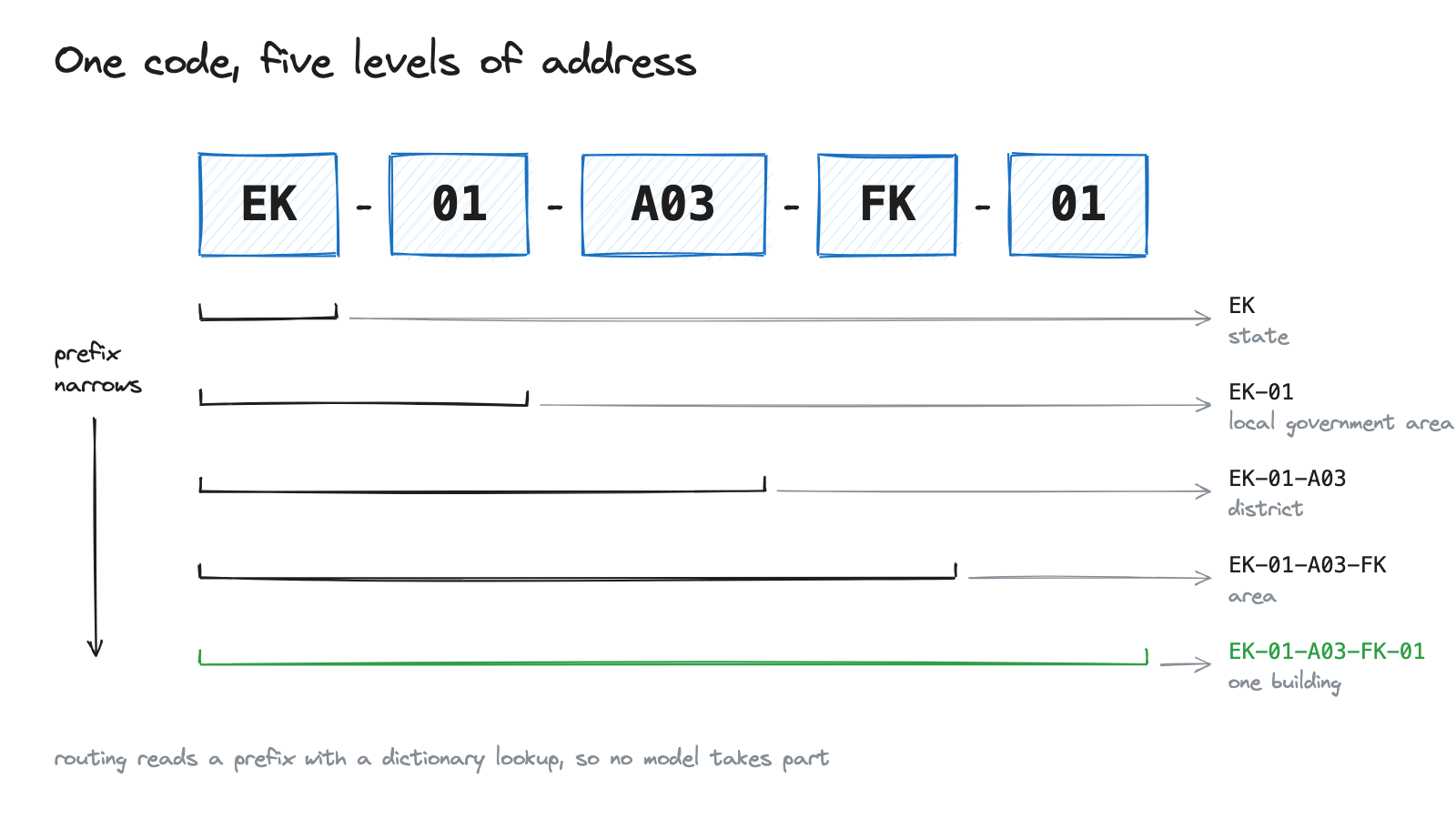
As of October 1, 2026, the Nigerian postal system underwent a definitive transformation. The legacy six-digit postcode format—a system deeply embedded in the digital architecture of the past two decades—has been retired in favor of an 11-character alphanumeric string. This new format, exemplified by codes like EK-01-A03-FK-01, serves as a granular identifier for individual buildings, moving Nigeria toward a more precise logistical infrastructure.
However, this transition has created an immediate and significant crisis for generative AI. Because large language models (LLMs) are trained on vast datasets that predate this shift, they continue to "hallucinate" the old six-digit format with high confidence. For developers building autonomous agents to handle logistics, deliveries, or customer service, this mismatch poses a critical operational risk.
The Chronology of a Digital Mismatch
The disconnect between current AI training and real-world administrative changes is not merely a theoretical concern; it is a live failure state for automated systems.
- October 1, 2026: NIPOST officially implements the 11-character digital postcode system.
- October 5, 2026: Benchmarking tests performed on leading LLMs (including those with web-access capabilities) reveal that these models consistently default to the deprecated six-digit format.
- October 13, 2026: Implementation of "system prompt" corrections proves that while LLMs can be nudged toward accuracy, they remain inherently unreliable for high-stakes administrative tasks without deterministic oversight.
When tested against standard development prompts, models across Python, JavaScript, Rust, and Java environments uniformly failed to suggest the correct format. Even when explicitly provided with the current date, the models bypassed their web-search tools to rely on the "muscle memory" of their training data. The resulting code, when used in production, would reject every valid, modern Nigerian postcode.
The Mechanics of Failure: Why Agents Invent Postcodes
The tendency of an AI agent to suggest an incorrect postcode stems from a fundamental characteristic of Transformer-based architectures. A model reproduces the statistical patterns that dominated its training data. Since the new 11-character format has historically had almost no presence in the vast internet archives used for training, the model views the old, six-digit format as the "ground truth."
This manifests in two distinct agent behaviors:
- The Coding Agent: These models generate validation logic (e.g., regex strings) that are inherently incompatible with modern postcodes.
- The Runtime Agent: These models attempt to parse or extract user-provided strings. When they fail, they may "correct" a valid 11-character code into a non-existent six-digit one, or vice versa, leading to failed delivery attempts and data corruption.
Establishing a Trust Boundary
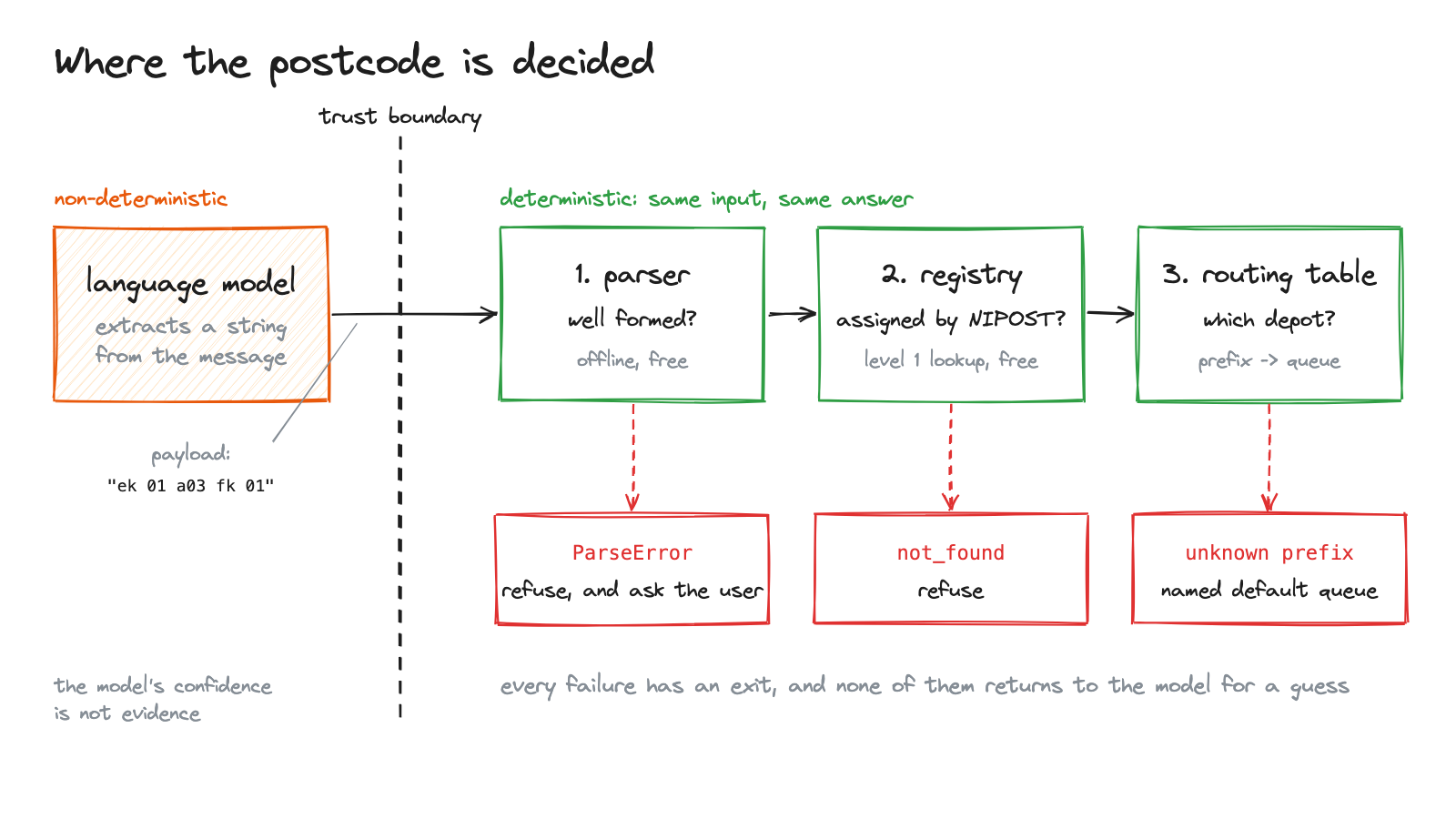
To mitigate these risks, developers must adopt a "Trust Boundary" architecture. In this design, the AI is demoted from a decision-maker to a simple data extractor.
Defining the Roles
- The Model: Its sole responsibility is to extract a string from a user’s message. It does not validate, it does not confirm, and it does not route.
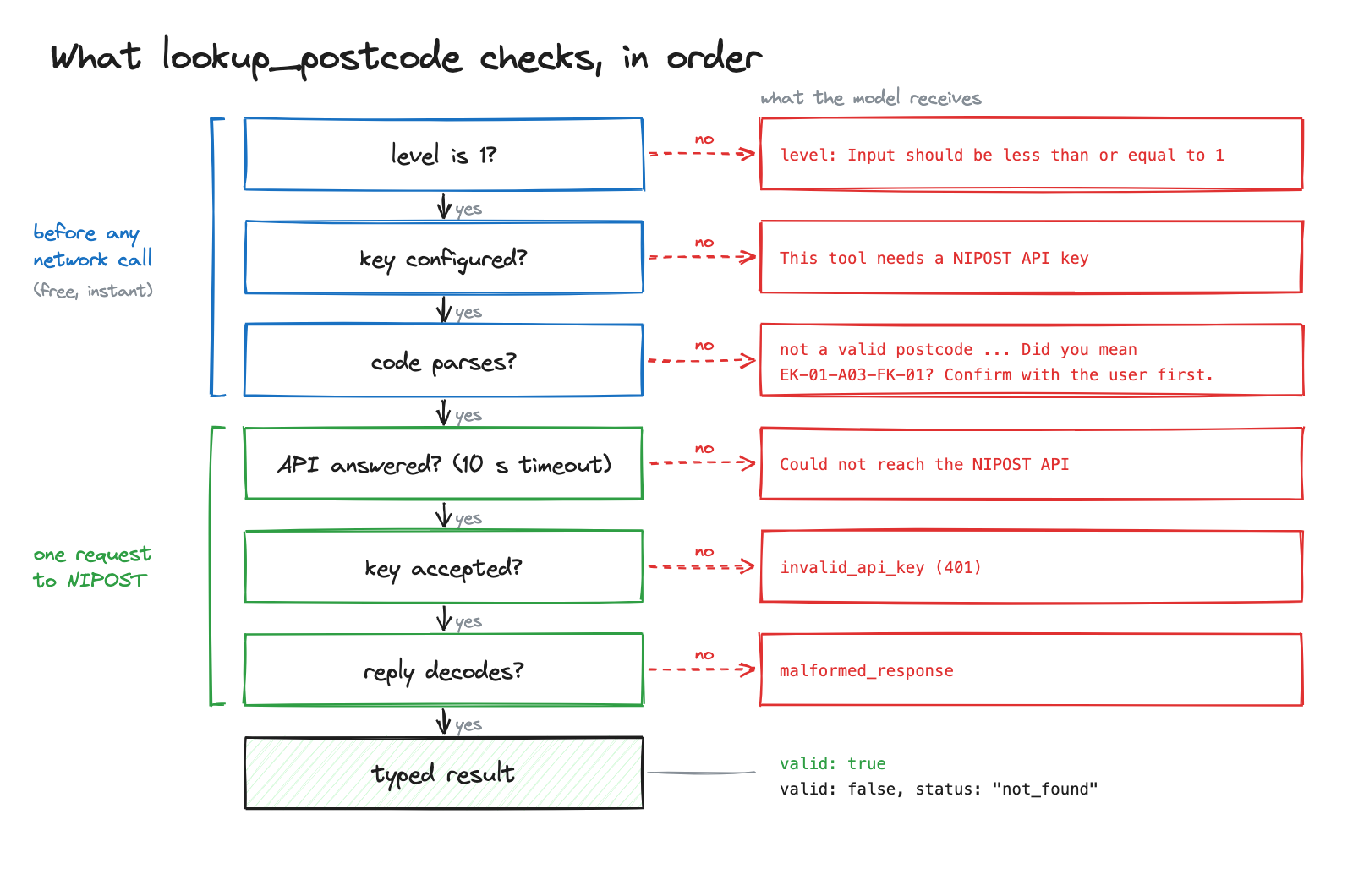
- The Deterministic Gate: A hard-coded, rule-based function receives the string from the model. It checks for structural integrity (the five segments: State, LGA, District, Area, and Building Unit).
- The NIPOST Registry: An API call confirms whether the structure corresponds to a real, assigned location.
By treating the model as an "untrusted input source," developers can ensure that even if the AI hallucinates, the system remains resilient. A parse error from the gate should trigger a fallback response—typically an automated prompt asking the user to clarify or re-enter their code—rather than allowing the invalid data to propagate into the system.
Supporting Data: Failure State Analysis
Operational stability requires an exhaustive understanding of how these systems fail. Based on current testing with the ng-postcode library, we can categorize failure states into three tiers:
| State | Detection Method | System Response |
|---|---|---|
| Legacy Format | Offline Parser | Expected 11 characters, found 6 |
| Well-formed, Unassigned | NIPOST Registry | Not found |
| Malformed/Typo | Offline Parser | Suggested correction offered to user |
| Network/API Failure | HTTP Client | Retry logic triggered |
The most dangerous state is the "hallucinated, well-formed code"—a string that looks perfect in structure but does not exist in the NIPOST database. Only a mandatory registry lookup can intercept this before it reaches a physical logistics queue.
Strategic Implications for Developers
The shift to the 11-character format is more than a labeling update; it is an opportunity to improve the robustness of software handling address data.
The MCP Advantage
By utilizing the Model Context Protocol (MCP), developers can expose specific, audited tools to their agents. Rather than allowing an agent to "write its own validation," the agent is granted access to a controlled server that performs validated lookups. This server enforces strict limits:
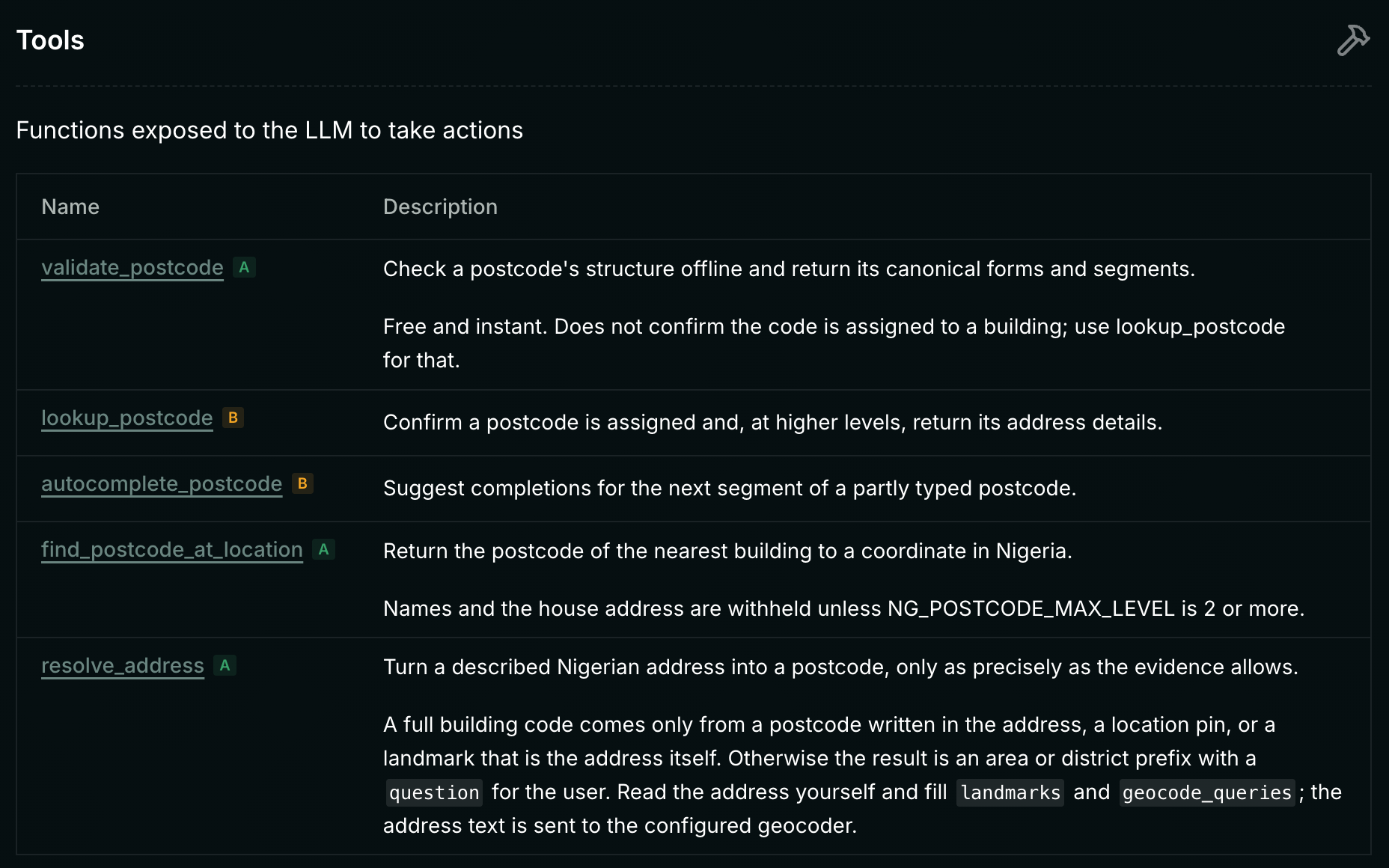
- No unauthorized lookups: The agent cannot query restricted administrative levels.
- Budgeting: The server limits the number of paid API calls an agent can make, preventing runaway costs.
- Immutable Logic: The permission structure is defined in server configuration files that an agent cannot overwrite through its chat interface.
Handling Personal Data
The new postcode system includes granular building identifiers, which inherently touches on sensitive information. Under the Nigeria Data Protection Act, developers must ensure that their systems are not leaking house-level address data through unintended AI behavior. The "level 1" lookup—which provides enough information for routing without revealing specific house-level details—should be the default for all agentic workflows.
Conclusion: Designing for the Next Transition
The "postcode crisis" of 2026 is a microcosm of a larger challenge in the age of AI: how to build systems that remain functional when the world changes faster than the models that monitor it.
The strategy proposed here—using deterministic gates, strict API contracts, and user-in-the-loop confirmation for corrections—is a blueprint for all future administrative integrations. Whether dealing with tax codes, national IDs, or evolving address systems, the rule remains the same: treat the model as a participant in a conversation, but never as the source of truth.
By decoupling the intelligence of the model from the reliability of the system, developers can leverage the efficiency of AI without sacrificing the integrity of critical national infrastructure. The tools are available, the structure is established, and the transition to the new Nigerian postcode system, while challenging, provides a clear path forward for building safer, more resilient automated systems.
For those implementing these systems, the ng-postcode library provides the necessary components to bridge the gap between current AI capabilities and the new NIPOST standards. By adopting these patterns, your agents will not only be more accurate but also more transparent, accountable, and ready for the next evolution of digital infrastructure.


 Siti Muinah
 Reynand Wu
 Layla Zulfa
 Nana
Nana
 Pevita Pearce
 Rifan Muazin

 Iffa Jayyana