
 Layla Zulfa
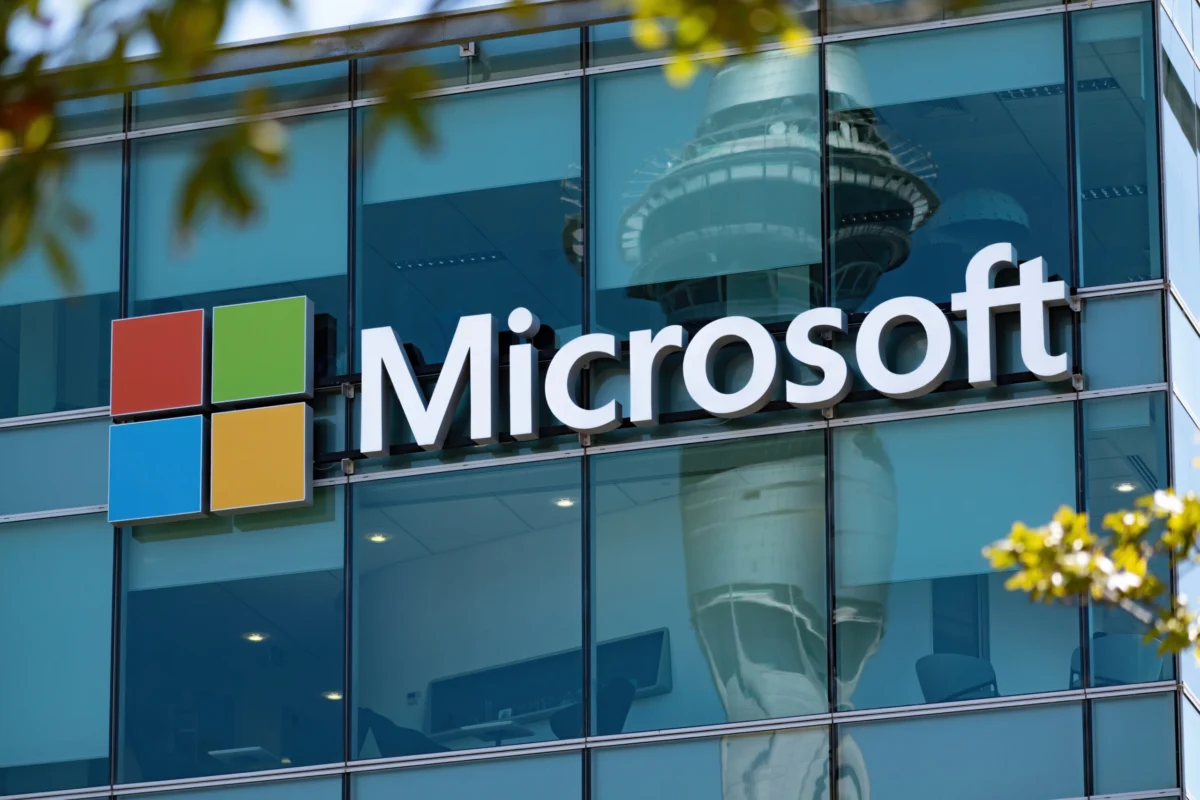
In a sweeping move that signals a profound shift in corporate strategy, Microsoft has launched a widespread Voluntary Exit Offer (VEO) affecting approximately 60,000 employees. This figure represents roughly 27% of the tech giant’s total workforce. The initiative is not merely a cost-cutting exercise; it is a calculated reconfiguration of the company’s human capital to align with an aggressive, multi-billion-dollar pivot toward Artificial Intelligence infrastructure and product development.
As Microsoft funnels record-breaking capital expenditures into the AI arms race, the company is fundamentally altering its operational DNA. By thinning its ranks in specific divisions, the Redmond-based behemoth is attempting to secure the financial agility required to dominate the next generation of computing.
The Core Facts: A Voluntary Exit for a New Era
The VEO, announced by Amy Coleman, Microsoft’s Executive Vice President and Chief People Officer, offers eligible employees a structured path to leave the company with financial support and career transition resources. Unlike traditional layoffs, this program is framed as a "new choice" for staff—a mechanism to provide flexibility for those considering a career change while allowing the company to recalibrate its workforce density.
The offer is primarily targeted at employees at level 70 and below. Eligibility is not universal; it is highly localized, depending on the specific priorities, customer commitments, and operational needs of individual business units. While the offer spans the United States, Canada, India, and the UK, the company has clarified that participation is at the discretion of specific organizations within the Microsoft ecosystem.
Crucially, teams involved in the development of AI experiences, including the Copilot suite, as well as units like Xbox and Windows + Devices, are reported to be among those included in the program. Conversely, critical infrastructure roles, such as select data center staff, as well as core marketing, sales, and commercial business teams, have largely been excluded to ensure continuity of service.
Chronology of a Workforce Transformation
The road to the current VEO began in early 2026, marked by a series of strategic maneuvers aimed at trimming headcount and streamlining operations.
- April 2026: Microsoft introduced a Voluntary Retirement Program aimed specifically at long-tenured employees in the United States. CFO Amy Hood noted at the time that the program carried roughly $900 million in one-time costs, a figure that ultimately proved lower than initial forecasts.
- April 29, 2026: During the fiscal 2026 Q3 earnings call, CFO Amy Hood confirmed that the company’s headcount would see a year-over-year decrease for fiscal 2027. She emphasized a shift in operational philosophy designed to increase "pace and agility."
- June 30, 2026: Official filings with the SEC confirmed that Microsoft’s full-time employee count had dipped to approximately 223,000, down from 228,000 the previous year.
- July 29, 2026: In the Q4 earnings call, the company reported a 2% total headcount decline year-over-year, setting the stage for more aggressive structural changes.
- October 26, 2026: Microsoft officially announced the broader Voluntary Exit Offer, expanding the scope beyond retirement-eligible US staff to a global, level-based demographic.
Supporting Data: The Cost of the AI Revolution
The impetus behind these workforce reductions is the staggering scale of Microsoft’s investment in AI infrastructure. In the quarter ending June 30, 2026, the company reported capital expenditures of $41 billion. Guidance provided by CFO Amy Hood suggests that spending will accelerate, with projections exceeding $50 billion for the subsequent quarter.
This level of spending is unprecedented in the software industry. To sustain these figures, Microsoft is looking toward "reallocation" of funds. During the April earnings call, CEO Satya Nadella explicitly stated that IT budgets—both internal and external—would need to be reshaped. By reducing Operating Expenses (OpEx) through headcount adjustments, Microsoft is effectively clearing the balance sheet to facilitate the massive hardware and energy costs associated with building out massive GPU clusters and AI data centers.
Official Responses and Corporate Philosophy
In her internal memo, which was later shared on the official Microsoft blog, Amy Coleman framed the VEO as a tool for organizational adaptation. "This offer gives eligible employees who may be considering a future outside the company a new choice to make that transition now with support," Coleman stated.
She further emphasized that the program is an experiment in corporate agility. "The Voluntary Exit Offer is new for us. We’ll learn from it," she wrote. This admission highlights a departure from the company’s traditional management style, suggesting that Microsoft is adopting a more fluid approach to human resources—treating the workforce as a dynamic variable that must be optimized alongside product roadmaps.
Implications: The Risks and Realities
While the program provides an "off-ramp" for employees, it introduces significant uncertainty for clients and stakeholders. The primary concern among industry analysts is "account coverage"—the ability of a lean team to maintain the high-touch service that enterprise customers have come to expect.
The Analyst Perspective
Sanchit Vir Gogia, chief analyst at Greyhound Research, offers a cautionary outlook. He notes that simply reducing headcount does not guarantee increased efficiency. "Microsoft’s internal AI use does not establish substitution of particular roles," Gogia warned. He emphasizes that the value of a workforce is found in its accumulated experience, not just its aggregate size.
"Workforce savings earn credibility through the capability that remains," Gogia added. For CIOs and enterprise clients, the transition period presents a genuine risk. If key personnel responsible for complex Azure migrations or Dynamics implementations accept the exit package, the onus falls on Microsoft to ensure that backfills are not only available but equally qualified.
The "Frontier Co." Counterbalance
Interestingly, while the VEO reduces staff in some areas, Microsoft is simultaneously investing in specialized human capital. The recent launch of "Microsoft Frontier Co."—an initiative to embed 6,000 industry and engineering experts directly with customers—suggests that while the company is shedding generalist or legacy-focused roles, it is doubling down on high-value, client-facing engineering talent.
This creates a two-tiered workforce strategy:
- Generalist/Operational Reduction: Utilizing VEOs to slim down departments that are either being automated by AI or are deemed less critical to the immediate "AI-first" mission.
- Specialist Expansion: Hiring and deploying expert squads (like those in Frontier Co.) to act as consultants and integrators, ensuring that customers actually adopt and succeed with the AI products Microsoft is selling.
Conclusion: A Smaller, Sharper Microsoft
The current Voluntary Exit Program is a testament to the urgency with which Microsoft views the AI transition. By shedding up to 60,000 roles, the company is effectively shedding the operational weight of a traditional software firm to become a leaner, infrastructure-heavy power player.
For the employees who choose to stay, the company promises a more agile, high-stakes environment. For the employees who choose to leave, the package offers a controlled exit. However, the true success of this transition will not be measured in dollars saved on payroll or in the total headcount reduction. It will be measured by whether Microsoft can maintain the institutional knowledge and customer trust required to remain the primary engine of global enterprise technology.
As the December deadline for the VEO approaches, the tech world will be watching closely. If Microsoft successfully navigates this shift, it may set a new standard for how massive, mature organizations can pivot to capture the future—or, conversely, it may provide a case study in the risks of over-correcting in the face of technological disruption. The only certainty is that the Microsoft of 2027 will be a significantly different entity than the one that entered the AI boom just two years ago.


 Lina Hope
 Asep Darmawan
 Nana

 Pevita Pearce
 Nana Wu
