
 Nana
Nana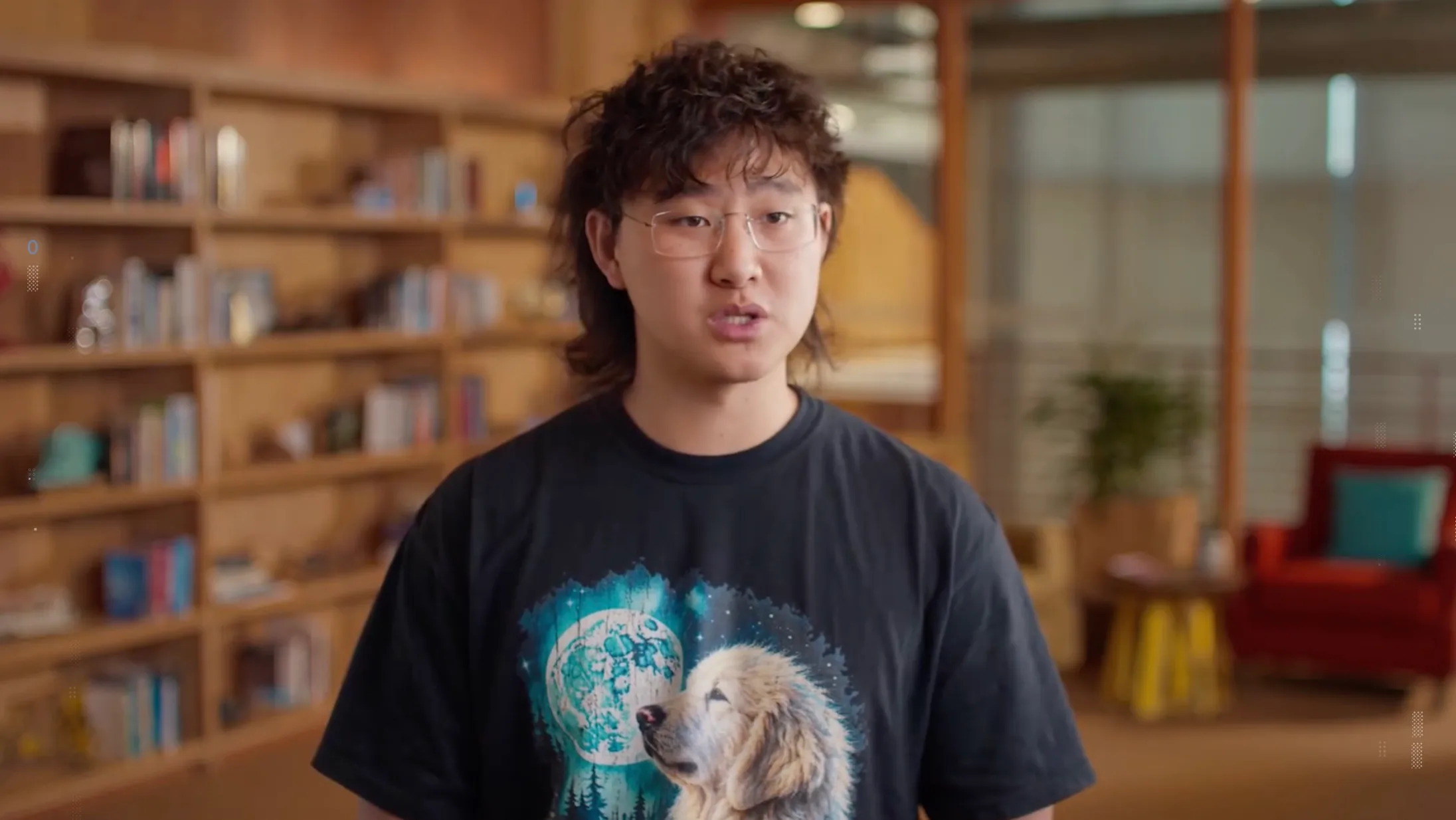
In a move that signals a decisive shift in its competitive posture, Meta’s Superintelligence Lab unveiled its latest breakthrough on Monday: a duo of state-of-the-art models dubbed Muse Wonder and Muse Wonder Full. This launch represents a significant milestone for the tech giant, marking its inaugural foray into the "frontier model" category—a domain previously dominated by players like OpenAI and Anthropic.
By positioning these models as the backbone of its "personal superintelligence" initiative, Meta is attempting to pivot from the era of conversational chatbots to a future defined by autonomous, long-term digital assistants.
The Core Offering: What is Muse Wonder?
The Muse Wonder series is built upon the foundational architecture of Meta’s earlier, lightweight "Muse Spark" model but represents a massive leap in parameter scale and computational depth. While Muse Spark was engineered primarily for low-latency, rapid-fire tasks, the Wonder models are designed for heavy lifting.
According to Meta’s internal benchmarks, the new models exhibit superior proficiency in complex reasoning, multi-step problem solving, and high-level coding tasks. Meta’s research documentation confirms that Muse Wonder and Muse Wonder Full deliver performance metrics comparable to current industry benchmarks, specifically standing toe-to-toe with Fable 5.1 and the GPT-6 Astra suite.
A Tiered Access Strategy
Meta has implemented a distinct strategy regarding how users can access this new technology:
- Muse Wonder: Available via the Meta Model API, this version is priced at $4 per million input tokens and $20 per million output tokens. This places it in direct price-competition with enterprise-grade models like GPT-6 Sol and Opus 5.5.
- Muse Wonder Full: This is the company’s "full-fat" iteration, reserved exclusively for Muse Code subscribers. It will not be accessible through the standard API, creating a "walled garden" approach for Meta’s most loyal developer and power-user base.
Both iterations will serve as the engine powering the broader Muse Agent, Meta’s unified interface for personal automation.
Chronology: The Road to Prometheus
The arrival of Muse Wonder is the culmination of a deliberate, year-long restructuring of Meta’s AI division.
August 2025: The Wang Era Begins
The trajectory of Meta’s current AI development can be traced back to August of last year, when Alexandr Wang, founder of Scale AI, took a central role in restructuring Meta’s AI efforts. At that time, the company had been largely focused on open-source weights and lightweight, efficient models like Muse Spark. The industry had begun to question whether Meta could compete with the proprietary "frontier" models being churned out by its competitors.
2026: The Infrastructure Build-Out
The training of the Muse Wonder models required unprecedented computational resources. Meta moved its training operations to the Prometheus data center in central Ohio, which officially came online earlier this year. As the world’s highest-capacity data center, Prometheus provided the raw horsepower necessary to iterate on models of this scale, allowing Meta to bridge the gap between "research toy" and "production-grade frontier model."
Late 2026 to Present: Iterative Integration
Since the restructuring, Meta has focused on refining the "Muse Agent" experience. By testing various agentic behaviors in smaller models like Muse Spark, the company prepared the ecosystem for the launch of the Wonder series, ensuring that the infrastructure could handle the memory-intensive requirements of the new models.
Supporting Data: The "Active Memory" Paradigm
Perhaps the most significant innovation accompanying the Muse Wonder launch is what Meta describes as "active memory." In an era where most LLMs suffer from "context window fatigue"—failing to recall information shared early in a conversation—Meta is betting that memory retention is the true frontier of personal intelligence.
The MemoryBench Benchmark
To validate this, Meta has leaned into the MemoryBench benchmark (arxiv.org/abs/2510.17281). MemoryBench is designed specifically to test how models handle "continual learning," forcing them to synthesize and retain information over days, weeks, and even months.
According to Meta’s performance charts, Muse Wonder significantly outperforms established giants like Fable, Opus, and Astra in this specific test. This suggests that the model is better at building a longitudinal profile of its user, allowing it to provide contextually relevant assistance that evolves alongside the user’s needs.
Official Responses and Scientific Vision
In a video briefing released alongside the model launch, Meta research scientist Kavya Kopparapu emphasized that the goal was not just to build a "smarter" chatbot, but a more consistent one.
"We put a tremendous amount of effort into making sure your model can remember what’s important to you over days, weeks, months, and beyond," Kopparapu stated. The company’s blog post echoed this sentiment, framing the release as a "major leap toward personal superintelligence."
The messaging from Meta suggests a deliberate departure from the "oracle" style of AI—where the model knows everything about the world—toward an "assistant" style, where the model knows everything about you.
Implications for the AI Landscape
The release of Muse Wonder has several profound implications for the industry at large.
1. The Death of the "One-Size-Fits-All" Model
By splitting the offering between a standard API model and a "Full" version locked behind a subscription, Meta is acknowledging that the future of AI is segmented. Enterprises, developers, and casual users have different needs, and Meta is betting that keeping the most potent "Wonder Full" model inside their own proprietary ecosystem will build stronger user retention.
2. The Memory War
With the introduction of "active memory" as a headline feature, Meta has effectively turned memory retention into the next battleground. If users find that their AI assistant "knows" them better than the competition, switching costs will skyrocket. This puts pressure on OpenAI and Anthropic to accelerate their own research into long-term contextual retention.
3. Meta’s Return to the Frontier
For a long time, Meta appeared to be playing a different game, focusing on open-source dissemination and lightweight local models. With the launch of Wonder, they have declared that they are back in the "frontier" game. The use of the Prometheus data center demonstrates that Meta is willing to commit the massive capital expenditure (CapEx) required to keep pace with the industry’s most expensive training runs.
4. Regulatory and Ethical Considerations
As Meta moves toward models that "remember" user history over long periods, the conversation around data privacy will inevitably intensify. While the company has highlighted its benchmarks, it has yet to provide full transparency on how "active memory" data is encrypted, stored, and utilized for further model training. Regulators, particularly in the EU and California, will likely scrutinize how this "memory" complies with the right to be forgotten.
Conclusion
The release of Muse Wonder and Muse Wonder Full represents a bold, calculated move by Meta. By moving from the "Spark" era into the "Wonder" era, the company is signaling that it is ready to challenge the status quo of frontier AI.
The combination of massive scale, specialized training at the Prometheus facility, and a focus on "active memory" suggests that Meta is not just trying to build a better chatbot—it is trying to build a digital entity that occupies a permanent space in the user’s daily life. As these models begin to permeate the Muse ecosystem, the industry will be watching closely to see if Meta’s vision of "personal superintelligence" resonates with the public or if the competitive pressure from Fable and GPT-6 remains insurmountable.
For now, the gauntlet has been thrown. Meta is no longer just contributing to the field; it is attempting to define the next generation of how we interact with, and rely upon, artificial intelligence.
Disclaimer: When you purchase through links in our articles, we may earn a small commission. This doesn’t affect our editorial independence.



 Ali Ikhwan
 Lina Irawan
 Rifan Muazin
 Evan Lee Salim
