
 Reynand Wu
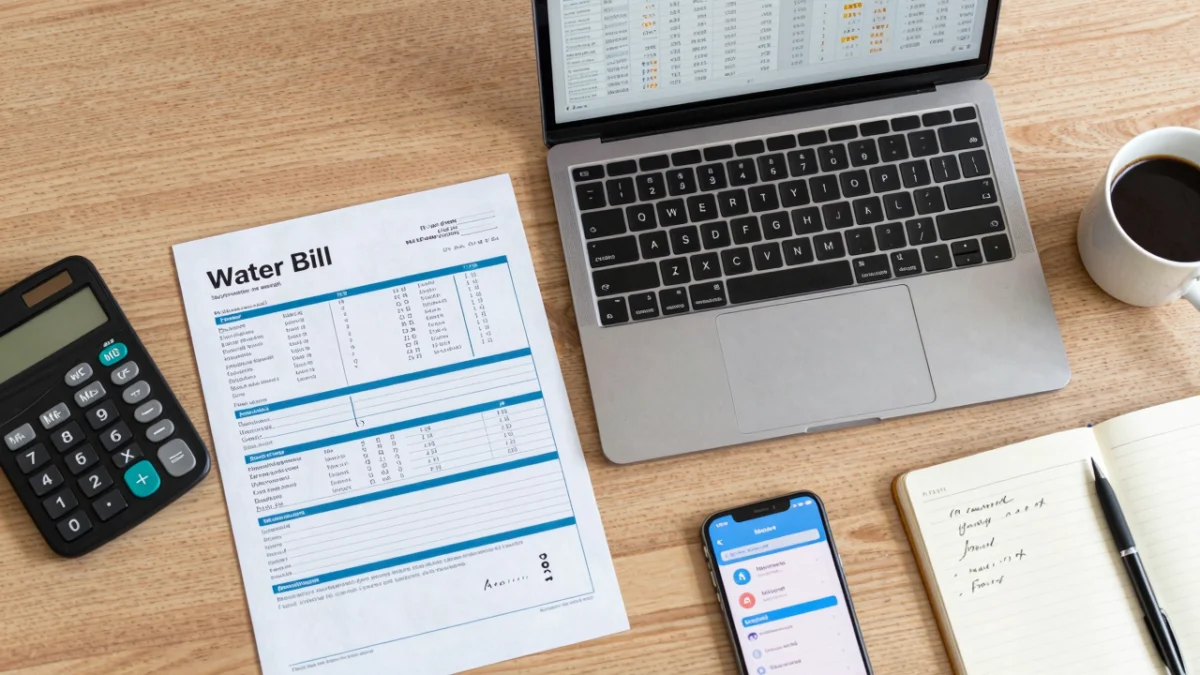
In the intricate landscape of small business finance, few line items are as consistent—or as frequently misunderstood—as utilities. From the humming of server rooms to the steady flow of water in a manufacturing plant, utility expenses are the lifeblood of operational continuity. However, treating these as mere "monthly bills" is a missed opportunity for financial optimization. Proper classification, meticulous record-keeping, and strategic allocation of utilities expenses are not just bookkeeping chores; they are foundational elements of a robust financial strategy that impacts everything from tax liability to the bottom line.
Main Facts: Defining Utility Expenses in Business
At its core, "utilities expense" refers to the costs associated with the essential services required to maintain business operations. This typically includes electricity, natural gas, water, sewage, waste management, and telecommunications—such as high-speed internet and business phone lines.

In accounting, these costs are classified as operating expenses (OPEX). They are recorded on the income statement as a reduction of revenue, appearing as costs necessary to generate business income. Unlike assets, which provide value over multiple years, utilities are consumed during the period in which they are incurred, making them a recurring drain on cash flow that requires constant monitoring.
Chronology of Effective Utility Management
To transform utility management from a reactive burden into a proactive financial tool, business owners should follow a structured, chronological workflow:

- Phase 1: Implementation (Setup): Establish specific sub-accounts in your General Ledger (GL) to differentiate between utilities used for administration (e.g., office lighting) versus those used for production (e.g., industrial machinery power).
- Phase 2: Routine Tracking (Monthly): Implement automated data capture. As bills arrive, they should be reconciled against the previous month’s usage to detect anomalies or "bill creep."
- Phase 3: Quarterly Audit (Mid-Year): Review the classification of your expenses. Are you over-allocating administrative utilities to COGS, or vice versa? This ensures that your financial reporting remains compliant with GAAP (Generally Accepted Accounting Principles).
- Phase 4: Annual Review (Tax Season): Compile all receipts and usage logs to maximize tax deductions. This is the stage where organized data translates directly into a lower tax bill.
Supporting Data: The Impact of Categorization
Misclassifying utilities is more than an clerical error; it is a distortion of financial reality. For instance, in a manufacturing setting, utilities associated with the production floor are often considered manufacturing overhead. If these are incorrectly lumped into "Administrative Expenses," the business will report an inaccurate Cost of Goods Sold (COGS), leading to flawed gross margin analysis.
Utility Allocation Breakdown
| Expense Type | Primary Purpose | Accounting Treatment |
|---|---|---|
| Production Electricity | Machinery/Factory operation | Manufacturing Overhead / COGS |
| Office Heating/Cooling | Staff workspace | Administrative Expense |
| Internet/Connectivity | Communication/E-commerce | Operating Expense |
| Water/Waste | Facility maintenance | Operating or Overhead (if production-related) |
By segmenting these costs, business owners gain "visibility into the overhead," allowing for granular cost-cutting. For example, if administrative utilities rise by 15% despite flat headcount, it may signal an energy inefficiency in the office building that warrants an equipment upgrade.

The Financial Implications: Tax Deductions and Compliance
The Internal Revenue Service (IRS) generally allows businesses to deduct the full cost of utilities as "ordinary and necessary" business expenses. However, the rigor of your documentation determines the success of these deductions during an audit.
The Home Office Deduction
For solopreneurs and remote-first businesses, the rules are more stringent. The IRS requires that the utility expense be directly related to the business use of the home. This is typically calculated using the square footage method:

- Determine the total square footage of the home.
- Determine the square footage dedicated exclusively to business.
- Apply that percentage to your utility bills (e.g., if 10% of the home is a dedicated office, 10% of the electricity bill is deductible).
Documentation Requirements
To substantiate these claims, taxpayers must retain more than just a summary statement. Best practices dictate keeping the itemized monthly bill, which shows consumption rates and dates, and proof of payment (e.g., cleared check or bank transfer record). Relying on a credit card statement alone is often insufficient in the event of an audit.
Technology: Streamlining the Expense Lifecycle
The era of manual data entry for utility bills is ending. Modern expense management platforms—such as Ramp, Sage, or Expensify—have revolutionized how companies handle these recurring payments.

Automated Expense Tracking
Modern systems utilize OCR (Optical Character Recognition) to scan utility bills, extract the date, amount, and provider, and automatically route the expense to the correct GL code. This reduces the risk of human error and ensures that expenses are recorded in the correct accounting period (the accrual basis of accounting).
Real-Time Insights
By integrating utility tracking with accounting software, businesses can move from "historical reporting" to "real-time analytics." Dashboarding tools can highlight when a facility’s energy usage exceeds the historical average, allowing managers to investigate faulty HVAC units or lighting systems before the bill becomes a crisis.

Strategic Cost-Saving Opportunities
Beyond mere record-keeping, utility management serves as a gateway to operational efficiency.
- Audit Contracts: Many businesses pay "standard" rates without realizing they qualify for commercial or industrial tiers. A regular audit of your rate structure can yield 5–10% in immediate savings.
- Demand Management: In many jurisdictions, electricity providers charge for "peak demand." By shifting energy-intensive tasks (like running large ovens or heavy machinery) to off-peak hours, businesses can significantly reduce their base-load charges.
- Facility Upgrades: Investing in smart thermostats and LED lighting is often a high-ROI endeavor. The reduction in monthly utility expenses often pays for the capital expenditure within 18–24 months.
Addressing Common Classification Pitfalls
Many business owners fall into the trap of "convenience classification," where all utility bills are sent to a single "Utilities" bucket. This leads to several issues:

- Inaccurate COGS: Inflating overhead reduces the perceived profitability of the product.
- Audit Red Flags: If your tax return shows massive utility deductions without a corresponding increase in production volume, it may trigger an inquiry.
- Hidden Waste: When all utilities are aggregated, the business cannot identify if the waste is occurring in the warehouse, the office, or the remote sales team’s expenses.
Solution: Implement a strict "Chart of Accounts" that separates utilities by department or function. If your accounting software allows, use "tags" to track utilities by project or facility location.
Conclusion: A Proactive Financial Future
The management of utilities is an essential pillar of corporate governance for businesses of all sizes. While it may seem mundane, the ability to accurately categorize, track, and analyze these costs separates sustainable enterprises from those that struggle with cash flow volatility.

By leveraging automation, adhering to strict documentation standards, and treating utility expenses as a variable cost rather than a fixed "black box," business owners can unlock significant tax savings and operational efficiencies. As you move forward, remember: every dollar saved on an inefficient utility bill is a dollar added directly to your net profit. Start by auditing your current records, categorizing your expenses by department, and exploring the technological tools available to turn your utility expenses into a strategic asset.
Frequently Asked Questions (FAQ)
Q: Where do I report utilities on my tax return?
A: For sole proprietors, utility expenses related to the business are typically reported on Schedule C (Form 1040), Line 25. Always consult with a CPA to ensure your specific business structure (LLC, S-Corp, etc.) aligns with the correct reporting line.

Q: Are internet and phone bills considered utilities?
A: Yes. In the modern business context, telecommunications are essential utilities. Ensure these are categorized appropriately as operating expenses.
Q: Does my balance sheet show utility expenses?
A: No, the balance sheet records assets, liabilities, and equity. However, if you owe for a utility service at the end of the month that hasn’t been paid, the amount due appears as a liability under "Accounts Payable."

Q: What is the biggest mistake businesses make with utilities?
A: The most common mistake is failing to separate business use from personal use in a home-office environment, which leads to either over-claiming (risking audit) or under-claiming (leaving money on the table).


 Nila Kartika Wati

 Asep Darmawan

 Ammar Sabilarrohman


 Asro

 Layla Zulfa

 Muslim
