
 Neng Nana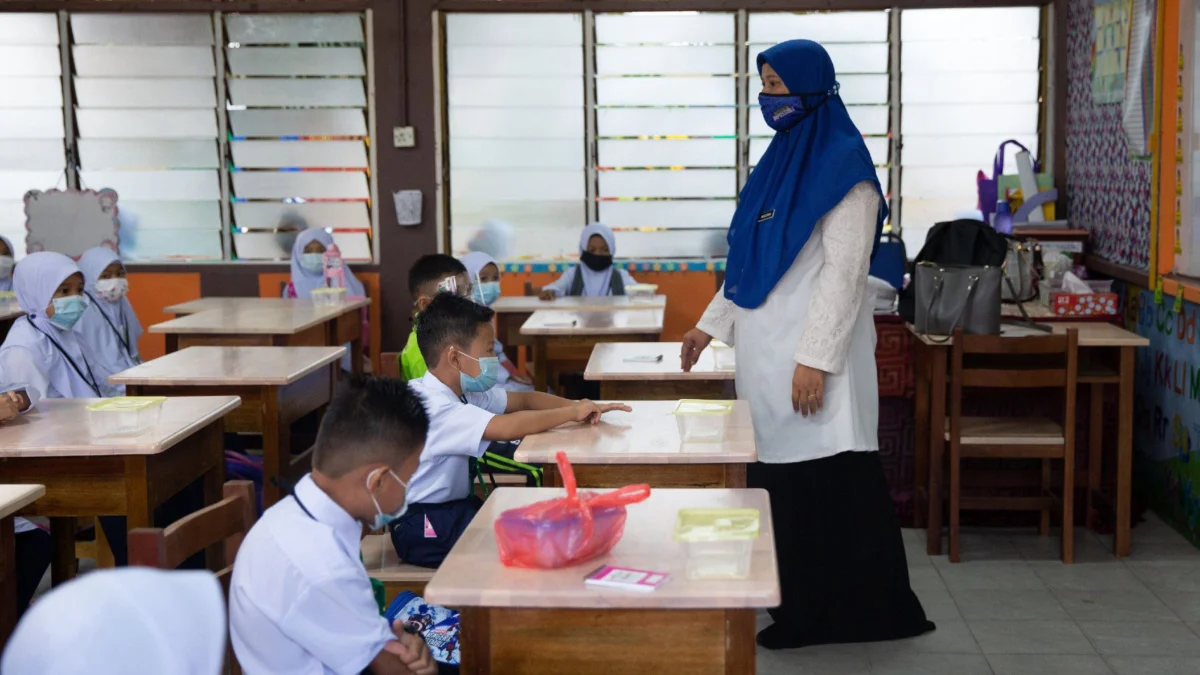
KUALA LUMPUR – As a persistent haze shroud continues to affect various regions across Malaysia, the Ministry of Education (MOE) has implemented a localized, data-driven strategy to manage school operations. In a move to prioritize the health of students and educators while maintaining academic continuity, the Ministry has decentralized decision-making, allowing State Education Departments (JPN) and District Education Offices (PPD) to dictate closures and reopenings based on real-time Air Pollution Index (API) readings.
The current situation, characterized by fluctuating air quality levels, has resulted in a complex patchwork of school statuses across the peninsula. While some federal territories and states have seen a return to face-to-face learning, others have been forced to suspend physical classes, transitioning thousands of students back to home-based learning (PdPR) modules.
Main Facts: The Framework of Response
The Ministry of Education’s response to the 2026 haze crisis is grounded in a directive issued on October 10, 2026. This directive established the Haze Monitoring Task Force Committees, a collaborative effort between the JPN and PPD. These committees are tasked with the rigorous monitoring of API readings provided by the Department of Environment (DOE).
Key Operational Guidelines:
- Decentralized Authority: State Education Directors hold the ultimate authority to switch schools to Belajar Dari Rumah (BDR) or Pengajaran dan Pembelajaran di Rumah (PdPR) based on local conditions.
- API Thresholds: Generally, an API reading exceeding 150 at 5:00 PM triggers a review for the following day’s operations.
- Communication Timelines: To facilitate planning for families, particularly those with children in boarding schools, the MOE has established specific announcement windows:
- Group A Schools: Status updates by 2:45 PM on Saturdays.
- Group B Schools: Status updates by 2:45 PM on Sundays.
- Weekdays: General announcements are made before 5:45 PM daily.
- Administrative Flexibility: During closures, Teachers and Members of the Implementing Group (AKP) are often permitted to work from home (WFH), ensuring administrative and pedagogical support remains active.
Chronology of Events: October 12–13, 2026
The transition between October 12 and October 13 serves as a microcosm of the volatile nature of the haze crisis. The situation evolved rapidly, with some states granting a reprieve while others faced deteriorating conditions.
The Landscape on Monday, October 12
The week began with significant disruptions in the southern and central regions.
- Johor: All schools were shuttered as a precautionary measure. This led to the postponement of the Year 4 Learning Matrix (MPT4) and the Special School Entrance Assessment (PKSK).
- Selangor: The districts of Hulu Langat, Gombak, and Petaling Perdana suspended physical classes.
- Kuala Lumpur: A divided status emerged. While Sentul and Keramat districts reopened after three days of improving air quality (API below 100), the Bangsar/Pudu district remained closed due to an unhealthy API of 152.
- Success Stories: Perlis, Putrajaya, and Penang maintained normal operations, with Perlis recording a remarkably low API of 47.
The Shift to Tuesday, October 13
By Tuesday, the "haze map" of Malaysia shifted again, showing both recovery and new hotspots.
- Kuala Lumpur Total Reopening: Following a consistent decline in API levels (all stations recording below 150), the Federal Territory Education Department announced a full return to face-to-face classes for all districts, ending the PdPR phase for Bangsar/Pudu.
- Melaka’s Reversal: After a brief reopening on the 12th, the Melaka State Education Department ordered all educational institutions to close again on the 13th as air quality dipped back into unhealthy territory.
- Pahang’s Emerging Crisis: While the state had been largely open on the 12th, the districts of Rompin and Kuantan were forced into closure on the 13th due to a sudden spike in haze density.
- Selangor’s Expanding Closures: The closure list in Selangor evolved to include Hulu Langat, Petaling Perdana, Kuala Langat, and Sepang, though Gombak was notably omitted from the Tuesday closure list as conditions there improved.
- Johor’s Continued Stasis: Johor maintained its blanket closure, citing a need for sustained air quality improvement before resuming physical operations.
Supporting Data: API Readings and Regional Impact
The Department of Environment’s monitoring stations have been the "north star" for education officials. The following data points highlight the disparity in air quality that justifies the localized approach:
| Region/Station | Date | API Reading | Operational Status (Oct 13) |
|---|---|---|---|
| Perlis | Oct 11 | 47 (Good) | Open |
| Putrajaya | Oct 11 | 70 (Moderate) | Open |
| Batu Muda (KL) | Oct 11 | 84 (Moderate) | Open |
| Cheras (KL) | Oct 11 | 152 (Unhealthy) | Reopened on Oct 13 (post-improvement) |
| Perak | Oct 12 | < 150 (Moderate) | Open |
| Penang | Oct 12 | < 150 (Moderate) | Open |
| Melaka | Oct 12 | > 150 (Unhealthy) | Closed |
The use of the 150 API mark as a primary decision point aligns with Ministry of Health (MOH) guidelines, which suggest that readings between 101 and 200 are "Unhealthy," particularly for sensitive groups such as children and those with respiratory ailments.
Official Responses and Administrative Measures
The Ministry of Education and various state departments have emphasized that "school closure" does not equate to a "holiday." The focus remains on the continuity of the syllabus.
The Role of PdPR
The Pengajaran dan Pembelajaran di Rumah (PdPR) manual has become the standard operating procedure. State departments, such as Pahang’s, have instructed teachers to implement PdPR using "suitable methods," taking into account the digital access and learning capabilities of their specific student cohorts. This flexibility acknowledges the "digital divide" that may exist in more rural districts like Rompin.
Examination Integrity
A significant concern for parents has been the status of national and specialized assessments.
- STAM (Sijil Tinggi Agama Malaysia): In Melaka and Johor, officials confirmed that the STAM examinations would proceed as scheduled despite school closures. Candidates are treated as "essential travelers" to their respective centers.
- PKSK (Special School Entrance Assessment): This has seen the most disruption. In Johor, the PKSK originally scheduled for October 12 was moved to October 19–22, 2026.
- MUET (Malaysian University English Test): Candidates for Session 3, 2026, have been directed to the Malaysian Examinations Council (MPM) portal for real-time updates, as these exams often involve higher education facilities.
Staff Welfare
A notable inclusion in the latest directives is the explicit permission for Members of the Implementing Group (AKP)—non-teaching staff—to work from home alongside teachers. This holistic approach ensures that school campuses remain largely empty, reducing the overall number of people exposed to the hazy outdoor air.
Implications: Health, Education, and Future Readiness
The 2026 haze crisis underscores several critical implications for the Malaysian education system and the broader community.
1. Public Health and Safety
The primary driver of these closures is the prevention of long-term respiratory issues. By monitoring API readings daily, the MOE is acting as a frontline health advocate. Parents have been urged to monitor their children for symptoms such as coughing, eye irritation, or breathing difficulties, and to seek medical attention immediately if symptoms persist.
2. The Normalization of Hybrid Learning
The seamless transition to PdPR in states like Melaka and Selangor demonstrates that the lessons learned during the COVID-19 pandemic have been institutionalized. The ability of the education system to "flip" from physical to digital learning within 24 hours is a testament to the increased digital literacy of the Malaysian teaching force. However, it also highlights the ongoing necessity for robust internet infrastructure in all districts.
3. Logistical Challenges for Boarding Schools
The haze creates a unique problem for Malaysia’s extensive boarding school network (Sekolah Berasrama Penuh). The MOE’s decision to announce statuses early (by 2:45 PM on weekends) is specifically designed to prevent families from traveling long distances only to find a closed campus. For students already on campus during a closure, the directive is clear: they remain in their dormitories and conduct PdPR from there, rather than risking travel through high-pollution zones.
4. Economic and Social Impact
While school closures protect health, they place a secondary burden on working parents who must suddenly arrange for childcare or supervise home learning. The MOE’s reliance on official social media channels (Facebook and Telegram) for updates reflects a push toward rapid, direct-to-consumer communication to mitigate these social disruptions.
5. Environmental Advocacy
The recurring nature of the haze—often linked to regional peat fires and weather patterns—suggests that the MOE may need to consider "haze-resilient" school designs in the future. This could include air-conditioned halls with HEPA filtration systems to allow exams like STAM and PKSK to proceed without endangering candidates.
Conclusion
As of mid-October 2026, the Malaysian education landscape remains in a state of high alert. The Ministry of Education’s strategy of "localized autonomy" appears to be the most effective way to handle a crisis that does not respect state borders but varies wildly in intensity from one valley to the next.
Parents and guardians are strongly advised to remain vigilant and stay connected to the official communication channels of their respective JPNs and PPDs. With the Department of Environment continuing to monitor the air quality, the priority remains a delicate balance: safeguarding the breath of the nation’s youth while ensuring their intellectual growth does not falter.
For the latest updates on school operations, parents should refer to the official portals of the Ministry of Education (MOE) and their respective State Education Departments.


 Pevita Pearce
 Lina Hope
 Basiran

 Nana Muazin
 Jia Lissa
 Laily UPN
 Asep Darmawan