
 Laily UPN
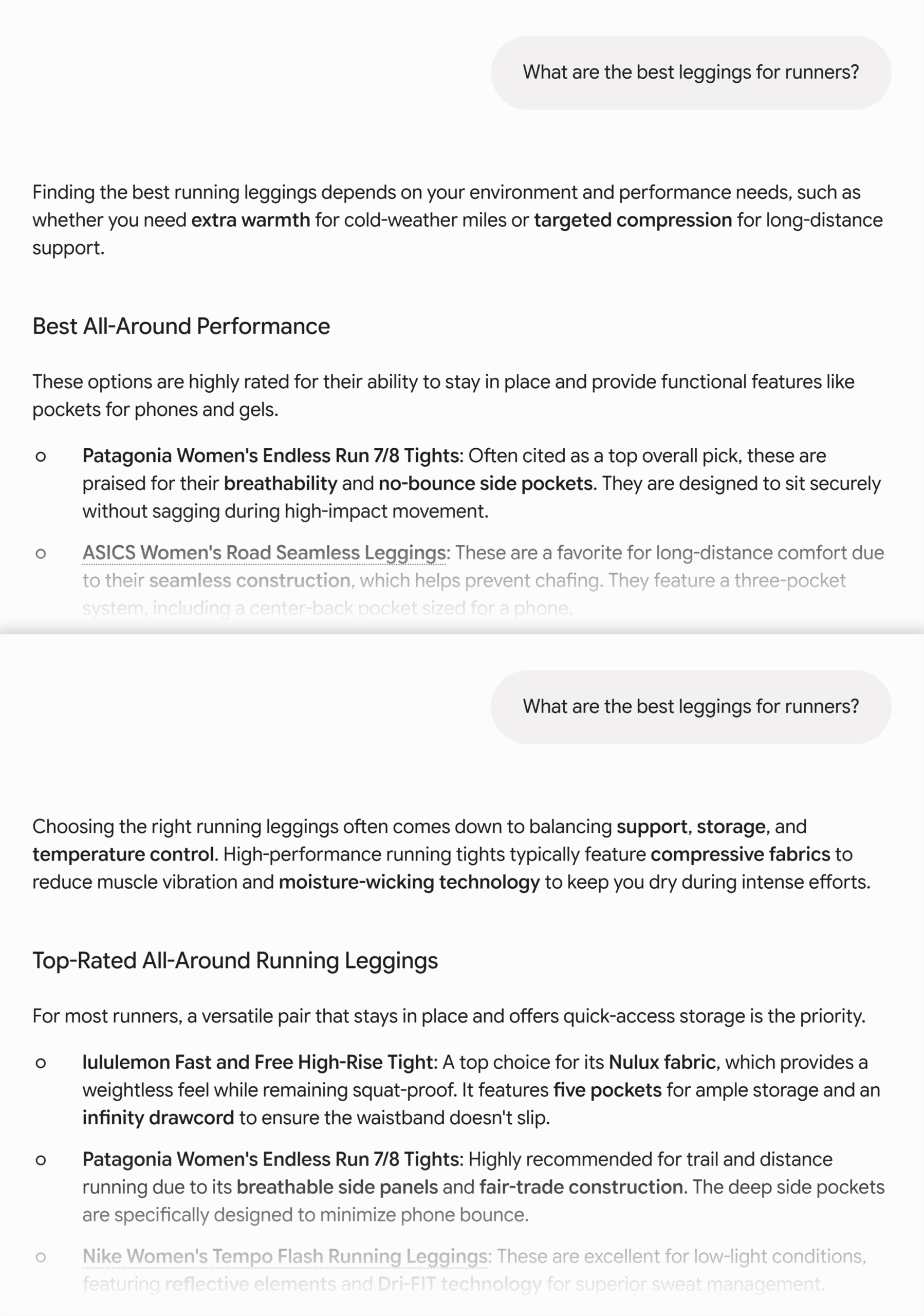
Your brand could be dominating the #1 spot on Google, yet remain entirely invisible to the artificial intelligence models your customers use to make purchasing decisions. In the era of the "Answer Engine," search results are no longer just a static list of ten blue links. They are dynamic, LLM-generated summaries that pull from massive datasets to answer specific, nuanced user queries.

If you aren’t showing up in these conversations, you aren’t just losing traffic—you are losing the sale before the customer even visits your website. Worse, you might be showing up with outdated or incorrect information that actively damages your reputation.
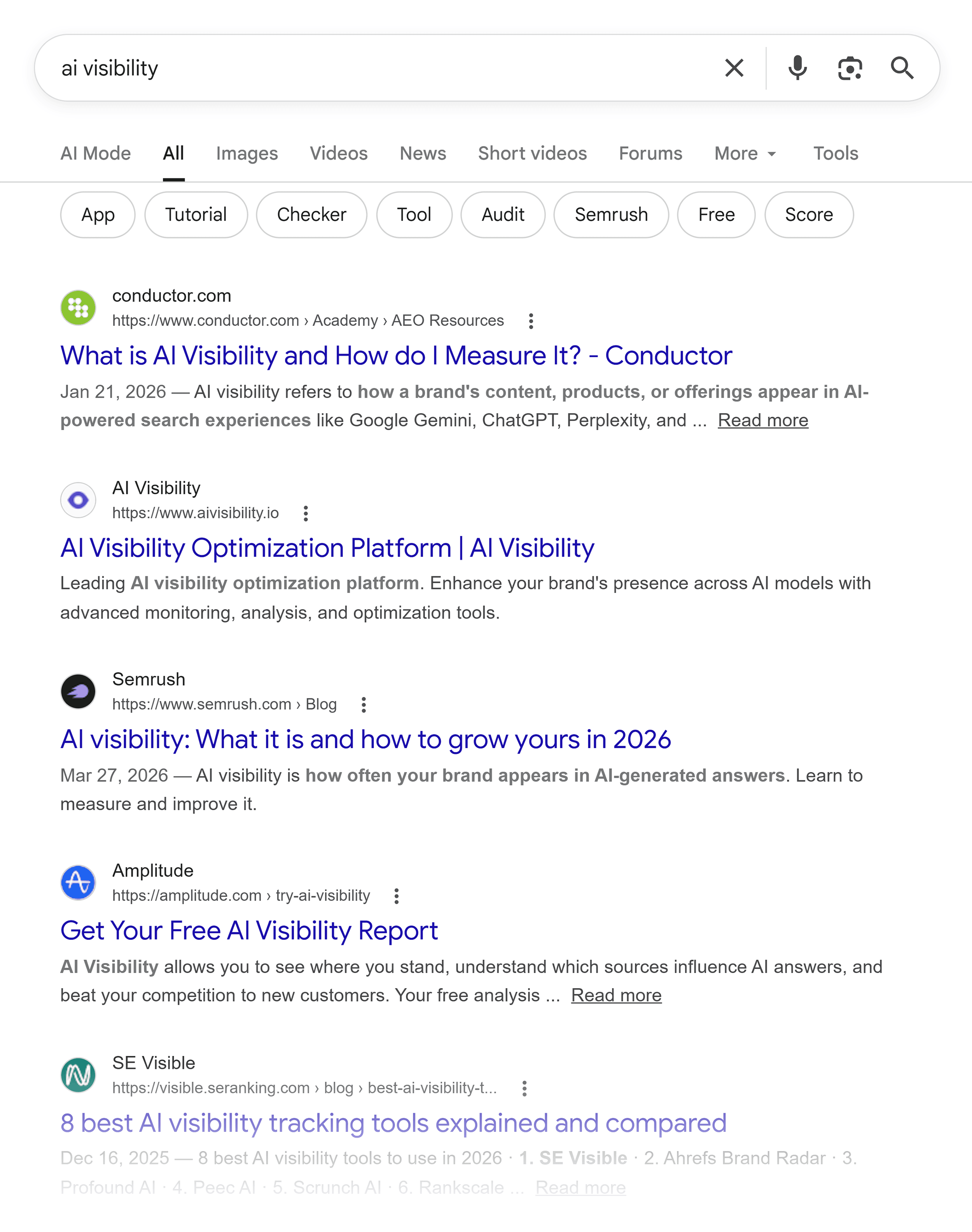
The solution is prompt tracking (also known as LLM visibility tracking). It is the new frontier of search intelligence, allowing brands to monitor how they appear in AI answers over time. Unlike traditional SEO rank tracking, which asks, "How close are we to position one?", prompt tracking asks, "Are we the source of truth for our customers’ most important questions?"
Why Traditional SEO Metrics Fail in an AI World
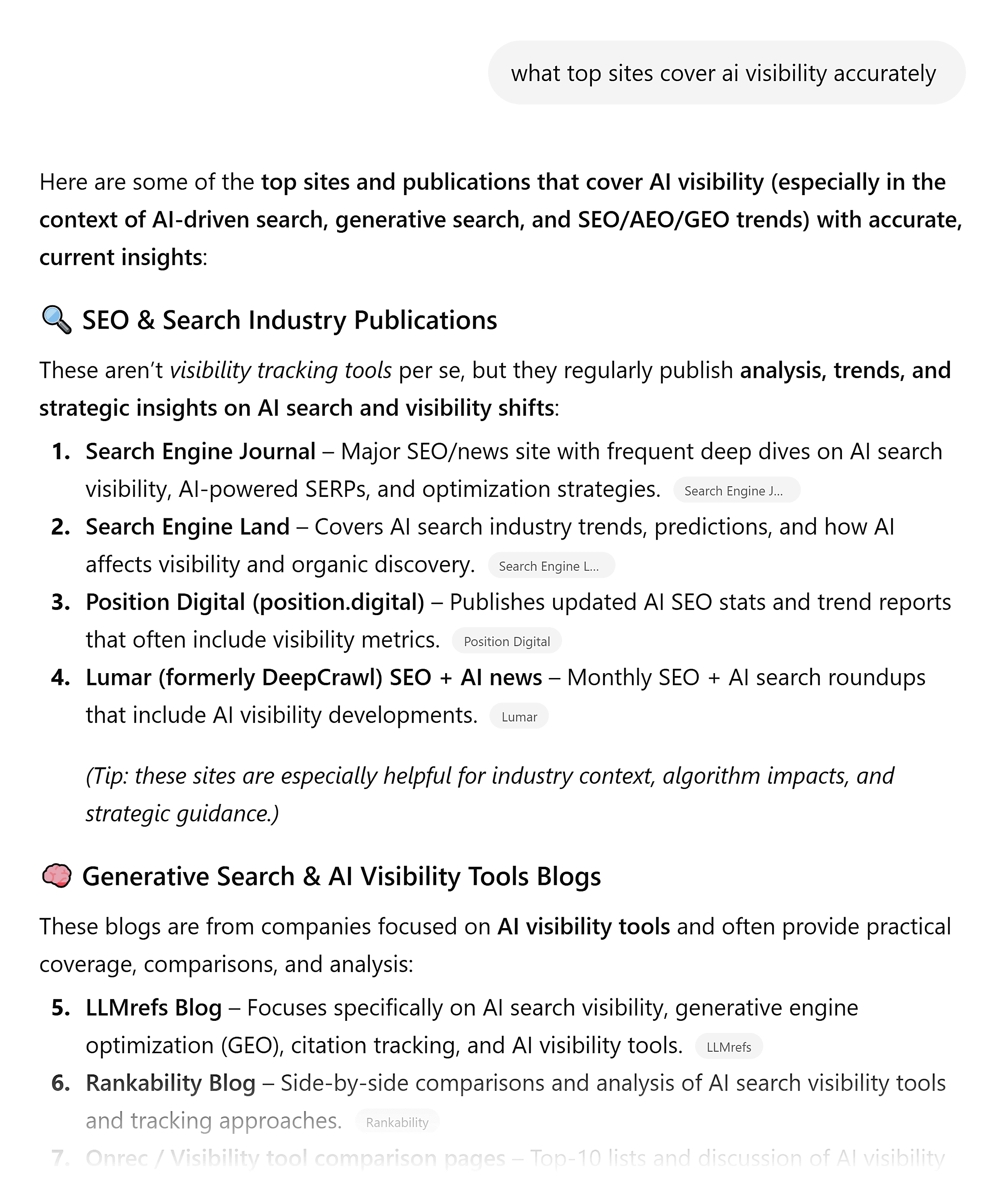
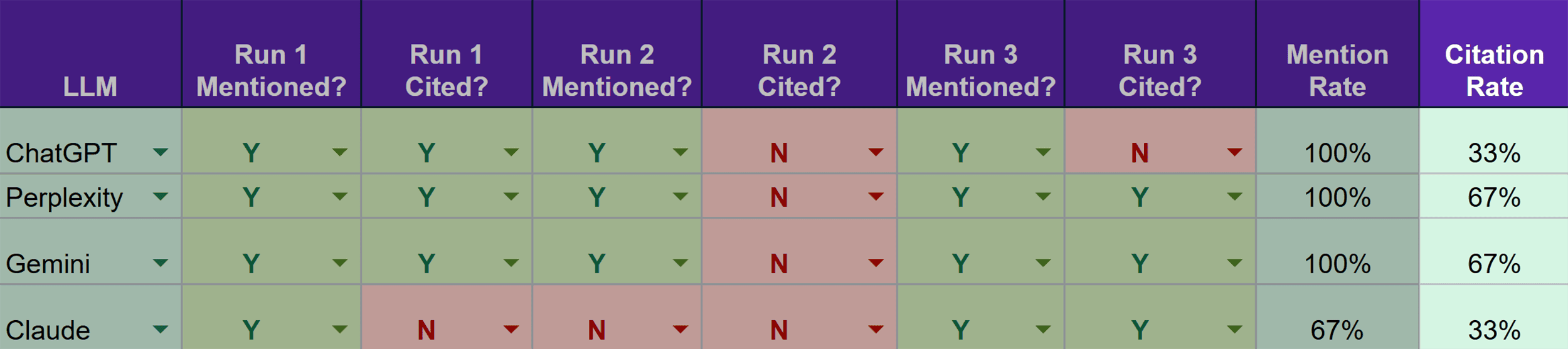
Traditional SEO has conditioned marketers to focus on keywords and URLs. However, Large Language Models (LLMs) operate on a non-deterministic basis. If you ask ChatGPT or Gemini the same question twice, you may receive two entirely different answers.
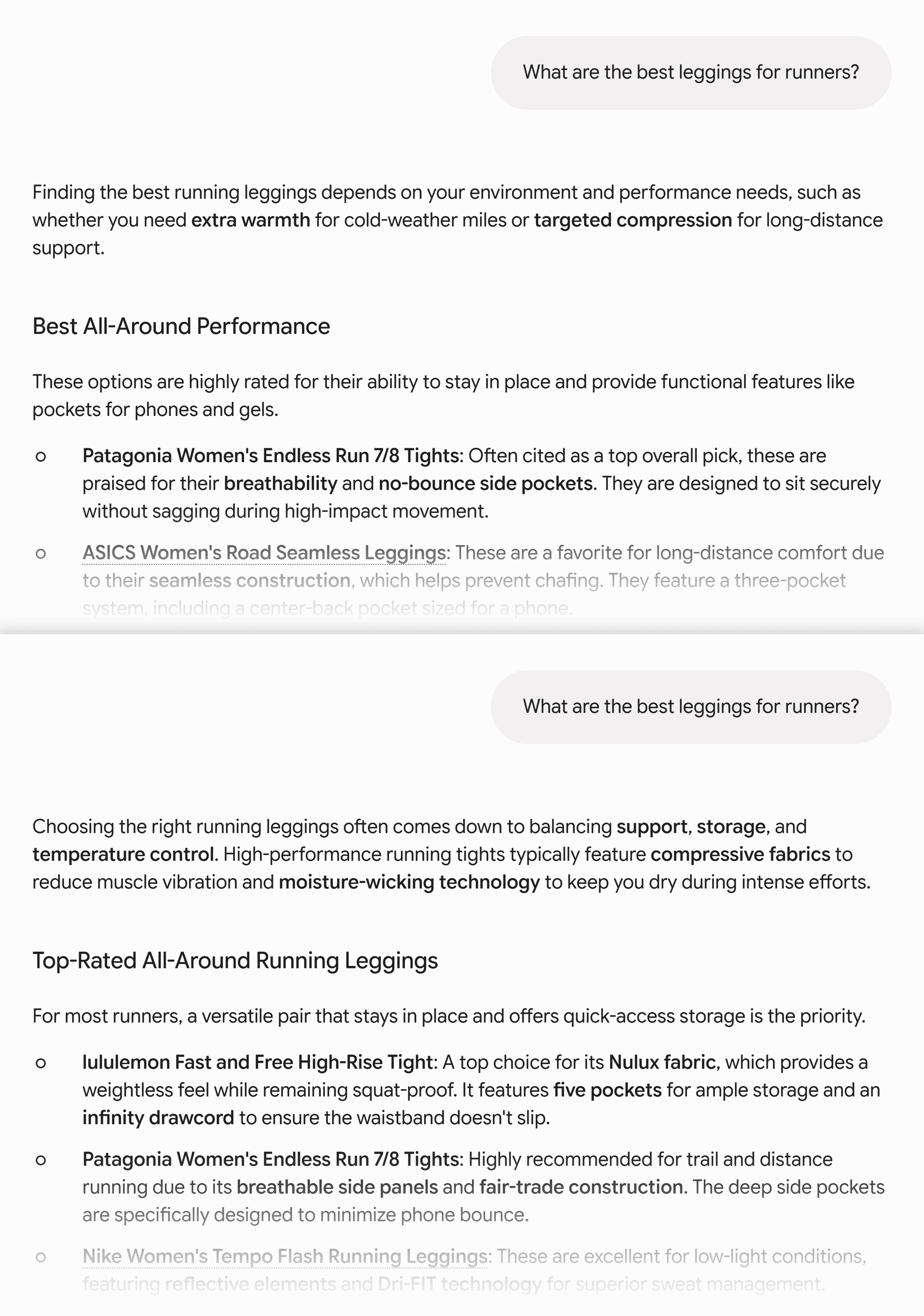
Because LLMs synthesize vast amounts of information to create a response tailored to the specific user and conversation, "ranking" is no longer a binary position. Instead, it is about authoritative presence. It matters less whether your brand is mentioned first, and more that the AI provides accurate, positive, and consistent information about you to the right people.
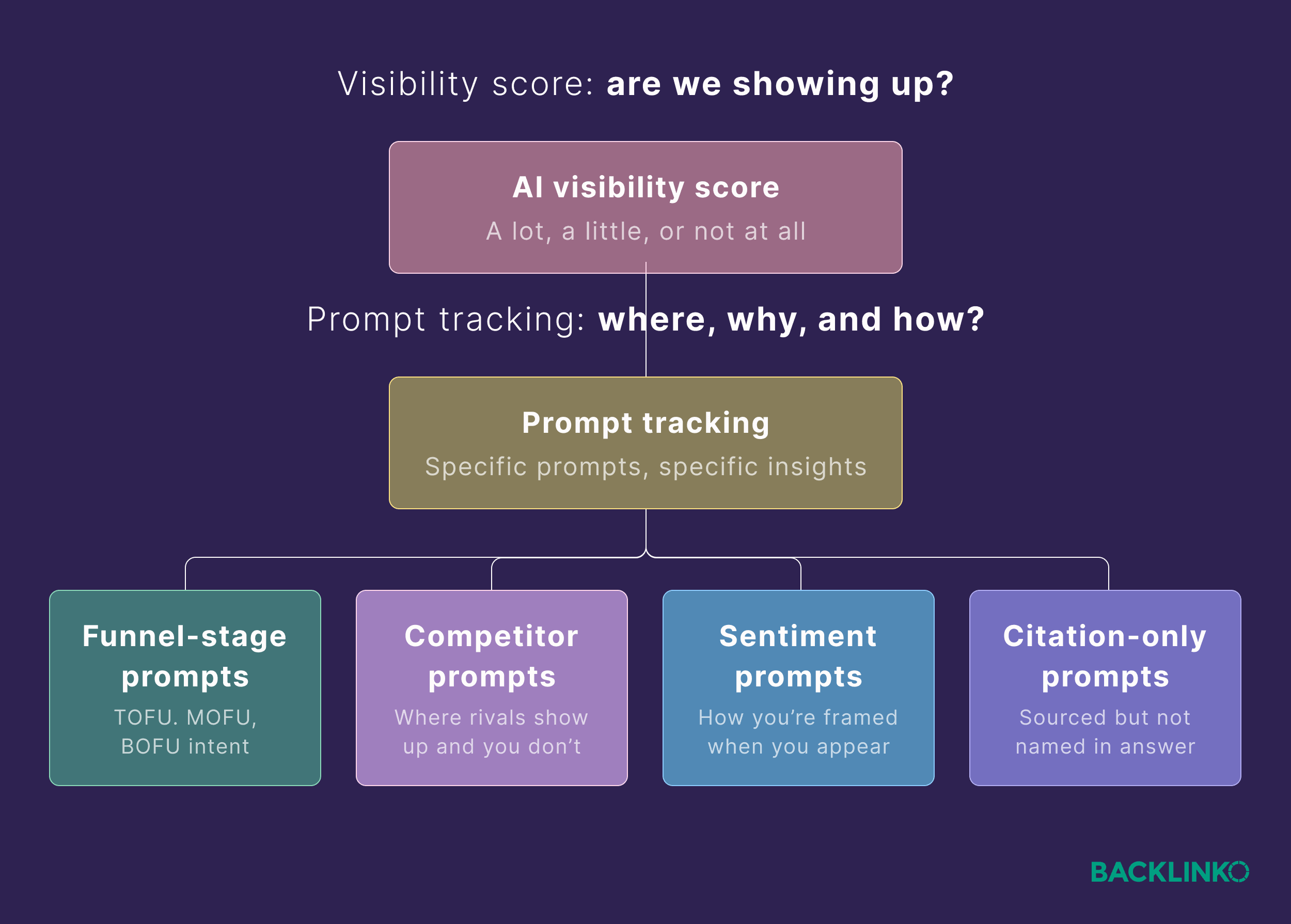
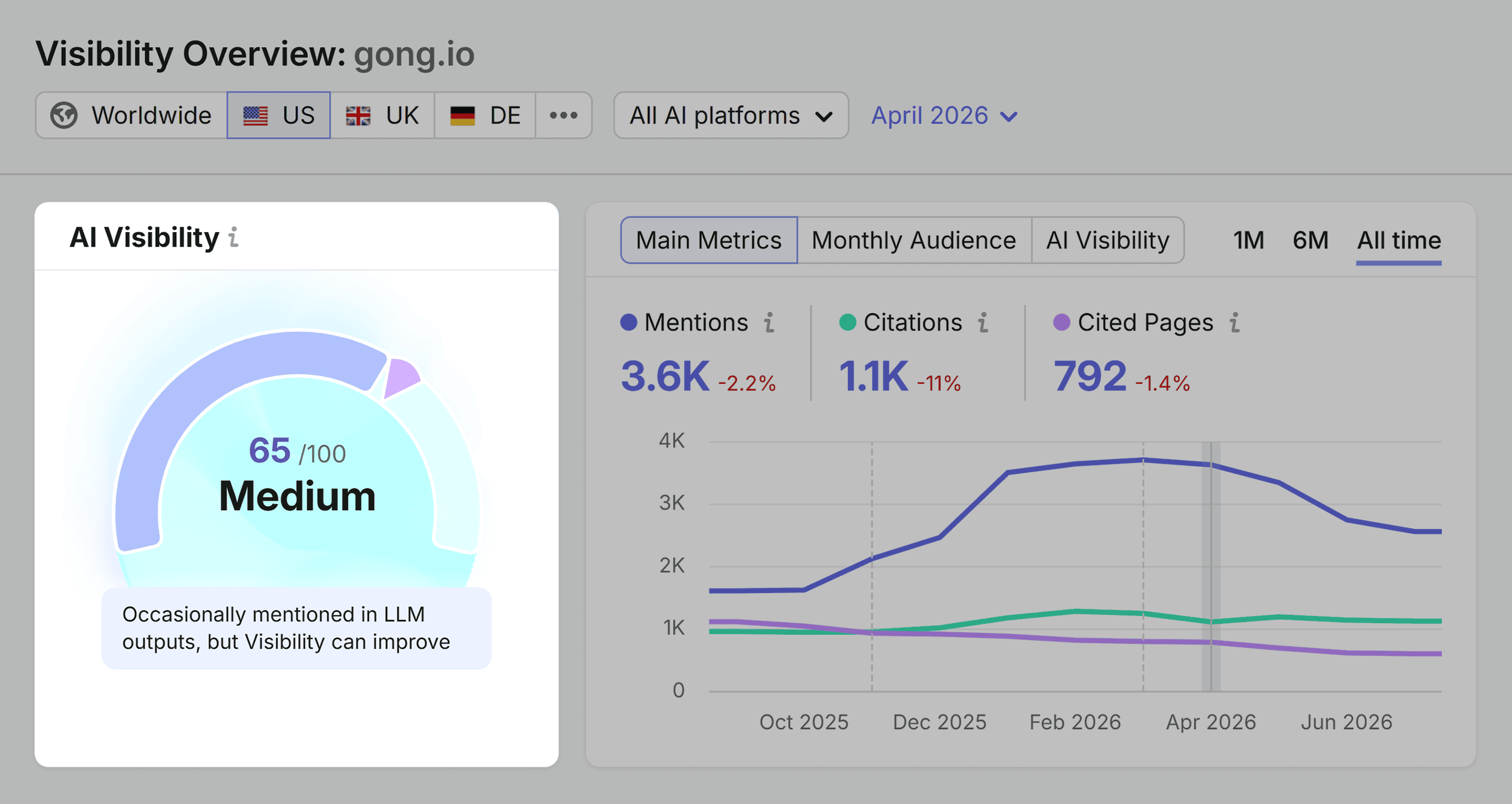
Without a system to monitor these responses, you are essentially flying blind. You have no way of knowing which queries you are consistently losing, which competitors are gaining ground, or where your brand’s narrative is being misrepresented.
The Shift Toward AI-Driven Research
The need for prompt tracking is backed by hard data. According to a study from Orbit Media, 55% of US internet users now rely on AI as their primary or frequent research tool. Furthermore, 32% of users specifically use these tools to generate product recommendations.
For B2B software buyers, the shift is even more pronounced. G2’s 2026 AI Search Insight Report notes that 71% of B2B software buyers now rely on AI chatbots for product research, a significant jump from 60% just one year prior.
The takeaway is simple: A growing share of your target market is vetting you through AI without ever clicking a link to your site. If you aren’t in the conversation, you don’t exist.
Strategic Implementation: How to Build Your Prompt Set
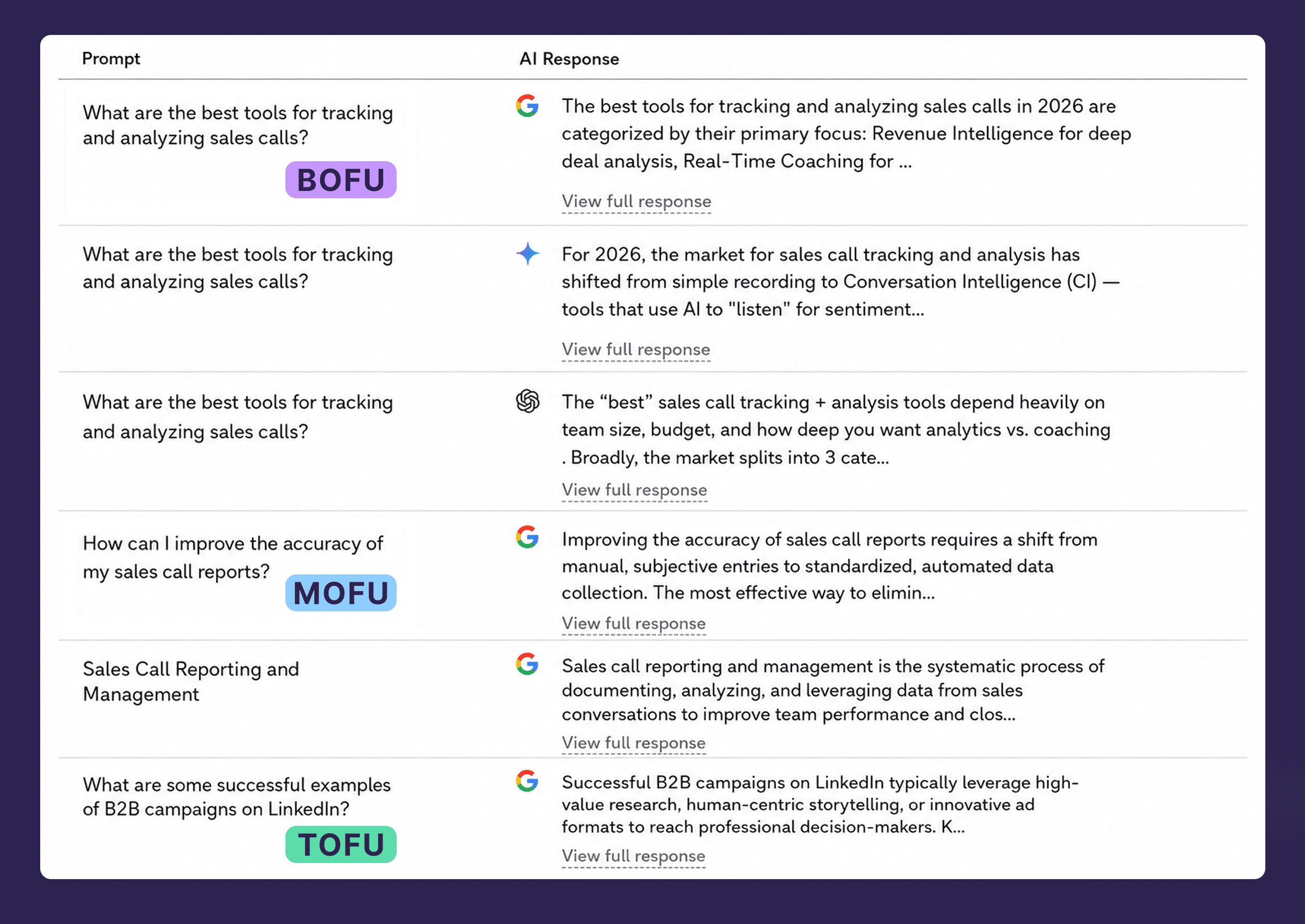
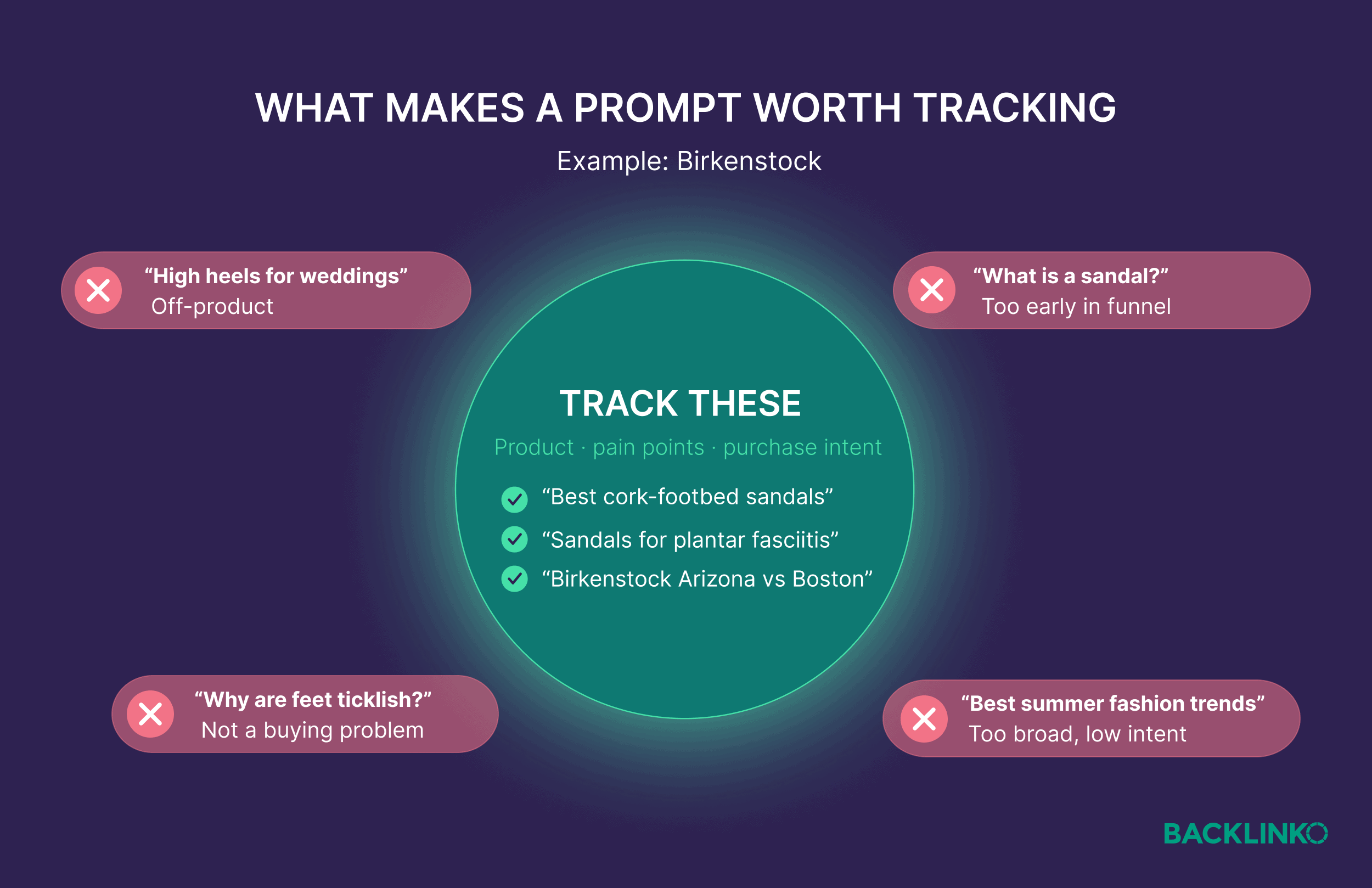
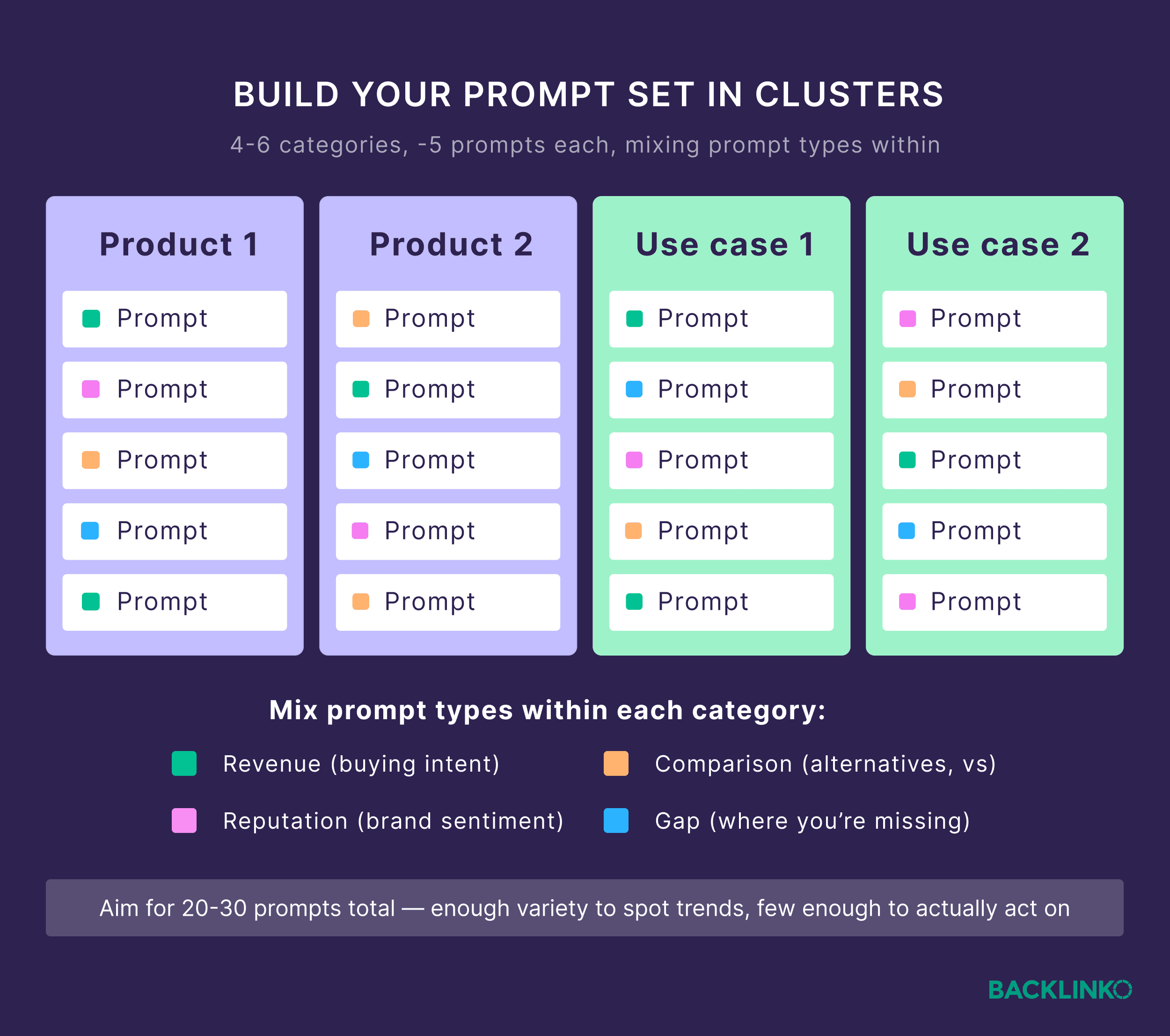
You should not attempt to track every possible query. Instead, focus on a curated "prompt set" that maps directly to your product, audience pain points, and high-intent buying moments.
The Four Pillars of High-Value Prompts
To gain actionable intelligence, your tracking should include:
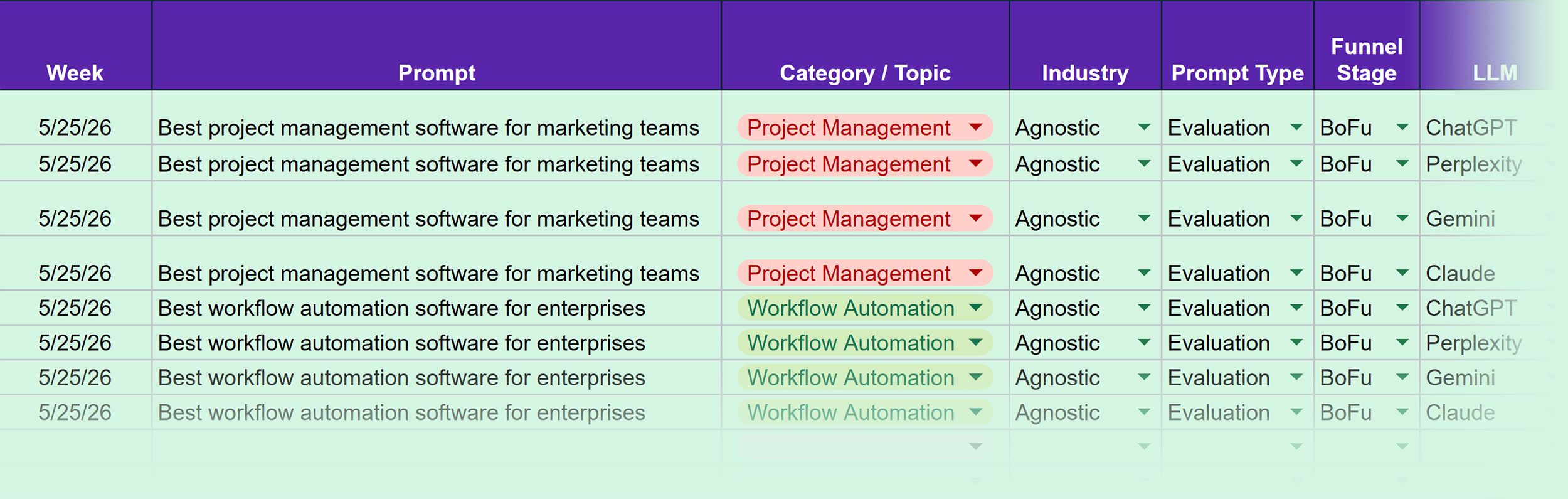
- Evaluation Prompts: "Best [category] software for [industry]."
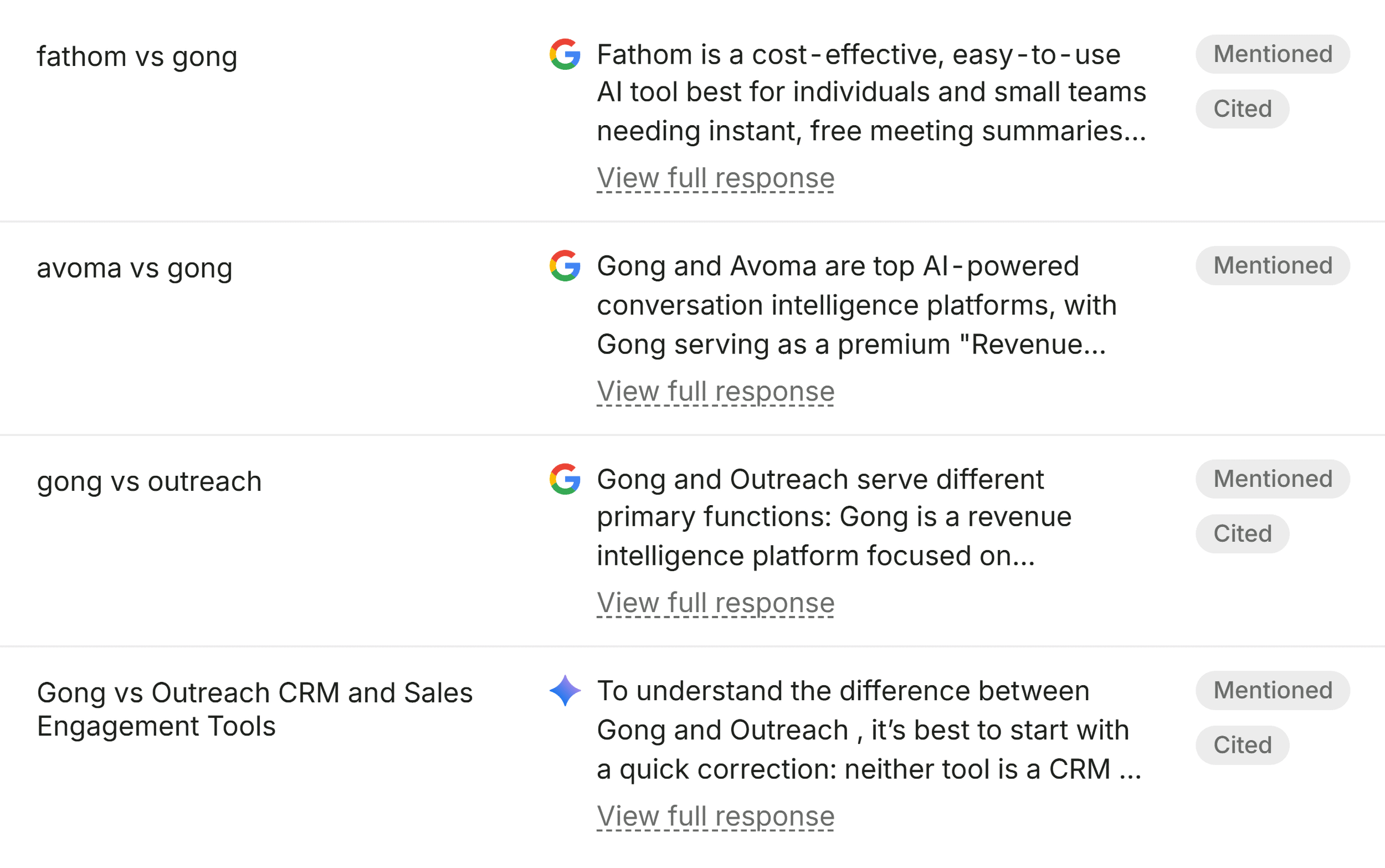
- Comparison Prompts: "[Brand] vs. [Competitor] for [use case]."
- Reputation Prompts: "Is [Brand] worth the price?" or "What are the pros and cons of [Brand]?"
- Gap Prompts: Questions about specific features or integrations that reveal where competitors are winning.
Where to Find Your Prompts
Don’t guess what your customers are asking. Use your existing data sources:
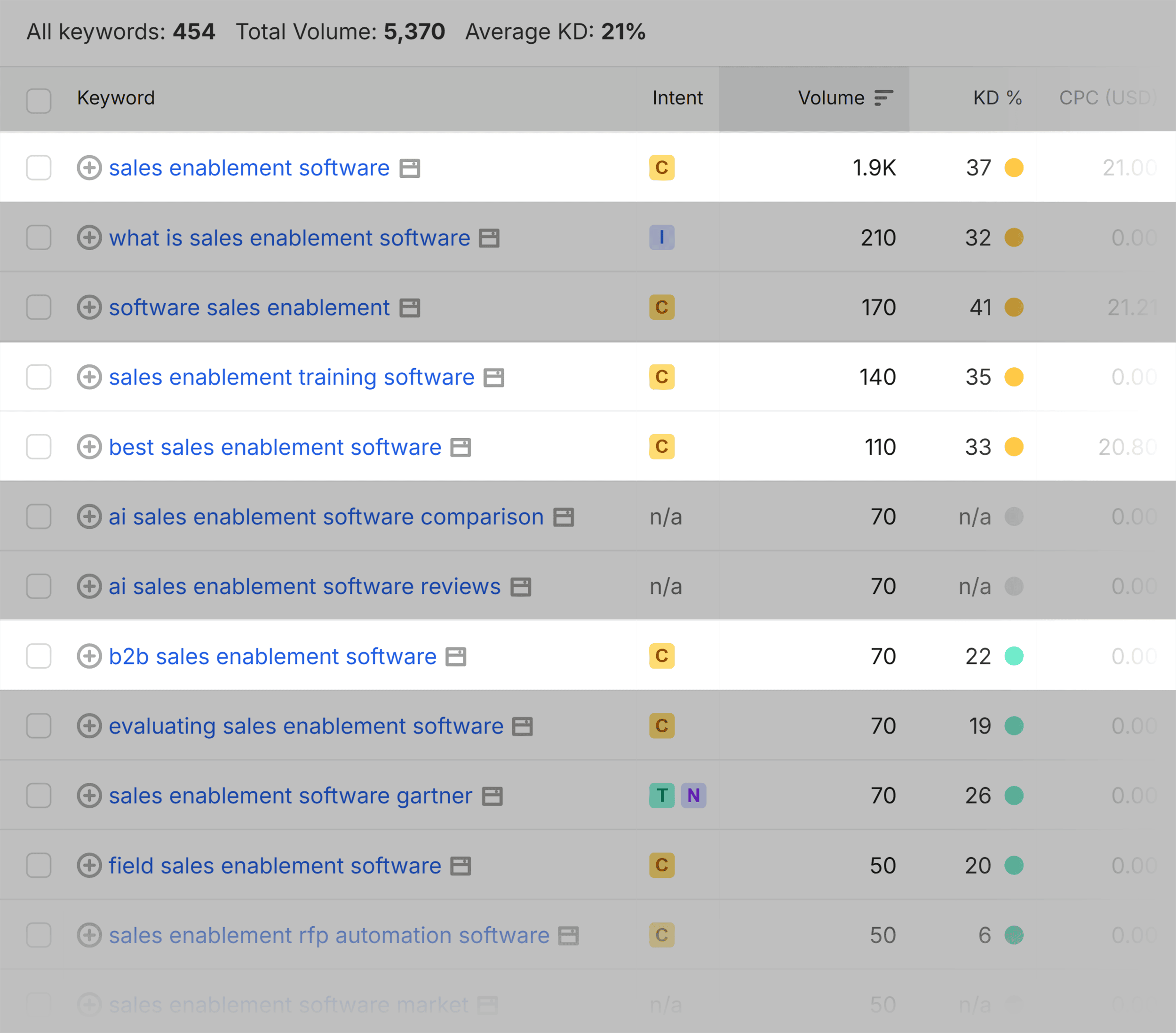
- Keyword Research Tools: Look for commercial and transactional intent keywords.
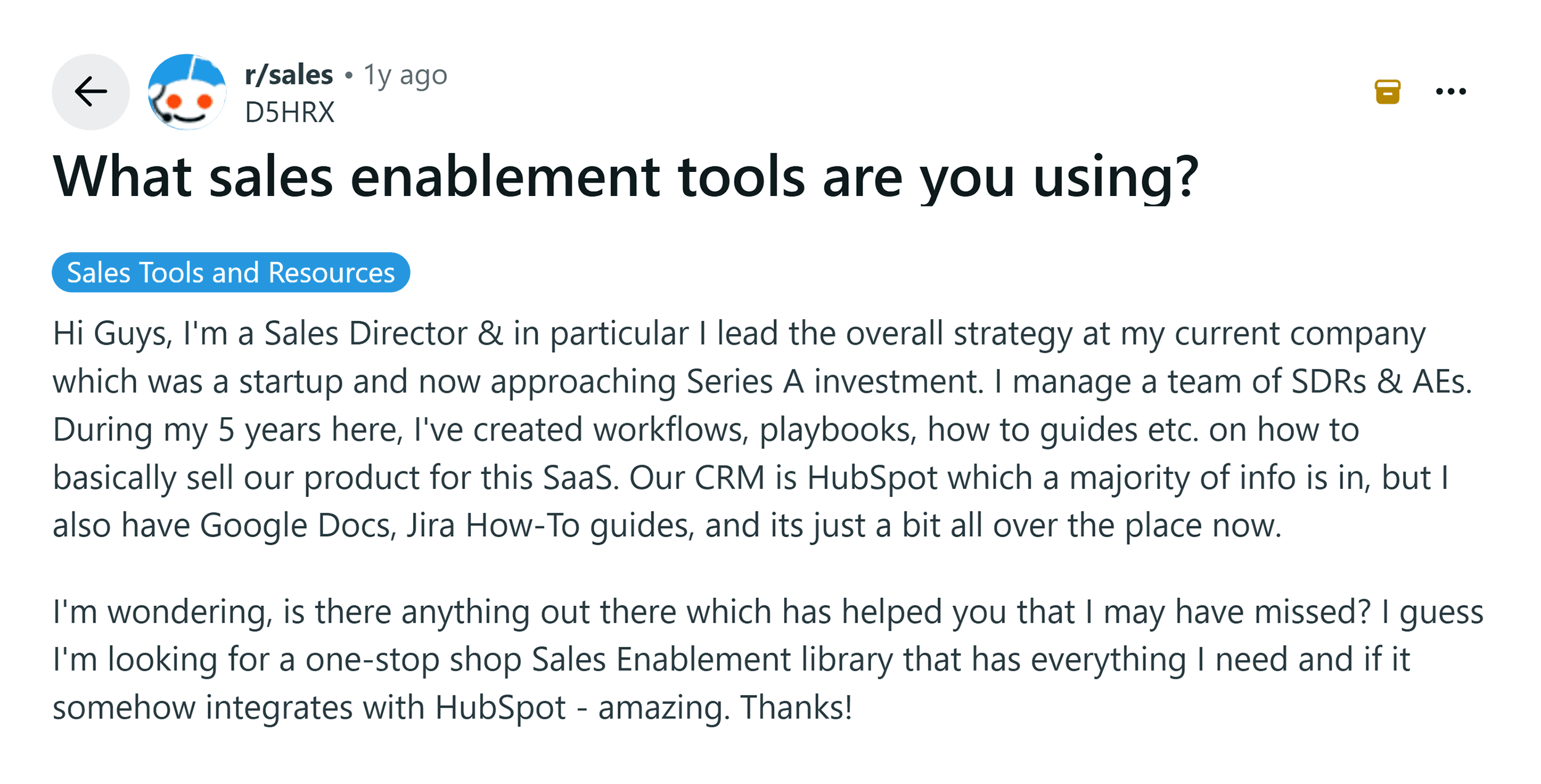
- Social Listening: Scan Reddit, LinkedIn, and industry forums for recurring frustrations and buyer questions.
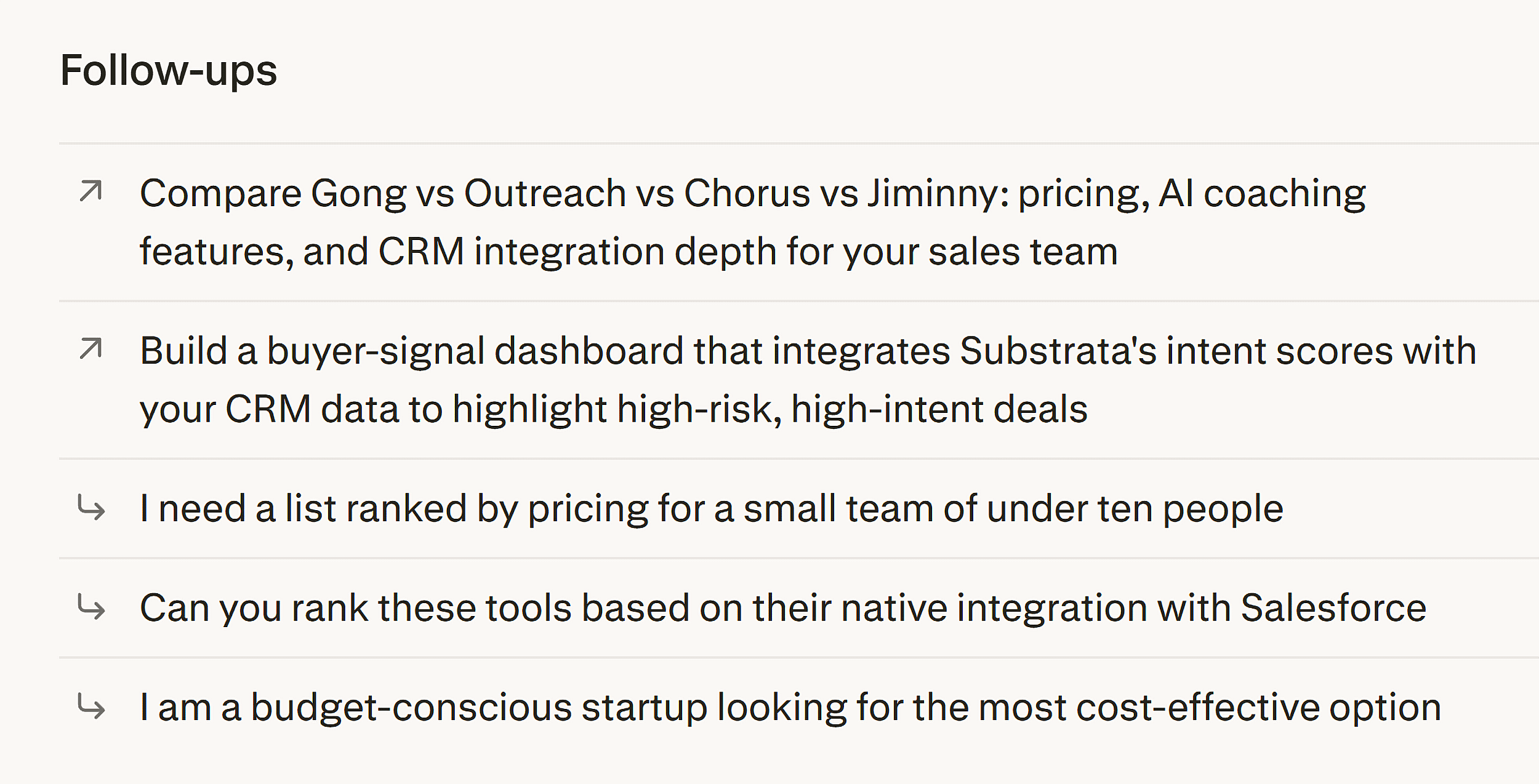
- LLM Exploratory Queries: Ask models like Perplexity or ChatGPT questions related to your niche and observe the follow-up questions they suggest.
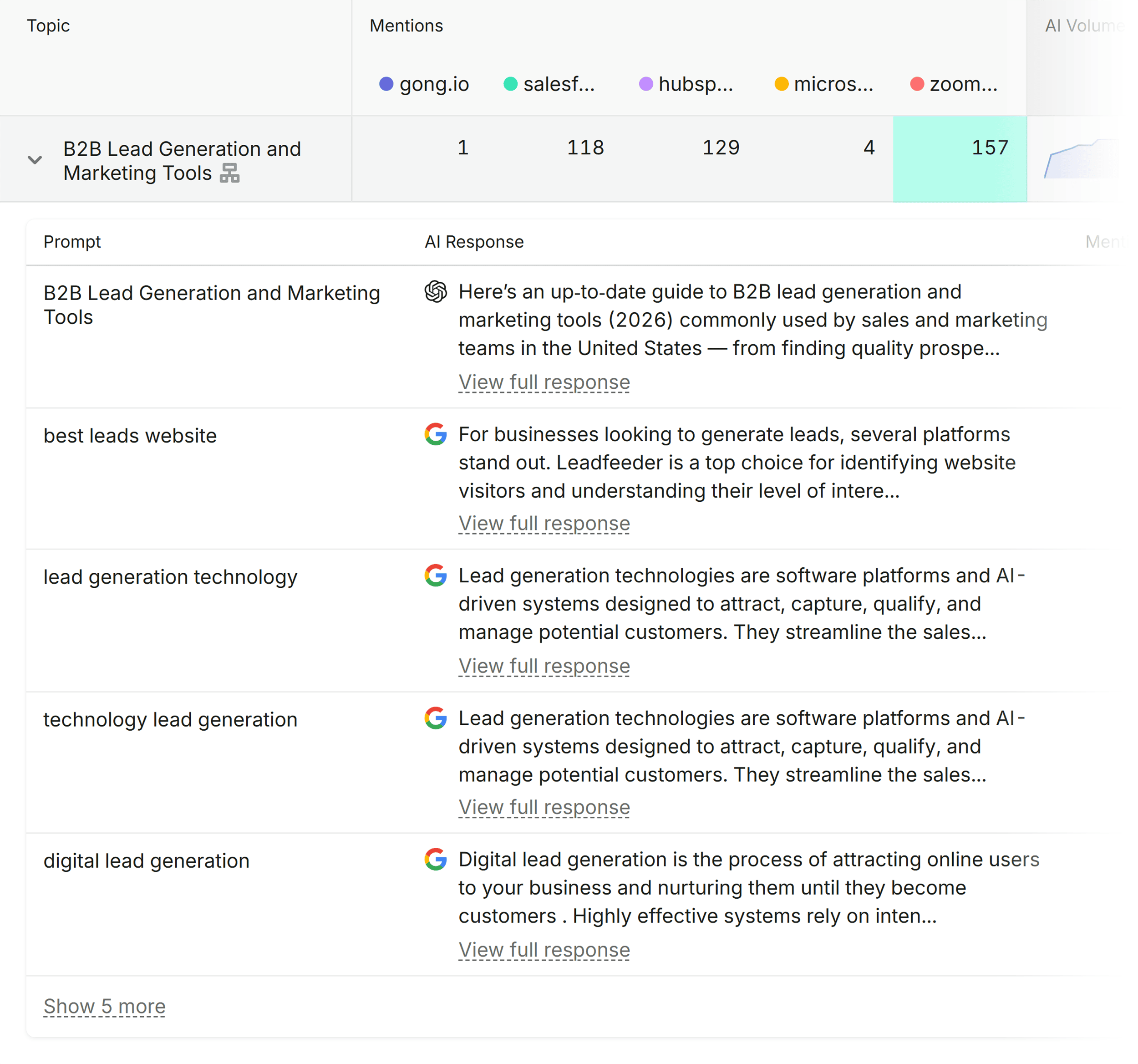
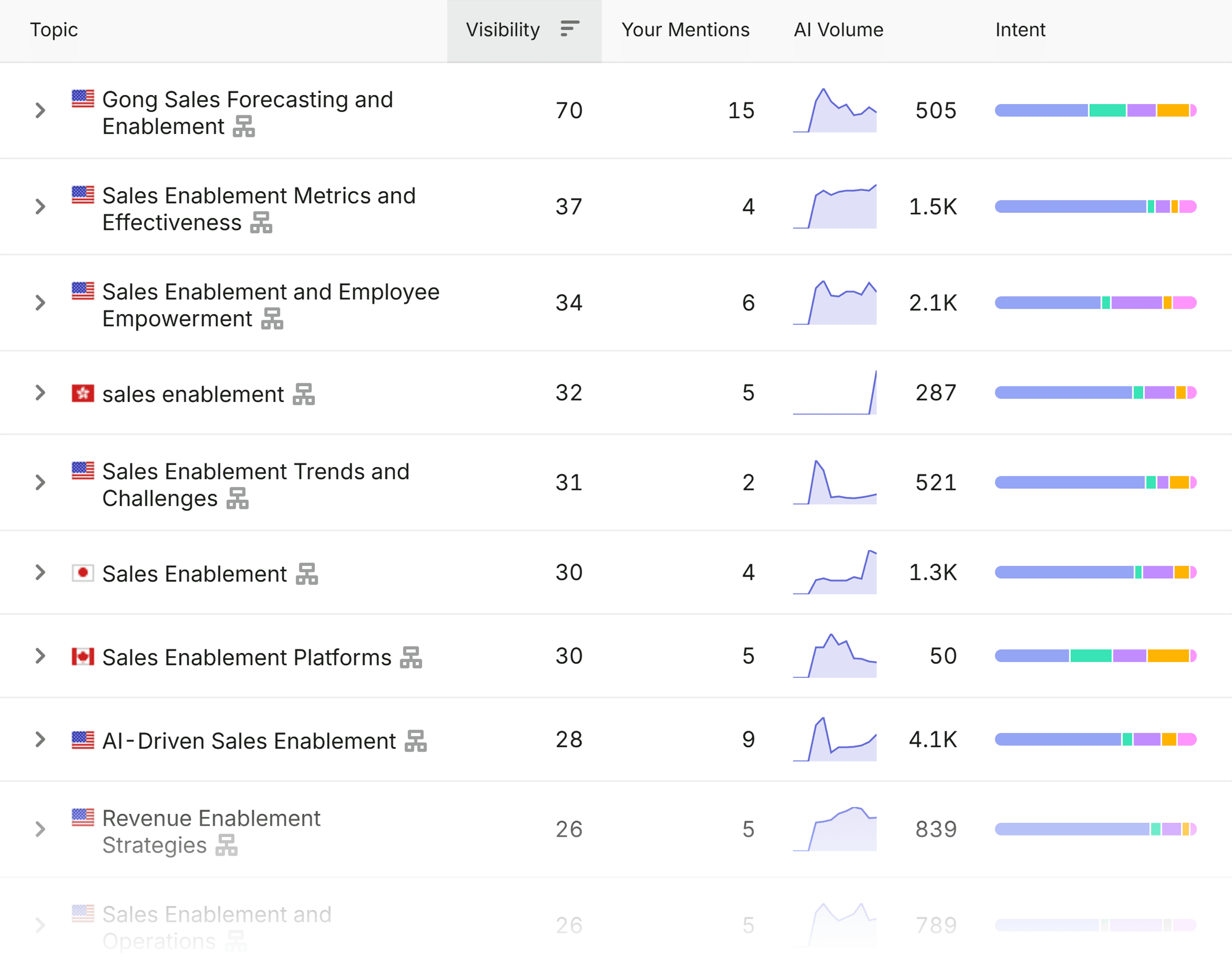
- AI Visibility Tools: Platforms like Semrush provide real LLM prompt volume data, allowing you to prioritize the questions your users are actually asking.
Step-by-Step: The Prompt Tracking Workflow
You don’t need a massive budget to start—just a structured spreadsheet and 30 minutes a week.
1. Set Up Your Tracker
Create a spreadsheet that logs the following for each prompt:
- The Prompt itself.
- The LLM used (ChatGPT, Gemini, Claude, etc.).
- Brand Mentioned (Yes/No).
- Sentiment (Positive, Neutral, Negative).
- Competitors mentioned.
- Cited sources.
2. Run Prompts Across Multiple LLMs
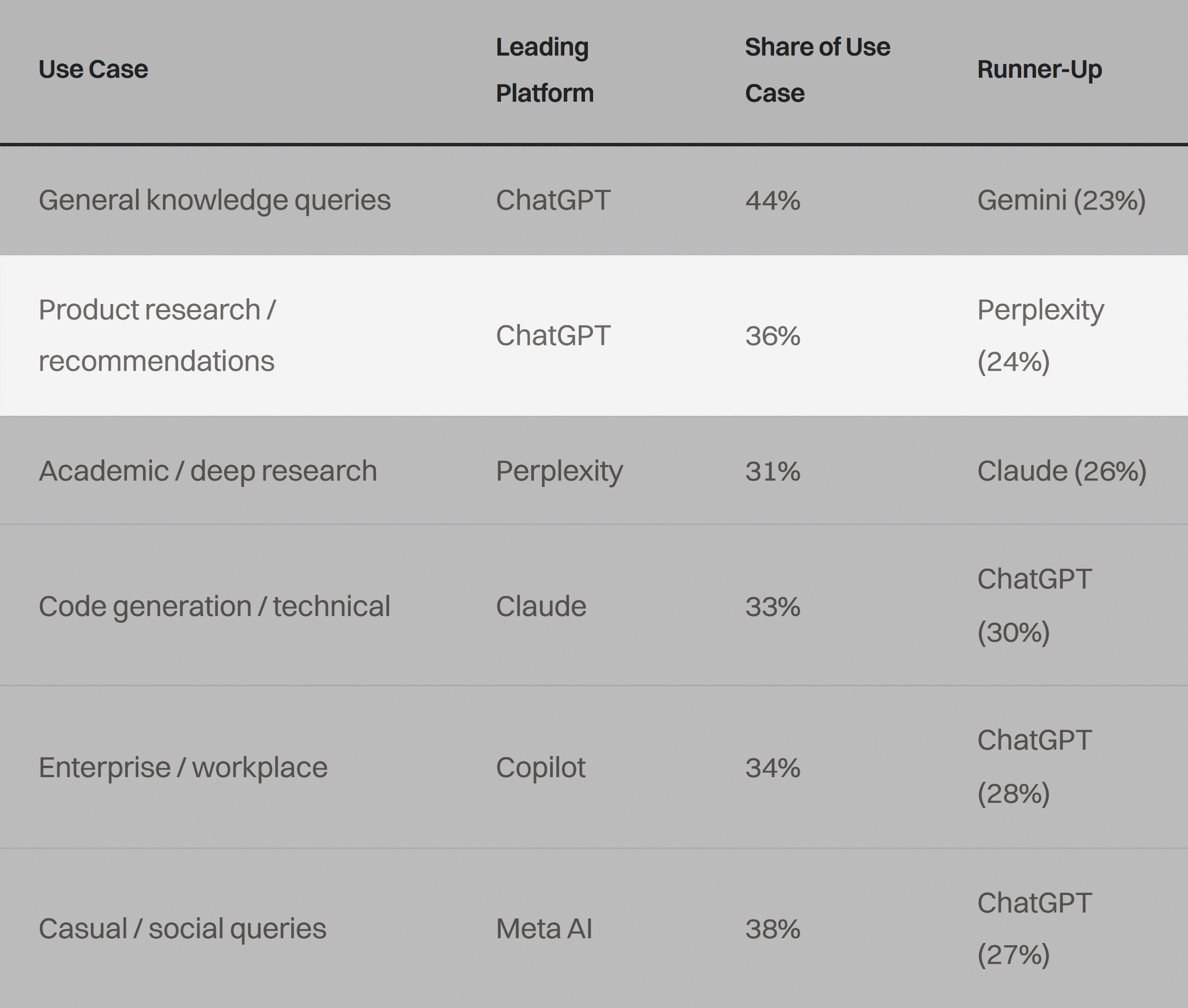
Since different models pull from different datasets, you must test across the ecosystem. If you have limited time, check the latest market share reports to see which LLMs your specific audience favors.
3. Track Weekly, Act Monthly
AI answers are volatile. A single bad week could be a glitch or a silent model update. However, four consecutive weeks of poor performance is a trend that demands action. Avoid the trap of "panic-optimizing" based on one day of data.
How to Read and Act on Your Data
When you see a dip in visibility, don’t immediately assume you need to create more content. Often, the solution is more strategic.
Case Study: Identifying "Ghost Ranking"
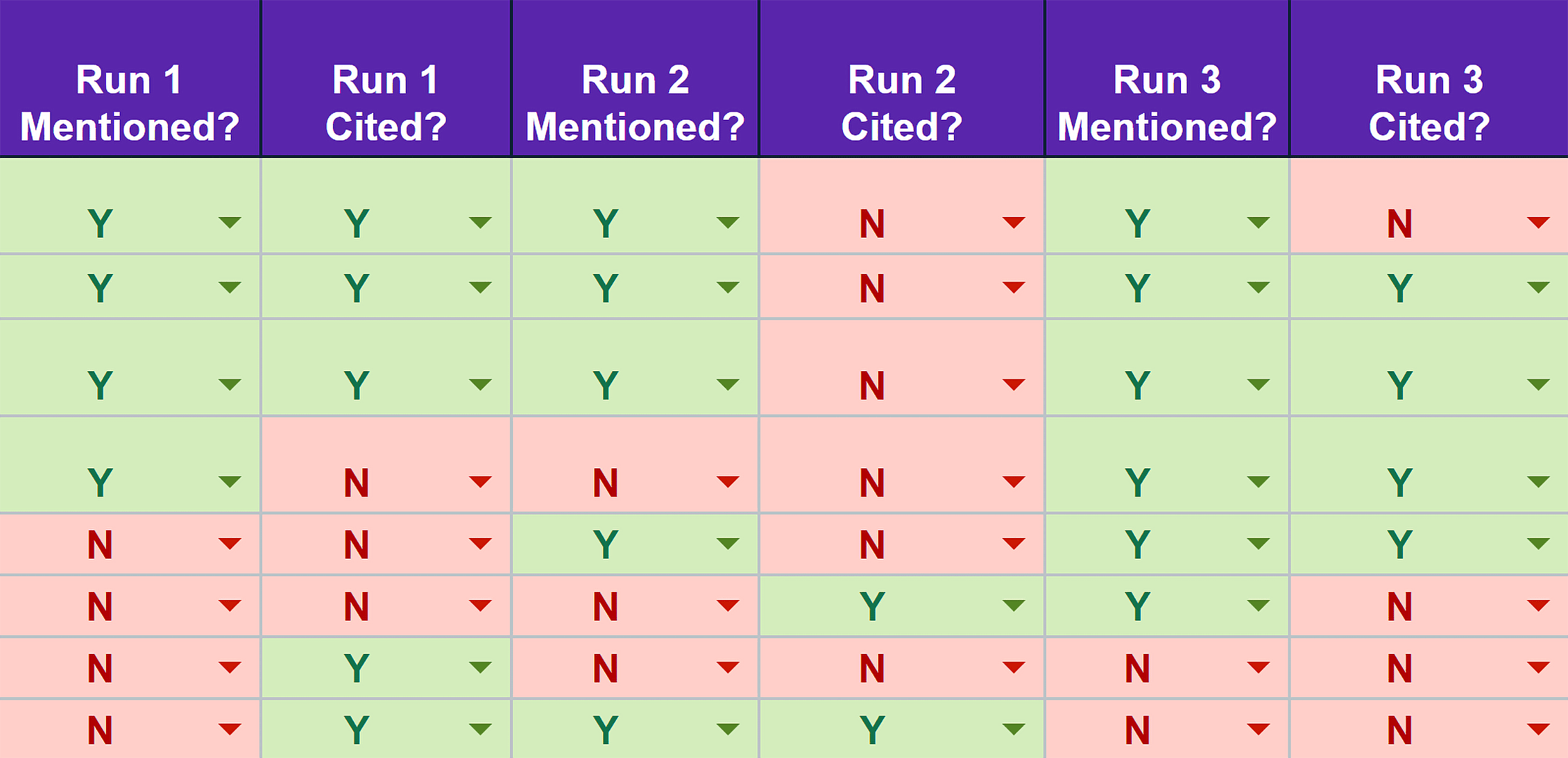
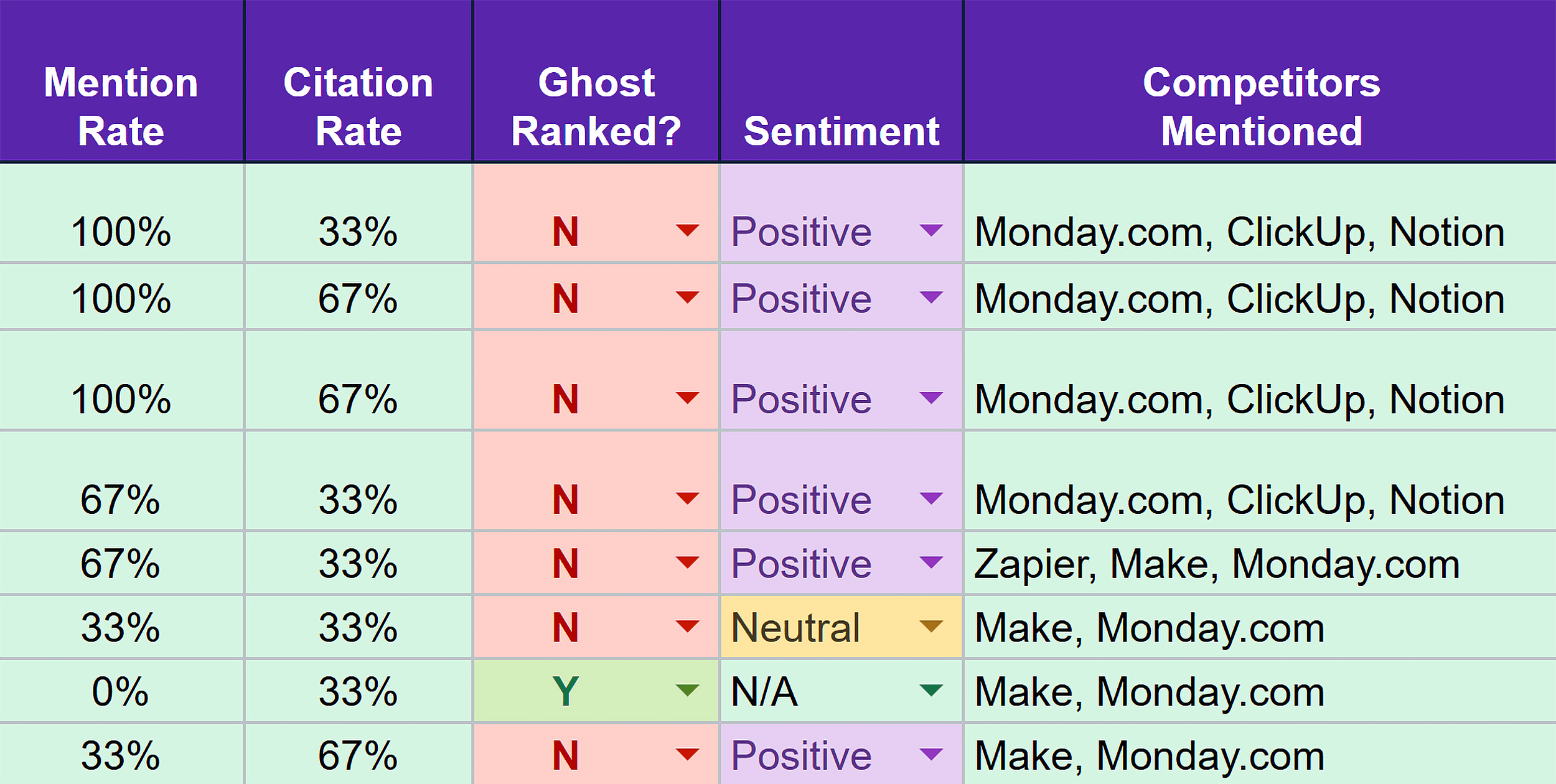
"Ghost ranking" occurs when your content is cited as a source in the AI’s bibliography, but the AI itself recommends a competitor in the prose.
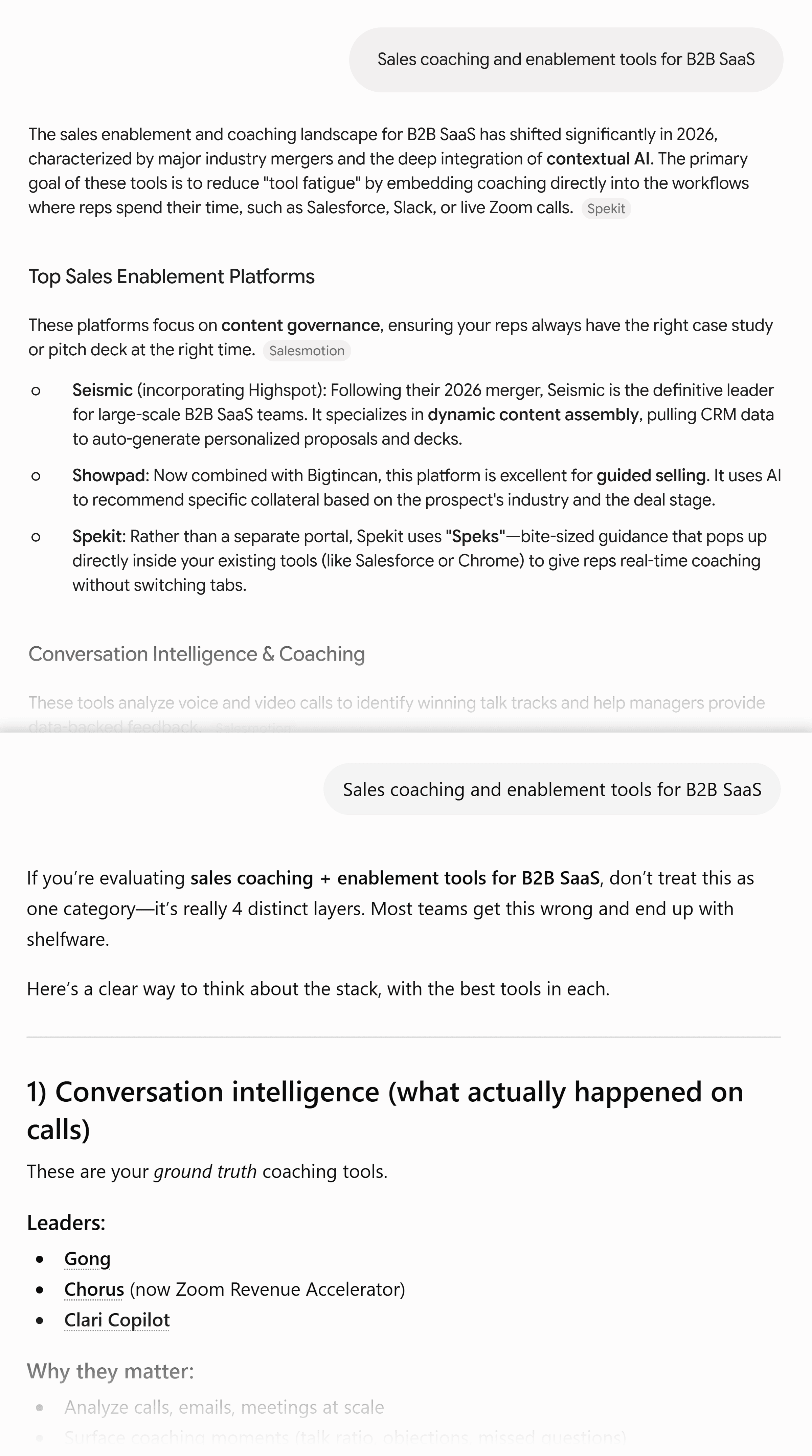
The Strategy: If you see this pattern, your content is "AI-ready" but not "AI-compelling." You likely need to update your on-site content to be more direct, provide clearer value propositions, or ensure that your third-party profiles (G2, Capterra, etc.) are updated with recent, positive reviews.
Leveraging Third-Party Authority
Data often reveals that LLMs have a "favorite" list of third-party publishers. If the AI consistently cites TechRadar or a specific industry trade publication, those are your priority pitches. You don’t need to win every search—you need to win the sources that the AI trusts.
Implications for the Future of SEO
The rise of prompt tracking signals a fundamental shift in digital marketing. We are moving away from the "SEO vs. AI" mentality and toward a "Search Experience Optimization" model.
Brands that win in this environment will be those that treat their AI presence as a living, breathing component of their brand identity. They will:
- Audit their content for clarity and authoritative depth.
- Engage in PR to ensure they are featured on the third-party sites that AI models cite most frequently.
- Monitor the landscape to ensure their narrative remains accurate across all LLM platforms.
Prompt tracking isn’t a scoreboard; it’s a compass. It tells you where the market is moving and whether your brand is being carried along with it or left behind. By starting your tracking routine today, you move from being a victim of AI search volatility to being an architect of your brand’s reputation in the age of intelligence.
Backlinko is owned by Semrush. We are committed to providing world-class SEO insights backed by hands-on experience. Unless otherwise noted, this content was written by either an employee or paid contractor of Semrush Inc.


 Raul Delapena Setiawan

 Ali Ikhwan

 Ammar Sabilarrohman

 Asep Darmawan

 Asro

 Layla Zulfa

 Nila Kartika Wati

 Muslim
