
 Ammar Sabilarrohman
For decades, the life of a software developer was defined by a specific, rigid choreography: the clatter of a mechanical keyboard, the flickering of a terminal window, and the cognitive load of managing an endless array of browser tabs. To build software was to “speak computer”—mastering arcane syntax, memorizing command-line arguments, and meticulously debugging logic line by line.
Today, that relationship is undergoing a profound structural shift. We are moving away from the era of operating tools toward an era of expressing intent. As Artificial Intelligence moves from being a mere autocomplete assistant to an autonomous, context-aware agent, the role of the developer is evolving from a manual laborer of code to a high-level architect of outcomes.
The Evolution of the Developer Workflow: A Chronology of Control
To understand where we are going, we must recognize where we have been. The history of software development is a history of abstraction:
- The Command-Line Era (The Foundation): Development was a manual process of direct interaction with machine memory and registers. Every action required explicit, error-prone instructions.
- The GUI and IDE Revolution (The Visual Shift): With the advent of graphical user interfaces and integrated development environments (IDEs), development became visual. The mouse simplified navigation, and IDEs provided the first layers of automation, such as syntax highlighting and basic refactoring tools.
- The Connected/Web Era (The Expansion): The rise of the web and cloud computing turned development into a distributed effort, demanding constant context-switching between local environments and remote services.
- The Agentic Era (The Current Shift): We have now entered the age of "Intent-Based Development." AI agents are no longer just suggesting snippets; they are understanding entire repositories, planning multi-step tasks, executing tests, and refining implementations.
This progression reflects a recurring theme in human-computer interaction: each iteration seeks to lower the barrier between the human thought process and the machine’s output.
The Mechanics of Intent: How AI Agents Operate
The modern AI-assisted workflow, exemplified by tools like GitHub Copilot, is fundamentally different from traditional coding. The new paradigm relies on a system that acts as a bridge between high-level human goals and low-level machine execution.
The process operates across three critical layers:
- Modality (Capturing Intent): The developer communicates the desired outcome, whether through natural language prompts, voice, or physical control interfaces.
- The Harness (Planning and Action): The agent—empowered by deep context of the repository, symbols, and dependencies—creates a roadmap to achieve the objective. It executes tasks, edits files, and runs tests in isolated environments (such as those powered by GitHub Actions).
- The Control Plane (Validation): This is the most crucial layer. The developer acts as the supervisor, inspecting, redirecting, and approving the agent’s work.
This transition compresses the "coding loop." What once took hours of navigating file structures and documentation can now be handled by an agent in seconds. Yet, this speed creates a paradox: as the mechanics of coding become easier, the judgment required of the developer becomes more precious.
The Human Element: Why Taste and Judgment Matter More Than Ever
There is a common misconception that AI will render the software engineer obsolete. In reality, the opposite is occurring: the developer’s role is becoming more strategic.
An agent can generate three different architectural implementations of a feature in the time it takes to brew a cup of coffee. However, the agent cannot inherently know if a specific abstraction is "clean," if a migration is truly safe for production, or if the resulting code aligns with the long-term technical debt strategy of the organization.
The developer remains the ultimate authority. They are the curator, the debugger of logic, and the final arbiter of quality. In this new workflow, "taste"—the ability to recognize elegant, maintainable, and scalable software—is the developer’s most valuable asset.
The Return of the Physical: Ambient Control in a Digital World
While much of the discourse around AI focuses on the screen, there is a growing movement to integrate physical controls into the developer workflow. As we spend more time managing AI agents, the keyboard and mouse can sometimes feel like an insufficient interface for high-level orchestration.
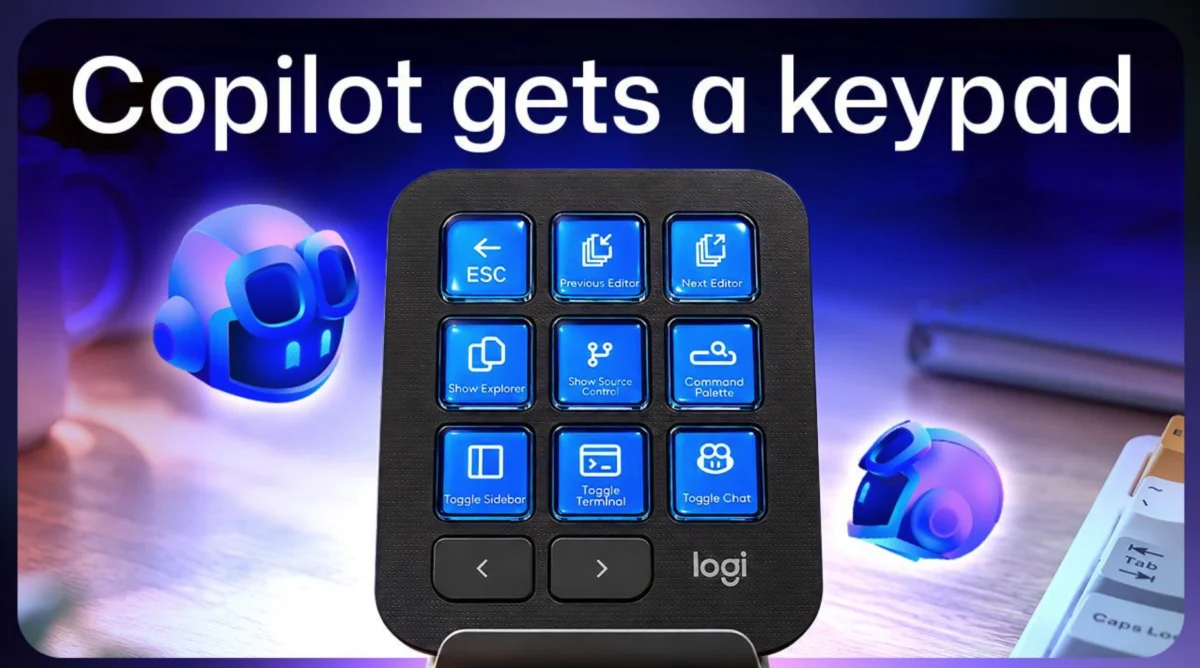
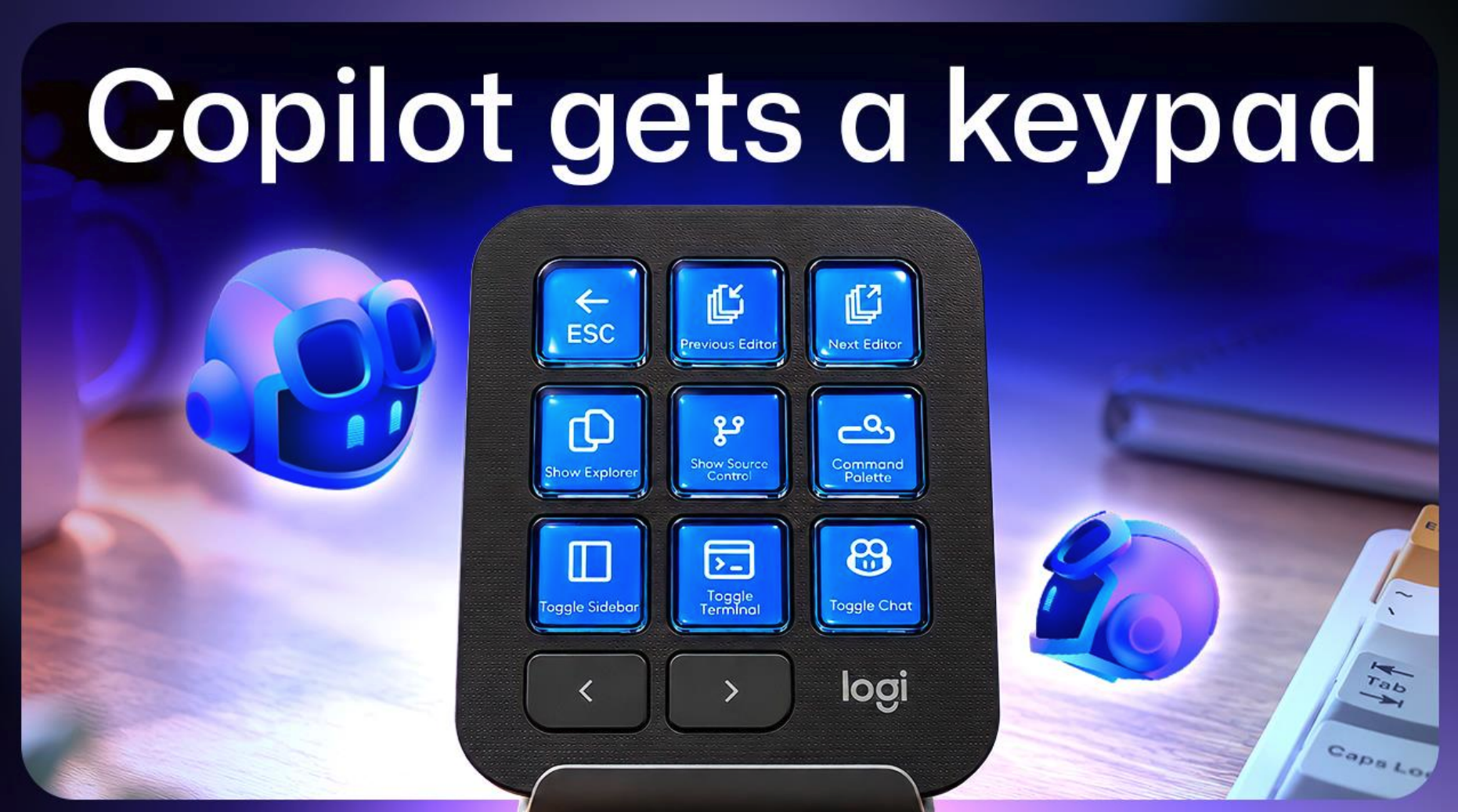
GitHub has recently partnered with Logitech to integrate the GitHub Copilot app with the MX Keypad. This is not about adding a "gimmick" to the desk; it is about reducing friction. By mapping repeated, high-frequency actions—such as starting a new agent session, triggering a test suite, or submitting a complex prompt—to a physical button, developers can stay in a "flow state."
Physical controls serve a specific purpose: when an action is repeated dozens of times a day, the physical act of triggering it through a dedicated, tactile device preserves cognitive energy. It allows the developer to move across modalities—text, voice, and physical hardware—without losing their train of thought.
Implications: The Future of Engineering Infrastructure
The shift toward agentic workflows raises significant engineering questions that the industry must address in the coming years:
- Context Management: How much repository history should an agent retain? How do we provide enough context for the agent to be effective without overwhelming it with noise?
- Security and Governance: As agents gain the ability to commit code and run tests, how do we enforce security boundaries? The integration of hooks and policy enforcement is becoming the new "must-have" for enterprise DevOps.
- Agent Coordination: We are moving toward a future of multi-agent systems. Orchestrating these agents so they do not duplicate work or conflict with one another is the next great frontier in software infrastructure.
- Interoperability: Technologies like the Model Context Protocol (MCP) are essential. They allow agents to connect to various tools and services, ensuring that the AI can act on a wide array of data sources without being siloed in a single proprietary environment.
The Path Forward: Getting Out of the Way
The goal of these advancements is not to replace the developer, but to remove the "noise" that prevents them from doing meaningful work. For decades, developers have been forced to "speak computer." We have spent our careers learning the syntax of the machine so that we could translate our ideas into a format the hardware could process.
We are now reaching a point where the computer is finally meeting us halfway. The best interface of the future will not be the one with the most flashy buttons or complex dashboards. It will be the one that is largely invisible—the interface that understands the context of our work, preserves our control over the outcome, and then effectively gets out of the way.
As we continue to refine this experience, the invitation to developers is simple: start with one recurring task. Whether it is a repetitive pull request check, a frequent documentation update, or a standard testing procedure, experiment with how AI agents and ambient controls can handle the heavy lifting. By delegating the mechanics, we free ourselves to focus on the craft—building software that truly matters.
For those looking to explore this new frontier, the combination of tools like the Logitech MX Keypad and GitHub Copilot Pro+ offers a practical, hands-on way to test the limits of this new workflow. The future of development isn’t just about code; it’s about the intent behind it, and the tools that help us realize that intent with minimal friction.

 Dwi Wanna
 Laily UPN


 Asep Darmawan

 Asro

 Layla Zulfa

 Nila Kartika Wati

 Muslim
