
 Lina Hope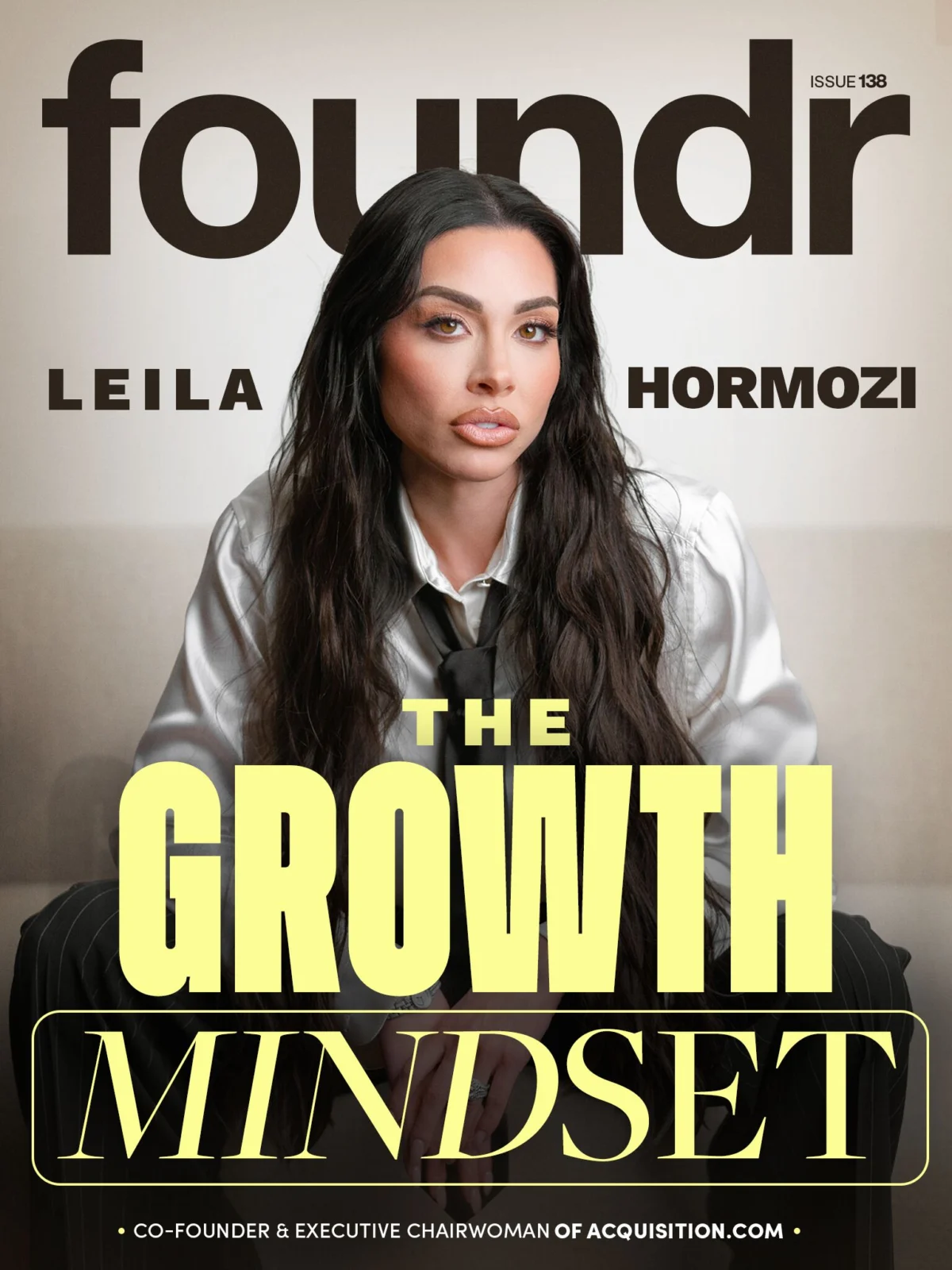
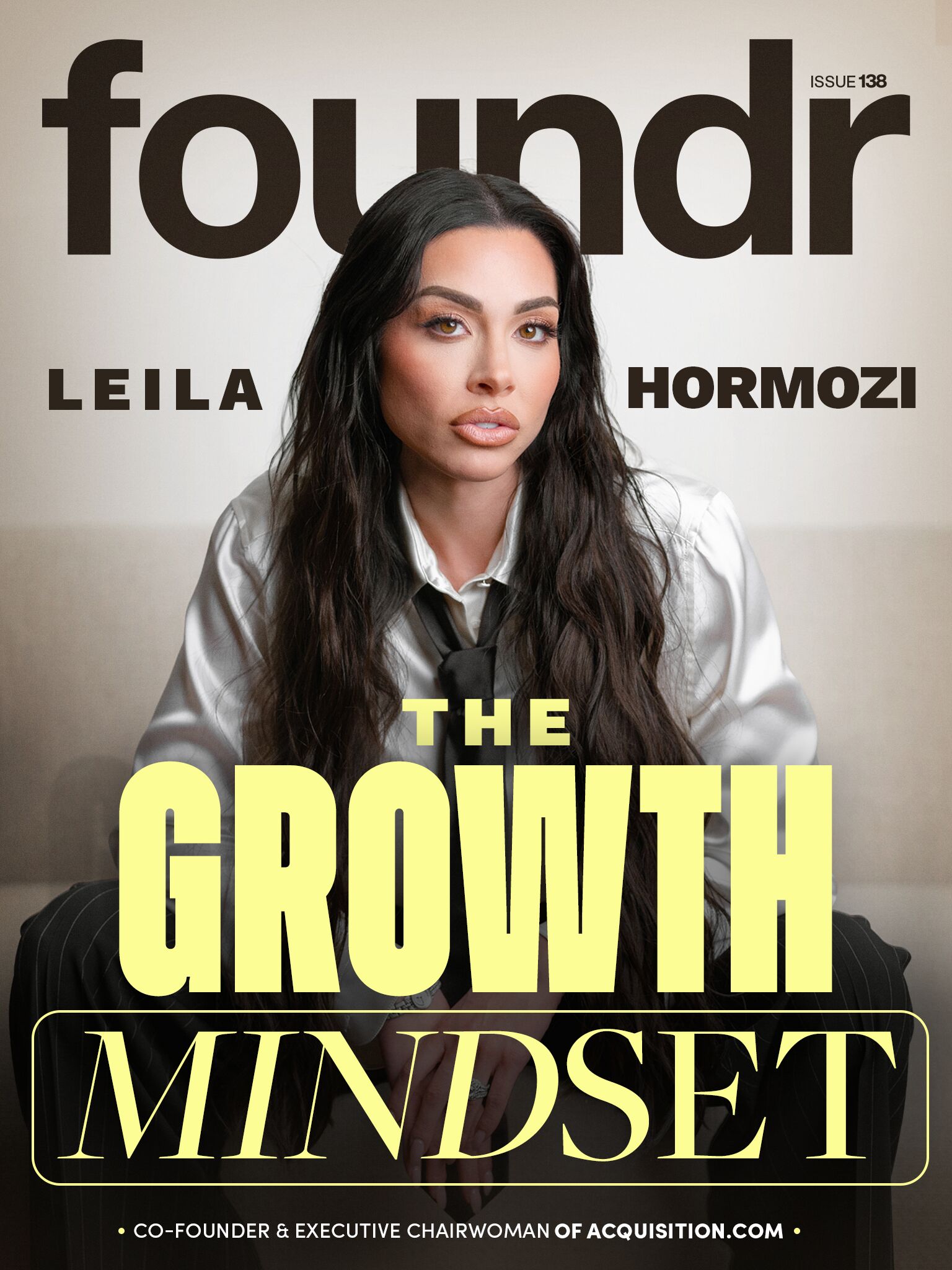
In the high-stakes world of modern entrepreneurship, few figures command as much respect for their operational rigor as Leila Hormozi. As the co-founder of Acquisition.com, she has been instrumental in building a portfolio of companies that generate over $250 million in annual revenue. Yet, to view her success through the lens of modern business accolades is to ignore the turbulent, gritty foundation upon which that empire was built.
Leila Hormozi’s story is not the typical Silicon Valley narrative of privilege or Ivy League connections. It is a raw, unflinching account of overcoming personal destruction, learning the hard lessons of leadership through failure, and mastering the art of execution. In a recent, wide-ranging interview with Foundr CEO Nathan Chan, Hormozi opened up about the transformative power of pain and the necessity of radical self-accountability.
The Catalyst: A Journey from Six Arrests to Redemption
To understand the operator Leila Hormozi is today, one must confront the person she was in her early twenties. Within an eighteen-month span, Hormozi was arrested six times. She was battling addiction and caught in a cycle of anger and victimhood, stemming from deep-seated familial conflicts.
The turning point was not a dramatic intervention or a professional epiphany, but a quiet, harrowing moment at her father’s home. Following her sixth arrest, she awoke with no memory of the previous night’s events. Her father, rather than reacting with the expected rage, sat her down and delivered a chillingly calm assessment: he believed she would kill herself if she continued on her current trajectory.
"It was the first time I realized that my actions had real consequences," Hormozi reflects. "I wasn’t a kid anymore, and this was my fault."
That moment of clarity triggered a complete systemic overhaul of her life. She stopped using substances, cleared her environment of toxicity, and submerged herself in the works of personal development icons like Tony Robbins and Jim Rohn. When asked if this change was the result of disciplined habit-forming, Hormozi offers a stark correction: "It wasn’t discipline. It was complete pain."

She posits that humans rarely change due to inspiration alone; they change when the pain of remaining stagnant finally outweighs the pain of the transformation required to move forward.
The Laboratory of Survival: Becoming a Personal Trainer
Following her decision to pivot, Hormozi moved across the country and began her professional life as a personal trainer with only $5,000 in her bank account. This period was not merely a career start; it was a boot camp for business.
Living on a tight budget—with rent consuming a significant portion of her savings—Hormozi was forced to master the fundamentals of survival: sales, lead generation, and client retention. She walked to every gym in her vicinity, relentlessly building her roster from zero. This "survival-level" financial management became the bedrock of her future operational philosophy.
"I am such a fanatic about leadership, starting with self-leadership, because you cannot lead others unless you can lead yourself," she says. This phase taught her that a business is not just a commercial entity; it is a vehicle for personal growth and a mechanism to improve the lives of others.
The Partnership: Scaling Gym Launch and Facing Reality
Her professional trajectory shifted significantly when she met her partner, Alex Hormozi, on the dating app Bumble. On their first date, Alex pitched her on his vision for Gym Launch. She saw the opportunity, calculated the risks, and decided that even in the event of a total failure, she would simply be back where she started—a position she was already comfortable navigating.
The early days of Gym Launch were defined by "one disaster after another." From dealing with a fraudulent business partner who drained their operating capital to having their funds frozen by merchant processors on Christmas Eve, the duo operated in a state of constant, high-pressure adaptation.
"I had burner phones with different accounts on them because that worked at the time," she recalls. "We scrounged everything possible."
Despite these hurdles, they scaled Gym Launch from zero to $50 million in just twenty months. However, this explosive growth brought its own set of internal challenges. Hormozi admits that during this period, she made the critical mistake of allowing inexperienced managers to dictate hiring projections. They hired 35 people when only five were needed. The resulting layoffs were handled poorly, leading to a public relations crisis on Glassdoor, where their rating plummeted from a 4.9 to a 2.2.
The Philosophy of Leadership: Radical Honesty
The Glassdoor incident became a pivotal lesson for Hormozi regarding the difference between being "liked" and being an effective leader. She realized that her desire to be perceived as empathetic had manifested as a failure to provide the honest, critical feedback her team needed to succeed.
"Whether I’m yelling at my team, or I’m being so nice I don’t tell them the truth, the same result occurs," she explains. "That person doesn’t know what they need to do better."
Influenced by the coaching philosophy of John Wooden, she shifted her approach. She realized that her role as a leader was not to coddle her team, but to act as a coach who identifies performance gaps and provides the roadmap to bridge them. She now emphasizes that being "nice" by withholding the truth is, in effect, a form of deception—a way for the leader to spare themselves the discomfort of a difficult conversation.
Implications: The Mechanics of Outsized Growth
When asked about the commonalities across her ventures, from Gym Launch to her SaaS initiatives, Hormozi identifies a universal disconnect in how businesses approach growth.
"Most businesses don’t fail because of a bad strategy," she asserts. "They fail because they have poor execution, and they have nobody to tell them what good execution looks like."
According to Hormozi, companies must balance two sides of the ledger:
- The Offer: Understanding the market, the money model, and what the customer truly wants.
- The Capacity: Building the financial, personnel, systems, and "thinking" capacity required to deliver.
Most founders obsess over the first while completely underestimating the second. Hormozi stresses that for a business to scale, the founder must be the "heartbeat" of the organization, as every action they take is amplified through the lens of their team.
Attracting Talent in a Competitive Market
For smaller businesses, attracting high-caliber talent without the luxury of massive corporate compensation packages requires a different value proposition. For Hormozi, that proposition is growth.
She intentionally builds a culture where change is viewed as a challenge rather than a threat. She has invested heavily in a "people team," maintaining a ratio of human resources staff to employees that would be considered excessive by many industry standards. She argues that the employee experience should be held in the same high regard as the customer experience.
"I just started these companies after I graduated from community college," she notes. "But they [high-level talent] come because of the offer we present: we are a place for people to grow, and we leave everyone better than they came in."

Conclusion: The Rite of Passage
Leila Hormozi’s journey serves as a potent reminder that the trajectory of a successful entrepreneur is rarely a straight line. It is a sequence of failures, near-catastrophes, and hard-won wisdom. When asked what she wants people to take away from her story, her answer is definitive:
"Do you think we would have had the massive success without the massive failures? No. The same muscle that allows you to succeed at that level and take those risks also means you’re gonna fall on your face. It’s a rite of passage."
Ultimately, her story isn’t just about the $250 million. It is about the transition from a person who felt like a victim of circumstance to an operator who takes total responsibility for her environment, her team, and her legacy. For those looking to follow in her footsteps, the takeaway is clear: stop waiting for the perfect conditions and start building the capacity to execute, regardless of how painful the process may be.


 Nila Kartika Wati
 Asep Darmawan
 Ammar Sabilarrohman
 Reynand Wu
 Iffa Jayyana
 Azzam Bilal Chamdy
 Sagoh
Sagoh
 Suro Senen