
 Layla Zulfa
For decades, the Fairmount Line in Boston served as a stark, mechanical metaphor for systemic inequity. While commuter trains whisked affluent suburbanites into downtown Boston, the diesel engines chugged through the heart of Dorchester—a vibrant, diverse neighborhood—without stopping, leaving local residents to rely on crowded, slow-moving bus routes.
For Marvin Martin, a longtime resident and former head of the transit advocacy organization Action For Equity, the disparity was personal. Watching the trains pass by his neighborhood, Martin realized that the tracks weren’t just transporting people; they were navigating the socioeconomic divides of the city. His decision to challenge the Massachusetts Bay Transportation Authority (MBTA) in 1995 ignited a movement that would span nearly 30 years, transforming the Fairmount Line from a symbol of exclusion into a front-line laboratory for the future of green transit.
Today, that movement has reached a historic inflection point. The MBTA has finalized plans to electrify the Fairmount Line, committing $765 million to a fleet of battery-powered trainsets. As the city prepares for this technological leap, the story of the Fairmount Line offers a masterclass in grassroots advocacy, the evolution of rail technology, and the urgent push to clean up urban air quality.
A Chronology of Advocacy: The Long Road to Inclusion
The transformation of the Fairmount Line was never a singular project; it was the result of a persistent, multi-decade campaign by community members who refused to let their neighborhood be bypassed.
- 1995: The Spark of Activism. Martin and his coalition began applying public pressure on the MBTA, arguing that the line provided a ready-made transit corridor for Dorchester and Mattapan residents.
- 2012–2013: The First Breakthrough. After 17 years of advocacy, the MBTA finally added three new stops in Dorchester, effectively integrating the neighborhood into the commuter rail map.
- 2019: Expanding Access. The momentum continued as the T opened a fourth stop in Mattapan, further solidifying the line’s role as a vital link for local commuters.
- 2024–2025: The Green Pivot. With the physical infrastructure in place, the focus shifted from access to environmental health. Martin and other advocates intensified calls to end the reliance on diesel engines, which were pumping toxic particulates into the lungs of local residents.
- 2030: The Target Horizon. The MBTA is now slated to launch its fleet of battery-powered trains, signaling the final phase of Martin’s long-term vision.
The Technological Leap: Battery-Powered Rail
The cornerstone of the Fairmount Line’s future is a $765 million, 15-year lease for seven battery-powered trainsets built by the Swiss manufacturer Stadler.
Battery-powered rail is a strategic middle-ground technology. Historically, rail electrification required the installation of expensive, complex overhead catenary wires—a massive infrastructure burden that often stalled electrification projects across the United States. By opting for battery-electric multiple units (BEMUs), the MBTA can bypass the need for extensive grid upgrades while still eliminating the tailpipe emissions associated with traditional diesel locomotives.
"We want a train that would not be spewing a bunch of toxic particulates into the air," Martin noted. The project promises to increase service frequency from every 30 minutes to every 20, a significant quality-of-life improvement for daily commuters. According to the MBTA, the transition will save 17,700 tons of carbon dioxide emissions annually, providing immediate relief to a neighborhood that has suffered from decades of industrial air pollution.
The Global Context: Is the Technology Proven?
While the promise of clean air is undeniable, the implementation of battery rail on a high-frequency urban line is not without its skeptics. Chris Friend, interim executive director of the advocacy group TransitMatters, supports the transition but urges caution.
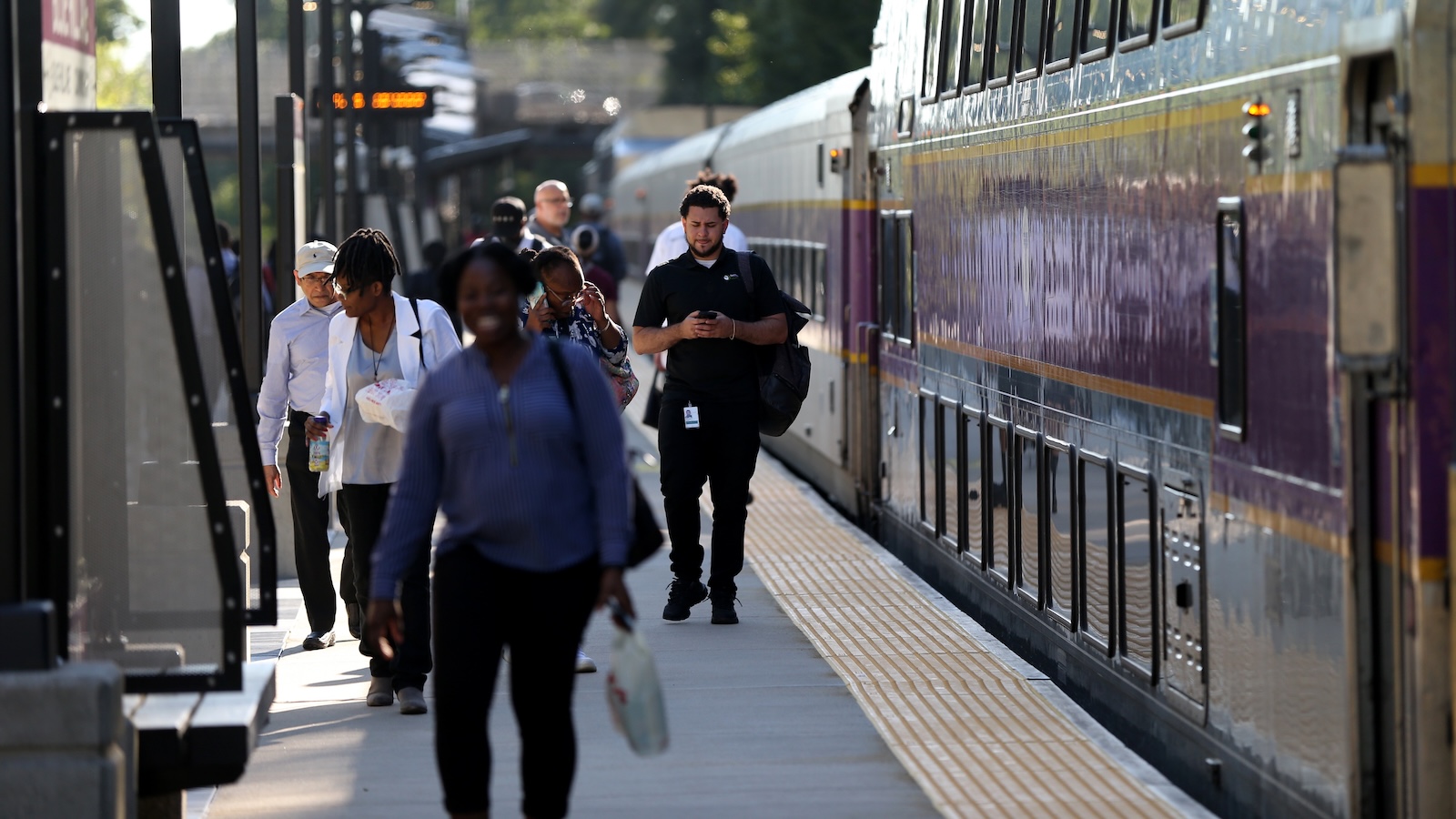
"Is this the thing, or are we going to end up in another quagmire of an unproven technology?" Friend asked. He notes that while battery trains have seen success in other parts of the world, they have not yet been stress-tested on the heavy-ridership, high-frequency routes common to American commuter rail systems.
However, the international landscape provides some evidence for optimism. In Germany, Alstom has successfully deployed battery-powered trains on a 50-mile route serving 2 million passengers annually. Dani Simons, Alstom’s vice president of communications in the Americas, points out that the global rise in diesel fuel prices—which reached record highs exceeding $6 per gallon—is forcing transit agencies to reconsider the long-term economics of fossil-fuel-reliant systems.
"Transit agencies should be pursuing electrification in all its forms," Simons said. "Diesel-electric hybrids and overhead catenary lines all have their place, but the focus must be on mitigating fuel cost volatility and improving public health."
Lessons from the Past: Electrification as "Back to the Future"
To understand why the U.S. fell behind in rail electrification, one must look at the mid-20th century. History professor Albert Churella of Kennesaw State University notes that the late 19th century was actually an era of massive electric innovation. Boston’s Tremont Street Subway, which opened in 1897, was the first electric subway in North America and only the third in the world.
"People get infatuated with technological advancements, and they tend to believe these are cure-alls," Churella explained. "Electrification of railways was no different."
However, as the car-centric culture of the post-World War II era took hold, the incentive to invest in electric rail plummeted. Historian Nicholas Dagen Bloom, author of The Great American Transit Disaster, notes that most commuter lines were owned by freight railroads that favored the low upfront costs of diesel. Electrification, which required a massive initial investment in grid infrastructure, was viewed as a luxury that the declining rail industry could not afford.
Today, we are effectively retracing those steps—not as a technological experiment, but as a public health necessity.
Evidence of Impact: The Caltrain Success Story
If Boston needs a roadmap for what success looks like, it only needs to look at the San Francisco Bay Area. In 2024, Caltrain replaced its aging diesel fleet with electric trains on the 51-mile corridor between San Francisco and San Jose.
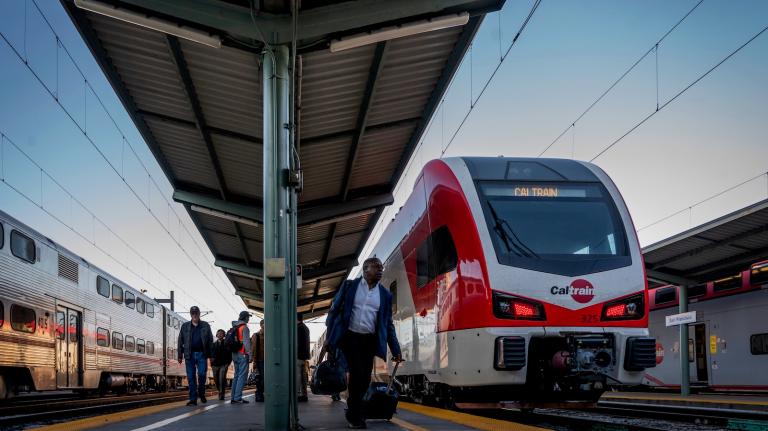
The results were transformative:
- Speed: Commute times dropped by up to 23 percent due to the superior acceleration of electric motors.
- Ridership: The system saw a 60 percent surge in usage, proving that riders respond to cleaner, quieter, and faster service.
- Air Quality: A study by Joshua Apte, an environmental engineer at UC Berkeley, found that riders’ exposure to black carbon dropped by 89 percent—a public health gain equivalent to three decades of air quality regulations.
"You might see similar air quality gains if you electrify other commuter rail systems," Apte observed. For the Fairmount Line, which runs through dense, populated corridors, the potential for such a drastic reduction in particulate matter is a significant win for environmental justice.
Implications for the Future of Transit
The MBTA’s commitment to the Fairmount Line is more than just an equipment upgrade; it is a signal to other transit agencies that the era of the diesel commuter train is drawing to a close. By diversifying its fleet to include both battery-powered and catenary-based trains, the MBTA is building a "fail-safe" model that allows it to adapt as technology matures.
For Marvin Martin, who recently retired from his leadership role at Action For Equity, the long wait has been worth it. He is acutely aware that the diesel trains will continue to run for a few more years, and that the "novelty" of the battery-electric trains will eventually wear off. But the outcome—a cleaner, faster, more reliable transit link for his community—is the realization of a life’s work.
"I’m pretty satisfied with where we ended up," Martin said, reflecting on the three decades of meetings, protests, and negotiations. "As long as we still get that train."
As Boston moves toward 2030, the Fairmount Line stands as a beacon of what can happen when community advocacy meets the imperative of environmental sustainability. It is a reminder that the most powerful engine for change isn’t a battery, a motor, or a rail car—it is the persistent, collective voice of a community that refuses to be left behind.


 Dwi Wanna
 Suro Senen
 Nana Wu
 Asro
Asro
 Jia Lissa
 Neng Nana
 Siti Muinah