
 Azzam Bilal Chamdy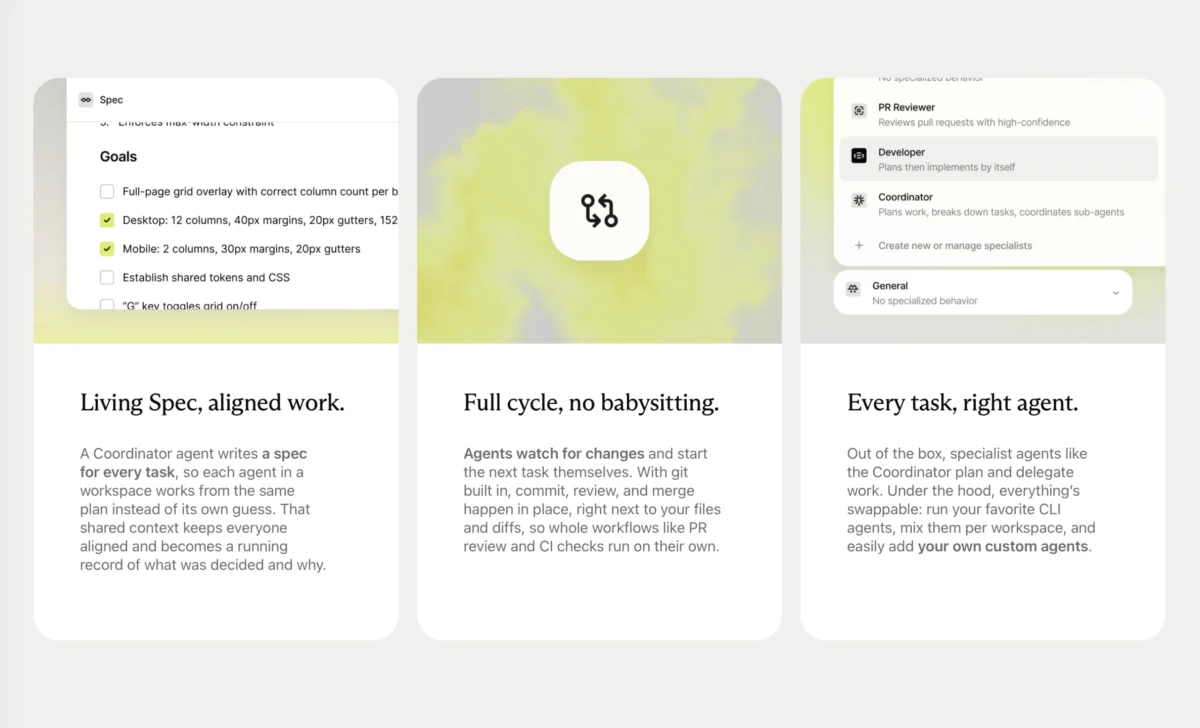
The landscape of Artificial Intelligence is undergoing a seismic shift. For the past two years, the industry has been obsessed with the "chat era"—a period defined by users typing prompts into text boxes and waiting for a large language model (LLM) to spit out a response. But as the novelty of the chatbot interface fades, a more complex, industrial-scale reality is taking hold: the era of agent orchestration.
We have moved beyond simple, single-turn interactions. Today, the most forward-leaning software developers are no longer asking AI to "write a function." They are supervising hundreds of autonomous agents across dozens of simultaneous projects. This transition from "AI as a tool" to "AI as a workforce" necessitates a radical redesign of the developer experience, a challenge that the open-source project Intent is now leading.
Chronology: The Evolution of AI Products
To understand where we are, we must look at the trajectory of the last decade.
- The Era of Hidden Models: Initially, AI existed behind the scenes—hidden APIs that powered autocomplete, recommendation engines, and background optimizations. The user felt the effect, but rarely saw the mechanism.
- The Chat Era (2022–2024): With the arrival of ChatGPT and its peers, AI moved to the foreground. The prompt became the primary interface. While revolutionary, this stage was fundamentally limited by its linear, single-threaded nature.
- The Agentic Orchestration Phase (2025–Present): We are currently witnessing the maturation of multi-agent systems. Here, AI models do not just respond; they collaborate. They break down complex objectives into sub-tasks, delegate them to specialized sub-agents, and iterate based on real-time feedback loops.
As this progression continues, the "chat" interface is increasingly proving to be an insufficient management layer for the complexity of modern software engineering. When you have hundreds of agents building, testing, and shipping code, you can no longer rely on a simple text-based conversation to track progress.
The Bottleneck: Why Developer Tools Are Failing
The primary friction point for modern engineering teams is the "supervision gap." Developers are now acting more like project managers for silicon-based teams, but they are using tools designed for individual programmers.
In a standard chat-based AI workflow, agents frequently collide. If two agents are tasked with modifying the same file or architectural dependency without an orchestration layer, the result is code rot and systemic failure. This is why the team behind Intent has completely rebuilt their platform to move away from the "chat-first" paradigm.
Scaling Through Isolation
The core philosophy behind the new Intent architecture is "isolated workspaces." By turning tasks into distinct, sandboxed environments, the system ensures that multiple agents can operate on a project without stepping on each other’s toes. Each workspace operates on a "living specification"—a dynamic blueprint that evolves as the code changes.
Instead of a human manually reviewing every code commit, a coordinator agent manages the flow, delegating tasks to specialized sub-agents (e.g., a "Testing Agent" or an "Architecture Agent"). A higher-level "Overseer" agent then monitors these workspaces, ensuring that progress across multiple devices remains synchronized.
Supporting Data: The Shift in Observability
Data from the current beta usage of orchestrator tools suggests a clear trend: developers who shift to managed agent systems see a significant increase in the complexity of projects they can handle.
| Metric | Traditional Chat AI | Agent Orchestration (Intent) |
|---|---|---|
| Active Projects | 1-2 | 10+ |
| Context Management | Manual (Copy/Paste) | Automated/Isolated |
| Error Resolution | Manual Intervention | Agentic Self-Correction |
| Human Role | Executor | Supervisor/Architect |
The observability provided by these systems is not just a "nice to have"; it is a requirement. When you have hundreds of agents performing tasks, the system must provide a visual or logical audit trail. The "feature talk" surrounding these tools—the ability to see exactly what an agent is doing, why it made a change, and how it aligns with the project’s living spec—is the difference between a system that scales and one that collapses under its own technical debt.
Official Perspectives: The Trust-Autonomy Continuum
The developers leading this transition express a nuanced view on the role of the human in the loop. While early adopters were hesitant to let AI run unsupervised, there is a growing trend of "trust-based autonomy."
In the initial stages of agentic integration, human developers insist on reviewing every line of code. However, as the systems prove their reliability in defined, sandboxed environments, the human role naturally shifts toward "management by exception." Developers now spend their time defining the "what" and the "why," while the system handles the "how."
However, this transition is not about removing the human; it is about providing the human with better control. The goal is to build systems that allow developers to dive in at any moment, perform a course correction, and then step back out as the agents resume their automated flow.
Implications: The Next Layer of Abstraction
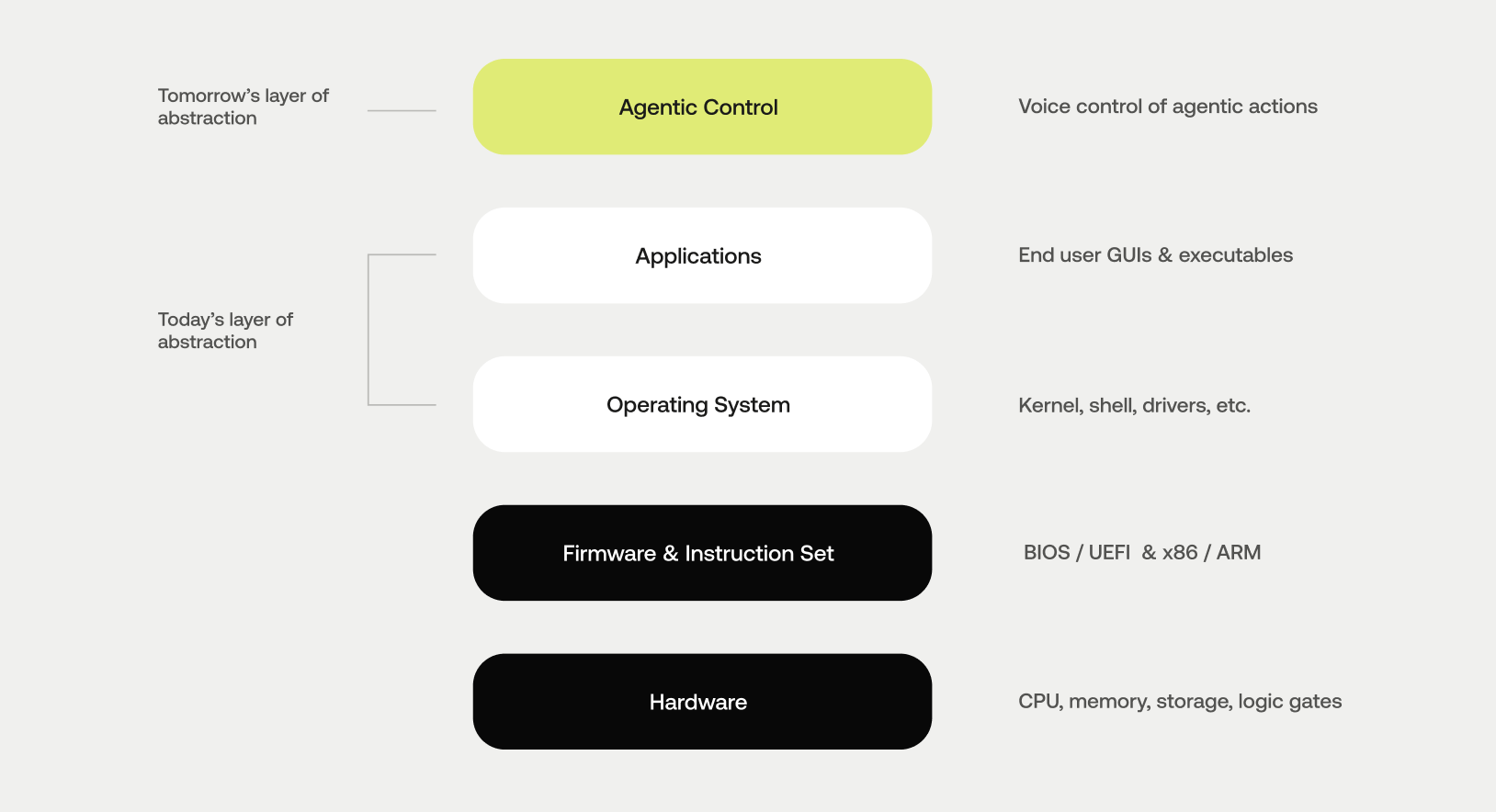
If we look at the history of computing, we see a recurring pattern of abstraction. Early computer users had to understand the physical hardware and the machine code to run basic programs. With the advent of operating systems and graphical user interfaces, that complexity was abstracted away. We no longer care how a word processor communicates with the CPU’s registers; we simply care that the document is saved.
We are on the verge of a similar shift in software development and general knowledge work.
The End of "Software-Centric" Work
Today, we spend our lives in specific applications: IDEs for code, browsers for research, spreadsheets for data. We are slaves to the user interfaces of the software we use. But as agentic systems mature, we will move toward a model where the application itself is secondary.
A new layer of abstraction will soon sit between the user and their software. In this vision, the user will express an intent, and the agentic system will navigate the necessary applications on the user’s behalf to complete the task. You will no longer need to know how to use a specific project management tool or a specific coding environment. You will only need to define the desired outcome.
A Return to Human-Centric Computing
This brings us back to the visionary work of the late 20th century. Figures like Alan Kay and the concepts behind Apple’s "Knowledge Navigator" were never about making computers more powerful; they were about making them more human-centric. They imagined a future where the computer acted as an agent, anticipating needs and facilitating complex tasks without the user having to "operate" the machine in the traditional sense.
As we add this next layer of abstraction, we are finally approaching that long-promised future. The current push toward agent orchestration—as seen in projects like Intent—is the bridge between the clunky, prompt-driven AI of today and a future where software is truly invisible.
Conclusion
The transition from chat-based AI to orchestrated agent systems is not merely a change in UI; it is a fundamental shift in how we build and interact with the digital world. By delegating complex, multi-step processes to specialized agents, developers are reclaiming their time and scaling their capabilities.
As trust in these autonomous systems grows, we will inevitably see the "application" as we know it fade into the background. We are moving toward a reality where the software we use is as unobtrusive as the operating system that runs it. In this new era, the most successful developers—and eventually, all computer users—will be those who master the art of orchestrating agents, rather than manually operating software. The evolution is no longer about what you can type; it is about what you can envision.

 Sagoh
Sagoh
 Asep Darmawan
 Raul Delapena Setiawan
 Reynand Wu



 Ali Ikhwan