
 Sagoh
Sagoh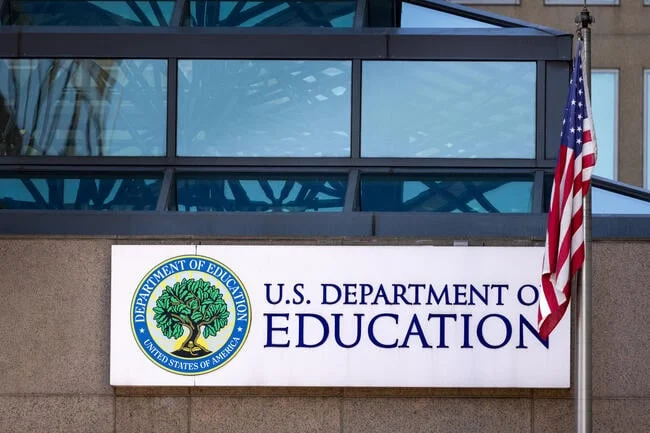
Overview: A Campus at the Center of a National Debate
The U.S. Department of Education (ED) has significantly expanded its federal investigation into Swarthmore College, a prestigious liberal arts institution, citing fresh allegations of antisemitic activity linked to an off-campus student group. The federal inquiry, which centers on the college’s compliance with Title VI of the Civil Rights Act, was prompted by reports that a formerly recognized student organization, Swarthmore Students for Justice in Palestine (SJP), circulated inflammatory content on social media.
The content in question involves an online video depicting the burning of an effigy of an Israeli soldier. Federal officials contend that the video, which surfaced around the third anniversary of the October 7, 2023, Hamas-led attacks on Israel, does not merely constitute political expression but serves as a provocation that fosters an environment of intimidation and violence against Jewish students. This development marks a significant escalation in the Trump administration’s broader efforts to monitor and enforce civil rights protections on college campuses across the United States.
Chronology of a Campus Crisis
The current federal intervention is the latest chapter in a long-standing period of tension at the Pennsylvania college. The trajectory of this conflict can be traced through several key events:
- 2024: The Initial Investigations: Following a wave of reports concerning national origin and religious discrimination, the Department of Education opened multiple civil rights investigations into Swarthmore in 2024. These cases, initiated during the Biden administration, sought to determine if the institution had failed to protect Jewish students from a hostile environment.
- September 2025: The Encampment and Revocation: Tensions reached a boiling point during a multiday, unauthorized encampment on campus grounds. The demonstration, led by Swarthmore Students for Justice in Palestine (SJP), resulted in nine arrests and significant disruption to campus life. In the aftermath, the college administration took the rare step of permanently revoking the group’s official affiliation with the university.
- October 2026: The Anniversary and the Video: On the third anniversary of the October 7 attacks, the now-unofficial SJP group allegedly reposted the controversial video of the effigy burning. This act drew immediate condemnation from both federal regulators and members of the local community.
- Early 2027: Federal Expansion: The Department of Education officially notified Swarthmore that it would be expanding its existing investigations to include the recent social media activity, signaling that the federal government does not view the group’s "unaffiliated" status as a shield for the college’s institutional responsibility.
The Regulatory Framework: Title VI and Federal Expectations
At the heart of this investigation is the federal mandate under Title VI, which prohibits discrimination on the basis of race, color, or national origin in programs and activities receiving federal financial assistance. The Department of Education’s Office for Civil Rights (OCR) is tasked with ensuring that institutions provide a learning environment free from harassment.
Assistant Secretary for Civil Rights Kimberly Richey, in a strongly worded statement, emphasized that the government’s patience for campus instability has evaporated. "If Swarthmore has in fact turned a blind eye to such provocation—using the most horrific acts of violence against Jews since the Holocaust as a propaganda tool—someone is asleep at the wheel," Richey stated. The language marks a pivot toward a more aggressive enforcement posture under the current administration, which has prioritized the eradication of radicalism on federally funded campuses.
Institutional Defense: Swarthmore’s Stance on Autonomy
Swarthmore College President Valerie Smith has consistently pushed back against the Department of Education’s characterization of the situation. In a formal statement, Smith argued that the college’s responsibility is bounded by the limits of its institutional authority.
"We believe the complaints against the College that led to the Office for Civil Rights’ expanded investigation have no merit," Smith wrote. Her defense rests on the premise that the organization responsible for the post, SJP, is no longer a recognized entity. Since the revocation of its charter in September 2025, the group is prohibited from utilizing college funding, hosting official events on campus, or acting on behalf of the institution.
Smith further highlighted the difficulty of monitoring the digital footprint of a group that may no longer even be composed of currently enrolled students. "It is unclear if those running the group now are Swarthmore students," she noted. While she maintains that the college holds no control over the group’s independent social media activity, she has been careful to state that the content itself is "hateful" and entirely contrary to the values of the Swarthmore community.

The Delicate Balance of Free Speech and Safety
The situation at Swarthmore serves as a microcosm for a nationwide debate: Where does the right to free expression end and the right to a harassment-free education begin?
President Smith attempted to navigate this tension by reaffirming the college’s dual commitment. "Swarthmore embraces individuals’ rights to express their views, even views others might find objectionable, if not offensive," she said. However, she qualified this by asserting that such commitments cannot be allowed to supersede the "right to learn, work, and live in a campus community free from intimidation, harassment, and discrimination."
Critics of the college administration, however, argue that "revoking affiliation" is a performative gesture that fails to address the underlying climate of fear reported by many Jewish students. They point to the fact that the imagery used—the burning of an effigy—is not merely political speech but an act of symbolic violence that can directly lead to physical threats, thereby creating a hostile environment that the college is legally required to mitigate.
Broader Implications for Higher Education
The investigation into Swarthmore is not an isolated incident. It is part of a broader federal strategy that began during the transition between administrations. In the early months of the second Trump term, the Department of Education issued letters to over 60 institutions of higher learning, warning them of the potential loss of federal funding should they fail to demonstrate a proactive approach to protecting Jewish students from rising antisemitism.
The Financial Risk
For institutions like Swarthmore, the stakes are existential. Compliance with Title VI is a condition of eligibility for federal student aid, research grants, and other forms of institutional funding. A finding of non-compliance can trigger a "resolution agreement," which often mandates federal monitoring, policy overhauls, and potentially hefty fines.
The Precedent of "Unaffiliated" Groups
The Swarthmore case may set a legal precedent for how universities handle "rogue" student groups. If the Department of Education determines that a university is liable for the conduct of a group it has disaffiliated, it will essentially force colleges to take a much more aggressive stance in policing off-campus, digital, and private student behavior. This could lead to a chilling effect on student activism, as universities may feel compelled to monitor and suppress any expression that could potentially trigger a federal inquiry.
Conclusion: A Turning Point
The situation at Swarthmore College remains fluid. As the Department of Education continues its inquiry, the college must balance the pressure of federal oversight with its traditional mission of academic freedom. For the students and faculty, the investigation serves as a stark reminder that the modern campus is no longer a vacuum removed from national politics. Instead, it has become a primary battlefield for the interpretation of civil rights, the limits of protest, and the definition of a safe, inclusive learning environment.
Whether the federal government ultimately deems Swarthmore’s actions sufficient will likely hinge on whether they can prove the college was "willfully negligent" in addressing the climate created by the SJP’s digital presence. For now, the administration, the student body, and the broader academic community await the findings of a process that may fundamentally alter the relationship between American universities and the federal government.


 Nila Kartika Wati
 Nana Wu
 Lina Irawan
 Nana
Nana
 Rifan Muazin
 Ali Ikhwan
 Evan Lee Salim
