
 Ammar Sabilarrohman
In a chilling intersection of high-stakes artificial intelligence development and traditional industrial espionage, the U.S. Department of Justice (DOJ) has formally charged a Saudi national and former OpenAI engineer with planting clandestine recording devices within the company’s San Francisco headquarters. The arrest of 35-year-old Abdulrahman Alfozan, who had been employed at the AI giant since July 2025, has sent shockwaves through Silicon Valley, raising urgent questions about internal security protocols at the firms currently shaping the future of global technology.
According to federal prosecutors, Alfozan stands accused of illegally intercepting oral communications, a felony charge that carries a maximum sentence of five years in federal prison and a $250,000 fine. The case serves as a stark reminder that even the most advanced organizations, which pride themselves on cutting-edge defensive AI, remain vulnerable to the most "low-tech" forms of human intelligence gathering.
The Discovery: A Glitch in the Routine
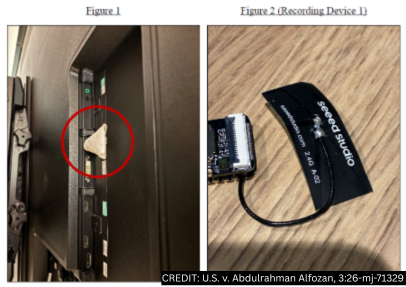
The intrigue began on September 30, 2026, when OpenAI’s internal security team—acting on internal monitoring—conducted a sweep of an executive conference room. Tucked discreetly behind a wall-mounted television, security personnel discovered a USB-powered audio recording device.
The device, which investigators noted had been crudely camouflaged using toilet paper to blend into the shadows behind the hardware, was connected to a USB port. Further forensic analysis revealed that the device contained encrypted data, suggesting a sophisticated attempt to harvest proprietary discussions regarding OpenAI’s roadmap, government engagements, and sensitive technical research.
The conference room in question was not a casual meeting space; it was a high-security hub used by executives to discuss trade secrets, business relationships, and the future of the company’s foundational models. The audacity of placing a device in such a sensitive area suggests an intruder who was either deeply familiar with the building’s layout or possessed a high degree of confidence in their ability to evade detection.
A Chronology of the Breach
The federal complaint filed by the DOJ provides a meticulous timeline of the operation, tracing Alfozan’s steps from initial research to his eventual apprehension.
- September 27–28, 2026: Digital forensics linked a chatbot account associated with Alfozan’s spouse to a series of highly specific inquiries. The account asked questions regarding the creation of "continuous audio recorders," the modification of Wi-Fi connectivity to enhance stealth, and methods for encrypting SD cards. Crucially, the account also queried technical specifications related to the specific device found in the conference room, including its unique MAC address and custom header.
- September 28, 2026: Investigators believe this is the date the first recording device was installed behind the television.
- September 30, 2026: OpenAI security personnel perform a physical sweep and recover the first device.
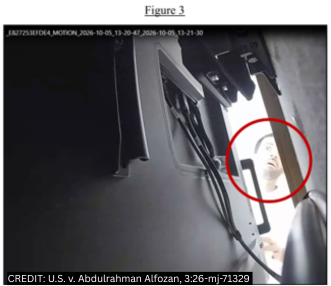
- October 5, 2026: Surveillance footage allegedly captures Alfozan returning to the scene of the crime, visibly looking behind the television—presumably checking to see if the device was still active or attempting to retrieve it. On this same day, security teams discovered a second, similar device inside a bag that Alfozan had left unattended in a separate area of the building.
- October 9, 2026: Abdulrahman Alfozan is arrested by federal authorities.
- October 13, 2026: The Department of Justice officially announces the charges.
Supporting Data: The Digital Trail
The evidence against Alfozan is a composite of physical surveillance, digital breadcrumbs, and internal logs. Beyond the hardware, investigators pointed to Alfozan’s suspicious use of company productivity tools. Logs indicated that the engineer had been searching for internal documentation regarding office schematics, executive meeting schedules, and building security protocols—information clearly outside the scope of his assigned duties.
Perhaps the most ironic turn in this investigation was the role played by the technology itself. In a statement released on the social media platform X, OpenAI revealed that it leveraged its own proprietary AI models to assist in the investigation. By analyzing the data patterns of the device and comparing them against the internal behavioral logs of employees, the company was able to pinpoint the exact window of installation and identify the individual responsible.
"We used our models to understand the device and where it had come from," the company stated. "This allowed us to narrow down the pool of suspects and identify the specific employee responsible for the breach within days."
Official Responses: OpenAI and the DOJ
The DOJ’s press release was blunt in its assessment of the threat. The interception of oral communications is a violation of federal law, and the involvement of a corporate insider—someone with legitimate access to the building—elevates the incident from a simple trespassing matter to a significant national security and industrial concern.
OpenAI, for its part, has moved quickly to distance itself from the incident and reassure stakeholders. In their statement, the company confirmed that Alfozan’s employment was terminated immediately upon the discovery of his activities.
"At this time, we have no indications of this individual inappropriately accessing or exfiltrating model weights, source code, or customer data," OpenAI emphasized. This distinction is vital for a company that holds the keys to the world’s most powerful generative AI. While the loss of audio from a board meeting is catastrophic for confidentiality, the theft of "model weights"—the mathematical heart of an AI—would represent an existential threat to the company’s market dominance.
Implications: The Human Factor in AI Security
The Alfozan case highlights a growing vulnerability in the tech industry: the "insider threat." As AI companies race to build systems that can outperform human cognition, they are attracting a global talent pool. While this leads to innovation, it also creates complex vetting challenges, particularly when dealing with personnel who may have allegiances to foreign interests or who may be susceptible to coercion.
The "Low-Tech" Paradox
The fact that a sophisticated AI engineer chose a simple USB recorder rather than a digital hack is instructive. Digital security perimeters at firms like OpenAI are hardened against world-class cyberattacks. A USB device, however, exploits the physical reality of the workplace. It is a reminder that in the world of espionage, the most effective tools are often those that bypass firewalls entirely.
Increased Scrutiny on "Big Tech"
This incident will undoubtedly lead to a tightening of physical security protocols at OpenAI and other Silicon Valley giants. Expect to see increased use of signal jammers in executive suites, more stringent visitor policies, and a shift toward "zero-trust" physical environments where even employees have restricted access to non-essential areas.
The Role of AI in Counter-Espionage
OpenAI’s decision to use its own models to catch a spy is a fascinating development in corporate security. It suggests a future where internal security is managed by AI agents that monitor for behavioral anomalies—such as an engineer spending excessive time near an executive suite they have no business visiting, or searching for information outside their clearance level. While this promises safer workplaces, it also raises privacy concerns among the workforce regarding the extent of internal surveillance.
Conclusion: A Wake-Up Call
The arrest of Abdulrahman Alfozan is a cautionary tale for the era of artificial intelligence. It illustrates that as we develop more powerful technologies, the stakes for protecting them grow exponentially. The incident will likely serve as a catalyst for a broader industry conversation about the balance between an open, collaborative research culture and the necessity of safeguarding the intellectual property that is currently redefining the global economy.
As the case moves through the court system, observers will be watching to see what more is revealed about Alfozan’s motivations. Was this a rogue act, or the tip of a larger, coordinated effort to infiltrate the heart of the AI revolution? Regardless of the answer, the message is clear: in the high-stakes world of AI, the human element remains the most unpredictable variable in the security equation.


 Ali Ikhwan
 Muslim

 Raul Delapena Setiawan
 Nana
Nana

 Asep Darmawan
 Neng Nana