
 Lina Hope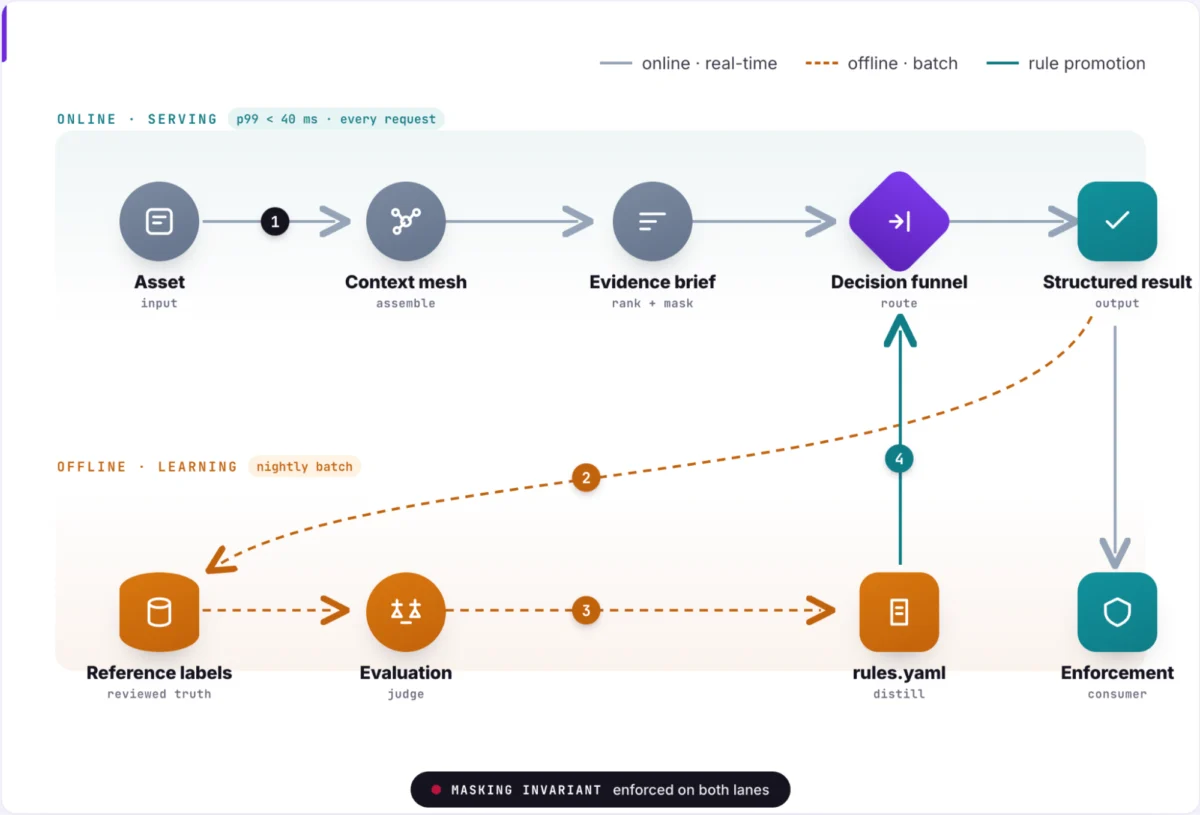
As Artificial Intelligence transitions from an experimental novelty to the backbone of global digital products, the challenge of data governance has evolved from a static compliance requirement into a high-stakes engineering hurdle. At Meta, the rapid proliferation of generative AI, multimodal inputs, and complex data pipelines has necessitated a radical shift in how privacy controls are architected.
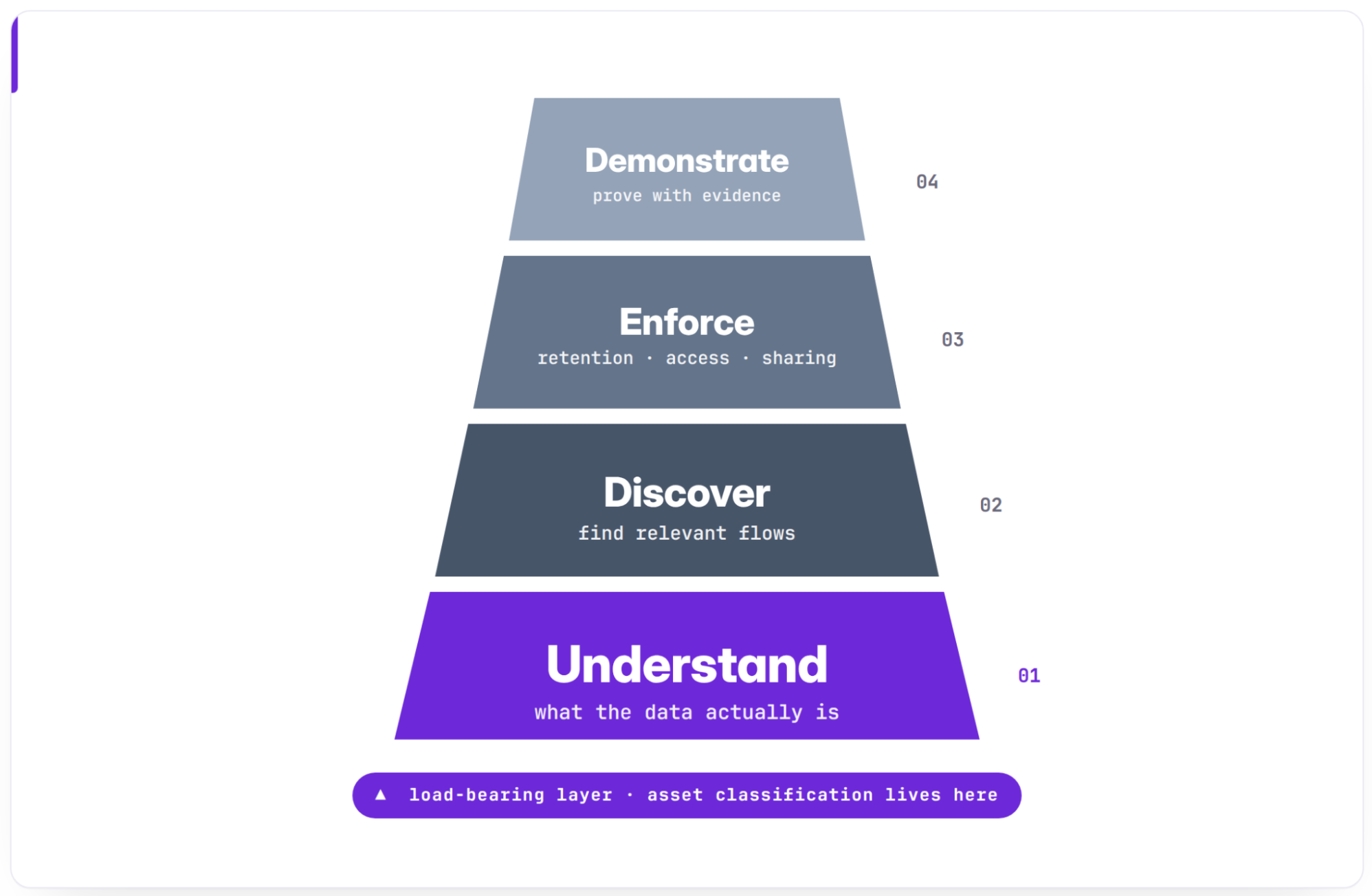
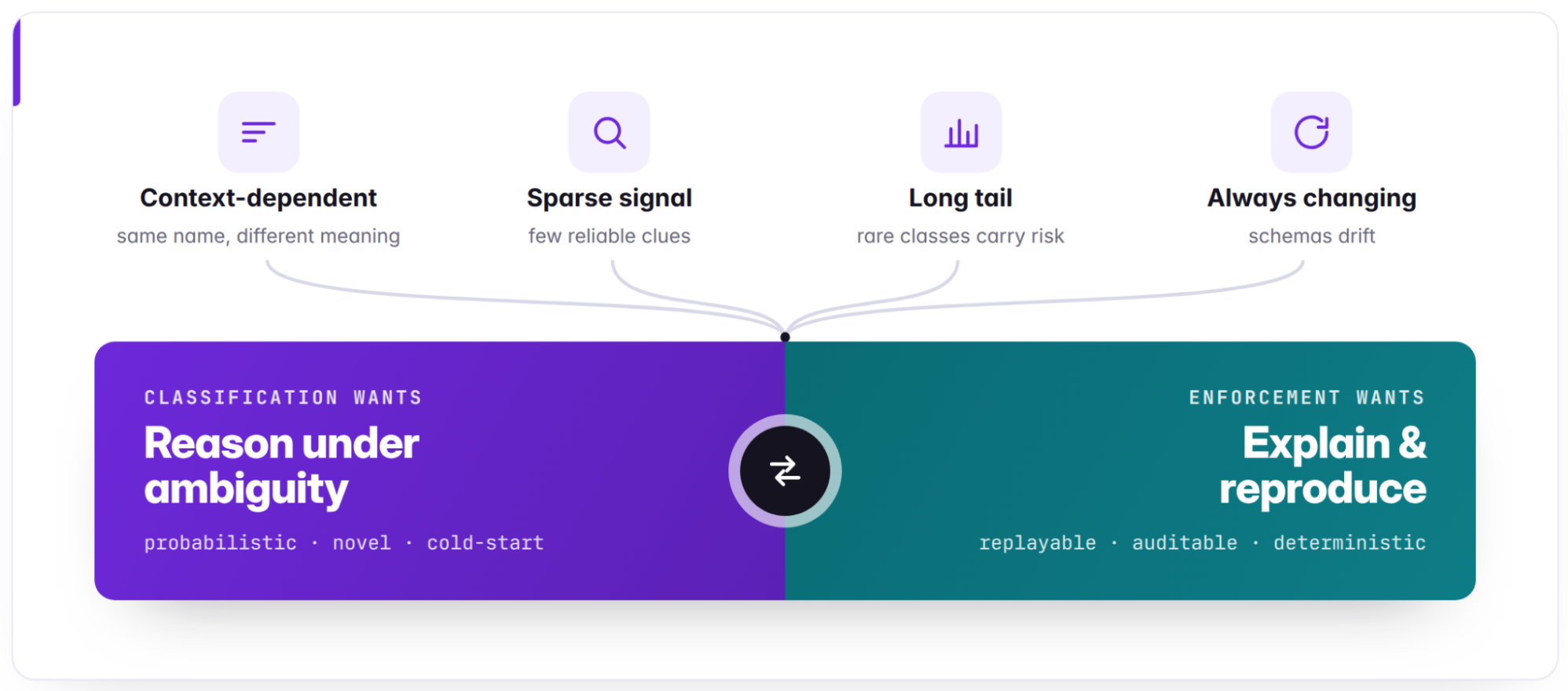
The core of this challenge lies in a fundamental technical paradox: while AI systems thrive on probabilistic, ambiguous signals, privacy enforcement requires the cold, hard certainty of deterministic rules. To bridge this gap, Meta’s Privacy-Aware Infrastructure (PAI) team has pioneered a hybrid architecture that treats "Asset Classification"—the act of identifying what data actually is—as the load-bearing foundation for all downstream privacy protections.

The Problem: The "Age" Ambiguity
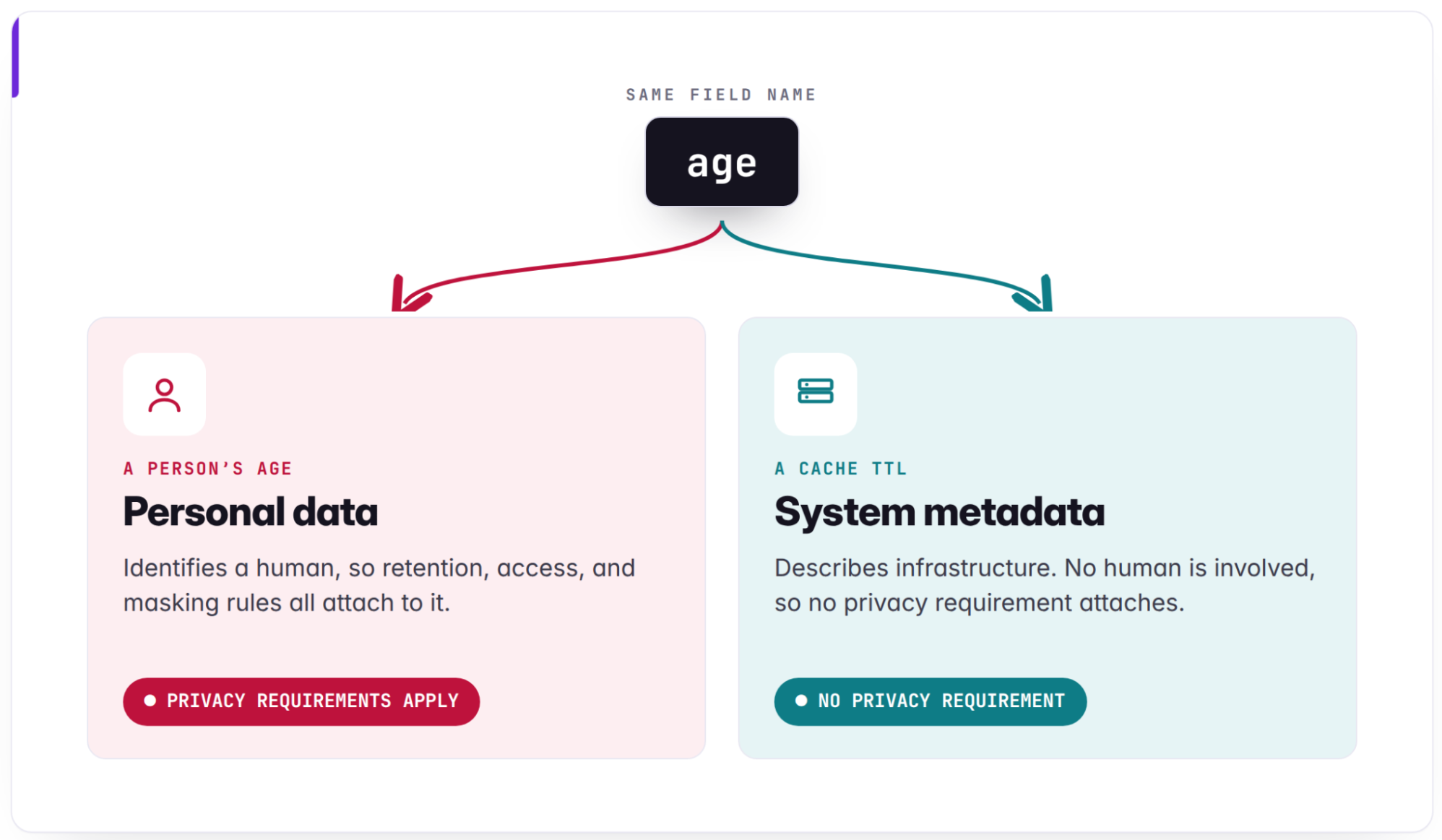
At the heart of the issue is the inherent noise in modern data environments. A simple field label, such as "age," can be profoundly deceptive. In one database, it may represent the birth date of a user, necessitating stringent PII (Personally Identifiable Information) protections. In another, it may be a technical cache time-to-live (TTL) value in an infrastructure pipeline, holding zero privacy relevance.
Traditional manual review processes, while valuable for accountability, are fundamentally unable to keep pace with the velocity of AI-native development. When data is transformed into embeddings, derived features, and multimodal inputs, the "meaning" of the data becomes decoupled from its original structure. Consequently, the industry is seeing a move toward Privacy-Aware Infrastructure (PAI) systems that can interpret these signals at scale without sacrificing the auditability required by law and ethical standards.
Chronology: Building the Hybrid Funnel
Meta’s journey to its current PAI architecture followed a methodical path of iteration, moving away from "LLMs everywhere" toward a more disciplined, rule-based distillation.
- The Recognition Phase: Engineers identified that relying solely on Large Language Models (LLMs) for production enforcement created a "black box" scenario, where decisions were difficult to explain, replay, or verify.
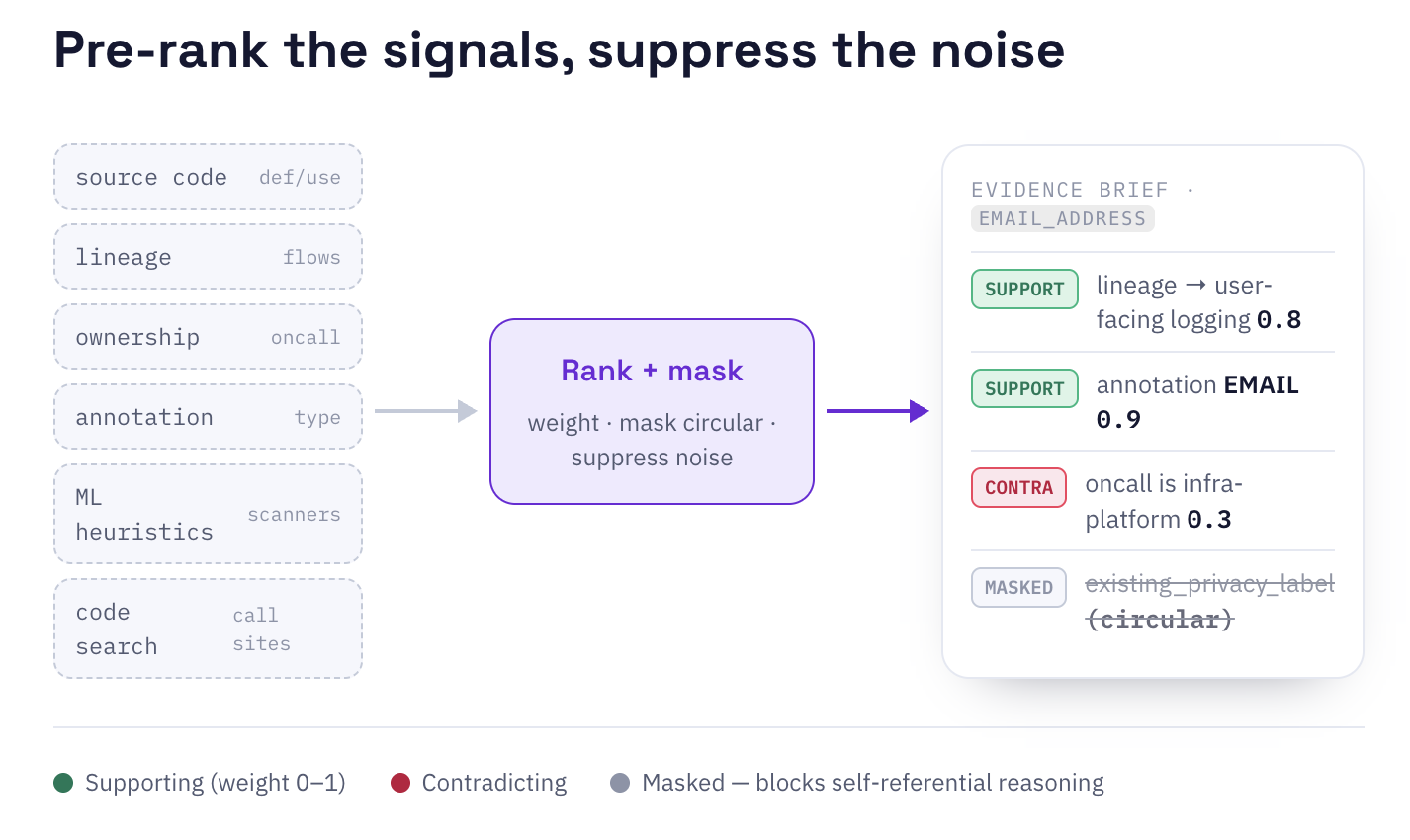
- The Context Mesh Creation: Teams realized that classification failures were rarely prompt-related; they were evidence-related. The system was updated to aggregate disparate signals—lineage, code references, ownership, and semantic annotations—into an "evidence brief" before any model inference occurred.
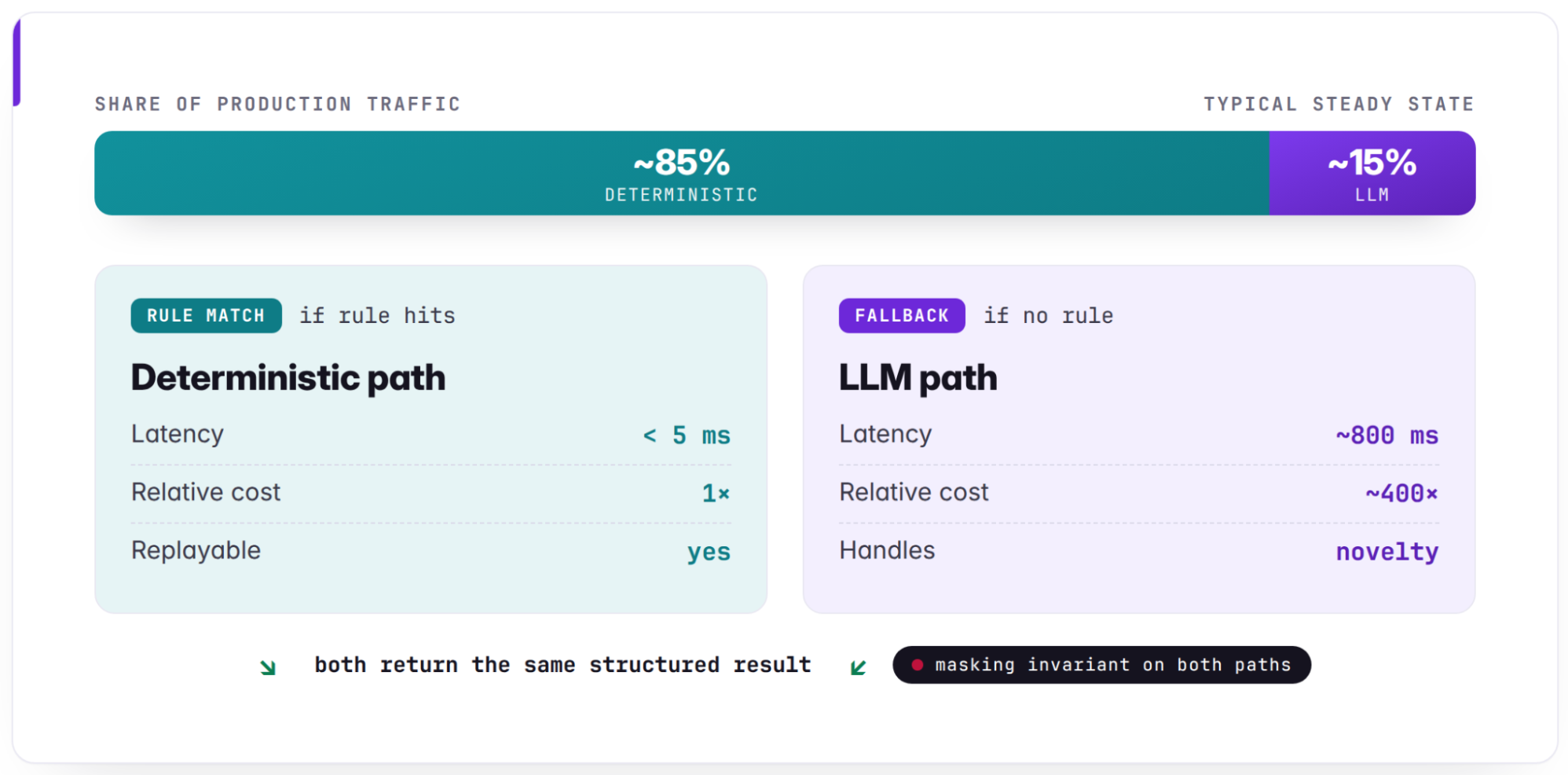
- The Funnel Implementation: A dual-lane architecture was deployed. Deterministic rules now handle the vast majority of routine traffic (~85%), while the LLM is reserved as an intelligent fallback for the remaining 15% of novel or ambiguous cases.
- Distillation and Promotion: Over time, patterns discovered by the LLM are validated by human reviewers and "distilled" into versioned, deterministic rules. This effectively shrinks the LLM’s role in the production path, moving the system toward higher efficiency and lower latency.
Supporting Data: Why "Context Beats Prompts"
The engineering data from Meta’s implementation provides a clear roadmap for other organizations. The team found that "prompt engineering" offered only marginal gains when the underlying data was noisy. However, when the system provided the model with a structured "evidence brief," accuracy improved significantly.
The Decision Funnel Efficiency
The operational performance of this system is a testament to the hybrid approach. The deterministic path resolves in single-digit milliseconds, keeping system latency low. In contrast, the LLM fallback path is approximately 400 times more compute-intensive and requires a different budget allocation. By funneling 85% of traffic through the deterministic lane, Meta has achieved a balance between high-level reasoning and high-speed, low-cost enforcement.
The Masking Invariant
A critical technical constraint—the "masking invariant"—prevents the system from cheating. By masking the existing privacy labels from the LLM during the classification process, the team ensures the model is truly reasoning about the evidence, rather than simply parroting back existing (and potentially incorrect) tags. This prevents circular reasoning and ensures that when a rule is promoted to production, it is based on a verifiable, clean signal.
Official Perspectives: The Two-Lane Operating Pattern
The PAI team emphasizes that their goal is not to eliminate human oversight, but to concentrate it where it is most effective. According to the team’s documentation, the system operates as a state machine.
"The end goal is not ‘LLMs everywhere,’" the engineering report states. "Instead, it is a system that can learn from ambiguous signals while moving production enforcement toward logic that is low latency, replayable, and easier to audit."
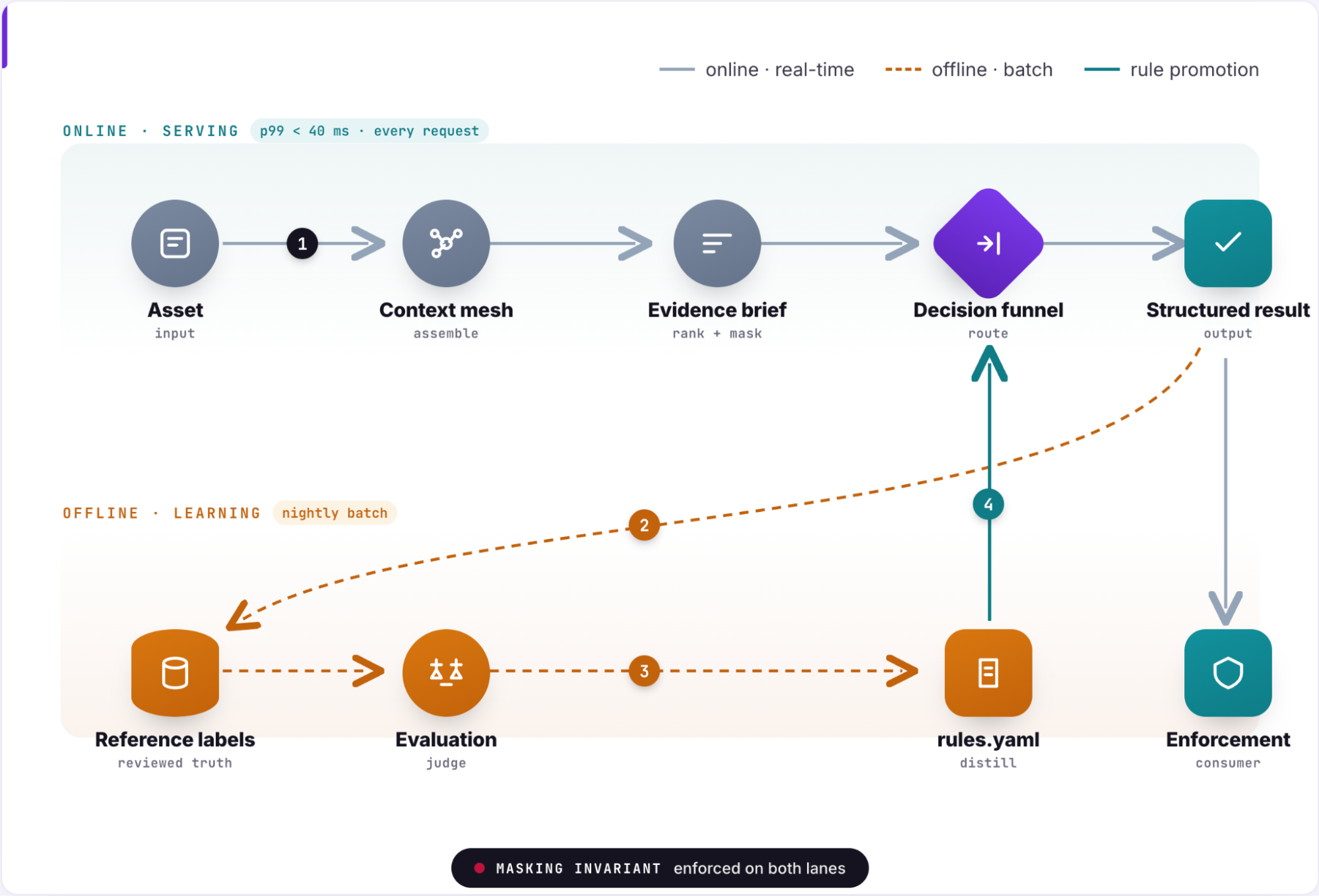
The system employs a "multi-panel judge" for quality control. Three independent LLM evaluations—each with different prompt strategies—review the same evidence. By comparing their consensus against human-reviewed "reference sets," the system can statistically determine its own health. If the Cohen’s kappa (a measure of inter-rater reliability) drops, the system triggers a "FreezeAndAudit" state, effectively installing "brakes" to prevent the propagation of inaccurate privacy classifications.
Implications for the Future of Data Privacy
The implications of this architecture extend far beyond Meta’s internal operations.
1. The Shift to "Privacy-as-Code"
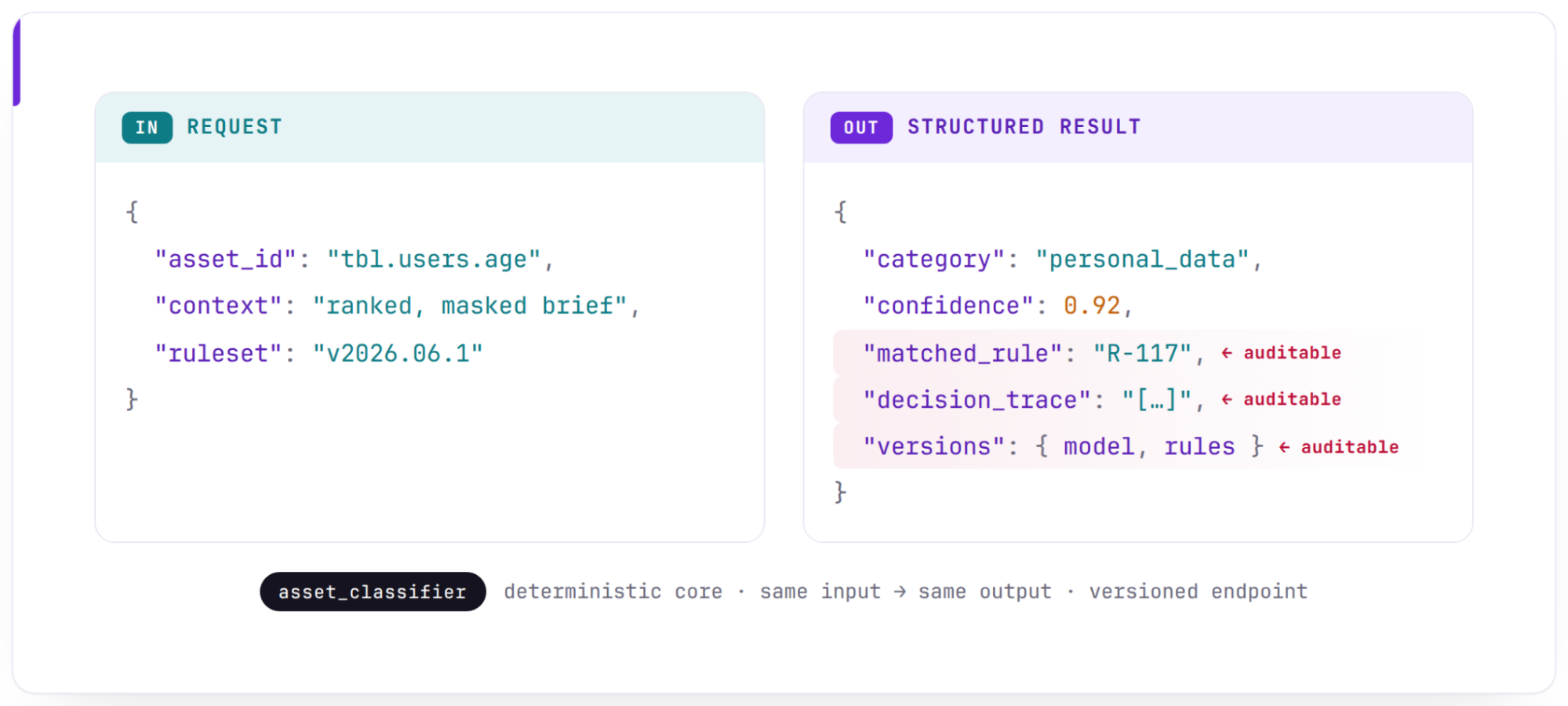
The move toward distilling LLM-derived patterns into versioned, deterministic rules represents the professionalization of privacy governance. As these rules are written into standard formats like JSON or Python, they become auditable artifacts that can be shared with regulators, proving exactly why a specific data asset was handled in a specific way.
2. A New Metric for Success: Coverage vs. Correctness
The PAI framework highlights a vital industry truth: coverage (the percentage of data successfully classified) is not a proxy for correctness. A system that classifies everything quickly but incorrectly is a liability. By tracking per-class recall and using balanced metrics like the Matthews correlation coefficient, engineers can now surface failures in rare, sensitive data categories that would otherwise be buried in aggregate accuracy reports.
3. The End of "Manual-Only" Governance
Perhaps the most significant takeaway is that the traditional "human-only" model of privacy review is no longer scalable in an AI-native product environment. However, the hybrid model proves that automation is not a replacement for judgment—it is a force multiplier. By automating the collection of evidence and the proposal of rules, human privacy experts are freed to focus on high-level policy interpretation and the adjudication of edge cases.
Looking Ahead
The PAI team has outlined three future directions for this work: scaling the system to cover even more complex data modalities, integrating deeper lineage analysis to track data transformation in real-time, and developing more robust automated feedback loops to identify policy drift before it impacts production.
As AI continues to reshape the digital landscape, the "Privacy-Aware Infrastructure" pattern offers a vital lesson: that true privacy in the era of AI is not achieved through constraints on innovation, but through the development of infrastructure that is sufficiently sophisticated to understand the data it governs. By building systems that prioritize clear contracts, rich evidence, and deterministic enforcement, organizations can protect user privacy without stalling the momentum of the AI revolution.
This hybrid approach, now validated by multiple teams within Meta, serves as a blueprint for the industry at large, suggesting that the most effective AI-governance tools will be those that know exactly when to rely on machine intelligence—and exactly when to stop and ask for a human.


 Jia Lissa
 Nila Kartika Wati
 Raul Delapena Setiawan
 Reynand Wu
 Sagoh
Sagoh

 Azzam Bilal Chamdy
 Ali Ikhwan